 Arabic Grammar
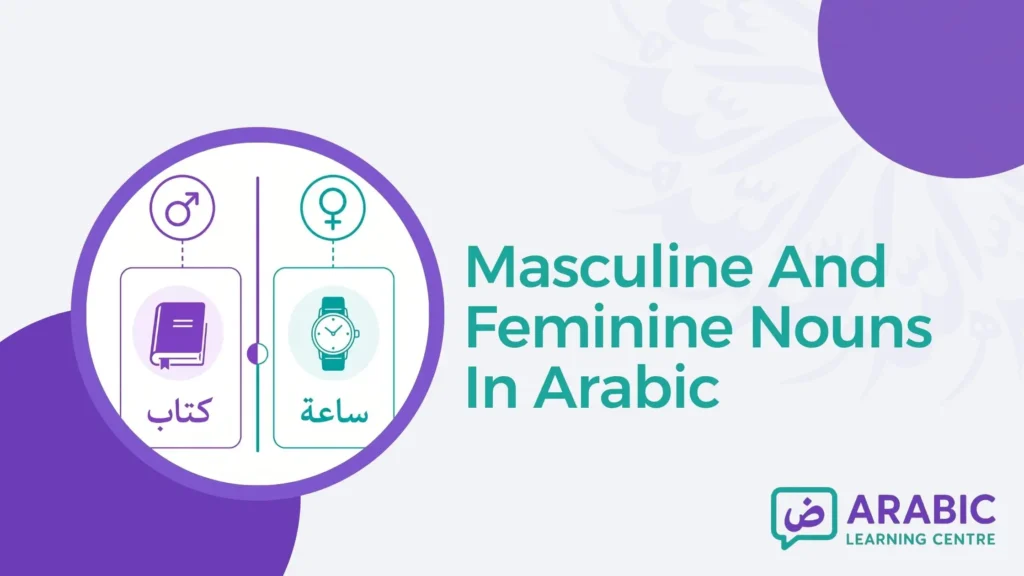
Arabic is a grammatically gendered language, which means that nouns are usually classified as either masculine or feminine. This rule does not only apply to people and animals. It also applies to objects, places, ideas, and abstract meanings.
Understanding masculine and feminine nouns in Arabic is one of the first steps toward building correct Arabic sentences. Once you know whether a noun is masculine or feminine, it becomes easier to use the right adjective, pronoun, verb form, and plural structure.
In this guide, you will learn how masculine and feminine nouns work in Arabic, how to identify them, which signs usually mark feminine nouns, and what common exceptions beginners should remember.
Does Arabic Have Gendered Nouns?
Arabic has a clear gender system in grammar. Every noun is generally treated as either masculine or feminine, even when the noun does not refer to a living being.
So, does Arabic have gendered nouns? Yes, Arabic has gendered nouns. Unlike English, Arabic does not usually use a neutral “it” category for nouns. A word such as كِتَاب (kitaab – book) is masculine, while a word such as شَمْس (shams – sun) is feminine.
This gender affects the sentence around the noun. For example:
الكِتَابُ جَمِيلٌ
Al-kitaabu jameelun
The book is beautiful.
الشَّمْسُ جَمِيلَةٌ
Ash-shamsu jameelatun
The sun is beautiful.
In the first sentence, كِتَاب is masculine, so the adjective is جَمِيل. In the second sentence, شَمْس is feminine, so the adjective becomes جَمِيلَة.
What Are Masculine And Feminine Nouns In Arabic?
Masculine and feminine nouns in Arabic are nouns that Arabic grammar treats as either male or female. Sometimes this gender is natural, and sometimes it is purely grammatical.
Natural gender is easy to understand. وَلَد (walad – boy) is masculine because it refers to a male child, while بِنْت (bint – girl) is feminine because it refers to a female child. Grammatical gender is different. For example, بَاب (baab – door) is masculine, while سَيَّارَة (sayyaarah – car) is feminine, even though neither has biological gender.
| Feature | Masculine Nouns | Feminine Nouns |
| Basic Idea | Male beings or grammatically masculine words | Female beings or grammatically feminine words |
| Common Ending | Often ends in a consonant | Often ends in ة |
| Human Example | رَجُل (rajul – man) | اِمْرَأَة (imra’ah – woman) |
| Object Example | كِتَاب (kitaab – book) | سَيَّارَة (sayyaarah – car) |
| Adjective Example | الكِتَابُ جَمِيلٌ | السَّيَّارَةُ جَمِيلَةٌ |
This table gives a simple overview, but Arabic gender cannot be understood from endings alone. Some feminine nouns do not end in ة, and some masculine names may end in ة, such as حَمْزَة (Hamza).
Masculine Nouns In Arabic
Masculine nouns in Arabic are nouns that refer to male beings or nouns that Arabic grammar treats as masculine. In many cases, the masculine form is considered the default form.
A masculine noun usually does not need a special ending to show that it is masculine. Words such as قَلَم (qalam – pen), بَيْت (bayt – house), and مَكْتَب (maktab – desk) are masculine because Arabic treats them that way grammatically.
What Are Masculine Nouns In Arabic?
Masculine nouns can refer to people, animals, objects, places, or abstract ideas. Some are naturally masculine, while others are masculine only because of Arabic grammar.
For example, رَجُل (rajul – man) is naturally masculine because it refers to a male person. However, كِتَاب (kitaab – book) is grammatically masculine, not because it has anything to do with males, but because Arabic classifies it as masculine.
Types Of Masculine Nouns In Arabic
Masculine nouns can be divided into real masculine and grammatical masculine. This distinction helps beginners understand why non-living things can still be masculine in Arabic.
Real masculine nouns refer to living beings that are naturally male. Examples include رَجُل (man), وَلَد (boy), أَب (father), and حِصَان (horse).
Grammatical masculine nouns do not refer to male beings, but Arabic treats them as masculine. Examples include كِتَاب (book), قَلَم (pen), بَيْت (house), and أَمَل (hope).
Examples Of Masculine Nouns In Arabic
Examples make masculine nouns easier to understand because you can see how they behave inside sentences. Notice that most masculine nouns below do not have a special masculine ending.
| Arabic Noun | Transliteration | Meaning | Type |
| أَب | ab | father | Real Masculine |
| أَخ | akh | brother | Real Masculine |
| وَلَد | walad | boy | Real Masculine |
| رَجُل | rajul | man | Real Masculine |
| كِتَاب | kitaab | book | Grammatical Masculine |
| قَلَم | qalam | pen | Grammatical Masculine |
| بَاب | baab | door | Grammatical Masculine |
| بَيْت | bayt | house | Grammatical Masculine |
| جَبَل | jabal | mountain | Grammatical Masculine |
| أَمَل | amal | hope | Grammatical Masculine |
For example:
الأَبُ طَيِّبٌ
Al-abu tayyibun
The father is kind.
Here, أَب is masculine, so the adjective طَيِّب also appears in the masculine form.
Another example:
البَيْتُ كَبِيرٌ
Al-baytu kabeerun
The house is big.
The noun بَيْت is not a male being, but it is treated as masculine in Arabic, so the adjective is كَبِير.
Learn Masculine And Feminine Nouns With Arabic Language Teachers
Understanding masculine and feminine nouns in Arabic becomes much easier when you learn with Arabic Language Teachers from The Arabic Learning Centre who guide you through grammar rules with clear explanations and real sentence practice.
Instead of just memorizing noun gender, you will learn how to apply masculine and feminine forms correctly in adjectives, pronouns, and full sentence structure. Through structured one-on-one lessons, the Arabic Learning Centre helps you build confidence in using Arabic naturally in reading, writing, and speaking.
Start learning masculine and feminine nouns in Arabic today with Arabic Language Teachers from The Arabic Learning Centre and turn grammar into real fluency.
Shots Videos from Our Courses
Feminine Nouns In Arabic
Feminine nouns in Arabic are nouns that refer to female beings or nouns that Arabic grammar treats as feminine. Many feminine nouns are easy to recognize because they end with taa marbuta ة.
However, not every feminine noun has a visible feminine ending. Some words are feminine because Arabic speakers have traditionally used them as feminine, such as شَمْس (sun), أَرْض (earth), and يَد (hand).
What Are Feminine Nouns In Arabic?
Feminine nouns may describe women, girls, female animals, objects, places, or abstract meanings. Their gender affects the adjectives, pronouns, and sometimes verbs used with them.
For example, بِنْت (bint – girl) is naturally feminine because it refers to a female person. سَيَّارَة (sayyaarah – car) is grammatically feminine because it ends in ة and is treated as feminine in Arabic grammar.
Types Of Feminine Nouns In Arabic
Feminine nouns can be grouped into real feminine, grammatical feminine, and marked feminine. These categories help beginners understand both regular words and exceptions.
Real feminine nouns refer to living beings that are naturally female. Examples include بِنْت (girl), أُمّ (mother), اِمْرَأَة (woman), and نَعْجَة (female sheep).
Grammatical feminine nouns do not refer to biologically female beings, but Arabic treats them as feminine. Examples include شَمْس (sun), أَرْض (earth), دَار (house/estate), and حَرْب (war).
Marked feminine nouns have a visible feminine sign, such as ة, ى, or اء. Examples include شَجَرَة (tree), مَدْرَسَة (school), كُبْرَى (greatest), and حَمْرَاء (red, feminine).
Examples Of Feminine Nouns In Arabic
The examples below show different kinds of feminine nouns. Some are feminine because of meaning, some because of endings, and some because of Arabic usage.
| Arabic Noun | Transliteration | Meaning | Type |
| بِنْت | bint | girl | Real Feminine |
| أُمّ | umm | mother | Real Feminine |
| اِمْرَأَة | imra’ah | woman | Real Feminine |
| نَعْجَة | na‘jah | female sheep | Real Feminine |
| سَيَّارَة | sayyaarah | car | Marked Feminine |
| شَجَرَة | shajarah | tree | Marked Feminine |
| مَدْرَسَة | madrasah | school | Marked Feminine |
| شَمْس | shams | sun | Grammatical Feminine |
| أَرْض | ard | earth | Grammatical Feminine |
| يَد | yad | hand | Grammatical Feminine |
For example:
السَّيَّارَةُ جَمِيلَةٌ
As-sayyaaratu jameelatun
The car is beautiful.
The noun سَيَّارَة is feminine, so the adjective becomes جَمِيلَة.
Another example:
الشَّمْسُ مُشْرِقَةٌ
Ash-shamsu mushriqatun
The sun is bright.
Although شَمْس does not end in ة, it is feminine, so the adjective is feminine too.
How To Identify Masculine And Feminine Nouns In Arabic?
Identifying noun gender in Arabic becomes easier when you combine meaning, word endings, sentence context, and memorization. No single clue works for every word.
Beginners should not rely only on the shape of the word. The best method is to look at several signs together and learn common nouns with their gender from the beginning.
Check The Meaning
The meaning of the noun is often the easiest clue. If the noun refers to a male person or animal, it is usually masculine. If it refers to a female person or animal, it is usually feminine.
For example, أَحْمَد is masculine because it is a male name, while فَاطِمَة is feminine because it is a female name. وَلَد (boy) is masculine, while بِنْت (girl) is feminine.
Look For Feminine Endings
Many feminine nouns end with taa marbuta ة. This is the most common feminine marker in Arabic and one of the first signs beginners learn.
Examples include مَدْرَسَة (school), طَالِبَة (female student), مُعَلِّمَة (female teacher), and شَجَرَة (tree).
However, this rule has exceptions. Some masculine names or titles end in ة, such as حَمْزَة (Hamza) and خَلِيفَة (caliph).
Use Sentence Context
Sometimes the sentence itself shows you whether the noun is masculine or feminine. The adjective, pronoun, or verb can reveal the gender of the noun.
For example:
الشَّمْسُ جَمِيلَةٌ
Ash-shamsu jameelatun
The sun is beautiful.
The feminine adjective جَمِيلَة tells us that شَمْس is feminine.
Memorize Common Exceptions
Some nouns are feminine even though they do not have a visible feminine marker. These words must be learned through practice and repeated exposure.
Common examples include شَمْس (sun), أَرْض (earth), حَرْب (war), دَار (house/estate), يَد (hand), and عَيْن (eye).
Common Feminine Markers In Arabic
Feminine markers are signs that often show a noun is feminine. They are very helpful, but they should be used with awareness because Arabic still has exceptions.
The most common feminine marker is taa marbuta ة, but Arabic also uses other signs such as alif maqsurah ى and alif mamdudah اء. Some feminine nouns have no visible marker at all.
| Feminine Marker | Arabic Form | Example | Meaning |
| Taa Marbuta | ة / ـة | مَدْرَسَة | school |
| Taa Marbuta | ة / ـة | مُعَلِّمَة | female teacher |
| Alif Maqsurah | ى | كُبْرَى | greatest |
| Alif Mamdudah | اء / ـاء | حَمْرَاء | red, feminine |
| No Visible Marker | سماعي | شَمْس | sun |
| No Visible Marker | سماعي | أَرْض | earth |
The taa marbuta is the easiest marker for beginners. For example, مُعَلِّم means “male teacher,” while مُعَلِّمَة means “female teacher.”
The endings ى and اء can also mark feminine words, but learners should know that they are not always feminine markers in every word. For example, مُصْطَفَى is a male name even though it ends in ى.
Learn Arabic With A Female Arabic Teacher
Understanding masculine and feminine nouns in Arabic becomes much easier when you study with the right teacher. Through the Learn Arabic with a Female Arabic Teacher course at The Arabic Learning Centre, students receive clear, supportive guidance from qualified female instructors who explain Arabic grammar, pronunciation, vocabulary, and sentence structure step by step.
This makes it easier for learners to recognize noun gender, use correct adjectives and pronouns, and build accurate Arabic sentences with confidence.
Start mastering masculine and feminine nouns in Arabic with the Learn Arabic with a Female Arabic Teacher course at The Arabic Learning Centre.
Masculine And Feminine Arabic Grammar Rules
Noun gender in Arabic affects more than vocabulary. It controls how other parts of the sentence agree with the noun.
When you learn masculine and feminine nouns in Arabic, you are also learning how Arabic sentence structure works. This includes adjective agreement, pronoun agreement, verb agreement, and plural treatment.
Adjective Agreement
Adjectives in Arabic usually agree with the noun they describe. If the noun is masculine, the adjective is masculine. If the noun is feminine, the adjective usually becomes feminine.
For example:
الوَلَدُ طَوِيلٌ
Al-waladu taweelun
The boy is tall.
البِنْتُ طَوِيلَةٌ
Al-bintu taweelatun
The girl is tall.
The adjective changes from طَوِيل to طَوِيلَة because the noun changes from masculine to feminine.
Pronoun Agreement
Pronouns in Arabic also change according to gender. Arabic uses هُوَ (huwa) for masculine nouns and هِيَ (hiya) for feminine nouns.
For example:
هُوَ طَبِيبٌ
Huwa tabeebun
He is a doctor.
هِيَ طَبِيبَةٌ
Hiya tabeebatun
She is a doctor.
Arabic may also use masculine and feminine pronouns for objects depending on the grammatical gender of the noun.
Verb Agreement
Verbs can show gender in Arabic, especially when the subject is feminine. This is important for learners because gender agreement appears in very basic sentences.
For example:
ذَهَبَ الوَلَدُ
Dhahaba al-waladu
The boy went.
ذَهَبَتِ البِنْتُ
Dhahabati al-bintu
The girl went.
The feminine subject البِنْت causes the verb to take a feminine marker.
Non-Human Plural Agreement
One important Arabic grammar rule is that many non-human plurals are treated as singular feminine. This rule appears often in Arabic reading and writing.
For example, even if the singular noun is masculine, its non-human plural may take singular feminine agreement. This is why learners should not only study gender in singular nouns, but also how plural nouns behave in real sentences.
Masculine And Feminine Plurals In Arabic
Arabic plurals can be regular or irregular. Some plurals follow clear endings, while others change the internal structure of the word.
Masculine and feminine plural forms are important because they affect sentence agreement. Learners should know the basic regular endings first, then gradually learn broken plurals through vocabulary practice.
For regular masculine human plurals, Arabic often uses ـونَ (-oon) or ـينَ (-een). For example, مُعَلِّم (teacher) becomes مُعَلِّمُونَ or مُعَلِّمِينَ, depending on grammar position.
For regular feminine plurals, Arabic often uses ـات (-aat). For example, مُعَلِّمَة (female teacher) becomes مُعَلِّمَات, and سَيَّارَة (car) becomes سَيَّارَات.
Arabic also has broken plurals, which do not follow one simple ending. For example, رَجُل (man) becomes رِجَال (men), بَيْت (house) becomes بُيُوت (houses), and كِتَاب (book) becomes كُتُب (books).
Common Exceptions In Arabic Gender
Arabic has useful gender patterns, but it also has exceptions that learners need to remember. These exceptions are normal and become easier with exposure.
Some feminine nouns do not end with ة, while some masculine words may look feminine because they end with ة. This is why context and repeated practice are essential.
Examples of feminine nouns without ة include شَمْس (sun), أَرْض (earth), حَرْب (war), دَار (house/estate), يَد (hand), and عَيْن (eye).
Examples of masculine nouns ending in ة include حَمْزَة (Hamza) and خَلِيفَة (caliph). These words show why learners should not depend only on the final letter of a noun.
Feminine Body Parts In Arabic
Some body parts are treated as feminine in Arabic, especially many body parts that come in pairs. This pattern is useful, but it still needs memorization and practice.
Common feminine body parts include عَيْن (eye), يَد (hand), أُذُن (ear), رِجْل (leg/foot), and قَدَم (foot).
For example:
العَيْنُ جَمِيلَةٌ
Al-aynu jameelatun
The eye is beautiful.
Here, عَيْن is feminine even though it does not end in ة, so the adjective becomes جَمِيلَة.
Another example:
اليَدُ صَغِيرَةٌ
Al-yadu sagheeratun
The hand is small.
The noun يَد is feminine, so the adjective صَغِيرَة is also feminine.
Read Also: Arabic Past Tense With Examples
Our Students Reviews
Read Also: Ten Most Used Sentences In Arabic
Master Masculine And Feminine Nouns In Arabic With Arabic Learning Centre
Understanding masculine and feminine nouns in Arabic is a key step toward building correct sentences and speaking with confidence. While this guide gives you the foundation, real progress comes with guided practice and structured learning.
At Arabic Learning Centre, you can take your knowledge further through step-by-step Arabic grammar lessons designed specifically for non-native speakers. You’ll practice how noun gender affects adjectives, pronouns, and verbs in real conversations, not just theory.
Start learning Arabic with Arabic Learning Centre today and master rules like masculine and feminine nouns in Arabic with clear, guided lessons.
Courses We Offer:
- Arabic Course for Beginners
- Arabic Classes for Adults
- Arabic Classes for Ladies
- Advanced Arabic Course
- Intensive Arabic Course
Conclusion
Mastering masculine and feminine nouns in Arabic is essential for anyone who wants to understand Arabic grammar and form accurate sentences. Arabic noun gender affects adjectives, pronouns, verbs, and plural agreement, so it is much more than a vocabulary detail.
The basic idea is simple: masculine is often the default form, while feminine nouns may refer to real female beings, carry feminine markers such as ة, ى, or اء, or belong to known feminine words such as شَمْس, أَرْض, and يَد.
With regular practice, examples, and exposure, learners can recognize masculine nouns in Arabic and feminine nouns in Arabic more naturally. Once you understand this rule, Arabic sentence structure becomes clearer, easier, and much more accurate.
Read Also: Does Arabic Have Grammatical Gender?
FAQ
This section answers the most common beginner questions about Arabic noun gender. These short answers are useful for quick revision after reading the full guide.
Does Arabic Have Gendered Nouns?
Yes, Arabic has gendered nouns. Most nouns are treated as either masculine or feminine, including people, animals, objects, places, and abstract ideas.
Is Arabic A Masculine Or Feminine Language?
Arabic is not a masculine or feminine language. It is a grammatically gendered language because it uses both masculine and feminine forms as part of its grammar system.
How Do You Know If A Word Is Masculine Or Feminine In Arabic?
You can check the meaning, the ending, the sentence context, and common Arabic usage. Feminine nouns often end in ة, but some feminine words, such as شَمْس and أَرْض, do not have this ending.
What Is Taa Marbuta In Arabic?
Taa marbuta ة is one of the most common feminine markers in Arabic. It often appears at the end of feminine nouns, such as مَدْرَسَة, طَالِبَة, and سَيَّارَة.
How Do You Make Masculine And Feminine Plural In Arabic?
Regular masculine human plurals often use ـونَ or ـينَ, while regular feminine plurals often use ـات. Arabic also has broken plurals, such as رَجُل → رِجَال and كِتَاب → كُتُب.
Is Sun Feminine In Arabic?
Yes, شَمْس (sun) is feminine in Arabic, even though it does not end in ة. This is known through Arabic usage and agreement with feminine adjectives and pronouns.
Is House Masculine Or Feminine In Arabic?
It depends on the Arabic word used. بَيْت (bayt – house) is masculine, while دَار (daar – house/estate) is often treated as feminine. This shows why learners should study nouns with their gender.
Related Articles
Arabic Grammar