 Arabic Grammar
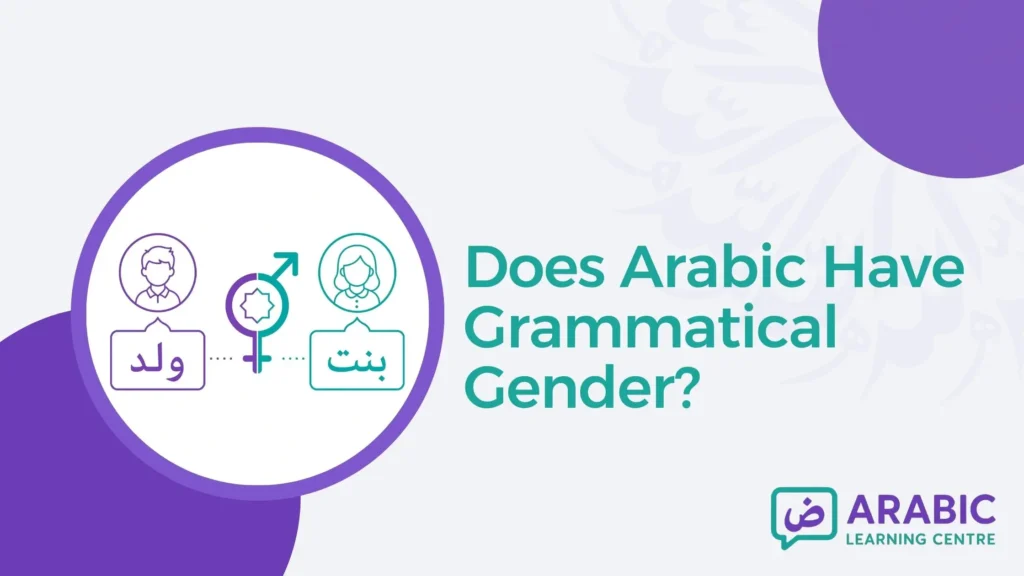
Learning word gender in Arabic is one of the first important steps toward understanding how Arabic grammar works. Unlike English, Arabic does not treat most objects as neutral. Instead, almost every noun in Arabic is either masculine or feminine, and this affects the words around it, including pronouns, verbs, adjectives, and demonstratives.
So, does Arabic have grammatical gender? Yes, it does. Arabic uses grammatical gender not only for people and animals, but also for objects, places, and abstract ideas. This means words like “book,” “sun,” “car,” and “school” all have a gender in Arabic, even if they are not male or female in real life.
In this guide, you will learn how gender in Arabic language works, how to know if an Arabic word is male or female, and how Arabic noun gender, Arabic pronoun gender, Arabic verb gender, plural nouns, adjectives, and prepositions connect to gender rules in Arabic grammar.
Does Arabic Have Grammatical Gender?
Arabic does have grammatical gender. This means Arabic words are often treated as either masculine or feminine, even when the word does not refer to a real male or female person.
In Arabic, every noun is grammatically masculine or feminine. This gender then affects other parts of the sentence, such as pronouns, adjectives, demonstratives, and verbs. However, it is more accurate to say that nouns have inherent gender, while verbs and adjectives agree with the gender of the noun. The reference also notes that particles do not have gender, while verbs reflect the gender of their subjects.
So, the direct answer is:
Yes, Arabic has grammatical gender. Arabic nouns are either masculine or feminine, and many sentence elements change to match them.
Grammatical Gender In Arabic
Grammatical gender in Arabic is not always the same as natural gender. Sometimes the gender is logical, but sometimes it is simply part of the word’s grammar.
For example, words like رجل (rajul, man) and ولد (walad, boy) are masculine because they refer to males. Words like امرأة (imra’ah, woman) and بنت (bint, girl) are feminine because they refer to females.
But Arabic also gives gender to objects and abstract words:
| Arabic Word | Meaning | Gender |
| قمر (qamar) | moon | Masculine |
| شمس (shams) | sun | Feminine |
| كتاب (kitaab) | book | Masculine |
| سيارة (sayyaarah) | car | Feminine |
| دار (daar) | house / estate | Feminine |
This is why gender in Arabic language is important for learners. You cannot always guess the gender from meaning alone. Sometimes you must learn the word with its gender.
Word Gender In Arabic
Word gender in Arabic means that a noun carries a grammatical identity as either masculine or feminine. This identity controls how surrounding words behave.
For example:
| Arabic Sentence | Meaning | Gender Rule |
| القمر جميل | The moon is beautiful | قمر is masculine, so جميل is masculine |
| الشمس جميلة | The sun is beautiful | شمس is feminine, so جميلة is feminine |
| هذا كتاب | This is a book | كتاب is masculine, so هذا is used |
| هذه سيارة | This is a car | سيارة is feminine, so هذه is used |
The important point is that Arabic does not have a neutral “it” category like English. Objects, places, ideas, and abstract nouns are still grammatically masculine or feminine.
Types Of Gender Rules In Arabic Grammar
Arabic gender rules appear in several parts of grammar. The most important rule is noun gender, but learners also need to understand how gender affects pronouns, verbs, adjectives, and plural nouns.
The main types of gender rules in Arabic grammar are:
- Arabic Noun Gender
- Arabic Pronoun Gender
- Arabic Verb Gender
- Gender Adjectives
- Gender Plural Nouns
- Arabic Preposition Gender
- Demonstrative Gender
- Natural And Grammatical Gender
Each type works differently, so we need to separate them clearly.
Take The Next Step From Grammar To Vocabulary
After learning how grammatical gender in Arabic works, you can see why vocabulary should be studied with more than just translation. Each Arabic word needs to be understood with its form, gender, meaning, and correct use in sentences.
The Arabic Vocabulary Course at Arabic Learning Centre helps learners expand their word bank through organized vocabulary lessons, contextual practice, and clear guidance. By studying Arabic words with their patterns and usage, students become more confident in reading, writing, and speaking Arabic accurately.
Start building your Arabic vocabulary with confidence through our Arabic Vocabulary Course at Arabic Learning Centre.
Arabic Noun Gender
Arabic noun gender is the foundation of the whole topic. In Arabic, nouns are either masculine or feminine, and this affects many other words in the sentence.
Masculine Nouns In Arabic
Masculine nouns are usually the default form in Arabic. A noun does not need a special ending to be masculine.
Examples:
| Arabic | Transliteration | Meaning |
| رجل | rajul | man |
| ولد | walad | boy |
| كتاب | kitaab | book |
| قلم | qalam | pen |
| قمر | qamar | moon |
Some masculine nouns refer to real male beings, such as رجل and ولد. Others are grammatically masculine even though they are objects, such as كتاب and قلم.
Feminine Nouns In Arabic
Feminine nouns may refer to real female beings or to words that are grammatically feminine. Many feminine nouns have clear signs, but some do not.
Examples:
| Arabic | Transliteration | Meaning |
| امرأة | imra’ah | woman |
| بنت | bint | girl |
| طالبة | taalibah | female student |
| سيارة | sayyaarah | car |
| شمس | shams | sun |
A common feminine sign is ة (taa marbuta) at the end of the word, as in سيارة and طالبة. But some feminine words, such as شمس, do not have this ending.
Shots Videos from Our Courses
How To Know If An Arabic Word Is Male Or Female?
Knowing whether an Arabic word is masculine or feminine depends on signs, meaning, and memorization. Some words are easy to identify, while others must be learned through usage.
Look For Feminine Endings
The easiest way to identify many feminine Arabic nouns is to look at the ending. Several common feminine markers appear at the end of nouns.
| Feminine Marker | Arabic Name | Example | Meaning |
| ة | تاء مربوطة | مدرسة | school |
| ى | ألف مقصورة | سلمى | Salma |
| اء | ألف ممدودة | صحراء | desert |
The most common sign is ة. For example:
| Masculine | Feminine | Meaning |
| معلم | معلمة | teacher |
| طالب | طالبة | student |
| جميل | جميلة | beautiful |
The reference also explains that feminine nouns may be recognized through signs such as taa marbuta, alif maqsurah, and alif mamdudah.
Check The Meaning Of The Word
Some Arabic words are feminine because they naturally refer to female beings. They do not always need a visible feminine ending.
Examples:
| Arabic | Meaning | Gender |
| أم | mother | Feminine |
| بنت | girl | Feminine |
| أخت | sister | Feminine |
| امرأة | woman | Feminine |
The same applies to masculine words that refer to males:
| Arabic | Meaning | Gender |
| أب | father | Masculine |
| ولد | boy | Masculine |
| أخ | brother | Masculine |
| رجل | man | Masculine |
Memorize Common Feminine Words Without Clear Signs
Some Arabic nouns are feminine even though they do not have a visible feminine ending. These are important because learners often mistake them as masculine.
Examples:
| Arabic | Meaning | Gender |
| شمس | sun | Feminine |
| أرض | earth | Feminine |
| نار | fire | Feminine |
| يد | hand | Feminine |
| عين | eye | Feminine |
| دار | house / estate | Feminine |
These words are learned through usage. Native speakers know their gender naturally, but learners need repeated examples and practice.
What Are The Gender Forms In Arabic?
Arabic mainly has two gender forms: masculine and feminine. There is no separate neuter form for objects in standard Arabic grammar.
The main gender forms are:
| Gender Form | Arabic Term | Example |
| Masculine | مذكر | كتاب جميل |
| Feminine | مؤنث | سيارة جميلة |
Arabic also distinguishes between real gender and grammatical gender.
Real Gender In Arabic
Real gender refers to words connected to actual male or female beings. This is usually easy to understand.
Examples:
| Masculine | Feminine | Meaning |
| رجل | امرأة | man / woman |
| ولد | بنت | boy / girl |
| معلم | معلمة | male teacher / female teacher |
| طالب | طالبة | male student / female student |
Grammatical Gender In Arabic
Grammatical gender refers to words that are masculine or feminine because Arabic grammar treats them that way, not because they are biologically male or female.
Examples:
| Arabic Word | Meaning | Gender |
| كتاب | book | Masculine |
| باب | door | Masculine |
| شمس | sun | Feminine |
| سيارة | car | Feminine |
This is the part that usually feels difficult for non-native learners.
Arabic Pronoun Gender
Arabic pronoun gender is very important because Arabic pronouns change according to gender, number, and person. This is different from English, where many pronouns do not show as much gender distinction.
Are There Gender Pronouns In Arabic?
Yes, Arabic has gender pronouns. The most obvious examples are the third-person pronouns هو and هي.
| English | Arabic | Transliteration | Gender |
| He | هو | huwa | Masculine |
| She | هي | hiya | Feminine |
Arabic also shows gender in second-person pronouns:
| English | Arabic | Transliteration | Use |
| You | أنتَ | anta | One male |
| You | أنتِ | anti | One female |
For plural pronouns:
| English | Arabic | Transliteration | Use |
| They | هم | hum | Masculine or mixed group |
| They | هن | hunna | Female group |
So, if someone asks Are there gender pronouns in Arabic?, the answer is yes. Arabic pronouns clearly distinguish between masculine and feminine forms in many cases.
Attached Pronouns And Gender
Arabic also uses attached pronouns. These can attach to verbs, nouns, and prepositions.
Examples:
| Arabic | Meaning | Gender |
| رأيته | I saw him | Masculine |
| رأيتها | I saw her | Feminine |
| كتابه | his book | Masculine |
| كتابها | her book | Feminine |
| إليه | to him | Masculine |
| إليها | to her | Feminine |
This is especially important when discussing prepositions, because the preposition itself does not change, but the attached pronoun can show gender.
Arabic Verb Gender
Arabic verb gender means that verbs can change form to agree with the gender of the subject. The verb itself does not have independent gender like a noun; instead, it reflects the gender of the doer.
Do Verbs In Arabic Have Gender?
Arabic verbs do not have gender by themselves, but they change according to the gender of the subject. So, the better answer is: Arabic verbs show gender agreement.
Examples:
| Arabic | Meaning | Gender |
| كتب الولد | The boy wrote | Masculine subject |
| كتبت البنت | The girl wrote | Feminine subject |
In the second sentence, the verb كتبت has a feminine ending because the subject البنت is feminine.
Arabic Verb Gender In Past Tense
In the past tense, feminine singular verbs often take تْ at the end.
| Masculine | Feminine | Meaning |
| نجح | نجحت | succeeded |
| كتب | كتبت | wrote |
| جلس | جلست | sat |
Examples:
- نجح الطالب
The male student succeeded. - نجحت الطالبة
The female student succeeded.
Arabic Verb Gender In Present Tense
In the present tense, Arabic often uses different prefixes for masculine and feminine subjects.
| Masculine | Feminine | Meaning |
| يكتب | تكتب | writes |
| يجلس | تجلس | sits |
| يدرس | تدرس | studies |
Examples:
- هو يكتب
He writes. - هي تكتب
She writes.
The gender difference appears clearly in the verb form.
Gender Adjectives In Arabic
Gender adjectives in Arabic must agree with the noun they describe. This means a masculine noun takes a masculine adjective, and a feminine noun takes a feminine adjective.
The most common way to make many adjectives feminine is by adding ة at the end.
| Masculine Noun + Adjective | Feminine Noun + Adjective |
| كتاب جميل | سيارة جميلة |
| ولد ذكي | بنت ذكية |
| بيت كبير | مدرسة كبيرة |
Examples:
- البيت جميل
The house is beautiful. - الحديقة جميلة
The garden is beautiful.
In English, the adjective “beautiful” does not change. In Arabic, جميل changes to جميلة because the noun is feminine.
This agreement rule is one of the most important parts of grammatical gender in Arabic.
Continue Learning Arabic Gender Through A Complete Grammar Course
After learning does Arabic have grammatical gender and how word gender in Arabic affects sentence structure, the next step is building a full grammar foundation. Gender in Arabic is connected to nouns, pronouns, verbs, adjectives, demonstratives, and sentence agreement, so mastering it becomes easier when you study it within a complete grammar system.
Through the Arabic Grammar Course at Arabic Learning Centre, learners receive structured Arabic grammar lessons covering morphology, syntax, sentence formation, verb conjugation, noun declension, and grammatical analysis. This helps you move beyond isolated rules and understand how Arabic grammar works in real reading, writing, Quranic Arabic, and everyday communication.
Join Arabic Learning Centre’s Arabic Grammar Course today and master Arabic gender, sentence structure, and grammar rules with confidence.
Gender Plural Nouns In Arabic
Gender plural nouns in Arabic can be more advanced because plural agreement depends on whether the noun refers to humans or non-humans. This is one of the most important Arabic gender rules for learners.
Human Plural Nouns
Human plural nouns usually keep gender agreement clearly. Masculine human plurals use masculine agreement, and feminine human plurals use feminine agreement.
| Singular | Plural | Gender |
| معلم | معلمون | Masculine |
| معلمة | معلمات | Feminine |
| طالب | طلاب | Masculine |
| طالبة | طالبات | Feminine |
Examples:
- المعلمون مجتهدون
The male teachers are hardworking. - المعلمات مجتهدات
The female teachers are hardworking.
Non-Human Plural Nouns
Non-human plurals are usually treated as singular feminine in Arabic. This is a major rule and can surprise learners.
Examples:
| Plural Noun | Meaning | Agreement |
| كتب | books | Feminine singular |
| سيارات | cars | Feminine singular |
| أبواب | doors | Feminine singular |
Examples:
- الكتب مفيدة
The books are useful. - السيارات سريعة
The cars are fast.
Even if the singular noun is masculine, the non-human plural often takes feminine singular agreement. The reference also highlights this rule: non-human plurals are generally treated as singular feminine in Arabic.
Arabic Preposition Gender
Arabic preposition gender is a common point of confusion. Some learners search for “Arabic proposition gender,” but the correct grammar term is Arabic preposition gender.
Arabic prepositions themselves do not have gender. Words like في (in), على (on), من (from), إلى (to), and مع (with) do not change because of masculine or feminine nouns.
Examples:
| Arabic | Meaning | Note |
| في البيت | in the house | في does not change |
| في المدرسة | in the school | في does not change |
| على الكرسي | on the chair | على does not change |
| على الطاولة | on the table | على does not change |
However, attached pronouns after prepositions can show gender:
| Arabic | Meaning | Gender |
| إليه | to him | Masculine |
| إليها | to her | Feminine |
| معه | with him | Masculine |
| معها | with her | Feminine |
| منه | from him | Masculine |
| منها | from her | Feminine |
So, the correct rule is:
Arabic prepositions do not have gender, but pronoun suffixes attached to them can show masculine or feminine gender.
Demonstrative Gender In Arabic
Demonstratives are words like “this” and “that.” In Arabic, they change according to the gender of the noun.
This is another important type of gender agreement because Arabic learners use demonstratives very often in basic sentences.
| English | Masculine Arabic | Feminine Arabic |
| This | هذا | هذه |
| That | ذلك | تلك |
Examples:
- هذا كتاب
This is a book. - هذه سيارة
This is a car. - ذلك باب
That is a door. - تلك مدرسة
That is a school.
The gender of the noun controls which demonstrative you choose.
Masculine Words With Feminine Endings
Some Arabic words look feminine because they end with ة, but they are actually masculine. These are exceptions that learners should memorize.
This is why it is helpful not to rely only on word endings. Endings are useful clues, but they are not perfect rules.
Examples:
| Arabic Word | Meaning | Gender |
| حمزة | Hamza | Masculine name |
| أسامة | Usama | Masculine name |
| طلحة | Talha | Masculine name |
| خليفة | caliph / successor | Often masculine title |
| علامة | great scholar | Can be masculine as a title |
For example:
- حمزة طالب مجتهد
Hamza is a hardworking student.
We do not say مجتهدة here because حمزة is a masculine name even though it ends with ة.
Read Also: Arabic Past Tense With Examples
Common Mistakes With Gender In Arabic
Learners often make mistakes with Arabic gender because they translate from English or rely only on visual endings. Arabic requires agreement across the whole sentence.
Common mistakes include:
| Mistake | Correct Idea |
| Treating objects as neutral | Arabic has no neutral noun gender |
| Using هذا with every noun | Use هذه with feminine nouns |
| Forgetting adjective agreement | Adjectives must match gender |
| Assuming every ة word is feminine | Some masculine names end in ة |
| Treating prepositions as gendered | Prepositions do not have gender |
| Forgetting non-human plural rule | Non-human plurals often take feminine singular agreement |
The safest method is to learn each noun with a simple example sentence.
For example:
- هذا كتاب جميل
- هذه سيارة جميلة
- الشمس مشرقة
- القمر ساطع
This makes gender easier to remember in context.
Our Students Reviews
Read Also: Ten Most Used Sentences In Arabic
Start Mastering Arabic Gender The Right Way
Now that you understand the answer to “Does Arabic have grammatical gender?” and how word gender in Arabic works, the next step is practicing these rules in real sentences with guidance. Learning Arabic gender is not just about memorizing masculine and feminine forms—it’s about using them naturally with verbs, pronouns, and adjectives.
At Arabic Learning Centre, you’ll learn Arabic grammar step by step through a structured approach that makes topics like grammatical gender, agreement rules, and sentence building simple and clear. With expert teachers and practical exercises, you’ll move from confusion to confidence in using Arabic correctly.
Join Arabic Learning Centre today and turn your knowledge of Arabic gender rules into real fluency.
Courses We Offer:
- Online Arabic Course
- Classical arabic course
- Modern Standard Arabic Course
- Fusha Arabic Course
- Learn Saudi Arabic
Conclusion
Arabic does have grammatical gender, and understanding it is essential for forming correct Arabic sentences. The most important idea is that Arabic nouns are either masculine or feminine, and other words often change to agree with them.
The topic includes several connected areas: Arabic noun gender, Arabic pronoun gender, Arabic verb gender, gender adjectives, gender plural nouns, and Arabic preposition gender. Nouns have inherent gender, pronouns have gender forms, verbs and adjectives agree with gender, and prepositions themselves do not carry gender.
To master gender in Arabic language, learners should not memorize isolated rules only. The best approach is to learn nouns with examples, notice adjective and verb agreement, and practice common sentence patterns until masculine and feminine forms become natural.
Read Also: Masculine And Feminine Nouns In Arabic
Frequently Asked Questions About Gender In Arabic Language
This section answers the main questions learners ask about Arabic gender rules in a direct and practical way.
Does Arabic Have Grammatical Gender?
Yes, Arabic has grammatical gender. Arabic nouns are either masculine or feminine, and this gender affects pronouns, verbs, adjectives, and demonstratives.
What Is Word Gender In Arabic?
Does Arabic Have Grammatical Gender?
Yes, Arabic has grammatical gender. Arabic nouns are either masculine or feminine, and this gender affects pronouns, verbs, adjectives, and demonstratives.
How To Know If An Arabic Word Is Male Or Female?
You can often know by checking the ending, especially ة, ى, or اء. You can also check the meaning, but some words must be memorized because they are feminine without a visible marker.
Are There Gender Pronouns In Arabic?
Yes, Arabic has gender pronouns. For example, هو means “he,” هي means “she,” أنتَ means “you” for one male, and أنتِ means “you” for one female.
Do Verbs In Arabic Have Gender?
Arabic verbs do not have gender independently, but they change form to agree with the gender of the subject. For example, كتب is masculine, while كتبت can mark a feminine subject in the past tense.
What Are The Gender Forms In Arabic?
The main gender forms in Arabic are masculine and feminine. Arabic does not have a separate neuter gender like English “it.”
Do Arabic Prepositions Have Gender?
No, Arabic prepositions do not have gender. However, attached pronouns after prepositions can show gender, such as إليه meaning “to him” and إليها meaning “to her.”
What Are Gender Adjectives In Arabic?
Gender adjectives in Arabic are adjectives that agree with the noun they describe. For example, جميل is masculine and جميلة is feminine.
How Do Plural Nouns Work With Gender In Arabic?
Human plural nouns usually keep masculine or feminine agreement. Non-human plural nouns are often treated as singular feminine, such as الكتب مفيدة meaning “the books are useful.”
Related Articles
Arabic Grammar