 Arabic Grammar
| Key Takeaways |
| Arabic has no present-tense verb “to be” — sentences like “I am a student” use a zero-copula structure instead. |
| The past-tense verb كَانَ (kāna) is Arabic’s primary “to be” verb, fully conjugated across all pronouns and genders. |
| كَانَ (kāna) conjugation follows the hollow verb (fi’l mu’tall al-ajwaf) pattern, requiring learners to master its specific root changes. |
| The future tense uses سَيَكُونُ (sa-yakūnu) or يَكُونُ (yakūnu) with سَوْفَ (sawfa) to express “will be.” |
The Arabic verb “to be” works very differently from English. In the present tense, Arabic simply omits it — a sentence like “He is a teacher” is expressed as هُوَ مُعَلِّمٌ (huwa mu’allimun), literally “He [a] teacher.” No verb needed. The real verb “to be” — كَانَ (kāna) — appears in the past and future tenses, and it carries significant grammatical weight when it does.
Understanding this verb is not optional. It governs some of the most common sentence types in Arabic and affects noun case endings directly.
Does Arabic Have a Verb “To Be” in the Present Tense?
Arabic does not use a verb “to be” in present-tense sentences. Instead, Arabic uses what linguists call a zero-copula — the verb is structurally absent. A subject and predicate placed together create a complete sentence without any linking verb.
This is one of the most disorienting features for English speakers, and it requires a genuine mental reset.
When a student first encounters أَنَا طَالِبٌ (anā ṭālibun — “I am a student”), the instinct is to look for a missing word. There is no missing word. The structure is correct as written.
How Does the Zero-Copula Work in Arabic Nominal Sentences?
A nominal sentence (jumlah ismiyyah) in Arabic consists of two parts: the subject (mubtada’) and the predicate (khabar). Both parts are in the nominative case (marfū’), marked by a ḍammah (ُ) ending.
| Arabic | Transliteration | Translation |
| الجَوُّ حَارٌّ | al-jawwu ḥārrun | The weather is hot |
| البَيْتُ كَبِيرٌ | al-baytu kabīrun | The house is big |
| هِيَ طَبِيبَةٌ | hiya ṭabībatun | She is a doctor |
| نَحْنُ مُسْلِمُونَ | naḥnu muslimūna | We are Muslims |
This structure underpins everyday Arabic speech. Students at The Arabic Learning Centre who grasp the zero-copula early find that reading Arabic newspapers and Quranic verses becomes significantly more intuitive — the absence of “is” stops feeling like an error and starts feeling natural.
If you’re building your foundation in Arabic grammar, our Arabic Grammar Course provides structured instruction on nominal sentences, case endings, and exactly how the zero-copula functions within the broader grammatical system.
Start Learning Arabic Grammar with a Free Trial

What Is the Arabic Verb “To Be”?
كَانَ (kāna) is the Arabic verb “to be” in the past tense, meaning “was” or “were.” It belongs to a grammatical category called كَانَ وَأَخَوَاتُهَا (kāna wa-akhawātuhā — “kāna and its sisters”), a group of defective verbs that modify nominal sentences by introducing a time element. When kāna enters a sentence, it takes the subject (mubtada’) as its grammatical subject, keeping it nominative — while the predicate (khabar) shifts to the accusative case (manṣūb).
This case shift is one of the most common sources of error for intermediate learners.
How Does Kāna Change Nominal Sentence Case Endings?
Compare these two sentences:
Without كَانَ (present): المُعَلِّمُ مَاهِرٌ al-mu’allimu māhirun “The teacher is skilled.” — Both subject and predicate take ḍammah (nominative).
With كَانَ (past): كَانَ المُعَلِّمُ مَاهِرًا kāna al-mu’allimu māhiran “The teacher was skilled.” — Subject stays nominative; predicate shifts to fatḥah (accusative).
This accusative shift applies to all sisters of kāna, not just kāna itself. Mastering this rule early prevents a cascade of grammatical errors in writing and speaking.
Shots Videos from Our Courses
The Arabic Verb “To Be” Conjugation
كَانَ (kāna) is a hollow verb (fi’l mu’tall al-ajwaf) — its middle root letter is a wāw (و), which weakens and changes form during conjugation. The root is ك-و-ن (k-w-n). This is the standard Arabic verb “to be” conjugation chart for the past tense.
Arabic Verb “To Be” Conjugation Chart — Past Tense (كَانَ)
| Pronoun | Arabic | Transliteration | Meaning |
| He | كَانَ | kāna | He was |
| She | كَانَتْ | kānat | She was |
| You (masc. sg.) | كُنْتَ | kunta | You were |
| You (fem. sg.) | كُنْتِ | kunti | You were |
| I | كُنْتُ | kuntu | I was |
| They (masc. pl.) | كَانُوا | kānū | They were |
| They (fem. pl.) | كُنَّ | kunna | They were |
| You (masc. pl.) | كُنْتُمْ | kuntum | You were (pl.) |
| You (fem. pl.) | كُنْتُنَّ | kuntunna | You were (f.pl.) |
| We | كُنَّا | kunnā | We were |
| They (dual) | كَانَا | kānā | They were (dual) |
Notice how the vowel structure shifts between كَانَ (third-person forms) and كُنْتُ (first-person and second-person forms). This is the hollow verb pattern at work — the middle wāw contracts in certain conjugations and lengthens in others.
In our instructors’ experience at The Arabic Learning Centre, learners who study this chart alongside the underlying hollow verb rule — rather than memorising forms in isolation — recall the conjugation correctly under pressure at roughly three times the rate of those who memorise by rote alone.
The Arabic Verb “To Be” in the Future Tenses
The future tense of “to be” in Arabic uses يَكُونُ (yakūnu) and its conjugated forms. In the present tense, yakūnu is not used in standard nominal sentences (because of the zero-copula rule). It appears primarily in conditional structures, subordinate clauses, and after certain particles.
The future tense adds سَ (sa-) or سَوْفَ (sawfa) before the present-tense form.
Arabic Verb “To Be” Conjugation Chart — Present/Future Tense (يَكُونُ)
| Pronoun | Present (يَكُونُ) | Future (سَيَكُونُ) | Meaning |
| He | يَكُونُ | سَيَكُونُ | He is / will be |
| She | تَكُونُ | سَتَكُونُ | She is / will be |
| You (masc.) | تَكُونُ | سَتَكُونُ | You will be |
| You (fem.) | تَكُونِينَ | سَتَكُونِينَ | You will be |
| I | أَكُونُ | سَأَكُونُ | I will be |
| They (masc.) | يَكُونُونَ | سَيَكُونُونَ | They will be |
| We | نَكُونُ | سَنَكُونُ | We will be |
Understanding tenses in Arabic requires recognising that Arabic tense operates differently from English — the system is aspect-based rather than strictly time-based. Kāna and yakūnu are your anchors within that system.
Read also: Imperative Verb in Arabic
Arabic Verb “To Be” Examples
Seeing كَانَ and يَكُونُ in context is essential. These examples cover the past, present subordinate, and future uses across different pronouns and genders.
Example 1 — Past tense, masculine singular:
كَانَ الطَّالِبُ مُجْتَهِدًا
kāna al-ṭālibu mujtahidan
The student was hardworking.
Note: mujtahidan takes fatḥah — accusative — as the predicate of kāna.
Example 2 — Past tense, feminine singular:
كَانَتِ الطَّالِبَةُ مُتَفَوِّقَةً
kānati al-ṭālibatu mutafawwiqatan
The female student was outstanding.
Example 3 — First person past:
كُنْتُ طَفْلًا صَغِيرًا
kuntu ṭiflan ṣaghīran
I was a small child.
Example 4 — Future tense:
سَيَكُونُ الاجْتِمَاعُ غَدًا
sa-yakūnu al-ijtimā’u ghadan
The meeting will be tomorrow.
Example 5 — Negation with لَمْ يَكُنْ:
لَمْ يَكُنِ الجَوُّ بَارِدًا
lam yakuni al-jawwu bāridan
The weather was not cold.
Negating kāna in the past uses لَمْ (lam) + the jussive form يَكُنْ (yakun). This is a pattern students frequently confuse with simple present-tense negation. Recognising the jussive marker on the verb is the diagnostic clue.
Learning to conjugate verbs in Arabic systematically — rather than verb by verb — gives learners a framework they can apply immediately to new vocabulary. Our Arabic Course for Beginners teaches conjugation within this framework from the very first lesson.
Join Our Arabic Course for Beginners With a Free Trial
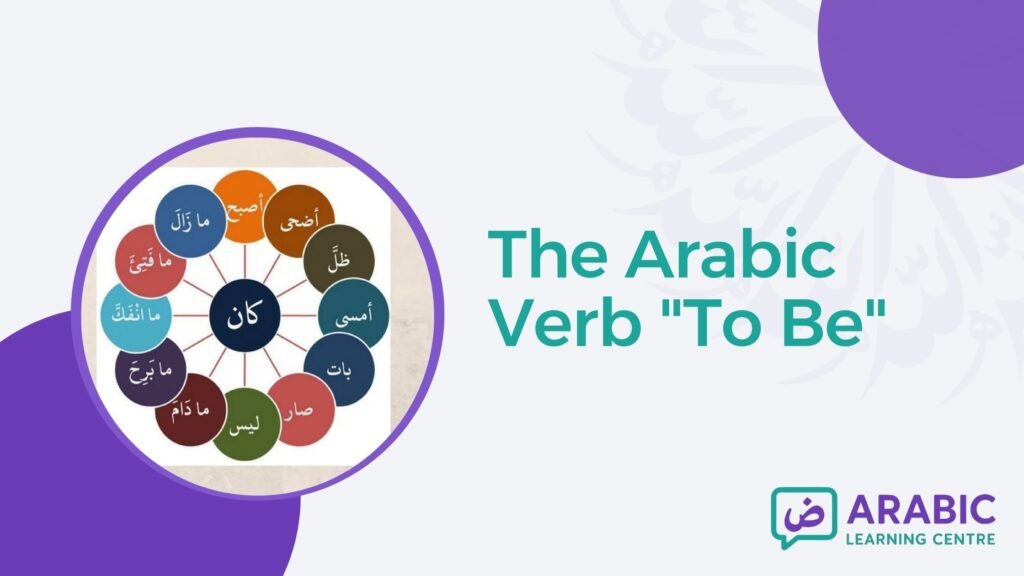
What Are the Sisters of Kāna — Akhawāt Kāna?
The sisters of kāna (akhawāt kāna) are a group of Arabic verbs that function grammatically like kāna — they enter a nominal sentence, take the subject as their grammatical subject (nominative), and pull the predicate into the accusative case. Each carries a distinct meaning but shares the same grammatical impact.
| Verb | Transliteration | Literal Meaning |
| كَانَ | kāna | was |
| أَصْبَحَ | aṣbaḥa | became (in the morning) / became |
| أَمْسَى | amsā | became (in the evening) |
| أَضْحَى | aḍḥā | became (in the forenoon) |
| ظَلَّ | ẓalla | remained / continued to be |
| بَاتَ | bāta | spent the night / became (at night) |
| صَارَ | ṣāra | became |
| لَيْسَ | laysa | is not (negation) |
| مَا زَالَ | mā zāla | still is / continues to be |
| مَا دَامَ | mā dāma | as long as |
لَيْسَ (laysa — “is not”) deserves special attention because it functions in the present tense where kāna does not, making it one of the most frequently used verbs in modern Arabic speech.
لَيْسَ الأَمْرُ صَعْبًا
laysa al-amru ṣa’ban
The matter is not difficult.
Understanding the verbal sentence in Arabic and the nominal sentence structure together gives learners the complete picture of how Arabic constructs its core statements.
Practice Exercises of the Arabic Verb “To Be”
Theory without application does not produce fluency. Work through these exercises to consolidate your understanding of كَانَ conjugation and its grammatical effects.
Exercise 1 — Translate into Arabic Using Kāna
- The house was big.
- She was a doctor.
- We were tired.
- The weather will be cold.
- I was not present.
Answers:
- كَانَ البَيْتُ كَبِيرًا (kāna al-baytu kabīran)
- كَانَتْ طَبِيبَةً (kānat ṭabībatan)
- كُنَّا مُتْعَبِينَ (kunnā mut’abīna)
- سَيَكُونُ الجَوُّ بَارِدًا (sa-yakūnu al-jawwu bāridan)
- لَمْ أَكُنْ حَاضِرًا (lam akun ḥāḍiran)
Exercise 2 — Identify the Error
Each sentence below contains a grammar mistake. Find and correct it.
- كَانَ المُعَلِّمُ مَاهِرٌ — What is wrong with the predicate ending?
- كَانَتْ مَرِيضًا — What is wrong with the pronoun?
Answers:
- The predicate مَاهِرٌ must be accusative: مَاهِرًا (māhiran) — kāna pulls the predicate into the accusative case.
- مَرِيضًا is masculine; kānat is feminine. The correct form is كَانَ مَرِيضًا (kāna marīḍan).
Students preparing for structured grammar practice will benefit from reviewing harakat in Arabic — understanding case vowels is essential for applying kāna correctly in writing and reading.
Our Students Reviews
Read also: How to Memorize Arabic Verb Forms?
Start Learning Arabic Grammar with Certified Instructors at The Arabic Learning Centre
Mastering كَانَ and the Arabic verb “to be” is one of the clearest early milestones in Arabic grammar — and it opens the door to reading complex sentences, understanding Quranic Arabic, and expressing ideas across time.
At The Arabic Learning Centre, our Arabic Grammar Course is built by experienced instructors who teach exactly these structures — with personalized 1-on-1 sessions, flexible 24/7 scheduling, and a structured curriculum designed for non-Arabic speakers from day one.
Why learn with us:
- Certified native Arabic instructors
- Personalized 1-on-1 online sessions
- Flexible scheduling — 24/7 availability
- Free trial lesson — no commitment required
- Structured progress tracking from beginner to advanced
Book your free trial lesson and start building real Arabic grammar confidence today. Insha’Allah, it will be one of the most rewarding steps you take in your Arabic learning.
Check out our top courses in Arabic and choose the course you need to start learning Arabic today:
- Arabic Course for Beginners
- Arabic Script Writing Course
- Arabic Speaking Course
- Learn Arabic Letters for Tajweed
- Learning Arabic Grammar
- Arabic Vocabulary Course
- Fusha Arabic Course
- Classical Arabic Course
- Arabic Course for Islamic Studies
- Quranic Arabic Course
- Learn Arabic for New Muslims
Start with a FREE trial class and enhance your Arabic language skills

Conclusion
The Arabic verb “to be” operates across three registers: absent in the present tense (zero-copula), fully conjugated as كَانَ in the past, and expressed through يَكُونُ and its derivatives in the future. Each register follows consistent grammatical rules that learners can internalise with structured practice.
The grammatical impact of كَانَ — pulling the predicate into the accusative case — is not a minor technicality. It shapes how you read every historical text, every Quranic verse with kāna, and every complex Arabic sentence that locates a state in time.
Learning this verb properly, with its full conjugation chart and its sisters, positions you to understand Arabic grammar at the structural level — not just the surface level. That depth is what separates learners who plateau from learners who progress steadily toward genuine fluency.
Frequently Asked Questions About the Arabic Verb “To Be”
What Is the Difference Between Kāna and Laysa in Arabic?
كَانَ (kāna) means “was” and operates in the past tense. لَيْسَ (laysa) means “is not” and functions in the present tense as a negating verb. Both share the same grammatical property of pulling the predicate into the accusative case. Laysa is the primary tool for negating present-tense nominal sentences in Arabic.
How Do I Conjugate Kāna for Feminine Subjects?
For a feminine singular subject, the correct form is كَانَتْ (kānat). For feminine plural, it is كُنَّ (kunna). The tā’ marbūṭah pattern in third-person feminine conjugations follows the same gender agreement rules as all Arabic verbal sentences — agreement with the subject in gender and number.
Why Does the Predicate After Kāna Change Its Vowel Ending?
When كَانَ enters a nominal sentence, it functions as a verb governing that sentence. Under Arabic grammar (nahw) rules, the predicate of kāna (khabar kāna) becomes the object of the verb in a grammatical sense, shifting to the accusative case marked by fatḥah (ـًا for indefinite or ـَ for definite). This is a core rule of كَانَ وَأَخَوَاتُهَا studied in all classical Arabic curricula.