 Arabic Grammar
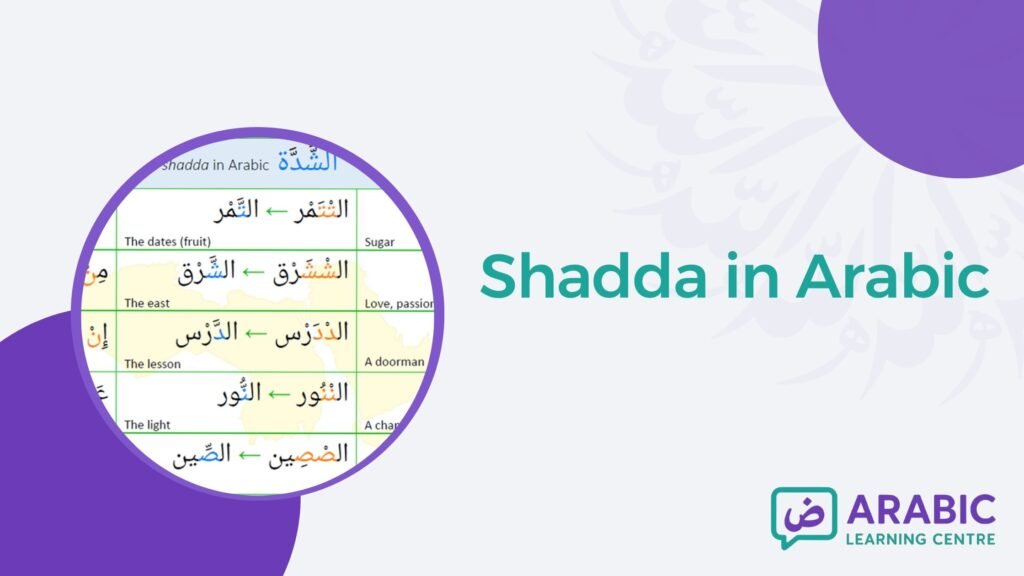
Shadda in Arabic (الشَّدَّة) is a diacritical mark written as a small “w” shape ( ّ ) placed above a letter to indicate that the consonant is doubled — pronounced with a brief hold and then released with emphasis. It is not an optional stylistic mark. The shadda changes meaning entirely, and mispronouncing it is one of the most common — and consequential — errors Arabic learners make.
Without the shadda, درَس (darasa) means “he studied.” With it, دَرَّسَ (darrasa) means “he taught.” Same root letters. Opposite roles in a classroom.
What Is Shadda in Arabic and Why Does It Matter So Much?
Shadda ( ّ ) in Arabic is the diacritical mark that signals gemination — the doubling of a consonant sound. When a letter carries a shadda, the speaker must articulate that consonant twice: once to close the sound and once to release it. This produces a noticeably elongated, emphatic consonant that Arabic ears hear as two distinct beats.
In classical Arabic grammar (النَّحْو An-Naḥw), this process is called تَضْعِيف (tad’īf) — intensification or doubling.
The shadda is not a vowel. It sits above a consonant and interacts with whichever vowel (ḥaraka) accompanies that consonant to produce the full syllable sound.
How the Shadda Functions in the Arabic Writing System?
Technically, a letter carrying a shadda represents two identical consonants: one with sukoon (سُكُون — a resting state with no vowel) and one with a vowel. For example:
مَدَّ
Madda
He stretched / extended
The دّ here represents دْ + دَ — the first dal has sukoon (no vowel), and the second dal carries a fatha. The shadda compresses both into one written letter with an intensified sound.
For more on sukoon and its role in Arabic phonology, see our guide on what sukoon is in Arabic.
Understanding this underlying structure is the key insight most learners miss. At The Arabic Learning Centre, our Arabic Grammar Course introduces the shadda within the broader harakat system so students understand not just what it does but why Arabic phonology demands it.
Start Learning Arabic Grammar with a Free Trial

Arabic Shadda Examples
The fastest way to understand arabic shadda is to see it in minimal pairs — words identical except for the shadda — and hear how dramatically meaning shifts.
| Without Shadda | With Shadda | Meaning Difference |
| دَرَسَ (darasa) | دَرَّسَ (darrasa) | “He studied” → “He taught” |
| كَسَرَ (kasara) | كَسَّرَ (kassara) | “He broke” → “He shattered repeatedly” |
| عَلِمَ (ʿalima) | عَلَّمَ (ʿallama) | “He knew” → “He taught/informed” |
| خَرَجَ (kharaja) | خَرَّجَ (kharraja) | “He went out” → “He graduated (others)” |
| جَمَعَ (jamaʿa) | جَمَّعَ (jammaʿa) | “He gathered” → “He assembled/collected intensively” |
This pattern — where adding a shadda to the middle root letter transforms a basic verb (Form I) into an intensive/causative verb (Form II) — is one of the most productive grammatical patterns in Arabic. It is called الفعل المضعَّف (al-fiʿl al-muḍaʿʿaf) or the doubled verb form.
Learners who understand this pattern early gain enormous vocabulary leverage. Every time they learn a Form I verb, they immediately understand its Form II counterpart by doubling the middle radical with a shadda.
For context on how harakat in Arabic — including the shadda — interact with the entire vowelling system, our dedicated guide walks through each mark in detail.
What Is a Shadda in Arabic Grammar?
A shadda in Arabic grammar is a tashkeel (تَشْكِيل — vocalization mark) that indicates consonantal gemination. It belongs to the category of al-ḥarakāt (الحَرَكَات — vowel and pronunciation markers), though it itself is not a vowel. It modifies how a consonant is articulated rather than the vowel sound attached to it.
The Two Positions the Shadda Occupies in a Word
The shadda can occur in two positions in a word. Arabic grammar avoids geminate consonants at the absolute beginning of a word because the cluster would be unpronounceable without a preceding vowel.
1. Word-medial position (most common)
This is where the shadda appears in verb intensification (Form II), verbal nouns (maṣādir), and many adjective patterns.
دَبَّرَ (dabbara) — “He planned/managed” (Form II of دَبَرَ)
2. Word-final position
Common in emphatic particles and Quranic Arabic.
إِنَّ (inna) — “Indeed / Verily” (a particle of emphasis) لَكِنَّ (lākinna) — “However / But indeed”
These particles — إِنَّ، أَنَّ، لَكِنَّ، كَأَنَّ، لَعَلَّ — are known as أَخَوَات إِنَّ (akhawāt inna, “the sisters of inna”) and every one of them carries a final shadda. They are studied in depth in classical Nahw and appear constantly in Quranic Arabic.
Shots Videos from Our Courses
How to Type Shadda in Arabic Keyboard?
Learning to type the shadda on an Arabic keyboard requires a dedicated key, typically Shift+ذ or Shift + ~ on standard Arabic layouts.
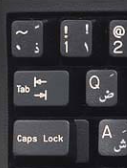
The correct typing sequence is:
- Type the base letter (e.g., د)
- Then press Shift+ذ or Shift + ~ to attach the shadda above it → دّ
- Then type the accompanying vowel (fatha, kasra, or damma) if needed → دَّ
Students who are building their Arabic typing skills alongside their grammar work benefit greatly from our learn to read Arabic course, which addresses script recognition alongside digital literacy in Arabic.
Read also: Arabic Grammar Exercises
Arabic Words with Shadda: Categories You Will Encounter Most
There are predictable categories where arabic words with shadda cluster. Recognizing these categories helps learners anticipate and correctly pronounce the shadda in new vocabulary.
1. Form II Verbs (الفعل من الباب الثاني)
Form II verbs are produced by doubling the second radical (middle letter) of a three-letter root. The shadda on the middle letter is the defining feature.
صَلَّى (ṣallā) — “He prayed” (intensive form of prayer) نَزَّلَ (nazzala) — “He sent down gradually” عَظَّمَ (ʿaẓẓama) — “He glorified / magnified”
2. Particles and Connectors
إِنَّ (inna) — “Verily / Indeed” أَنَّ (anna) — “That / Indeed that” لَعَلَّ (laʿalla) — “Perhaps / Maybe”
3. Relative Pronouns
الَّذِي (alladhī) — “Who / Which (masculine singular)” الَّتِي (allatī) — “Who / Which (feminine singular)” الَّذِينَ (alladhīna) — “Who / Which (masculine plural)”
The لّ in these relative pronouns carries a shadda because the definite article ال (al-) assimilates into the following lam, producing a doubled consonant. This is called الإدغام (al-idghām — assimilation/merging), a concept also essential to Tajweed recitation rules.
Our Students Reviews
How to Pronounce Arabic Words with Shadda Correctly?
Correct Arabic shadda pronunciation is the area where The Arabic Learning Centre’s instructors observe the most persistent errors among non-native learners. Most beginners either skip the doubled consonant entirely or produce a single elongated consonant without the characteristic “hold-and-release” quality.
The Physical Mechanics of Geminate Consonant Pronunciation
Gemination in Arabic requires the speaker to:
- Approach the consonant and hold the articulatory position for a brief beat (approximately one mora — the length of a short vowel)
- Release the consonant with the accompanying vowel, creating an audible “doubling” effect
Think of the difference between the English “unknown” (un-known — where the n is held across the syllable boundary) and “unown” (no held consonant). Arabic gemination works on this same doubling principle but with much greater regularity and phonemic importance.
بَدَّلَ (baddala) — “He changed / substituted”
Here the دّ requires: ba → hold the d → release da → la. Learners who skip the hold produce bādala, which sounds like a completely different word.
Our Arabic pronunciation course works through exactly this kind of articulatory detail with certified instructors who listen for and correct gemination errors in real time.
Begin Pronouncing Arabic Fluently with a Free Trial

Start Mastering the Shadda with Certified Instructors at The Arabic Learning Centre
The shadda is foundational. Get it right early, and every verb pattern, Quranic passage, and grammar structure you encounter will make more sense.
At The Arabic Learning Centre, our certified Arabic instructors offer:
- Personalized 1-on-1 sessions focused on your exact pronunciation needs
- Structured curriculum covering all harakat — including shadda — in sequence
- Flexible scheduling available 24/7 to fit your lifestyle
- Free trial lesson so you can experience our teaching approach before committing
Explore our Arabic Course for Beginners or our Arabic Grammar Course — both integrate shadda mastery from the very first lessons. Book your free trial today.
Check out our top courses in Arabic and choose the course you need to start learning Arabic today:
- Arabic Course for Beginners
- Arabic Script Writing Course
- Arabic Speaking Course
- Learn Arabic Letters for Tajweed
- Learning Arabic Grammar
- Arabic Vocabulary Course
- Fusha Arabic Course
- Classical Arabic Course
- Arabic Course for Islamic Studies
- Quranic Arabic Course
- Learn Arabic for New Muslims
Start with a FREE trial class and enhance your Arabic language skills

Read also: Jazm in Arabic
Conclusion
The shadda is one of those marks that separates learners who can read Arabic from learners who can understand Arabic. Recognizing it on the page is the first step — training your tongue and ear to produce and perceive the doubled consonant is the second, and it comes with consistent structured practice.
Every Form II verb, every particle of emphasis, every relative pronoun in the Quran carries a shadda. A learner who has internalized this mark is reading a fundamentally richer layer of the language than one who passes over it.
The path forward is systematic exposure — reading vocalized Arabic texts where the shadda is written, working with an instructor who corrects your pronunciation in real time, and eventually recognizing doubled consonants even in unvowelled Arabic. That last skill, Insha’Allah, comes sooner than most learners expect.
Frequently Asked Questions About Shadda in Arabic
What Is Shadda in Arabic and How Is It Different from Other Harakat?
Shadda ( ّ ) is a diacritical mark that doubles a consonant, making it distinctly different from other harakat (like fatha, kasra, and damma) that indicate vowel sounds. While vowel marks change the sound following a consonant, the shadda intensifies the consonant itself — indicating it must be pronounced twice in succession. It can appear alongside any vowel mark on the same letter.
Why Does the Shadda Change Word Meaning So Drastically in Arabic?
Because Arabic is a root-based language where meaning is carried primarily by consonantal patterns, doubling a consonant shifts the word into an entirely different morphological category. Adding a shadda to the middle letter of a three-letter root activates Form II — which typically signals intensification, repetition, or causation. The consonants stay the same; the grammatical role and semantic weight transform completely.
How Is the Shadda Used in Quranic Arabic?
The shadda appears with very high frequency in Quranic Arabic — in إِنَّ and its sisters, in relative pronouns like الَّذِي, in Form II verbs throughout the text, and in assimilation contexts (idghām) where adjacent consonants merge. Quranic recitation rules (Tajweed) treat the shadda as a mandatory sifah (characteristic) of the letter — skipping it in recitation is considered an error that can alter meaning.
Related Articles
Arabic Grammar