 Arabic Grammar
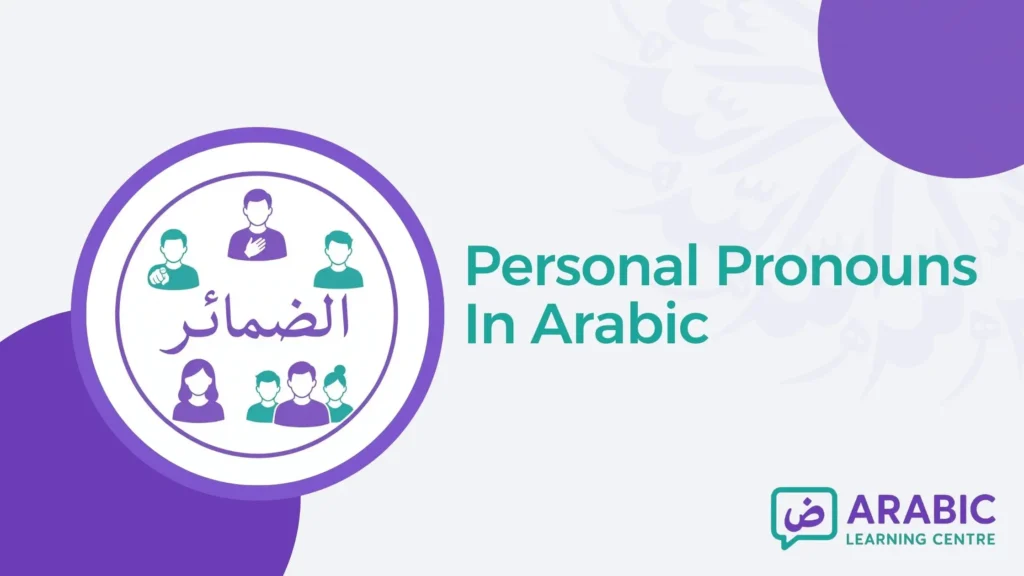
Personal pronouns are words used to refer to the speaker, the listener, or the person being spoken about. In English, these include words like I, you, he, she, we, and they.
In Arabic, personal pronouns are more detailed because they change according to person, gender, and number. This guide focuses only on standalone personal pronouns in Arabic, such as أنا, نحن, أنتَ, أنتِ, هو, and هي.
What Are Personal Pronouns In Arabic?
Personal pronouns are used instead of names or nouns to avoid repetition and make sentences clearer. In Arabic, they are called الضمائر الشخصية or simply الضمائر.
For example, instead of repeating a name many times, Arabic uses a pronoun to refer back to that person.
محمد طالب.
هو ذكي.
Muḥammad ṭālib. Huwa dhakiyy.
Muhammad is a student. He is smart.
Here, هو means he and replaces محمد.
In this article, we will focus on independent personal pronouns only:
| Person | Arabic Pronoun | Transliteration | English |
| First Person Singular | أنا | ana | I |
| First Person Plural | نحن | naḥnu | We |
| Second Person Masculine Singular | أنتَ | anta | You, masculine |
| Second Person Feminine Singular | أنتِ | anti | You, feminine |
| Second Person Dual | أنتما | antumā | You two |
| Second Person Masculine / Mixed Plural | أنتم | antum | You all |
| Second Person Feminine Plural | أنتنَّ | antunna | You all, feminine |
| Third Person Masculine Singular | هو | huwa | He |
| Third Person Feminine Singular | هي | hiya | She |
| Third Person Dual | هما | humā | They two |
| Third Person Masculine / Mixed Plural | هم | hum | They |
| Third Person Feminine Plural | هنَّ | hunna | They, feminine |
First Person Personal Pronouns In Arabic: I And We
First person pronouns are used when the speaker talks about themselves. Arabic has two main first person personal pronouns: أنا for one speaker and نحن for more than one speaker.
These pronouns do not change according to gender. A male and a female both use أنا for “I” and نحن for “we.”
أنا — Ana — I
This pronoun is used when one person speaks about themselves. It is one of the most basic forms in personal pronouns Arabic learners should study first.
Function:
أنا functions as a subject pronoun meaning I.
Usage in Arabic:
It is used by both male and female speakers. The pronoun itself does not change, but the word after it may change according to the speaker’s gender.
Examples:
أنا طالب.
Ana ṭālib.
I am a male student.
أنا طالبة.
Ana ṭālibah.
I am a female student.
أنا أدرس العربية.
Ana adrusu al-ʿarabiyyah.
I study Arabic.
Light Comparison:
أنا refers to one speaker, while نحن refers to the speaker with another person or group.
نحن — Naḥnu — We
This pronoun is used when the speaker refers to themselves with others. It can refer to two people or more than two people.
Function:
نحن functions as a subject pronoun meaning we.
Usage in Arabic:
It is used for male groups, female groups, and mixed groups. The pronoun stays the same, but the noun or adjective after it may change according to the group.
Examples:
نحن طلاب.
Naḥnu ṭullāb.
We are students.
نحن أصدقاء.
Naḥnu aṣdiqāʾ.
We are friends.
نحن نتعلم العربية.
Naḥnu nataʿallam al-ʿarabiyyah.
We are learning Arabic.
Light Comparison:
نحن means “we,” while أنا means “I.” Arabic uses نحن for both two people and larger groups.
Second Person Personal Pronouns In Arabic
Second person pronouns are used when speaking directly to someone. Arabic has several forms for “you” because it distinguishes between masculine, feminine, dual, and plural.
This is different from English, where “you” can refer to one person, two people, or a group without changing form.
أنتَ — Anta — You Masculine Singular
This pronoun is used when speaking to one male. It is one of the most common Arabic personal pronouns for direct speech.
Function:
أنتَ functions as a subject pronoun meaning you for one male.
Usage in Arabic:
It is used when addressing a male directly. The adjective, noun, or verb connected to it usually follows the masculine form.
Examples:
أنتَ طالب.
Anta ṭālib.
You are a male student.
أنتَ ذكي.
Anta dhakiyy.
You are intelligent, speaking to a male.
أنتَ تدرس العربية.
Anta tadrusu al-ʿarabiyyah.
You study Arabic, speaking to a male.
Light Comparison:
أنتَ is used for one male, while أنتِ is used for one female.
أنتِ — Anti — You Feminine Singular
This pronoun is used when speaking to one female. It is the feminine version of أنتَ.
Function:
أنتِ functions as a subject pronoun meaning you for one female.
Usage in Arabic:
It is used when addressing a female directly. The noun, adjective, or verb connected to it usually follows the feminine form.
Examples:
أنتِ طالبة.
Anti ṭālibah.
You are a female student.
أنتِ ذكية.
Anti dhakiyyah.
You are intelligent, speaking to a female.
أنتِ تدرسين العربية.
Anti tadrusīn al-ʿarabiyyah.
You study Arabic, speaking to a female.
Light Comparison:
أنتِ is used for one female, while أنتَ is used for one male.
أنتما — Antumā — You Two
This pronoun is used when speaking to two people. Arabic has a special dual form, while English usually uses “you” for both one person and two people.
Function:
أنتما functions as a subject pronoun meaning you two.
Usage in Arabic:
It can be used for two males, two females, or a mixed pair. The surrounding noun, adjective, or verb may show whether the two people are masculine or feminine.
Examples:
أنتما طالبان.
Antumā ṭālibān.
You two are male students.
أنتما طالبتان.
Antumā ṭālibatān.
You two are female students.
أنتما في البيت.
Antumā fī al-bayt.
You two are in the house.
Light Comparison:
أنتما is used for exactly two people, while أنتَ and أنتِ are singular, and أنتم or أنتنَّ are plural.
أنتم — Antum — You Plural Masculine Or Mixed
This pronoun is used when speaking to a group of males or a mixed group. It is the common plural “you” form for masculine or mixed groups.
Function:
أنتم functions as a subject pronoun meaning you all.
Usage in Arabic:
It is used for three or more people when the group is male or mixed. It is not normally used for an all-female group.
Examples:
أنتم طلاب.
Antum ṭullāb.
You are students, speaking to males or a mixed group.
أنتم في الفصل.
Antum fī al-faṣl.
You are in the classroom.
أنتم تدرسون العربية.
Antum tadrusūn al-ʿarabiyyah.
You all study Arabic.
Light Comparison:
أنتم is plural masculine or mixed, while أنتنَّ is plural feminine.
أنتنَّ — Antunna — You Plural Feminine
This pronoun is used when speaking to a group of females. It is specific and should be used only when the whole group is feminine.
Function:
أنتنَّ functions as a subject pronoun meaning you all for females.
Usage in Arabic:
It is used for three or more females. The sentence words connected to it usually take feminine plural agreement.
Examples:
أنتنَّ طالبات.
Antunna ṭālibāt.
You are female students.
أنتنَّ معلمات.
Antunna muʿallimāt.
You are female teachers.
أنتنَّ تدرسن العربية.
Antunna tadrusna al-ʿarabiyyah.
You all study Arabic, speaking to females.
Light Comparison:
أنتنَّ is for an all-female group, while أنتم is for males or mixed groups.
Shots Videos from Our Courses
Take Your Personal Pronouns In Arabic To The Next Level
Learning personal pronouns in Arabic like أنا، أنتَ، أنتِ، هو، وهي is a great start, but real fluency comes when you understand how these pronouns work inside full Arabic sentence structures. This is where the Arabic Learning Centre Arabic Grammar Course makes the difference.
Instead of learning pronouns in isolation, you will see how they connect with verbs, nouns, and sentence patterns through structured Arabic grammar lessons. This helps you move from simply recognising personal pronouns in Arabic to using them naturally and confidently in speaking and writing.
Join the course today and turn your grammar knowledge into real Arabic communication skills.
Third Person Personal Pronouns In Arabic: He, She, And They
Third person pronouns are used when speaking about someone or something. Arabic gives different forms for masculine, feminine, dual, and plural.
These pronouns are used when the person or group is not being directly addressed, but is being discussed.
هو — Huwa — He
This pronoun is used for one male. It is also used with grammatically masculine nouns in Arabic.
Function:
هو functions as a subject pronoun meaning he.
Usage in Arabic:
It refers to one male person or a masculine noun. The sentence usually follows masculine agreement.
Examples:
هو طالب.
Huwa ṭālib.
He is a student.
هو ذكي.
Huwa dhakiyy.
He is smart.
هو يقرأ الكتاب.
Huwa yaqraʾ al-kitāb.
He reads the book.
Light Comparison:
هو is masculine singular, while هي is feminine singular.
هي — Hiya — She
This pronoun is used for one female. It is also used with grammatically feminine nouns in Arabic.
Function:
هي functions as a subject pronoun meaning she.
Usage in Arabic:
It refers to one female person or a feminine noun. The words connected to it usually follow feminine agreement.
Examples:
هي طالبة.
Hiya ṭālibah.
She is a student.
هي مصرية.
Hiya miṣriyyah.
She is Egyptian.
هي تقرأ القرآن.
Hiya taqraʾ al-Qurʾān.
She reads the Quran.
Light Comparison:
هي is feminine singular, while هو is masculine singular.
هما — Humā — They Two
This pronoun is used for two people or two things. It is the third person dual pronoun in Arabic.
Function:
هما functions as a subject pronoun meaning they two.
Usage in Arabic:
It can refer to two males, two females, or two things. The following noun or verb may show the gender more clearly.
Examples:
هما في البيت.
Humā fī al-bayt.
They two are in the house.
هما طالبان.
Humā ṭālibān.
They two are male students.
هما طالبتان.
Humā ṭālibatān.
They two are female students.
Light Comparison:
هما is dual, while هم and هنَّ are plural.
هم — Hum — They Masculine Or Mixed
This pronoun is used for a group of males or a mixed group. It is one of the most common third person plural pronouns in Arabic.
Function:
هم functions as a subject pronoun meaning they.
Usage in Arabic:
It refers to three or more males, or to a mixed group of males and females.
Examples:
هم طلاب.
Hum ṭullāb.
They are students.
هم في المدرسة.
Hum fī al-madrasah.
They are at school.
هم يدرسون العربية.
Hum yadrusūn al-ʿarabiyyah.
They study Arabic.
Light Comparison:
هم is masculine or mixed plural, while هنَّ is feminine plural.
هنَّ — Hunna — They Feminine
This pronoun is used for a group of females. It is the feminine plural third person pronoun.
Function:
هنَّ functions as a subject pronoun meaning they for females.
Usage in Arabic:
It refers to three or more females. The connected noun, adjective, or verb usually follows feminine plural agreement.
Examples:
هنَّ طالبات.
Hunna ṭālibāt.
They are female students.
هنَّ معلمات.
Hunna muʿallimāt.
They are female teachers.
هنَّ في الفصل.
Hunna fī al-faṣl.
They are in the classroom.
Light Comparison:
هنَّ is feminine plural, while هم is masculine or mixed plural.
The Function Of Personal Pronouns In Arabic Sentences
Personal pronouns have a clear function in Arabic sentences. They identify who is speaking, who is being addressed, and who or what is being discussed.
In this article, the function focuses only on independent personal pronouns, not attached pronouns or possessive endings.
Personal Pronouns Replace Names And Nouns
This is the most basic function of personal pronouns. They prevent repetition and make speech more natural.
Example:
فاطمة طالبة.
هي مجتهدة.
Fāṭimah ṭālibah. Hiya mujtahidah.
Fatimah is a student. She is hardworking.
Here, هي replaces فاطمة.
Personal Pronouns Show The Speaker
Some pronouns show who is speaking. These are first person pronouns.
Examples:
أنا أتعلم العربية.
Ana ataʿallam al-ʿarabiyyah.
I am learning Arabic.
نحن نحب العربية.
Naḥnu nuḥibb al-ʿarabiyyah.
We love Arabic.
Personal Pronouns Show The Listener
Some pronouns show who is being addressed. These are second person pronouns.
Examples:
أنتَ طالب.
Anta ṭālib.
You are a male student.
أنتِ طالبة.
Anti ṭālibah.
You are a female student.
Personal Pronouns Show The Person Being Discussed
Some pronouns refer to someone being talked about. These are third person pronouns.
Examples:
هو معلم.
Huwa muʿallim.
He is a teacher.
هي معلمة.
Hiya muʿallimah.
She is a teacher.
Usage In Arabic
Usage in Arabic depends on the sentence type and the level of clarity needed. Personal pronouns can appear clearly in a sentence, but sometimes the verb already shows the subject.
This section explains how standalone personal pronouns are naturally used in Arabic sentences.
Personal Pronouns In Nominal Sentences
Nominal sentences often begin with a noun or pronoun. In this structure, personal pronouns are very common.
Examples:
أنا طالب.
Ana ṭālib.
I am a student.
هو طبيب.
Huwa ṭabīb.
He is a doctor.
هي معلمة.
Hiya muʿallimah.
She is a teacher.
Personal Pronouns Before Verbs
Personal pronouns can appear before verbs for clarity or emphasis. However, Arabic verbs often already show the subject through their form.
Examples:
أنا أدرس.
Ana adrusu.
I study.
نحن نكتب.
Naḥnu naktub.
We write.
هم يقرأون.
Hum yaqraʾūn.
They read.
Personal Pronouns For Emphasis
Arabic sometimes uses the pronoun even when the sentence can work without it. This gives emphasis or makes the subject clearer.
Example:
أحب العربية.
Uḥibb al-ʿarabiyyah.
I love Arabic.
أنا أحب العربية.
Ana uḥibb al-ʿarabiyyah.
I love Arabic.
The second sentence emphasizes I more clearly.
Personal Pronouns With Gender Agreement
Arabic pronouns often affect the noun, adjective, or verb that follows them. This is why gender agreement is important.
Examples:
هو ذكي.
Huwa dhakiyy.
He is smart.
هي ذكية.
Hiya dhakiyyah.
She is smart.
أنتَ طالب.
Anta ṭālib.
You are a male student.
أنتِ طالبة.
Anti ṭālibah.
You are a female student.
Characteristics Of Personal Pronouns In Arabic
Arabic personal pronouns have several characteristics that make them more specific than English pronouns. These characteristics help learners understand why Arabic has many forms for words like “you” and “they.”
The most important characteristics are person, gender, number, and sentence agreement.
They Change By Person
Arabic personal pronouns change depending on whether the sentence refers to the speaker, the listener, or another person. This is called first, second, and third person.
Examples:
أنا = I
أنتَ = you, masculine
هو = he
They Change By Gender
Arabic distinguishes between masculine and feminine forms in second and third person pronouns. This is a major difference from English.
Examples:
أنتَ
Anta
You, masculine
أنتِ
Anti
You, feminine
هو
Huwa
He
هي
Hiya
She
They Change By Number
Arabic has singular, dual, and plural forms. The dual is used for exactly two people or things.
Examples:
أنتَ
Anta
You, one male
أنتما
Antumā
You two
أنتم
Antum
You all
They Can Show Masculine, Feminine, Or Mixed Groups
Arabic uses masculine plural forms for male groups and mixed groups. Feminine plural forms are used for all-female groups.
Examples:
هم طلاب.
Hum ṭullāb.
They are students, masculine or mixed group.
هنَّ طالبات.
Hunna ṭālibāt.
They are female students.
They Affect The Words Around Them
Personal pronouns often affect the gender and number of nouns, adjectives, and verbs around them. This makes agreement an important part of Arabic grammar.
Examples:
هو معلم.
Huwa muʿallim.
He is a teacher.
هي معلمة.
Hiya muʿallimah.
She is a teacher.
Personal Pronouns Arabic Comparison
A short comparison helps learners see the relationship between similar pronouns. This is especially useful for comparing masculine and feminine forms or singular, dual, and plural forms.
The table below compares the closest personal pronoun forms side by side.
| Function | Singular | Dual | Plural |
| First Person | أنا | نحن | نحن |
| Second Person Masculine | أنتَ | أنتما | أنتم |
| Second Person Feminine | أنتِ | أنتما | أنتنَّ |
| Third Person Masculine | هو | هما | هم |
| Third Person Feminine | هي | هما | هنَّ |
Important comparisons:
- أنا means “I,” while نحن means “we.”
- أنتَ is for one male, while أنتِ is for one female.
- أنتما is for exactly two people.
- أنتم is for males or mixed groups.
- أنتنَّ is for female groups.
- هو means “he,” while هي means “she.”
- هما means “they two.”
- هم means “they” for males or mixed groups.
- هنَّ means “they” for females.
Build Real Arabic Confidence With Adult Arabic Classes
Studying personal pronouns in Arabic gives you the basics, but using them confidently needs guided practice. Through Arabic Classes for Adults at Arabic Learning Centre, learners practise Arabic in a clear, structured way that suits adult goals and schedules.
The course helps you understand how pronouns fit into everyday sentences, conversations, reading, and writing, so grammar becomes practical instead of memorised.
Start learning personal pronouns in Arabic the right way—join Arabic Classes for Adults at Arabic Learning Centre today and build real confidence in using Arabic.
Exercises On Personal Pronouns In Arabic
Exercises help learners test whether they understand the correct pronoun form. The following exercises focus only on standalone personal pronouns.
Try to answer before checking the answer section.
Exercise 1: Choose The Correct Personal Pronoun
This exercise helps you choose the right pronoun according to gender and number. Read the English meaning first, then select the correct Arabic pronoun.
- ___ طالب.
He is a student.
a) هو
b) هي
c) هم - ___ طالبة.
She is a student.
a) هو
b) هي
c) نحن - ___ طالبات.
They are female students.
a) هم
b) هنَّ
c) هما - ___ في البيت.
They two are in the house.
a) هما
b) هم
c) هنَّ - ___ تدرسين العربية.
You study Arabic, speaking to a female.
a) أنتَ
b) أنتِ
c) أنتم
Exercise 2: Match The Pronoun With The Meaning
This exercise helps you recognize each personal pronoun quickly. Match each Arabic pronoun with its English meaning.
- أنا
- نحن
- أنتَ
- أنتِ
- هو
- هي
- هما
- هم
- هنَّ
Meanings:
a) She
b) I
c) They two
d) You, masculine
e) We
f) They, feminine
g) He
h) They, masculine or mixed
i) You, feminine
Exercise 3: Translate Into Arabic
This exercise helps you use personal pronouns in complete Arabic sentences. Translate each sentence using the correct standalone personal pronoun.
- I am a teacher.
- We are friends.
- You are a student, masculine.
- You are a student, feminine.
- He is smart.
- She is Egyptian.
- They two are in the house.
- They are students, masculine or mixed.
- They are female students.
- You all study Arabic, masculine or mixed group.
Exercise Answers
The answers below show the correct personal pronouns and sentence forms. Review the answers carefully to notice the differences between masculine, feminine, dual, and plural forms.
Use this section as a quick revision after completing the exercises.
Answers For Exercise 1
These answers focus on choosing the correct standalone personal pronoun. Notice how gender and number change the pronoun.
- هو طالب.
- هي طالبة.
- هنَّ طالبات.
- هما في البيت.
- أنتِ تدرسين العربية.
Answers For Exercise 2
These answers match each Arabic pronoun with its English meaning. This is useful for memorizing the basic personal pronoun group.
- أنا = b) I
- نحن = e) We
- أنتَ = d) You, masculine
- أنتِ = i) You, feminine
- هو = g) He
- هي = a) She
- هما = c) They two
- هم = h) They, masculine or mixed
- هنَّ = f) They, feminine
Answers For Exercise 3
These answers show how personal pronouns work in full Arabic sentences. Pay attention to gender agreement in the nouns and adjectives.
- أنا معلم.
Ana muʿallim.
I am a male teacher. - نحن أصدقاء.
Naḥnu aṣdiqāʾ.
We are friends. - أنتَ طالب.
Anta ṭālib.
You are a student, masculine. - أنتِ طالبة.
Anti ṭālibah.
You are a student, feminine. - هو ذكي.
Huwa dhakiyy.
He is smart. - هي مصرية.
Hiya miṣriyyah.
She is Egyptian. - هما في البيت.
Humā fī al-bayt.
They two are in the house. - هم طلاب.
Hum ṭullāb.
They are students, masculine or mixed. - هنَّ طالبات.
Hunna ṭālibāt.
They are female students. - أنتم تدرسون العربية.
Antum tadrusūn al-ʿarabiyyah.
You all study Arabic, masculine or mixed group.
Read Also: Education Vocabulary In Arabic
Our Students Reviews
Read Also: Possessive Pronouns In Arabic
Learn Arabic Pronouns Step By Step With Expert Guidance
Learning personal pronouns in Arabic is a strong first step, but real progress comes when you practise them in speaking, reading, and real sentence patterns. At Arabic Learning Centre, learners can build their Arabic step by step with structured lessons that make grammar clear, practical, and easy to use.
Whether you are learning أنا, أنتَ, أنتِ, هو, هي, or more advanced Arabic structures, the academy helps you move from memorising rules to using Arabic confidently in real communication.
Start your Arabic journey with: Arabic Learning Centre and turn every grammar rule into a skill you can actually use.
Courses We Offer:
- Online Arabic Classes for Kids
- Arabic Words for Kids
- Arabic Lessons for Kindergarten
- Arabic Elementary School
- Arabic Intermediate School
- Arabic High School
Conclusion
Personal pronouns in Arabic are essential because they show who is speaking, who is being addressed, and who is being discussed. They are more detailed than English pronouns because they change according to person, gender, and number.
The main standalone personal pronouns are أنا, نحن, أنتَ, أنتِ, أنتما, أنتم, أنتنَّ, هو, هي, هما, هم, and هنَّ. Once learners understand these forms, Arabic sentences become much easier to read, speak, and understand.
Read Also: She Her Pronouns And Gender Pronouns In Arabic
Frequently Asked Questions About Personal Pronouns In Arabic
This section answers common beginner questions about Arabic personal pronouns. It keeps the focus only on standalone personal pronouns, not possessive or attached pronouns.
Use these answers as a quick review after studying the main article.
What Are Personal Pronouns In Arabic?
Personal pronouns in Arabic are standalone words that refer to the speaker, listener, or person being discussed. Examples include أنا meaning “I,” أنتَ meaning “you” for a male, هو meaning “he,” and هي meaning “she.”
What Are The Main Personal Pronouns Arabic Learners Should Know?
The main personal pronouns Arabic learners should know are أنا, نحن, أنتَ, أنتِ, أنتما, أنتم, أنتنَّ, هو, هي, هما, هم, and هنَّ.
What Is The Difference Between أنتَ And أنتِ?
أنتَ is used when speaking to one male. أنتِ is used when speaking to one female.
What Is The Difference Between هو And هي?
هو means he and refers to one male. هي means she and refers to one female.
What Is The Difference Between هم And هنَّ?
هم means they for a masculine or mixed group. هنَّ means they for an all-female group.
Does Arabic Have A Pronoun For Two People?
Yes. Arabic has dual pronouns. أنتما means you two, and هما means they two.
Why Are Arabic Personal Pronouns More Detailed Than English?
Arabic personal pronouns are more detailed because they show gender and number. English uses “you” for many situations, but Arabic uses أنتَ, أنتِ, أنتما, أنتم, and أنتنَّ depending on who is being addressed.
Related Articles
Arabic Grammar