 Arabic Grammar
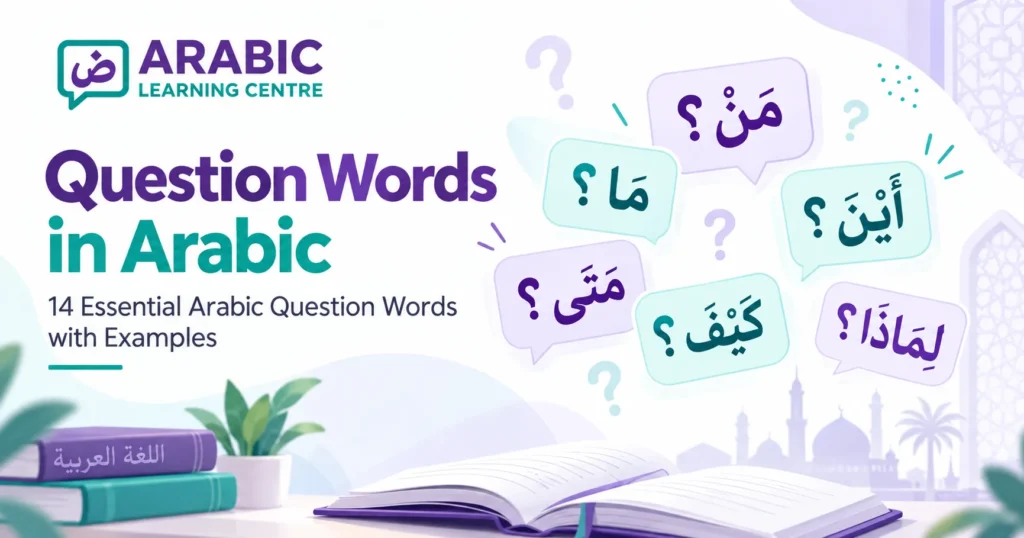
Interrogation in Arabic (الاسْتِفْهَام, al-istifhām) means asking to understand something you do not know. The word comes from the root ف-ه-م (f-h-m), “to understand,” so istifhām is literally “seeking understanding.”
Every Arabic question has two parts:
- The question word (أَدَاةُ الاسْتِفْهَام): the tool that signals a question, such as مَا or مَنْ.
- The thing asked about (المُسْتَفْهَمُ عَنْهُ): the person, object, place or idea you want to know.
In مَا اسْمُكَ؟ (mā ismuka? – What is your name?), مَا is the question word and اسْم (name) is what you are asking about.
Arabic grammarians split question words into two groups. Alongside them, learners use two very common compounds formed with the preposition لِ.
| Group | Arabic name | Members | Used for |
| Question particles | حَرْفَا الاسْتِفْهَام | هَلْ، أَ (the hamza) | Yes/no questions |
| Question nouns | أَسْمَاءُ الاسْتِفْهَام | مَنْ، مَا، مَاذَا، أَيْنَ، مَتَى، أَيَّانَ، كَيْفَ، كَمْ، أَيّ، أَنَّى | Questions that need specific information |
| Common compounds | لِ + question word | لِمَاذَا، لِمَنْ | Reason and ownership |
Only هَلْ and the hamza are true particles. Every other Arabic question word is grammatically a noun, which is why it takes a position in the sentence, such as subject or adverb.
لِمَاذَا and لِمَنْ are not separate question words in grammar books.
Each is a preposition joined to a question word. They are included in this list because learners use them so often that they are best memorised as whole units.
1. هَلْ (hal) – the yes/no question
Put هَلْ at the start of any statement to turn it into a yes/no question. It works like “Is…?”, “Are…?” or “Do…?” in English.
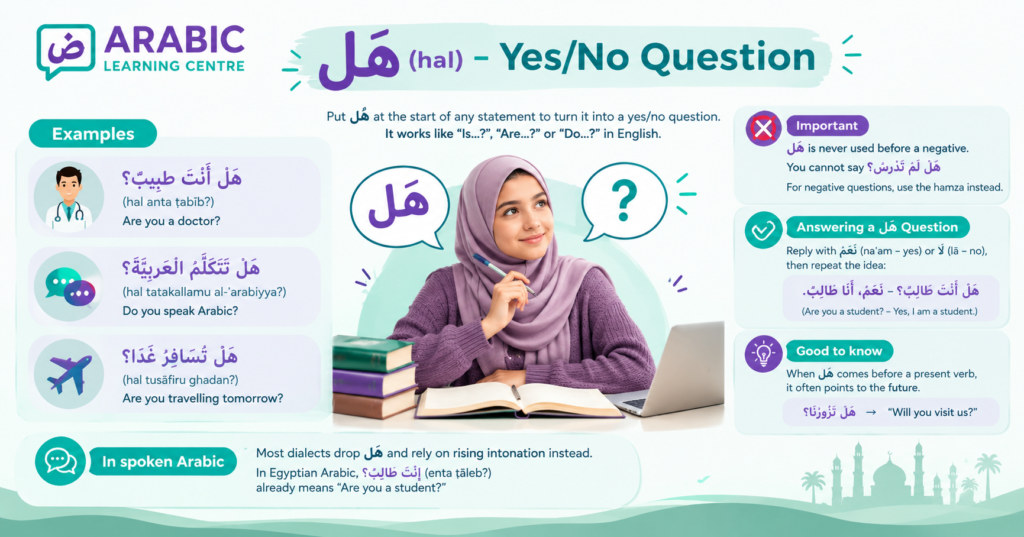
- هَلْ أَنْتَ طَبِيبٌ؟ (hal anta ṭabīb?) – Are you a doctor?
- هَلْ تَتَكَلَّمُ العَرَبِيَّةَ؟ (hal tatakallamu al-ʿarabiyya?) – Do you speak Arabic?
- هَلْ تُسَافِرُ غَدًا؟ (hal tusāfiru ghadan?) – Are you travelling tomorrow?
هَلْ is never used before a negative. You cannot say هَلْ لَمْ تَدْرُسْ؟ For negative questions, use the hamza instead.
Answering a هَلْ question: reply with نَعَمْ (naʿam – yes) or لَا (lā – no), then repeat the idea: هَلْ أَنْتَ طَالِبٌ؟ – نَعَمْ، أَنَا طَالِبٌ. (Are you a student? – Yes, I am a student.)
Good to know: when هَلْ comes before a present verb, it often points to the future.
هَلْ تَزُورُنَا؟ usually means “Will you visit us?”
In spoken Arabic: most dialects drop هَلْ and rely on rising intonation instead. In Egyptian Arabic, إِنْتَ طَالِب؟ (enta ṭāleb?) already means “Are you a student?”
Read also: What Are the Arabic Names of Each of the Five Pillars of Islam?
2. أَ (the hamza) – the flexible yes/no particle
The hamza (أَ) is attached directly to the first word of the question. Grammarians call it the original question tool, because it can do everything هَلْ does and more.
- أَتُرِيدُ أَنْ تَذْهَبَ؟ (a-turīdu an tadhhab?) – Do you want to go?
- أَلَيْسَ كَذَلِكَ؟ (a-laysa kadhālik?) – Isn’t that so?
- أَلَا تَدْرُسُ العَرَبِيَّةَ؟ (a-lā tadrusu al-ʿarabiyya?) – Don’t you study Arabic?
- أَشَايٌ أَمْ قَهْوَةٌ؟ (a-shāyun am qahwa?) – Tea or coffee?
Unlike هَلْ, the hamza can open negative questions and “this or that” questions with أَمْ (am – or).
Answering a negative question: to say “yes” to a negative question, use بَلَى (balā), not نَعَمْ. In Arabic, نَعَمْ confirms the negative statement itself.
- أَلَسْتَ طَالِبًا؟ – بَلَى، أَنَا طَالِبٌ. (Aren’t you a student? – Yes, I am a student.)
- أَلَسْتَ طَالِبًا؟ – نَعَمْ، لَسْتُ طَالِبًا. (Aren’t you a student? – Right, I am not a student.)
This is one of the most common mistakes learners make, because English uses “yes” for both meanings.
3. مَنْ (man) – Who?
مَنْ asks about people and other rational beings.
| Arabic | Pronunciation | English |
| مَنْ أَنْتَ؟ | man anta? | Who are you? |
| مَنْ كَتَبَ هَذِهِ الرِّوَايَةَ؟ | man kataba hādhihi ar-riwāya? | Who wrote this novel? |
| مَنْ يُسَاعِدُنِي؟ | man yusāʿidunī? | Who will help me? |
In spoken Arabic: “who” is مِين (mīn) in Egyptian, Levantine and most Gulf dialects.
Read also: Names of Animals in Arabic – Words, Plurals and Everyday Sentences
4. مَا (mā) – What? (without a verb)
مَا asks about things, ideas and definitions. It is most common in short questions with no verb, such as مَا اسْمُكَ؟. It can also come before a verb in formal Arabic, as in مَا تُرِيدُ؟ (What do you want?). For beginners, though, the simplest rule is to use مَا without a verb and مَاذَا with one.
Pronunciation note: the hamza at the start of words like اسْم and the definite article is a connecting hamza (هَمْزَةُ الوَصْل). It is silent when another word comes before it. So مَا اسْمُكَ؟ is pronounced mā-smuka, and كَمِ السَّاعَةُ؟ is pronounced kamis-sāʿa.
- مَا اسْمُكَ؟ (mā ismuka?) – What is your name?
- مَا هَذَا؟ (mā hādhā?) – What is this?
- مَا سَبَبُ غِيَابِكَ؟ (mā sababu ghiyābik?) – What is the reason for your absence?
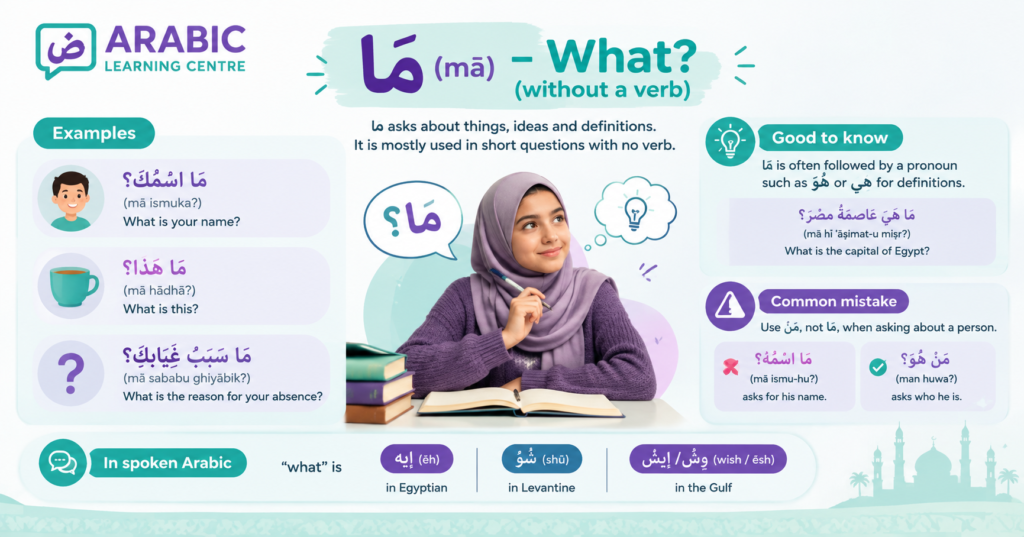
Good to know: مَا is often followed by a pronoun such as هُوَ or هِيَ for definitions: مَا هِيَ عَاصِمَةُ مِصْرَ؟ (What is the capital of Egypt?).
Common mistake: use مَنْ, not مَا, when asking about a person.
مَا اسْمُهُ؟ asks for his name, but مَنْ هُوَ؟ asks who he is.
In spoken Arabic: “what” is إِيه (ēh) in Egyptian, شُو (shū) in Levantine and وِشّ / إِيش (wish / ēsh) in the Gulf.
5. مَاذَا (mādhā) – What? (with a verb)
مَاذَا also means “what,” but it normally comes before a verb.
- مَاذَا تُرِيدُ؟ (mādhā turīd?) – What do you want?
- مَاذَا سَنَأْكُلُ غَدًا؟ (mādhā sa-naʾkulu ghadan?) – What will we eat tomorrow?
- مَاذَا دَرَسْتَ فِي الجَامِعَةِ؟ (mādhā darasta fī al-jāmiʿa?) – What did you study at university?
- مَاذَا حَدَثَ؟ (mādhā ḥadath?) – What happened?
The one common exception is مَاذَا عَنْ… (what about…?), which uses مَاذَا without a verb: مَاذَا عَنْكَ؟ (mādhā ʿanka?) – What about you? Women who want to develop their Arabic communication skills can also benefit from lessons designed around their individual level and learning goals.
Arabic Classes for Ladies provide a focused learning environment where students can practice vocabulary, questions, conversation, and everyday Arabic with structured guidance.
6. لِمَاذَا (limādhā) – Why?
لِمَاذَا is لِ (for) + مَاذَا (what), so it literally means “for what?”
| Arabic | Pronunciation | English |
| لِمَاذَا تُحِبُّ اللُّغَةَ العَرَبِيَّةَ؟ | limādhā tuḥibbu al-lugha al-ʿarabiyya? | Why do you love Arabic? |
| لِمَاذَا تَأَخَّرْتَ؟ | limādhā taʾakhkharta? | Why were you late? |
In formal Arabic, you will also meet the short form لِمَ (lima), as in لِمَ تَقُولُ ذَلِكَ؟ (Why do you say that?).
7. أَيْنَ (ayna) – Where?
أَيْنَ asks about the location of a person, object or event. The question word stays the same for men and women; only the pronoun or verb after it changes.
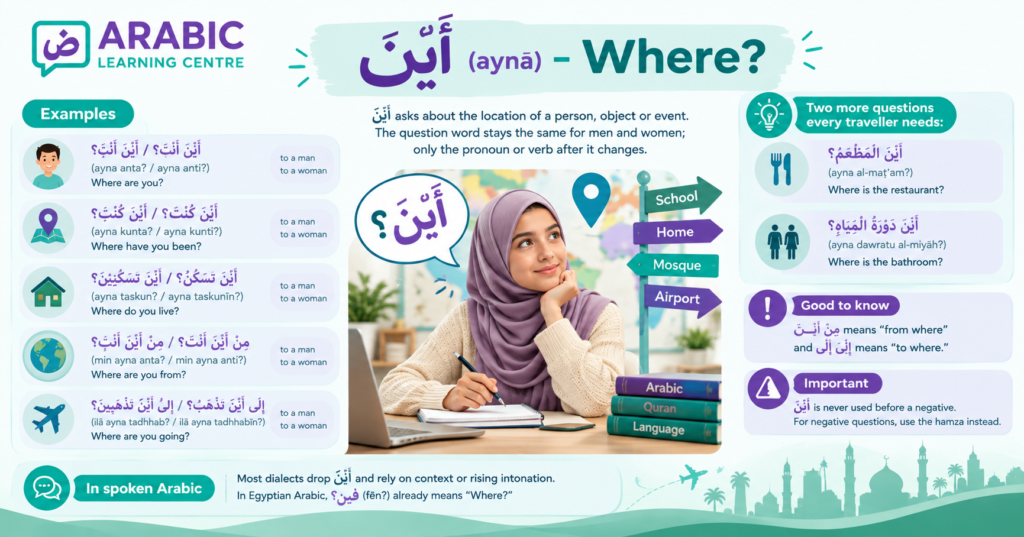
- Where are you? أَيْنَ أَنْتَ؟ (ayna anta?) to a man, أَيْنَ أَنْتِ؟ (ayna anti?) to a woman.
- Where have you been? أَيْنَ كُنْتَ؟ (ayna kunta?) to a man, أَيْنَ كُنْتِ؟ (ayna kunti?) to a woman.
- Where do you live? أَيْنَ تَسْكُنُ؟ (ayna taskun?) to a man, أَيْنَ تَسْكُنِينَ؟ (ayna taskunīn?) to a woman.
- Where are you from? مِنْ أَيْنَ أَنْتَ؟ (min ayna anta?) to a man, مِنْ أَيْنَ أَنْتِ؟ (min ayna anti?) to a woman.
- Where are you going? إِلَى أَيْنَ تَذْهَبُ؟ (ilā ayna tadhhab?) to a man, إِلَى أَيْنَ تَذْهَبِينَ؟ (ilā ayna tadhhabīn?) to a woman.
Two more questions every traveller needs:
- أَيْنَ المَطْعَمُ؟ (ayna al-maṭʿam?) – Where is the restaurant?
- أَيْنَ دَوْرَةُ المِيَاهِ؟ (ayna dawratu al-miyāh?) – Where is the bathroom?
Notice how مِنْ أَيْنَ means “from where” and إِلَى أَيْنَ means “to where.”
Don’t Just Take Our Word For It
Take a look inside our vibrant classes and see our students and teachers in action. Click below to watch our classroom experience:
8. مَتَى (matā) – When?
مَتَى asks about time, past or future. In many spoken dialects it sounds like “emta” or “imta.”
| Arabic | Pronunciation | English |
| مَتَى يَبْدَأُ الدَّرْسُ؟ | matā yabdaʾu ad-dars? | When does the lesson start? |
| مَتَى وَصَلْتَ؟ | matā waṣalta? | When did you arrive? |
| مَتَى تَتَخَرَّجُ؟ | matā tatakharraj? | When will you graduate? |
9. كَيْفَ (kayfa) – How?
كَيْفَ asks about manner or condition. The final “a” is often dropped in speech (kayf).
| Arabic | Pronunciation | English |
| كَيْفَ حَالُكَ؟ | kayfa ḥāluk? | How are you? |
| كَيْفَ يَعْمَلُ هَذَا الجِهَازُ؟ | kayfa yaʿmalu hādhā al-jihāz? | How does this device work? |
| كَيْفَ الطَّرِيقُ إِلَى بَيْتِكُمْ؟ | kayfa aṭ-ṭarīqu ilā baytikum? | What is the way to your house like? |
In spoken Arabic: Egyptians say إِزَّاي (izzāy), and Levantine speakers say كِيف (kīf).
10. كَمْ (kam) – How many? / How much?
كَمْ asks about number and amount. The noun after it is singular and in the accusative case (tamyīz).
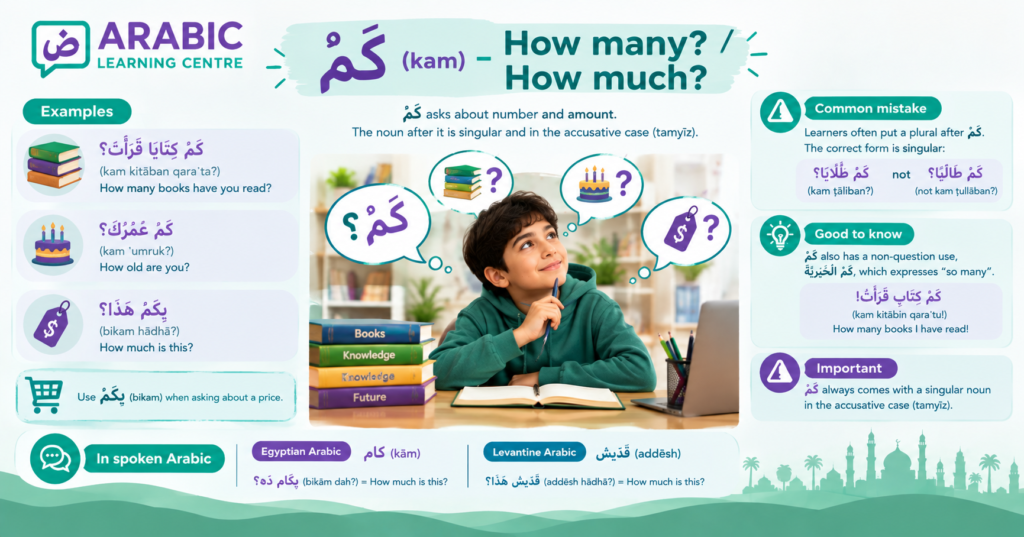
- كَمْ كِتَابًا قَرَأْتَ؟ (kam kitāban qaraʾta?) – How many books have you read?
- كَمْ عُمْرُكَ؟ (kam ʿumruk?) – How old are you?
- بِكَمْ هَذَا؟ (bikam hādhā?) – How much is this?
Use بِكَمْ (bikam, “for how much”) when you ask about a price.
Common mistake: learners often put a plural after كَمْ. The correct form is singular: كَمْ طَالِبًا؟ not كَمْ طُلَّابًا؟
Good to know: كَمْ also has a non-question use, كَمِ الخَبَرِيَّة, which expresses “so many”: كَمْ كِتَابٍ قَرَأْتُ! (How many books I have read!).
In spoken Arabic: Egyptians say كَام (kām), as in بِكَام دَه؟ (How much is this?). Levantine speakers often say قَدِّيش (addēsh).
11. أَيّ (ayy) – Which?
أَيّ asks you to choose from a group. It is always followed by a noun.
| Arabic | Pronunciation | English |
| أَيُّ كِتَابٍ تَقْرَأُ؟ | ayyu kitābin taqraʾ? | Which book are you reading? |
| فِي أَيِّ فُنْدُقٍ تَنْزِلُ؟ | fī ayyi funduqin tanzil? | Which hotel are you staying at? |
أَيّ is the only question word whose ending changes (ayyu, ayya, ayyi) depending on its role in the sentence. Once you are comfortable with the basic question words, learning more advanced Arabic grammar can help you understand how these words function in different sentence structures.
An Advanced Arabic Course can help learners move beyond memorized expressions and develop a deeper understanding of Arabic grammar and usage.

12. لِمَنْ (liman) – Whose?
لِمَنْ is not a separate question word but a compound: لِ (for / belonging to) + مَنْ (who). It asks “to whom does this belong?” and works like “whose” in English.
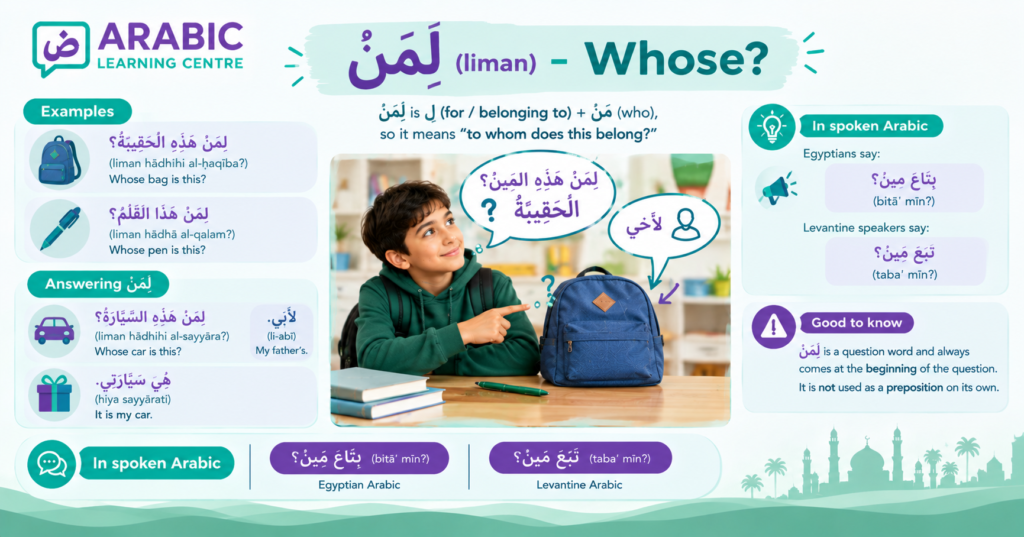
- لِمَنْ هَذِهِ الحَقِيبَةُ؟ (liman hādhihi al-ḥaqība?) – Whose bag is this?
- لِمَنْ هَذَا القَلَمُ؟ (liman hādhā al-qalam?) – Whose pen is this?
Answering لِمَنْ: use لِ + the owner, or a possessive ending: لِمَنْ هَذِهِ السَّيَّارَةُ؟ – لِأَبِي. (Whose car is this? – My father’s.) or هِيَ سَيَّارَتِي. (It is my car.)
In spoken Arabic: Egyptians say بِتَاع مِين؟ (bitāʿ mīn?), and Levantine speakers say تَبَع مِين؟ (tabaʿ mīn?).
13. أَيَّانَ (ayyāna) – When? (formal)
أَيَّانَ means “at what time,” like مَتَى, but it is formal and usually asks about great future events. You will meet it in the Quran and classical texts rather than in daily speech.
| Arabic | English |
| يَسْأَلُ أَيَّانَ يَوْمُ القِيَامَةِ (القيامة: 6) | He asks, “When is the Day of Resurrection?” |
| أَيَّانَ اللِّقَاءُ الخِتَامِيُّ لِلْمُؤْتَمَرِ؟ | When is the closing session of the conference? |
14. أَنَّى (annā) – How? / From where?
أَنَّى is a literary question word that means either “how” or “from where,” depending on context. It is rare in modern speech and appears mostly in the Quran and classical texts.
| Arabic | Meaning here | English |
| يَا مَرْيَمُ أَنَّى لَكِ هَذَا (آل عمران: 37) | From where | O Maryam, where did this come to you from? |
| رَبِّ أَنَّى يَكُونُ لِي وَلَدٌ (آل عمران: 47) | How | My Lord, how can I have a child? |
Arabic question words at a glance
Here’s a quick overview of the main Arabic question words and what each one is used to ask about:
| Arabic | Pronunciation | English | Asks about | |
| 1 | هَلْ | hal | Is / are / do? | Yes/no |
| 2 | أَ | a | Is / are / do? (also negative) | Yes/no, choices |
| 3 | مَنْ | man | Who? | People |
| 4 | مَا | mā | What? | Things, ideas (no verb) |
| 5 | مَاذَا | mādhā | What? | Things, actions (with a verb) |
| 6 | لِمَاذَا | limādhā | Why? | Reasons |
| 7 | أَيْنَ | ayna | Where? | Places |
| 8 | مَتَى | matā | When? | Time |
| 9 | كَيْفَ | kayfa | How? | Manner, state |
| 10 | كَمْ | kam | How many / how much? | Number, quantity |
| 11 | أَيّ | ayy | Which? | A choice from a group |
| 12 | لِمَنْ | liman | Whose? | Ownership |
| 13 | أَيَّانَ | ayyāna | When? (formal) | Major future events |
| 14 | أَنَّى | annā | How? / From where? | Manner, source, place |
Arabic question words with prepositions
Many Arabic questions start with a preposition joined to a question word. This gives you more precise questions without learning new vocabulary.
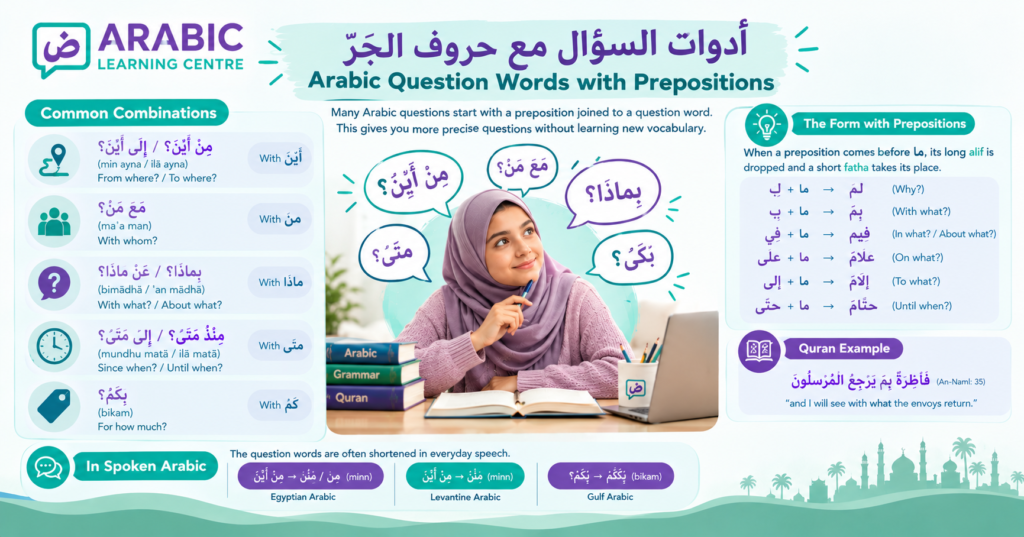
With أَيْنَ you get مِنْ أَيْنَ؟ (min ayna, from where?) and إِلَى أَيْنَ؟ (ilā ayna, to where?). With مَنْ you can ask مَعَ مَنْ؟ (maʿa man, with whom?). With مَاذَا you can ask بِمَاذَا؟ (bimādhā, with what?) and عَنْ مَاذَا؟ (ʿan mādhā, about what?).
For time, use مُنْذُ مَتَى؟ (mundhu matā, since when?) and إِلَى مَتَى؟ (ilā matā, until when?). For prices, use بِكَمْ؟ (bikam, for how much?). When a preposition comes before مَا, its long alif is dropped and a short fatha takes its place:
- لِ + مَا → لِمَ (Why?)
- بِ + مَا → بِمَ (With what?)
- فِي + مَا → فِيمَ (In what? / About what?)
- عَلَى + مَا → عَلَامَ (On what?)
- إِلَى + مَا → إِلَامَ (To what?)
- حَتَّى + مَا → حَتَّامَ (Until when?)
The Quran uses this form in فَنَاظِرَةٌ بِمَ يَرْجِعُ المُرْسَلُونَ (An-Naml: 35), “and I will see with what the envoys return.”
15 everyday Arabic questions to memorise
These Arabic questions come up in almost every first conversation, trip or class.
| Arabic | Pronunciation | English |
| مَا اسْمُكَ؟ / مَا اسْمُكِ؟ | mā ismuka? / mā ismuki? | What is your name? |
| كَيْفَ حَالُكَ؟ / كَيْفَ حَالُكِ؟ | kayfa ḥāluka? / kayfa ḥāluki? | How are you? |
| مِنْ أَيْنَ أَنْتَ؟ | min ayna anta? | Where are you from? |
| أَيْنَ تَسْكُنُ؟ | ayna taskun? | Where do you live? |
| كَمْ عُمْرُكَ؟ | kam ʿumruk? | How old are you? |
| مَاذَا تَعْمَلُ؟ | mādhā taʿmal? | What do you do (for work)? |
| هَلْ تَتَكَلَّمُ الإِنْجِلِيزِيَّةَ؟ | hal tatakallamu al-injilīziyya? | Do you speak English? |
| مَا مَعْنَى هَذِهِ الكَلِمَةِ؟ | mā maʿnā hādhihi al-kalima? | What does this word mean? |
| كَيْفَ أَقُولُ … بِالعَرَبِيَّةِ؟ | kayfa aqūlu … bil-ʿarabiyya? | How do I say … in Arabic? |
| كَمِ السَّاعَةُ؟ | kami as-sāʿa? | What time is it? |
| بِكَمْ هَذَا؟ | bikam hādhā? | How much is this? |
| أَيْنَ المَطْعَمُ؟ | ayna al-maṭʿam? | Where is the restaurant? |
| أَيْنَ دَوْرَةُ المِيَاهِ؟ | ayna dawratu al-miyāh? | Where is the bathroom? |
| إِلَى أَيْنَ تَذْهَبُ؟ | ilā ayna tadhhab? | Where are you going? |
| مَتَى يَفْتَحُ المَتْحَفُ؟ | matā yaftaḥu al-matḥaf? | When does the museum open? |
These everyday question patterns are also useful for young learners who are building their first Arabic vocabulary and practicing simple conversations. A structured Arabic Elementary School course can help children develop these foundations through age-appropriate lessons and regular practice.
Inside Our Classrooms
See how we make learning interactive and engaging! Watch a quick snippet of our live, conversational classes in action:
Build Confidence in Arabic Conversation with Arabic Learning Centre
Knowing Arabic question words is only the beginning. To use them naturally, you need opportunities to speak, listen, and build complete conversations with guidance from an experienced teacher.
At Arabic Learning Centre, online Arabic courses are designed to help learners develop practical language skills according to their level and goals.
Whether you are helping a young learner build a strong foundation, looking for a focused learning environment for women, or ready to move into more advanced Arabic grammar, structured lessons can make the learning process clearer and more consistent.
With guided practice, you can move from memorizing words such as مَنْ، مَا، أَيْنَ، كَيْفَ to using them naturally in real conversations.
Start learning Arabic with Arabic Learning Centre and turn the question words you have learned into confident, practical communication.
Courses We Offer:
- Online Arabic Course
- Classical arabic course
- Modern Standard Arabic Course
- Fusha Arabic Course
- Learn Saudi Arabic
- Arabic Course for Beginners
Conclusion
Arabic question words may be short, but they are essential for building real communication skills. Learning words such as مَنْ (man) for “who,” مَا (mā) and مَاذَا (mādhā) for “what,” أَيْنَ (ayna) for “where,” مَتَى (matā) for “when,” and كَيْفَ (kayfa) for “how” gives you the foundation to ask about people, places, time, reasons, choices, and everyday situations.
The key is to learn each question word in context rather than memorizing vocabulary in isolation. Start with simple questions, practice them aloud, and gradually combine them with prepositions, different verb forms, and more detailed sentence structures. As your vocabulary and grammar improve, these basic question patterns will become natural building blocks for longer conversations.
Whether you are learning Arabic for travel, school, everyday communication, or deeper study, mastering question words is an important step toward using Arabic with greater confidence. Regular practice and structured lessons can help turn these simple patterns into practical communication skills.
Frequently Asked Questions
1. What are the question words in Arabic?
The question words in Arabic are called أَدَوَاتُ الاسْتِفْهَام (adawāt al-istifhām). Grammarians list two particles, هَلْ and أَ, and ten question nouns: مَنْ، مَا، مَاذَا، أَيْنَ، مَتَى، أَيَّانَ، كَيْفَ، كَمْ، أَيّ and أَنَّى. Learners usually add two common compounds, لِمَاذَا (why) and لِمَنْ (whose), which brings the essential list to 14.
2. Which Arabic question words should beginners learn first?
Start with هَلْ (yes/no), مَا (what), مَنْ (who), أَيْنَ (where), كَيْفَ (how), مَتَى (when), لِمَاذَا (why) and كَمْ (how many). These eight cover almost every question you need for introductions, shopping and travel.
3. What is the difference between مَا and مَاذَا?
Both mean “what.” مَا is used mainly in short questions without a verb, such as مَا اسْمُكَ؟ (What is your name?).
مَاذَا comes before a verb, such as مَاذَا تُرِيدُ؟ (What do you want?).
4. How do you ask a yes/no question in Arabic?
Put هَلْ or the hamza أَ at the start of a statement.
أَنْتَ طَالِبٌ (You are a student) becomes هَلْ أَنْتَ طَالِبٌ؟ (Are you a student?). Use the hamza for negative questions, such as أَلَا تَعْرِفُ؟ (Don’t you know?).
5. Do Arabic question words change for men and women?
Almost never. You use the same question word for everyone, and only the verb or pronoun after it changes: أَيْنَ تَسْكُنُ؟ to a man and أَيْنَ تَسْكُنِينَ؟ to a woman. The one exception is أَيّ, which can take a feminine form before a feminine noun: أَيَّةُ مَدِينَةٍ؟ (Which city?). Both forms are correct.
6. Are question words different in spoken Arabic dialects?
Yes. Modern Standard Arabic uses the words in this guide, but dialects have their own forms. For example, “where” is أَيْنَ in standard Arabic, فِين (fēn) in Egyptian and وِين (wēn) in Levantine and Gulf Arabic. Learning the standard forms first makes the dialect versions easy to pick up later.
Related Articles
Arabic Grammar