 Arabic Grammar
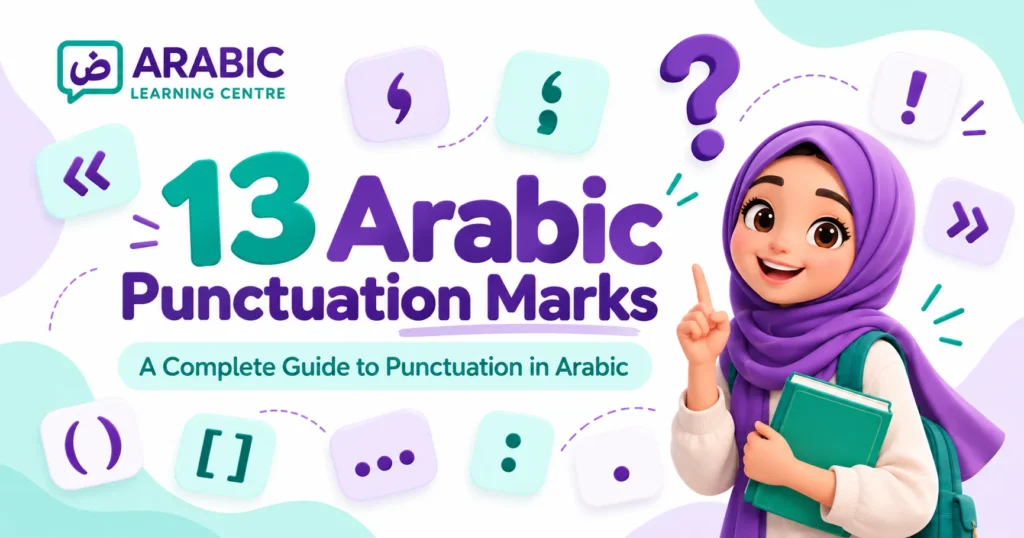
Learning Arabic means more than mastering letters, vowels and grammar. To read accurately and write clearly, you also need to know how punctuation in Arabic works. A single mark can turn a statement into a question or an exclamation, and a misplaced comma can make a sentence hard to follow.
Arabic punctuation looks familiar at first glance, yet it has its own shapes, spacing rules and uses. The comma, semicolon and question mark are mirrored for right-to-left script, quotation marks take a different form, and numbered lists follow a convention of their own.
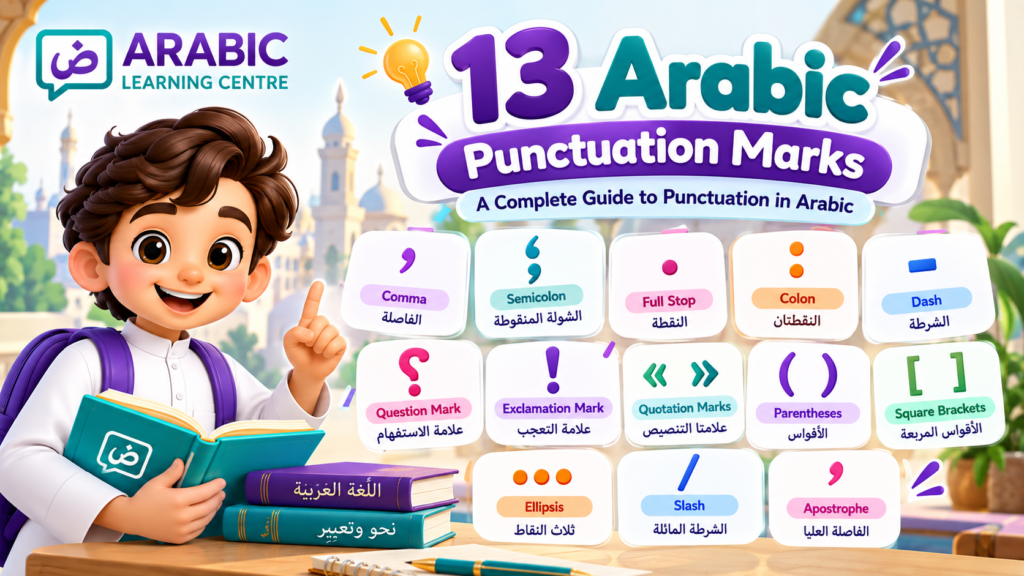
This guide walks you through all 13 Arabic punctuation marks one by one with clear rules and real Arabic examples. You will learn where each mark goes, how to space it, and which common mistakes to avoid, whether you are a beginner, a student of Modern Standard Arabic, or a writer polishing your texts.
1. The Arabic Comma (،): Mirrored, Attached to the Word, and Highly Flexible
The Arabic comma is written ،, not the Latin comma ( , ), and it is the most flexible mark in Arabic. Write it directly after the preceding word, with no space before it: أحب الشعر، والقصص. (not أحب الشعر ، والقصص.).
Here are its main uses, each with an example:
| Use | Example |
| Between connected sentences forming one idea | إن محمداً طالب مهذب، لا يؤذي أحداً، ولا يكذب في كلامه. |
| Between short joined sentences | الصدق فضيلة، والكذب رذيلة. |
| Instead of a conjunction | عند النهر، فوق الرابية، انتشر قطيع الغنم. |
| Between list items | الربيع، والصيف، والخريف، والشتاء. |
| After the person addressed | يا أحمد، اجتهد في دروسك. |
| Between a long condition and its result | إذا كنت في كل الأمور تعاتب أصدقاءك، فلن يبقى لك صديق. |
| Between an oath and its answer | والله، لأجتهدن. |
| Before a circumstantial clause | عدت إلى البيت، وأنا مسرور. |
| Around an appositive | إن هذا العصر، عصر الآلة، سهلت فيه المواصلات. |
| After an introductory or answer word | أخيراً، وصل المحاضر. / نعم، إلا السؤال الأخير. |
| Before مثل or نحو | الجملة الفعلية، نحو: كتب المعلم جملة مفيدة. |
| In bibliography entries | دلائل الإملاء وأسرار الترقيم، دار أفريقيا الشرق، الدار البيضاء، 1999 م. |
2. The Arabic Semicolon (؛): Linking Cause and Result
The semicolon marks a pause longer than a comma and shorter than a full stop. It is also called الشولة المنقوطة or القاطعة, and it sits directly after the word before it. It often comes before words of cause or result such as لذلك، لأن، لذا، ومن ثمَّ and حتى.
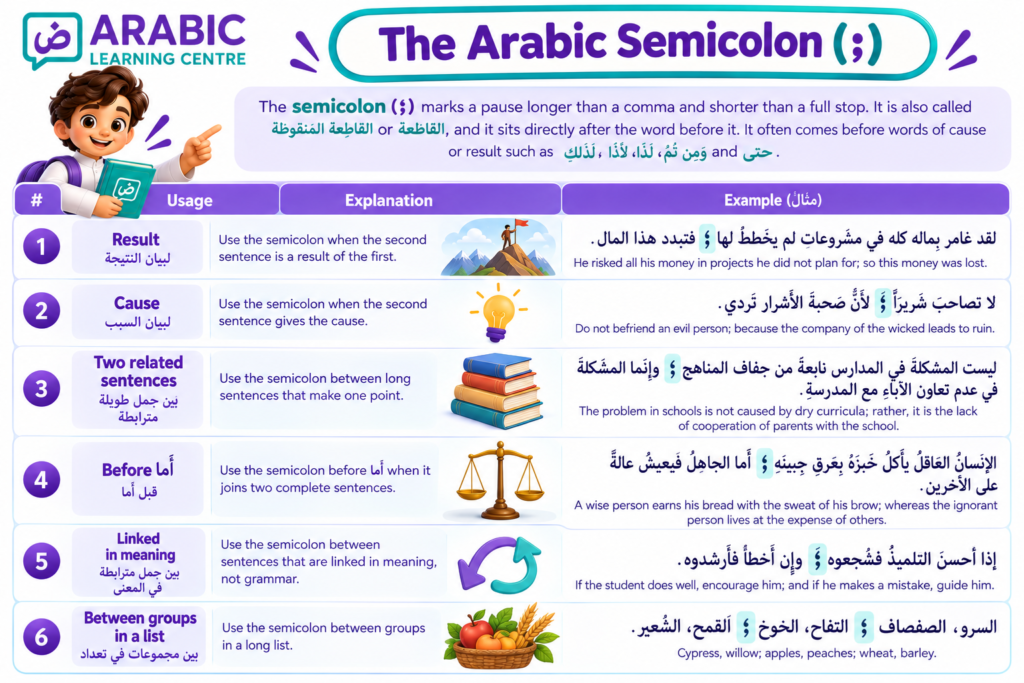
Where to use it:
- When the second sentence is a result of the first: لقد غامر بماله كله في مشروعات لم يخطط لها؛ فتبدد هذا المال.
- When the second sentence gives the cause: لا تصاحب شريراً؛ لأن صحبة الأشرار تردي.
- Between long sentences making one point: ليست المشكلة في المدارس نابعة من جفاف المناهج؛ وإنما المشكلة في عدم تعاون الآباء مع المدرسة.
- Before أما joining two complete sentences: الإنسان العاقل يأكل خبزه بعرق جبينه؛ أما الجاهل فيعيش عالة على الآخرين.
- Between sentences linked in meaning, not grammar: إذا أحسن التلميذ فشجعوه؛ وإن أخطأ فأرشدوه.
- Between groups in a long list: السرو، الصفصاف؛ التفاح، الخوخ؛ القمح، الشعير.
Read also: How To Ask A Question In Arabic?
3. The Arabic Full Stop Punctuation Mark (.): Ending Sentences and Abbreviations
The Arabic full stop punctuation mark looks exactly like the English one and signals a complete stop. It is called النقطة or الوقفة, and it attaches to the last word with no space before it.
Use the Arabic full stop punctuation after any complete statement, such as آمنت بالله. or الحديقة واسعة. It also closes a sentence when the next one opens a new idea (طلع الصباح.
آمل أن يكون هذا النهار مباركاً), and it always ends a paragraph.
Outside sentences, the full stop separates the letters of abbreviations, as in ت.
س.
إليوت, ق.
م (قبل الميلاد) and ص.
ب (صندوق بريد). It also appears in website and email addresses written in Latin letters.
Note: Arabic full stop punctuation is not the same as the Quranic verse-end sign (), which marks where an آية ends in recitation.
Read also: Question Words In Arabic – 14 Essential Arabic Question Words with Examples
4. The Colon (:): Introducing Quotes, Lists and Definitions
The colon introduces an explanation, a quote or a list, which is why Arabic grammarians call it the mark of clarification and reporting. It has the same shape as in English and attaches to the preceding word.
| Use | Example |
| After قال and similar verbs | سألته: من أين لك هذا؟ فأجاب: من أبي. |
| Before a quotation | من الأقوال المأثورة: «عند الشدائد يعرف الإخوان». |
| Between a thing and its types | أيام الدهر ثلاثة: يوم مضى، ويوم أنت فيه، ويوم مستقبل. |
| Between a summary and its details | المرء بأصغريه: قلبه، ولسانه. |
| Before examples (after مثل or نحو) | نحو: يدا الزرافة أطول من رجليها. |
| After ما يلي or التالية | أجب عما يلي: من أنت؟ |
| Before a definition | الفعل: لفظ يدل على معنى في ذاته، مقترن بزمن. |
| In question-and-answer records | س: ما اسمك؟ ج: سيد جمعة. |
| Between hours and minutes | ٢:٤٥ |
5. The Dash (-): Outline Numbers, Interruptions and Dialogue
The dash (الشرطة) is used for numbering, interruptions, dialogue, and separating related expressions.
| Use | Arabic Example |
| Numbering | ١- أجسام صلبة. ٢- أجسام سائلة. |
| Interrupting phrases | الصادق – وإن كان فقيراً – محبوب. |
| Dialogue | – كيف حالك؟ |
| Separating long clauses | الإنسان المجتهد – هو المثال الذي يُحتذى. |
| Summarising a list | الصدق، والإخلاص، والأمانة – كلها فضائل. |
| Exercise items | وعد – ولد – وثب – وقف. |
Note: Arabic outlines traditionally use a dash after numbers (١- ٢- ٣-) rather than a full stop.
Writing Tip: In RTL web content, parentheses or commas may be clearer than interrupting dashes.
Small conventions like this are what make Arabic writing look natural rather than translated. Our Arabic writing course covers them step by step, from lists and headings to full essays.

6. The Long Dash (—): Rarely Used in Arabic Text
The long dash (—), known as الشرطة الطويلة, is less common in Arabic writing than the regular dash (-). It creates a stronger visual separation between parts of a sentence.
Main Uses
- Interrupting phrases: العلم — وهو أساس التقدم — يبني الأمم.
- Adding explanations: القراءة — غذاء العقل — توسع المعرفة.
- Introducing dialogue: — أين الكتاب؟
- Emphasising a conclusion: الصدق والإخلاص والعمل — تلك مفاتيح النجاح.
- Expressing sudden interruption: أردت أن أخبرك — لكن الوقت انتهى.
Difference: The long dash (—) creates a more noticeable pause, while the regular dash (-) is more commonly used in numbering and simple separations.
Tip: In everyday Arabic writing, commas, parentheses, or the regular dash can often replace the long dash. Use one style consistently throughout your text.
Inside Our Classrooms
See how we make learning interactive and engaging! Watch a quick snippet of our live, conversational classes in action:
7. The Underscore (_): Uses in Arabic
The underscore (الشرطة السفلية) is mainly used in digital writing and fill-in-the-blank exercises. It has no punctuation function in Arabic prose.
| Use | Example |
| File names | arabic_lesson_1.pdf |
| Usernames & URLs | diwan_alarab |
| Programming | student_name |
| Fill-in-the-blank exercises | ذهب الولد إلى ______. |
Underscore vs. Tatweel (Kashida)
Unlike the underscore (_), which appears below the text, Tatweel (ـ) connects to Arabic letters to stretch them for decorative purposes.
Example: محـــمد instead of محمد.
Note: Avoid both in ordinary prose, as Tatweel may also interfere with digital word searches.
8. The Question Mark (؟): Ending Questions and Signalling Doubt
The Arabic question mark is mirrored (؟) to face the direction of the text. It follows the last word with no space.
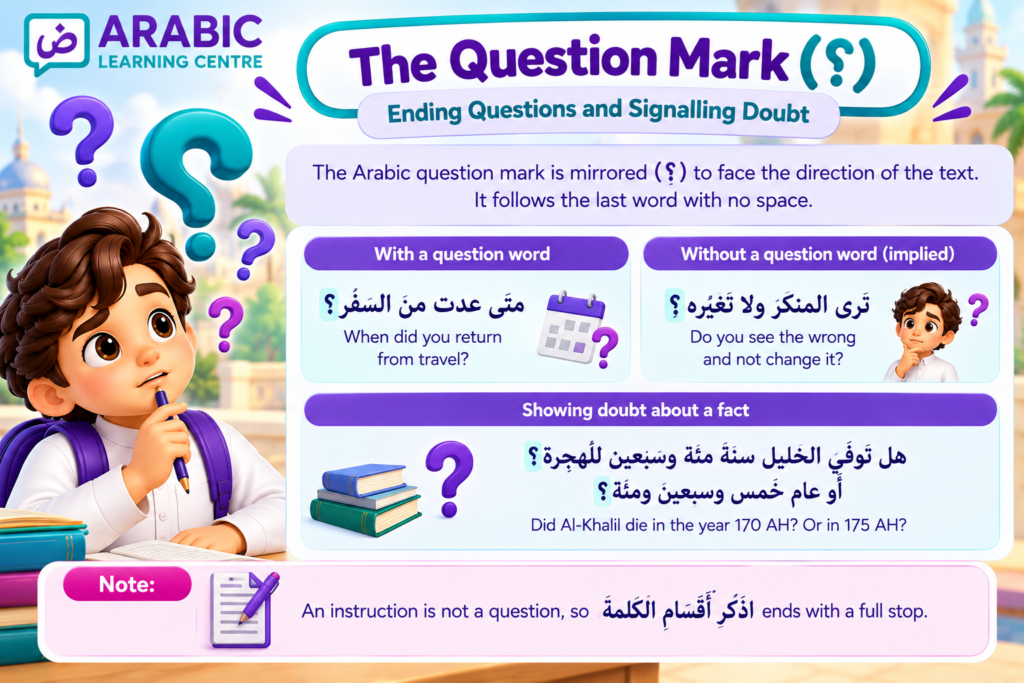
It comes after every question, whether the question word is written, as in متى عدت من السفر؟, or only implied, as in ترى المنكر ولا تغيره؟ (meaning أترى المنكر…). Writers also use it to show doubt about a fact, as when a historian weighs two possible dates: هل توفي الخليل سنة مئة وسبعين للهجرة؟ أو عام خمس وسبعين ومئة؟
Note: An instruction is not a question, so اذكر أقسام الكلمة ends with a full stop.
9. The Exclamation Mark (!): Expressing Every Strong Emotion
The exclamation mark (!) keeps the same shape as in English. Arabic calls it علامة التأثر or الانفعال because it covers far more than surprise: it follows any sentence carrying strong feeling.
This table shows the range of feelings it can express:
| Feeling | Example |
| Wonder | ما أقسى ظلم القريب! |
| Joy | وا فرحتاه! |
| Grief | وا حسرتاه! |
| Prayer or curse | ربي وفقني! / تباً لك أيها الخائن! |
| Calling for help | وا معتصماه! |
| Hope and wishing | لعل الله يرحمنا! / ليت الليل ينجلي! |
| Praise and blame | نعم الوفي! / بئس اللئيم! |
| Complaint | طفح الكيل! |
| Warning | إياك والمراوغة! |
| Urging | الصدق، الصدق! |
| Annoyance | أف لتصرفاتك! |
Note: When a question really expresses disbelief, both marks appear together (؟!): وهل تعلو العين على الحاجب؟! This tells the reader the writer isn’t truly asking.
Question and exclamation marks bring tone into writing, and they are easiest to master with guided practice. If you would like that in a relaxed, women-only setting, try our Arabic course for ladies.

10. The Ellipsis (…): Three Dots for Omitted Words
The ellipsis is exactly three dots, no more and no fewer, written straight after the preceding word. Arabic also calls it نقط الاختصار or نقط الإضمار.
Where to use it:
- To mark words removed from a quotation, showing you quoted honestly: «فكرة الإحسان في الإسلام فكرة واسعة الأفق… كل هذا إحسان».
- To shorten a list: قرأت روايات نجيب محفوظ كلها: خان الخليلي، والسكرية، واللص والكلاب…
- In place of words too offensive to write: فيقول أحدهما… ويقول الآخر…
11. Quotation Marks (« »): Arabic Uses Angled Marks, Not ” “
Use the angled quotation marks « » in Arabic, not the English ” “. Ahmad Zaki Pasha chose « » in 1911, and older printed books follow that style.
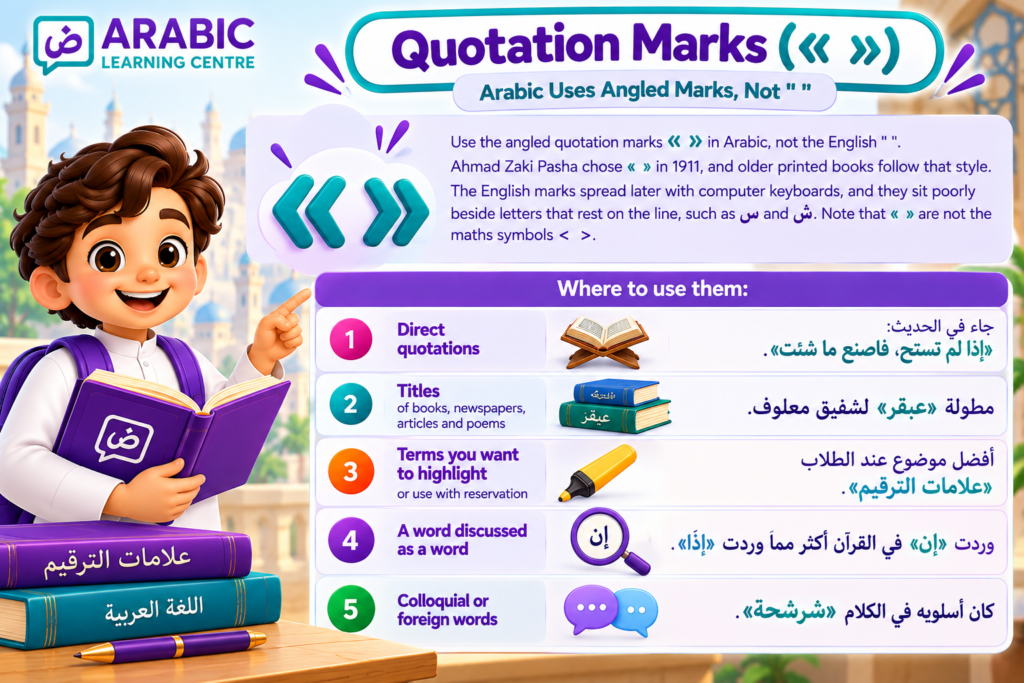
The English marks spread later with computer keyboards, and they sit poorly beside letters that rest on the line, such as س and ش. Note that « » are not the maths symbols < >.
Where to use them:
- Direct quotations: جاء في الحديث: «إذا لم تستح، فاصنع ما شئت».
- Titles of books, newspapers, articles and poems: مطولة «عبقر» لشفيق معلوف.
- Terms you want to highlight or use with reservation: أفضل موضوع عند الطلاب «علامات الترقيم».
- A word discussed as a word: وردت «إن» في القرآن أكثر مما وردت «إذا».
- Colloquial or foreign words: كان أسلوبه في الكلام «شرشحة».
12. Parentheses ( ): Holding Explanations, Dates and Asides
Parentheses hold words that are not essential to the sentence.
Where to use them:
- Explanations: دخلت ثالث الحرمين (المسجد الأقصى) وصليت فيه.
- Spelling notes that prevent confusion: الذمام (بالذال المكسورة) العهد.
- Numbers and dates: ابن سلام الجمحي (ت 231 هـ).
- Alternative terms: الفاصلة (أو الفصلة) علامة ترقيم شائعة.
- Stage directions in plays: الجمهور (بأصوات مختلطة): نعم!
- Asides you want noticed: اتهمني المدير بالتقصير (ويعلم الله أني مجد)، فظلمني.
- Less familiar foreign names: ولد (بابلو نيرودا) في تشيلي. Well-known names such as نيويورك need none.
- A quote inside a quote: «…فقال لي (عليك بالراحة يا علي)، وكتب لي دواء.»
13. Square Brackets [ ]: Marking Footnotes and Editor’s Additions
Square brackets work like parentheses, but they signal that the words are not part of the original text. That makes them a favourite tool of researchers and scholars editing classical manuscripts.
Where to use them:
- Sources: تجري الرياح بما لا تشتهي السفن [المتنبي]
- Footnote numbers: المسافة بين البلدين سبعون ميلاً [٤]
- Words an editor adds to a quoted text.
Note: In religious texts, ornate brackets ﴿ ﴾ or curly braces { } traditionally enclose Quranic verses.
Does Arabic Have Punctuation?
Yes. Modern Arabic has a full punctuation system, and every serious learner needs to master it.
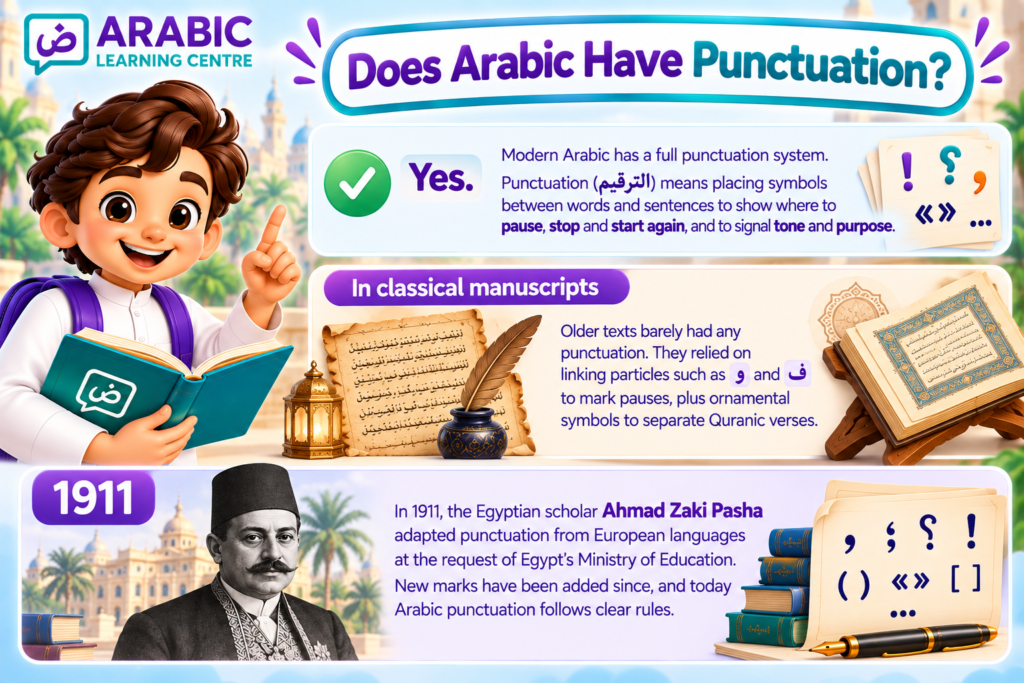
Punctuation in Arabic (الترقيم, al-tarqīm) means placing agreed symbols between words and sentences to show where to pause, stop and start again, and to signal tone and purpose. It makes the writer’s job of explaining easier and the reader’s job of understanding faster.
People often ask “does Arabic use punctuation” because classical manuscripts barely had any. Older texts relied on linking particles such as و (wa) and ف (fa) to mark pauses, plus ornamental symbols to separate Quranic verses.
That changed about a century ago. In 1911, the Egyptian scholar Ahmad Zaki Pasha, nicknamed “Sheikh al-Uruba”, adapted punctuation from European languages at the request of Egypt’s Ministry of Education. New marks have been added since, and today Arabic punctuation follows clear rules that every writer, translator and editor is expected to know.
Why Punctuation in Arabic Matters?
One mark can change the whole meaning of an Arabic sentence. These three lines use exactly the same three words:
| Sentence | Mark | Meaning |
| ما أحسن الرجل. | Full stop | A negative statement: “The man did not do well.” ما is a negating particle. |
| ما أحسن الرجل! | Exclamation mark | An exclamation: “How good the man is!” ما is exclamatory. |
| ما أحسن الرجل؟ | Question mark | A question: “What is best about the man?” ما is interrogative. |
Beyond preventing misreadings, good punctuation:
- Shows where sentences divide, so readers know where to pause and stop. This also improves reading aloud.
- Saves reading time, because a punctuated text is understood far faster than one the reader must untangle.
- Replaces voice and gesture. Marks do on paper what tone and pauses do in speech, like traffic signs that keep readers on the right road.
- Makes writing look polished, more pleasant to read and more convincing.
If you are learning Modern Standard Arabic, punctuation is part of reading comprehension, not an extra. Our Fusha Arabic course builds these reading habits alongside grammar and vocabulary.
Don’t Just Take Our Word For It
Take a look inside our vibrant classes and see our students and teachers in action. Click below to watch our classroom experience:
Take Your Arabic Writing Skills Further with The Arabic Learning Centre
Mastering Arabic punctuation is an important step toward writing clearly and confidently, but there is so much more to explore.
At The Arabic Learning Centre, we help learners strengthen their understanding of Arabic through engaging lessons that develop essential skills in reading, writing, grammar, and communication.
Whether you are a complete beginner or looking to refine your Modern Standard Arabic, our structured online Arabic classes provide a supportive learning environment tailored to your goals. With guidance from experienced Arabic tutors, you can build confidence, improve your language accuracy, and turn what you learn into practical everyday skills.
Start your learning journey with The Arabic Learning Centre and discover how enjoyable mastering Arabic can be. Book your FREE trial lesson today!
Courses We Offer:
- Arabic Grammar Course
- Arabic Speaking Course
- Arabic Script writing course
- Arabic Vocabulary Course
- Arabic Pronunciation Course
Conclusion
Mastering Arabic punctuation is an essential step toward clear, accurate, and effective writing. Each punctuation mark has a specific purpose, helping readers understand sentence structure, recognize pauses, and interpret the writer’s intended meaning.
Although punctuation marks may seem like small details, using them correctly can make a significant difference in how a message is understood.
By learning their functions, following proper spacing rules, and practising with real examples, writers can develop greater confidence and precision in Modern Standard Arabic. Remember, good punctuation does more than organize words; it brings clarity, rhythm, and meaning to every sentence.
Frequently Asked Questions
Does Arabic use punctuation the same way as English?
Mostly, but not entirely. The functions are similar, yet the comma (،), semicolon (؛) and question mark (؟) are mirrored, quotation marks are « », and the comma covers more situations, such as after a vocative or before مثل and نحو.
Is the Arabic full stop different from the English one?
No. The Arabic full stop punctuation mark has the same shape (.) and the same basic role. It also separates abbreviation letters, as in ق.
م.
What punctuation follows Arabic numerals in an outline?
A dash: 1- 2- 3- or ١- ٢- ٣-. The same goes for ordinal headings like أولاً- ثانياً-.
Which Arabic punctuation marks change shape?
The comma, semicolon and question mark. The full stop, colon and exclamation mark look the same as in English.
How many Arabic punctuation marks are there?
Thirteen are used in standard writing, from the comma to square brackets, plus technical symbols used in maths and code.
Related Articles
Arabic Grammar