 Arabic Vocabulary & Speaking
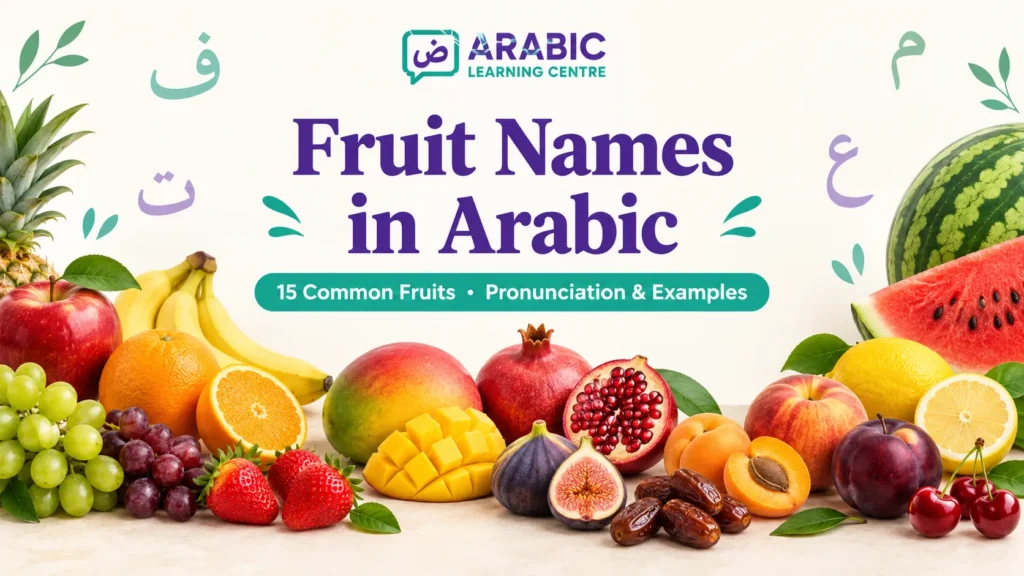
Learning fruit names in Arabic is a great way to expand your vocabulary and improve everyday conversations. Common fruits like تُفَّاح (tuffāḥ, apple), مَوْز (mawz, banana), and بُرْتُقَال (burtuqāl, orange) are useful when shopping, ordering food, or describing your favorite fruits.
In Arabic, fruit names can change depending on whether you’re talking about one piece or several. For example, تُفَّاح (tuffāḥ) means apples in general, while تُفَّاحَة (tuffāḥa) means one apple. Some fruit names also vary between Arabic dialects.
This guide introduces 15 common fruit names in Arabic with pronunciation, English translations, and example sentences. You’ll also learn useful grammar rules, regional differences, and the names of fruits mentioned in the Quran and Hadith.
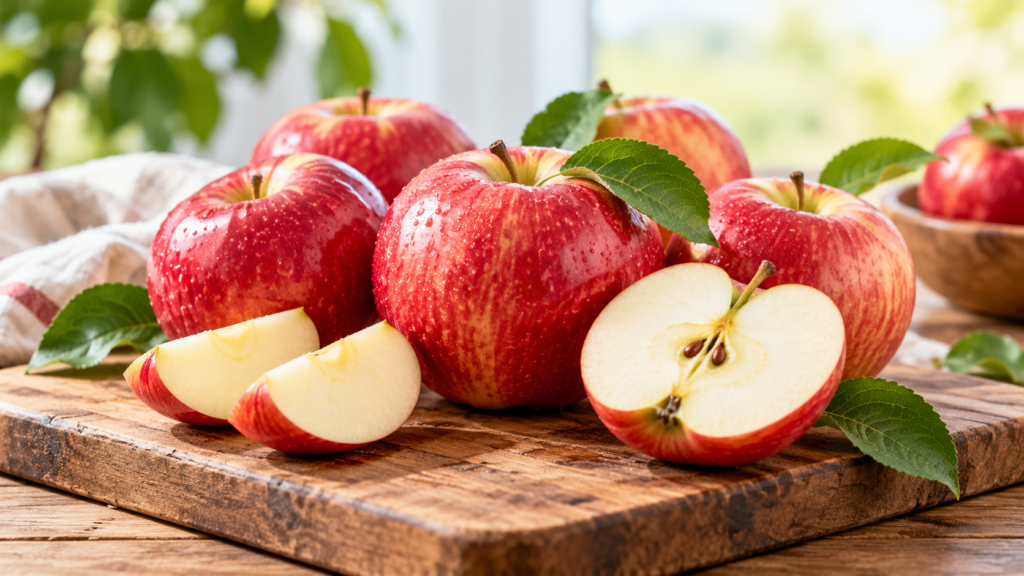
1. Apple in Arabic: تُفَّاح (tuffāḥ)
One apple is تُفَّاحَة, and several apples are تُفَّاحَات. The final ح is a breathy h from the throat, not an English h.
Examples:
- التفاحة حمراء (at-tuffāḥa ḥamrāʾ) — The apple is red.
- كل يوم آكل تفاحة (kulla yawm ākulu tuffāḥa) — I eat an apple every day.
Related words: شَجَرَة التُّفَّاح (shajarat at-tuffāḥ, apple tree), عَصِير تُفَّاح (ʿaṣīr tuffāḥ, apple juice), and تُفَّاح أَخْضَر (tuffāḥ akhḍar, green apple).
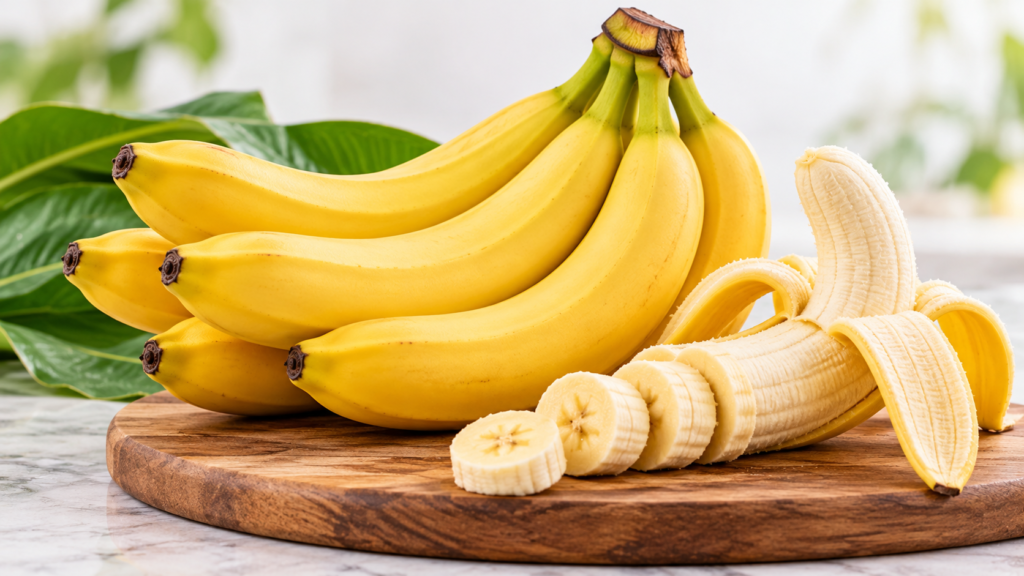
2. Banana in Arabic: مَوْز (mawz)
One banana is مَوْزَة, and several bananas are مَوْزَات. In Egyptian Arabic you’ll hear it pronounced “mōz.”
Examples:
- الموز غني بالبوتاسيوم (al-mawz ghaniyy bil-būtāsiyūm) — Bananas are rich in potassium.
- اشتريت كيلو موز (ishtaraytu kīlū mawz) — I bought a kilo of bananas.
Related words: قِشْر المَوْز (qishr al-mawz, banana peel), شَجَرَة المَوْز (shajarat al-mawz, banana tree), and عَصِير مَوْز بِالحَلِيب (ʿaṣīr mawz bil-ḥalīb, banana milkshake).
Read also: Particles in Arabic – 12 types with meanings, rules, and examples
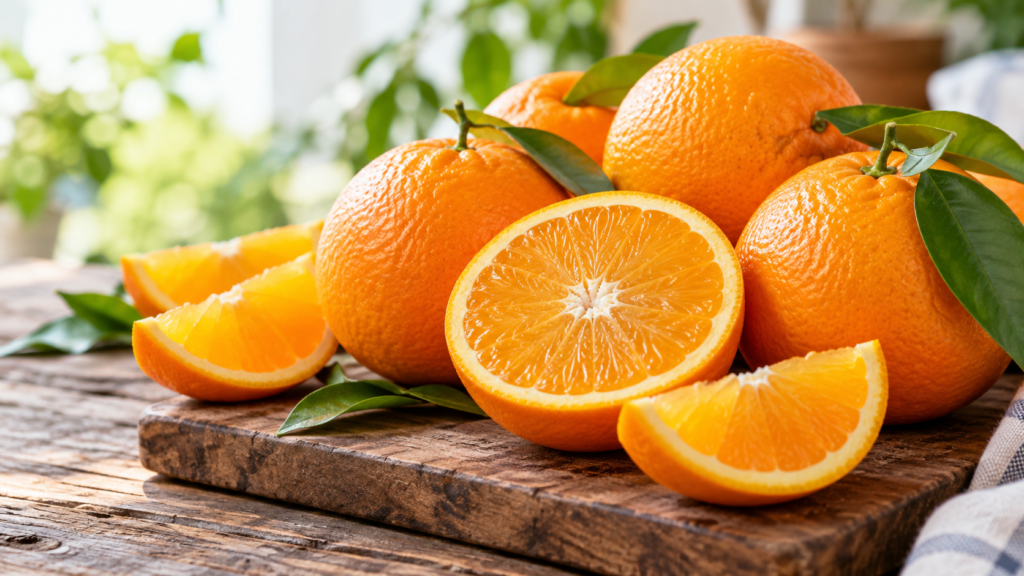
3. Orange in Arabic: بُرْتُقَال (burtuqāl)
One orange is بُرْتُقَالَة. The name is linked to Portugal, whose traders brought the sweet orange to the region. The older bitter orange has its own name, نَارَنْج (nāranj), the root of the English word “orange.”
Examples:
- عصير البرتقال منعش (ʿaṣīr al-burtuqāl munʿish) — Orange juice is refreshing.
- البرتقال مليء بفيتامين سي (al-burtuqāl malīʾ bi-fītāmīn sī) — Oranges are full of vitamin C.
Related words: شَجَرَة البُرْتُقَال (shajarat al-burtuqāl, orange tree), قِشْر البُرْتُقَال (qishr al-burtuqāl, orange peel), and اللَّوْن البُرْتُقَالِي (al-lawn al-burtuqālī, the color orange).
4. Grapes in Arabic: عِنَب (ʿinab)
One grape is حَبَّة عِنَب or عِنَبَة. The word starts with the throat sound ع. Dried grapes are زَبِيب (zabīb, raisins), and grape leaves, وَرَق عِنَب, are used in stuffed vine leaves.
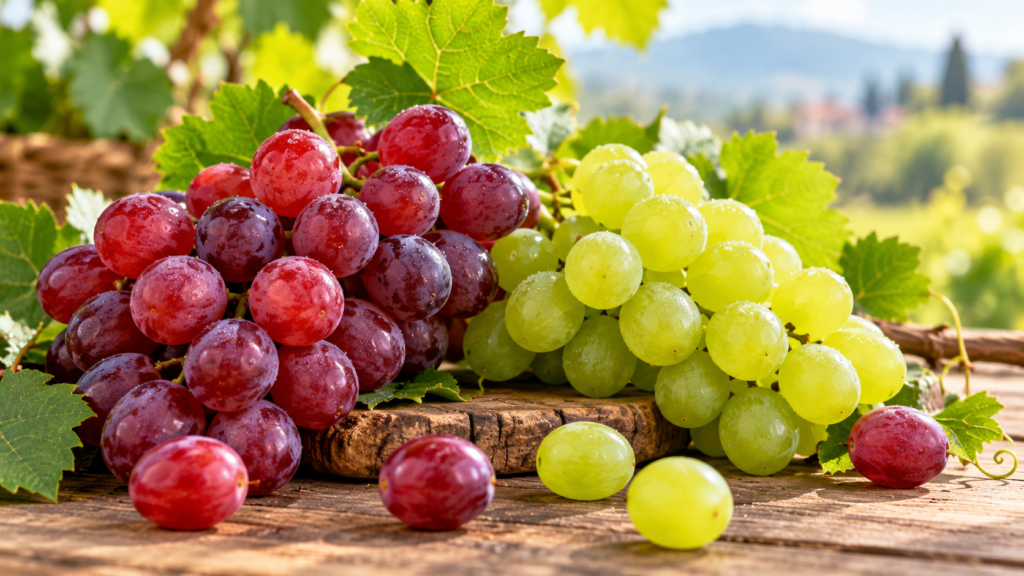
In the Quran: Surah ʿAbasa lists grapes among the plants Allah brings out of the earth:
فَأَنبَتْنَا فِيهَا حَبًّا وَعِنَبًا وَقَضْبًا
“Then We caused grain to grow in it, and grapes and fresh fodder.” — Surah ʿAbasa 80:27–28
Notice عِنَبًا (ʿinaban) with the ending -an. It’s joined to the object of the verb أَنبَتْنَا, so it takes the accusative case, the same ending you’ll see in the example اشتريت عنباً below.
Examples:
- اشتريت عنباً أحمر (ishtaraytu ʿinaban aḥmar) — I bought red grapes.
- أكلت عنقود عنب كاملاً (akaltu ʿunqūd ʿinab kāmilan) — I ate a whole bunch of grapes.
Related words: عُنْقُود عِنَب (ʿunqūd ʿinab, bunch of grapes), كَرْمَة (karma, grapevine), and عِنَب بِدُون بِذْر (ʿinab bidūn bidhr, seedless grapes).
5. Watermelon in Arabic: بَطِّيخ (baṭṭīkh)
One watermelon is بَطِّيخَة. The word has an emphatic ṭ and a final خ. In Iraq, watermelon is رَقِّي (raggī), and in Syria it’s جَبَس (jabas).
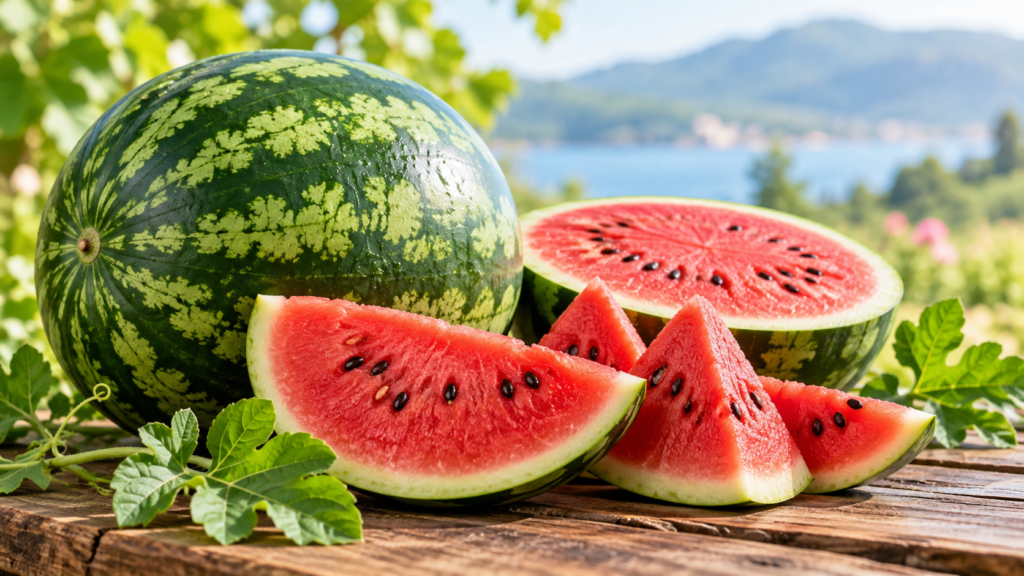
In the Hadith: Aisha, the Prophet’s wife, described how he ate watermelon in the hot summers of Medina:
كَانَ يَأْكُلُ الْبِطِّيخَ بِالرُّطَبِ، وَيَقُولُ: «يَكْسِرُ حَرَّ هَذَا بِبَرْدِ هَذَا، وَبَرْدَ هَذَا بِحَرِّ هَذَا»
“He used to eat watermelon with fresh dates, saying: The heat of this one is balanced by the coolness of that one, and the coolness of that one by the heat of this one.” — Narrated by At-Tirmidhi and Abu Dawud, graded sahih by al-Albani (Mishkat al-Masabih 4225)
The hadith spells the word الْبِطِّيخ (biṭṭīkh) with a kasra, the form classical dictionaries consider correct; baṭṭīkh is the everyday pronunciation. Scholars also differ on whether the word here means watermelon or yellow melon, the same ambiguity you’ll find in Syria today.
Examples:
- البطيخ فاكهة الصيف (al-baṭṭīkh fākihat aṣ-ṣayf) — Watermelon is a summer fruit.
- قطعت البطيخة إلى شرائح (qaṭṭaʿtu al-baṭṭīkha ilā sharāʾiḥ) — I cut the watermelon into slices.
Related words: شَرِيحَة بَطِّيخ (sharīḥat baṭṭīkh, watermelon slice), بِذْر البَطِّيخ (bidhr al-baṭṭīkh, watermelon seeds), and بَطِّيخ أَصْفَر / شَمَّام (baṭṭīkh aṣfar / shammām, melon).
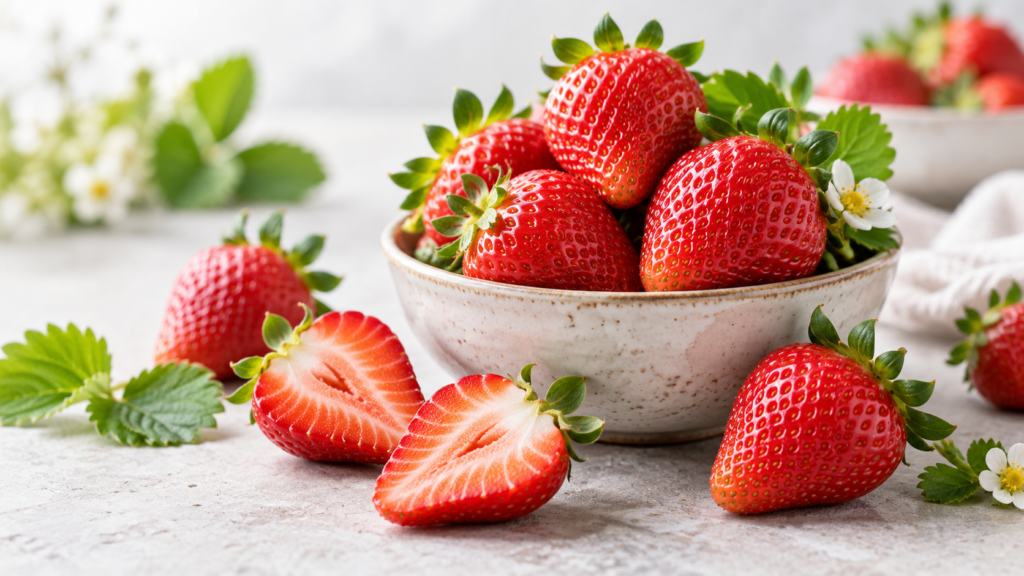
6. Strawberry in Arabic: فَرَاوِلَة (farāwila)
One strawberry is حَبَّة فَرَاوِلَة. The word is borrowed and already ends in ة, so it doesn’t follow the usual one-piece rule. In the Levant, people say فْرِيز (frēz).
Examples:
- الفراولة فاكهتي المفضلة (al-farāwila fākihatī al-mufaḍḍala) — Strawberry is my favorite fruit.
- صنعت أمي مربى الفراولة (ṣanaʿat ummī murabbā al-farāwila) — My mother made strawberry jam.
Related words: مُرَبَّى الفَرَاوِلَة (murabbā al-farāwila, strawberry jam), عَصِير فَرَاوِلَة (ʿaṣīr farāwila, strawberry juice), and فَرَاوِلَة بِالشُّوكُولَاتَة (farāwila bish-shūkūlāta, chocolate strawberries).
7. Mango in Arabic: مَانْجُو (mānjū)
One mango is حَبَّة مَانْجُو. Never say “مانجوة.” In Egypt you’ll also hear مَنْجَة (manga).

Examples:
- المانجو فاكهة استوائية (al-mānjū fākiha istiwāʾiyya) — Mango is a tropical fruit.
- موسم المانجو في مصر في الصيف (mawsim al-mānjū fī miṣr fī aṣ-ṣayf) — Mango season in Egypt is in summer.
Related words: عَصِير مَانْجُو (ʿaṣīr mānjū, mango juice), مَانْجُو نَاضِجَة (mānjū nāḍija, ripe mango), and مَوْسِم المَانْجُو (mawsim al-mānjū, mango season).
8. Pomegranate in Arabic: رُمَّان (rummān)
One pomegranate is رُمَّانَة, and its seeds are حَبّ الرُّمَّان. Note the doubled م.

In the Quran: Describing the two gardens of Paradise, Surah Ar-Rahman names the pomegranate alongside the date palm:
فِيهِمَا فَاكِهَةٌ وَنَخْلٌ وَرُمَّانٌ
“In both of them are fruit, date palms, and pomegranates.” — Surah Ar-Rahman 55:68
The verse uses فَاكِهَة, the general word for fruit, and then names date palms and pomegranates separately. Classical commentators explain that singling them out after the general word honors them above other fruits.
Examples:
- عصير الرمان مفيد (ʿaṣīr ar-rummān mufīd) — Pomegranate juice is healthy.
- أضيف دبس الرمان إلى الفتوش (uḍīfu dibs ar-rummān ilā al-fattūsh) — I add pomegranate molasses to fattoush.
Related words: دِبْس الرُّمَّان (dibs ar-rummān, pomegranate molasses), قِشْر الرُّمَّان (qishr ar-rummān, pomegranate peel), and شَجَرَة الرُّمَّان (shajarat ar-rummān, pomegranate tree).
9. Fig in Arabic: تِين (tīn)
One fig is تِينَة. Surah At-Tin, the 95th chapter of the Quran, is named after it.

In the Quran: The surah opens with an oath by two fruits:
وَالتِّينِ وَالزَّيْتُونِ
“By the fig and the olive.” — Surah At-Tin 95:1
Notice the ending -i in at-tīni. The و here is the و of oath (وَاو القَسَم), which puts the noun after it in the genitive case. It’s a clear example of how a fruit name changes its ending in Quranic Arabic.
Examples:
- أحب التين الطازج (uḥibbu at-tīn aṭ-ṭāzaj) — I love fresh figs.
- التين المجفف وجبة خفيفة صحية (at-tīn al-mujaffaf wajba khafīfa ṣiḥḥiyya) — Dried figs are a healthy snack.
Related words: تِين مُجَفَّف (tīn mujaffaf, dried figs), شَجَرَة التِّين (shajarat at-tīn, fig tree), and تِين شَوْكِي (tīn shawkī, prickly pear).
Inside Our Classrooms
See how we make learning interactive and engaging! Watch a quick snippet of our live, conversational classes in action:
10. Dates in Arabic: تَمْر (tamr)
One date is تَمْرَة.
تمر means dried dates; fresh ripe dates are رُطَب (ruṭab), and in Egypt fresh dates are بَلَح (balaḥ). Many Muslims break their Ramadan fast with dates.

In the Hadith: Breaking the fast with dates comes from the Prophet’s own practice. Anas ibn Malik reported:
كَانَ رَسُولُ اللَّهِ ﷺ يُفْطِرُ عَلَى رُطَبَاتٍ قَبْلَ أَنْ يُصَلِّيَ، فَإِنْ لَمْ تَكُنْ رُطَبَاتٌ فَعَلَى تَمَرَاتٍ، فَإِنْ لَمْ تَكُنْ حَسَا حَسَوَاتٍ مِنْ مَاءٍ
“The Messenger of Allah ﷺ would break his fast with a few fresh dates before praying. If there were no fresh dates, then with a few dried dates, and if there were none, he would take a few sips of water.” — Sunan Abi Dawud 2356, graded hasan sahih by al-Albani (Sunnah.com)
This one sentence shows the difference between رُطَب (fresh dates) and تَمْر (dried dates). It also uses رُطَبَات and تَمَرَات, the plurals of the one-piece forms, exactly as the counting rules later in this article explain.
Examples:
- نفطر على التمر في رمضان (nufṭiru ʿalā at-tamr fī ramaḍān) — We break our fast with dates in Ramadan.
- تمر العجوة من المدينة المنورة (tamr al-ʿajwa min al-madīna al-munawwara) — Ajwa dates come from Medina.
Related words: نَخْلَة (nakhla, date palm), تَمْر العَجْوَة (tamr al-ʿajwa, Ajwa dates), and مَعْمُول بِالتَّمْر (maʿmūl bit-tamr, date-filled cookies).
11. Apricot in Arabic: مِشْمِش (mishmish)
One apricot is مِشْمِشَة. Apricot paste, قَمَر الدِّين (qamar ad-dīn), is a popular Ramadan drink. The English word “apricot” comes, through Spanish, from Arabic البَرْقُوق, which in classical Arabic referred to the apricot.

Examples:
- المشمش فاكهة لذيذة (al-mishmish fākiha ladhīdha) — Apricots are a delicious fruit.
- نشرب قمر الدين في رمضان (nashrabu qamar ad-dīn fī ramaḍān) — We drink apricot juice in Ramadan.
Related words: مِشْمِش مُجَفَّف (mishmish mujaffaf, dried apricots), مُرَبَّى المِشْمِش (murabbā al-mishmish, apricot jam), and نَوَاة المِشْمِش (nawāt al-mishmish, apricot pit).
Fun fact: In Egyptian Arabic, the expression فِي المِشْمِش (fil-mishmish, “in apricot season”) means “never” or “when pigs fly,” because the apricot season is so short.
12. Peach in Arabic: خَوْخ (khawkh)
One peach is خَوْخَة. This is the word in Egypt and Standard Arabic. In Syria and Lebanon, however, خوخ means plum, and peach is دُرَّاق (durrāq).

Examples:
- أحب عصير الخوخ البارد (uḥibbu ʿaṣīr al-khawkh al-bārid) — I love cold peach juice.
- الخوخ طري وحلو (al-khawkh ṭariyy wa-ḥulw) — Peaches are soft and sweet.
Related words: عَصِير خَوْخ (ʿaṣīr khawkh, peach juice), شَجَرَة الخَوْخ (shajarat al-khawkh, peach tree), and خَوْخَة نَاضِجَة (khawkha nāḍija, ripe peach).
13. Plum in Arabic: بَرْقُوق (barqūq)
One plum is بَرْقُوقَة. Dried plums (prunes) are قَرَاصْيَا (qarāṣiyā).

Examples:
- البرقوق غني بالألياف (al-barqūq ghaniyy bil-alyāf) — Plums are rich in fiber.
- البرقوق الأحمر حامض قليلاً (al-barqūq al-aḥmar ḥāmiḍ qalīlan) — Red plums are a little sour.
Related words: بَرْقُوق أَحْمَر (barqūq aḥmar, red plums), قَرَاصْيَا (qarāṣiyā, prunes), and مُرَبَّى البَرْقُوق (murabbā al-barqūq, plum jam).
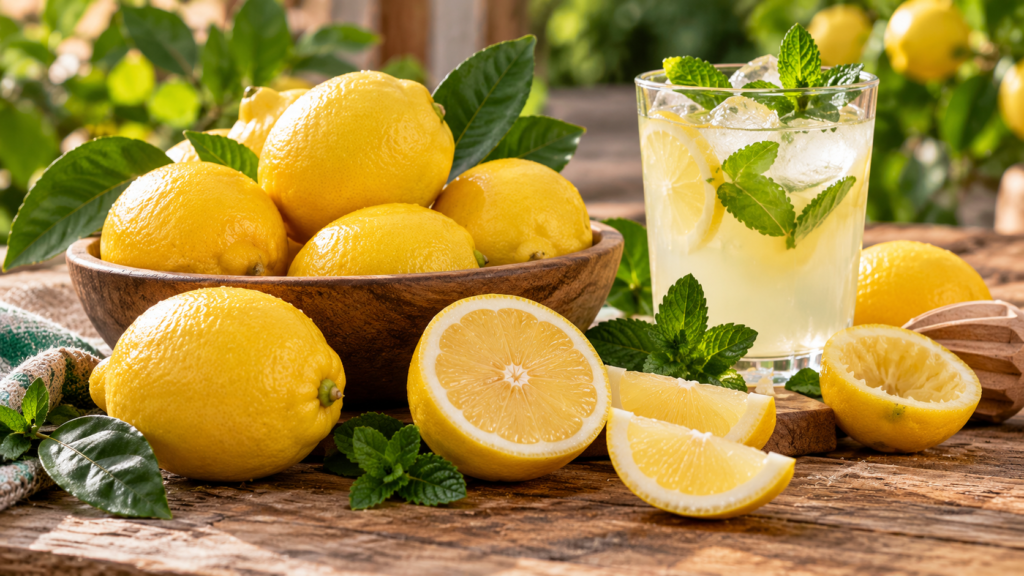
14. Lemon in Arabic: لَيْمُون (laymūn)
One lemon is لَيْمُونَة, and lime is لَيْمُون أَخْضَر (green lemon). In Morocco, ليمون usually means orange, and lemon is حامض (pronounced “ḥāmeḍ” in Moroccan Arabic).
Examples:
- أضف عصير الليمون إلى السلطة (aḍif ʿaṣīr al-laymūn ilā as-salaṭa) — Add lemon juice to the salad.
- أشرب ليمون بالنعناع في الصيف (ashrabu laymūn bin-naʿnāʿ fī aṣ-ṣayf) — I drink lemon with mint in the summer.
Related words: لَيْمُونَادَة (laymūnāda, lemonade), لَيْمُون بِالنَّعْنَاع (laymūn bin-naʿnāʿ, lemon with mint), and قِشْر اللَّيْمُون (qishr al-laymūn, lemon peel).
15. Cherry in Arabic: كَرَز (karaz)
One cherry is حَبَّة كَرَز, and several cherries are حَبَّات كَرَز. In Egyptian Arabic, cherry is usually كْرِيز (krēz).

Examples:
- أريد أن آكل كرزاً (urīdu an ākula karazan) — I want to eat cherries.
- الكرز غالٍ هذا الموسم (al-karaz ghālin hādhā al-mawsim) — Cherries are expensive this season.
Related words: عَصِير كَرَز (ʿaṣīr karaz, cherry juice), مُرَبَّى الكَرَز (murabbā al-karaz, cherry jam), and شَجَرَة الكَرَز (shajarat al-karaz, cherry tree).
How to say one, two, or many fruits in Arabic?
Most fruit names in Arabic are collective nouns, so the word changes with the number of pieces. Three rules cover nearly every case.
| You want to say | Rule | Example |
| Fruit in general or by weight | Keep the base form | أحب التفاح، كيلو موز |
| One piece | Add ة to the base form | تفاح → تُفَّاحَة |
| One piece of a borrowed name | Use حَبَّة + the name | حَبَّة مانجو |
| Two pieces | Add ـتان to the one-piece form | تُفَّاحَتَان |
| Three to ten pieces | Number + plural of the one-piece form | ثَلَاث تُفَّاحَات |
Adjectives follow the same logic: التفاح أحمر (apples are red) but التفاحة حمراء (the apple is red). To practice these patterns in real sentences with a teacher, the Arabic course for non-Arabic speakers builds vocabulary and grammar together.

Common mistakes with fruit names in Arabic
Most mistakes with fruit names in Arabic don’t come from the words themselves but from how they change with number, origin, and region. Even learners who know all 15 names often slip on these five points, so check your sentences against them:
- Using the base form for one piece: say أكلت تفاحة (I ate an apple), not أكلت تفاح.
- Adding ة to borrowed names: write حبة مانجو, not مانجوة.
- Using the singular after numbers: say ثلاث تفاحات, not ثلاث تفاحة.
- Assuming a word means the same thing everywhere: خوخ is a peach in Egypt but a plum in the Levant.
- Pronouncing ح and ع like an English h and a: both are throat sounds, and changing them can change the word.
15 more fruit names in Arabic
After the essentials, these are the next fruit names worth learning. Many are borrowed words, so they’re easy to remember.
| English | Arabic | Transliteration |
| Pineapple | أَنَانَاس | anānās |
| Pear | كُمَّثْرَى | kummathrā |
| Olive | زَيْتُون | zaytūn |
| Avocado | أَفُوكَادُو | afūkādū |
| Coconut | جَوْز الهِنْد | jawz al-hind |
| Kiwi | كِيوِي | kīwī |
| Guava | جَوَافَة | jawāfa |
| Grapefruit | جْرِيب فْرُوت | grīb frūt |
| Cantaloupe | شَمَّام | shammām |
| Tangerine | يُوسُفِي / مَانْدَرِين | yūsufī / māndarīn |
| Quince | سَفَرْجَل | safarjal |
| Mulberry | تُوت | tūt |
| Blueberry | تُوت أَزْرَق | tūt azraq |
| Raspberry | تُوت العُلَّيْق | tūt al-ʿullayq |
| Jujube (lote fruit) | نَبْق / سِدْر | nabq / sidr |
يوسفي is mainly Egyptian; مندرين is understood more widely. The lote tree, سدر, is also mentioned in the Quran.
Fruit names that change between Arabic dialects
Standard fruit names are understood everywhere, but some words change by region. The biggest trap is خوخ, which means peach in Egypt and plum in the Levant.
| Fruit | Standard / Egypt | Levant | Other regions |
| Peach | خوخ | دراق | — |
| Plum | برقوق | خوخ | — |
| Pear | كمثرى | إجاص | إجاص in North Africa |
| Strawberry | فراولة | فريز | — |
| Orange | برتقال | برتقان | ليمون in Morocco |
| Lemon | ليمون | ليمون | حامض in Morocco |
| Watermelon | بطيخ | جبس (Syria), بطيخ أحمر (Lebanon) | رقي in Iraq |
| Cherry | كرز (Egypt: كريز) | كرز | — |
In Syria, بطيخ on its own usually means melon, not watermelon. Learn the standard word first, then the local word for the dialect you’ll use. The advanced Arabic course helps you handle regional differences like these with confidence.

Fruits mentioned in the Quran and Hadith
The Quran mentions the fig, olive, pomegranate, grapes, lote fruit, and the date palm by name. It refers to dates through نَخْل (palm trees) and رُطَب (fresh dates), never the word تمر. The hadiths about dates and watermelon are covered in those fruits’ sections above.
| Fruit | Quranic text | Reference |
| Fig and olive | وَالتِّينِ وَالزَّيْتُونِ | At-Tin 95:1 |
| Pomegranate | فِيهِمَا فَاكِهَةٌ وَنَخْلٌ وَرُمَّانٌ | Ar-Rahman 55:68 |
| Grapes | وَعِنَبًا وَقَضْبًا | ʿAbasa 80:28 |
| Fresh dates | تُسَاقِطْ عَلَيْكِ رُطَبًا جَنِيًّا | Maryam 19:25 |
| Lote fruit | فِي سِدْرٍ مَّخْضُودٍ | Al-Waqiʿa 56:28 |
Two of these verses aren’t covered in the fruit sections above, so they’re worth a closer look.
Fresh dates for Maryam. During the birth of Jesus, Maryam was told:
وَهُزِّي إِلَيْكِ بِجِذْعِ النَّخْلَةِ تُسَاقِطْ عَلَيْكِ رُطَبًا جَنِيًّا
“Shake the trunk of the palm tree toward you, and it will drop fresh, ripe dates upon you.” — Surah Maryam 19:25
The verse pairs رُطَب (fresh dates) with جَنِيّ (freshly picked), two useful words in one phrase.
Lote fruit and, possibly, bananas. Describing Paradise, Surah Al-Waqiʿa says:
فِي سِدْرٍ مَّخْضُودٍ وَطَلْحٍ مَّنضُودٍ
“Among thornless lote trees, and talh trees layered with fruit.” — Surah Al-Waqiʿa 56:28–29
Many classical commentators explain طَلْح here as the banana tree, though the verse itself doesn’t use the word موز.
سِدْر is the lote tree, whose small fruit is called نَبْق today.
To recognize these words directly in recitation, the Arabic course for Islamic studies focuses on Quranic vocabulary.

Don’t Just Take Our Word For It
Take a look inside our vibrant classes and see our students and teachers in action. Click below to watch our classroom experience:
Take Your Arabic Learning Further with Arabic Learning Centre
Learning fruit names in Arabic is a wonderful starting point for discovering the Arabic language. From everyday words like تُفَّاح (tuffāḥ) and مَوْز (mawz) to forming complete sentences, every new word brings you closer to communicating naturally and confidently in Arabic.
At Arabic Learning Centre, we believe that learning Arabic should be an enjoyable, meaningful, and rewarding experience. Our academy provides a supportive learning environment where students can develop their vocabulary, improve pronunciation, and build essential communication skills with guidance from experienced Arabic teachers.
Whether you’re a complete beginner or looking to improve your existing Arabic skills, Arabic Learning Centre helps you turn simple vocabulary into real conversations. Our approach focuses on practical language use, helping learners gain confidence and make steady progress on their Arabic learning journey.
Ready to speak Arabic with confidence? Book your free trial lesson at Arabic Learning Centre today!
Courses We Offer:
- Business Arabic Course
- Learn Arabic from Zero
- Medical Arabic Course
- Learning Arabic for Non Arabic Speakers
- Learn Arabic in Saudi Arabia
- Learn to Read Arabic Course

Conclusion
Learning fruit names in Arabic is more than memorizing a list of words. It helps you understand how Arabic vocabulary, pronunciation, and grammar work together in everyday communication. By practicing common fruit names such as تُفَّاح (tuffāḥ), مَوْز (mawz), عِنَب (ʿinab), and رُمَّان (rummān), along with their singular forms and example sentences, you’ll develop a stronger foundation for speaking and understanding Arabic.
As you continue learning, try using these words while shopping, describing your favorite fruits, or making simple sentences in Arabic. Pay attention to pronunciation and regional differences, and revisit the examples regularly. With consistent practice, these Arabic fruit names and their pronunciations will become a natural part of your growing vocabulary.
Frequently Asked Questions About Fruit Names in Arabic
1. What is the Arabic word for fruit?
The Arabic word for fruit is فَاكِهَة (fākiha), and its plural is فَوَاكِه (fawākih), meaning fruits. For example, أُحِبُّ الفَوَاكِه (uḥibbu al-fawākih) means “I love fruits.” Both words are commonly used in Modern Standard Arabic.
2. What are the most common fruit names in Arabic?
Some of the most common fruit names in Arabic include تُفَّاح (tuffāḥ) for apple, مَوْز (mawz) for banana, بُرْتُقَال (burtuqāl) for orange, عِنَب (ʿinab) for grapes, بَطِّيخ (baṭṭīkh) for watermelon, and فَرَاوِلَة (farāwila) for strawberry.
3. How do you say apple, banana, and orange in Arabic?
Apple is تُفَّاح (tuffāḥ), banana is مَوْز (mawz), and orange is بُرْتُقَال (burtuqāl). To refer to one piece, you can say تُفَّاحَة (tuffāḥa), مَوْزَة (mawza), and بُرْتُقَالَة (burtuqāla).
4. How do you say one fruit or multiple fruits in Arabic?
Many Arabic fruit names use a collective form when referring to fruit in general. To describe one piece, you often add ة (tāʾ marbūṭa), as in تُفَّاح (tuffāḥ) becoming تُفَّاحَة (tuffāḥa). For three apples, you say ثَلَاث تُفَّاحَات (thalāth tuffāḥāt).
5. Are fruit names the same in all Arabic-speaking countries?
Not always. Although many fruit names are widely understood, regional dialects use different expressions. For example, strawberry is فَرَاوِلَة (farāwila) in Egypt but فْرِيز (frēz) in the Levant. Similarly, خَوْخ (khawkh) means peach in Egypt, while دُرَّاق (durrāq) is commonly used for peach in Syria and Lebanon.
6. Which fruits are mentioned in the Quran?
Several fruits and fruit-bearing plants are mentioned in the Quran, including figs (تِين), olives (زَيْتُون), grapes (عِنَب), pomegranates (رُمَّان), and date palms (نَخْل). For example, Surah At-Tin (95:1) begins with وَالتِّينِ وَالزَّيْتُونِ, meaning “By the fig and the olive.” Surah Ar-Rahman (55:68) also mentions pomegranates and date palms.
One response to “Fruit Names In Arabic – 15 Common Fruits With Pronunciation And Examples”
Related Articles
Arabic Vocabulary & Speaking









[…] Read also: Fruit Names in Arabic – 15 Common Fruits with Pronunciation and Examples […]