 Arabic Grammar
Choosing the right Arabic grammar book for beginners can make the difference between understanding Arabic grammar step by step and feeling overwhelmed by rules, terminology, and endless tables.
Arabic grammar is not simply about memorizing definitions. A good beginner book should help you understand how Arabic sentences are formed, why the endings of words change, how verbs behave, and how nouns, adjectives, pronouns, and particles work together.
The difficulty is that Arabic grammar books are written for very different types of learners. Some introduce grammar through simple exercises, while others follow the traditional approach to nahw and sarf.
Some are designed primarily for students of Modern Standard Arabic, whereas classical texts are more appropriate for learners who eventually want to study traditional Arabic literature or Islamic texts.
For that reason, there is no single perfect book for everyone. Below are 10 useful Arabic grammar books for beginners, followed by practical advice on choosing the right one and actually using it effectively.
1. Al-Ajrumiyyah – Ibn Ajurrum
Al-Ajrumiyyah (الآجرومية) is one of the best-known introductory texts in the traditional study of Arabic grammar. Written by Ibn Ajurrum, it provides a concise introduction to essential principles of Arabic syntax, particularly nahw.
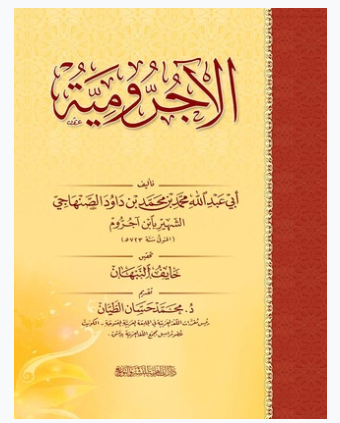
Rather than giving long explanations, Al-Ajrumiyyah presents grammatical concepts in a highly condensed and systematic form.
Students encounter important ideas such as i‘rab, grammatical cases, categories of words, subjects and predicates, and the different grammatical positions words can occupy within sentences.
Main Strengths and Learning Benefits
Al-Ajrumiyyah remains a popular starting point for Arabic grammar because it presents the core rules in a compact and organized way without overwhelming learners with unnecessary detail.
- Short and systematic
- Introduces traditional Arabic grammatical terminology
- Builds a foundation for more advanced classical grammar texts
- Widely taught and supported by commentaries and explanations
However, absolute beginners should remember that the original text is concise. Reading it independently without explanation may be difficult, especially if you have little previous knowledge of Arabic.
If your main reason for studying grammar is to understand older Arabic texts, combining a beginner grammar book with structured study of Classical Arabic can help you see how grammatical rules function in authentic language rather than learning definitions in isolation.

2. Al-Nahw Al-Wadih – Ali Al-Jarim and Mustafa Amin
Al-Nahw Al-Wadih (النحو الواضح) is another important choice for beginners, but its teaching style is quite different from Al-Ajrumiyyah.
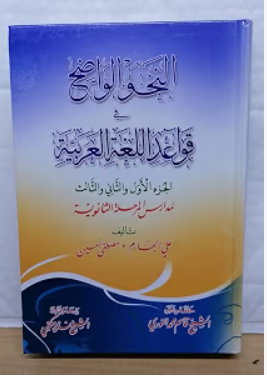
Instead of beginning with a compact rule that the student must memorize, the book generally introduces grammar through examples.
Learners examine sentences, identify patterns, understand the underlying principle, and then work with exercises. This makes it particularly useful for learners who find abstract grammar explanations difficult.
What Makes This Book Useful for Beginners
Al-Nahw Al-Wadih stands out for its gradual, example-based approach, making grammar rules easier to follow and practice as learners move from basic concepts to more advanced structures.
- Progressive organization
- Numerous Arabic examples
- Exercises for reinforcing grammar
- Moves gradually from simple to more complicated structures
- Encourages learners to recognize patterns
For students who already have basic reading ability, Al-Nahw Al-Wadih can provide a useful bridge between beginner grammar and more detailed study.
3. Arabic Grammar: A First Workbook – G. M. Wickens
Some learners understand grammar explanations perfectly but struggle when they have to apply those rules themselves. For them, a workbook can be more useful than another grammar reference.
Arabic Grammar: A First Workbook by G. M. Wickens focuses heavily on practice. It introduces foundational concepts and provides exercises that help learners become more comfortable with areas such as nouns, verbs, sentence construction, and grammatical patterns.
Why This Book Works Well for Grammar Practice
This book is particularly useful for learners who want to strengthen their grammar through regular practice, turning essential rules into skills they can recognize and apply more confidently.
- Practice-oriented format
- Reinforces foundational concepts
- Encourages active rather than passive learning
- Useful alongside another textbook or Arabic course
The important advantage here is application. Grammar becomes easier to remember when you repeatedly identify and produce structures instead of merely reading about them.
4. Al-Kitab Al-Asasi
Al-Kitab Al-Asasi is a broader Arabic-learning resource rather than a narrow grammar manual. It can therefore be useful for students who want grammar to develop alongside vocabulary, reading, and general language ability.
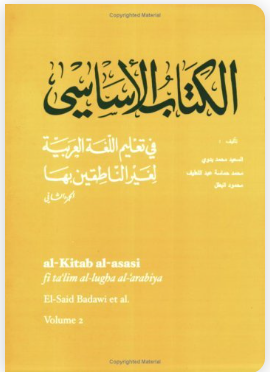
Its material moves from relatively basic language concepts toward more complicated structures, giving learners opportunities to encounter grammar as part of a larger Arabic-learning process.
How This Book Supports Broader Arabic Learning
This book offers a more integrated approach to learning Arabic, helping beginners understand grammar while developing vocabulary and seeing how grammatical structures work in practical language contexts.
- Broader language-learning approach
- Grammar presented alongside vocabulary
- Suitable for progressive study
- Provides exercises and examples
- Helps connect grammar to actual Arabic usage
This approach can be particularly valuable because grammar should ultimately support comprehension and communication rather than exist as an isolated subject.
5. A New Arabic Grammar of the Written Language
A New Arabic Grammar of the Written Language has long been used by English-speaking students studying formal written Arabic.
It covers a wide range of grammatical structures and can remain useful as learners move beyond the earliest beginner stage.
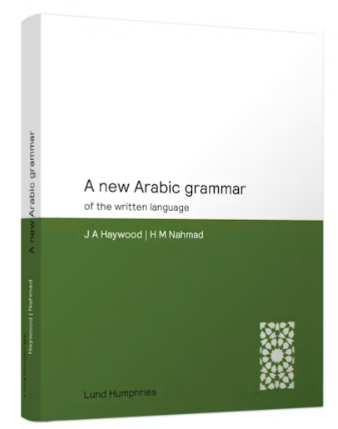
Because it is relatively detailed, however, it may work better as a structured reference than as the only resource for someone who has never studied Arabic before.
Key Benefits for Learning Written Arabic
One of the book’s main advantages is its depth, giving learners a resource they can continue using as they progress from basic grammar to more detailed aspects of written Arabic.
- Extensive grammatical coverage
- Useful explanations for English speakers
- Covers formal written Arabic
- Remains useful beyond beginner level
A learner does not need to read a book like this from beginning to end immediately. Instead, you can study foundational chapters first and return to more advanced sections when you encounter those structures.
6. Arabic: An Essential Grammar – Faruk Abu-Chacra
Arabic: An Essential Grammar is a useful option for learners who want a relatively accessible introduction to Modern Standard Arabic grammar.
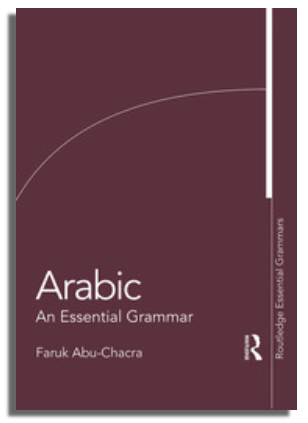
The book explains important structures in English and organizes them in a way that allows students to use it both for systematic study and later reference.
Why This Grammar Guide Is Useful for MSA Learners
The book’s clear organization and English-language explanations make it a practical choice for learners who want to understand essential MSA grammar without beginning with a highly condensed traditional text.
- English explanations
- Organized grammatical presentation
- Covers important MSA structures
- Useful as both a textbook and reference
- Suitable for learners who prefer direct explanations
If your goal is contemporary written Arabic rather than traditional grammatical study, this type of modern grammar guide may feel more accessible than beginning immediately with a classical text.
7. Easy Arabic Grammar – Jane Wightwick and Mahmoud Gaafar
For an absolute beginner, a highly technical grammar reference can create more confusion than clarity. Easy Arabic Grammar by Jane Wightwick and Mahmoud Gaafar takes a more approachable route.
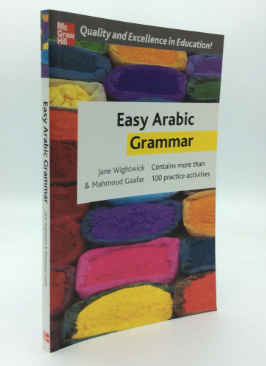
It is designed to make essential structures understandable without forcing beginners to absorb advanced grammatical terminology too early.
What Makes Arabic Grammar Easier to Understand
The book’s greatest strength is its accessibility, offering beginners a straightforward way to build essential grammar knowledge without feeling overwhelmed by complex rules or terminology.
- Beginner-friendly presentation
- Accessible explanations
- Focuses on practical foundations
- Less intimidating than traditional grammar manuals
- Useful for independent study
This makes it a sensible starting point if you want to understand the basic logic of Arabic before moving to deeper grammatical analysis.
8. Modern Standard Arabic Grammar
Once you have established the basics, you may want an Arabic grammar book that provides a more comprehensive explanation of Modern Standard Arabic.
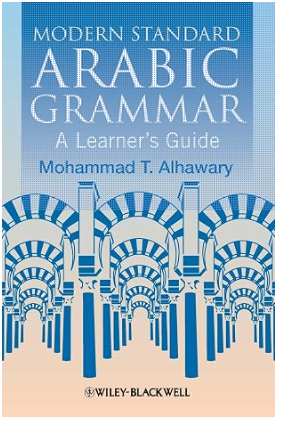
Modern Standard Arabic Grammar: A Learner’s Guide by Mohammad T. Alhawary is especially valuable as learners begin encountering more complex structures and need a detailed resource they can consult.
How This Book Builds Stronger MSA Grammar Skills
The book’s comprehensive approach makes it particularly useful for learners who want to deepen their understanding of MSA grammar and have a reliable reference to return to as they encounter more advanced structures.
- Focuses on MSA
- Detailed grammatical explanations
- Useful for continued study
- Functions well as a reference
- Helps learners move beyond elementary rules
It may be more detailed than necessary for your first few weeks of Arabic, but it can become increasingly useful as your reading level improves.
Read also: How Do U Say No in Arabic? – 15 Ways to Say No Naturally
Inside Our Classrooms
See how we make learning interactive and engaging! Watch a quick snippet of our live, conversational classes in action:
9. All the Arabic You Never Learned the First Time Around – James M. Price
This resource approaches Arabic grammar in a practical and explanatory manner and can be especially useful for learners who have already encountered grammar but still feel that important concepts have never fully clicked.

Rather than functioning like a traditional school grammar text, it can help students revisit areas that commonly cause confusion and organize their existing knowledge more clearly.
How This Resource Helps Fill Grammar Gaps
The book is particularly helpful for strengthening areas that may have remained unclear during earlier study, giving learners a practical way to review familiar grammar concepts and develop a more connected understanding of how they work.
- Practical explanations
- Useful for filling grammar gaps
- Helps reinforce previously encountered concepts
- Suitable as a supplementary resource
It is particularly useful when you already recognize basic Arabic structures but cannot consistently explain or apply them.
10. Wright’s A Grammar of the Arabic Language – William Wright
A Grammar of the Arabic Language by William Wright is one of the most famous English-language reference works on Classical Arabic grammar.
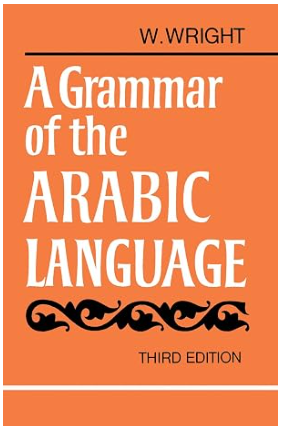
However, it needs an important warning in a list aimed at beginners: this is generally not the easiest Arabic grammar book for beginners.
Its value lies in its depth. Once you have built a solid foundation, Wright can become a powerful reference for understanding Classical Arabic morphology and syntax in much greater detail.
How This Resource Helps Fill Grammar Gaps
The book’s greatest strength is the depth of its grammatical coverage, making it a valuable long-term reference for learners who eventually want to explore Classical Arabic syntax and morphology beyond the beginner level.
- Extremely detailed
- Strong coverage of Classical Arabic
- Valuable long-term reference
- Useful for serious linguistic and classical study
Rather than starting with Wright and trying to understand everything, beginners are usually better served by first mastering basic sentence structures, verb patterns, grammatical cases, and common particles.
What Should an Arabic Grammar Book for Beginners Teach First?
Before buying or committing to a textbook, check its table of contents carefully.
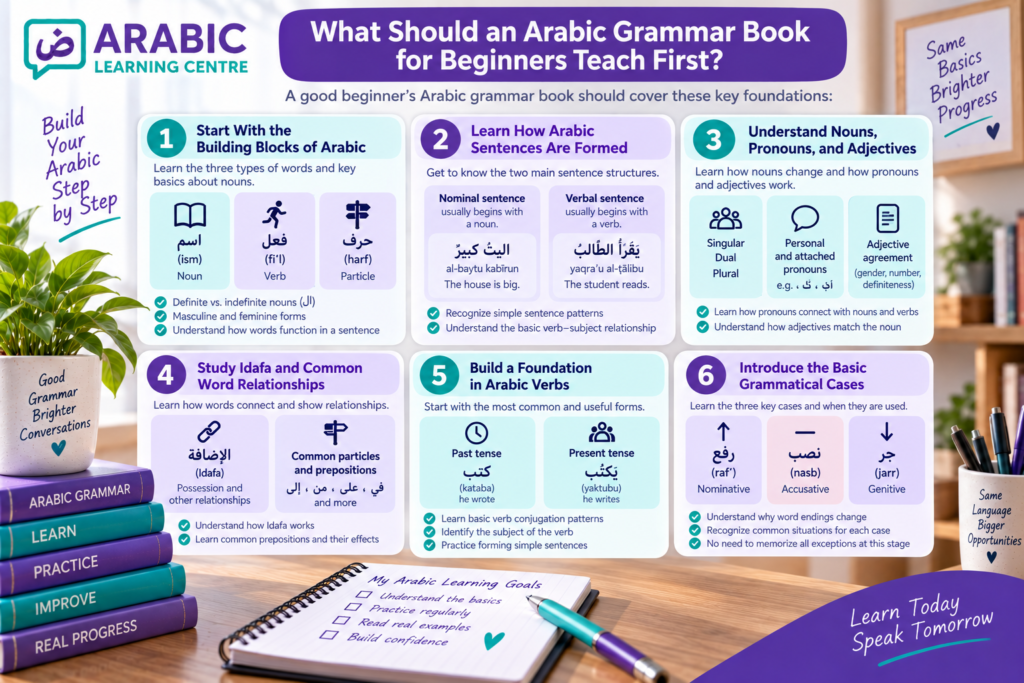
A good Arabic grammar book for beginners should build your understanding step by step, starting with the basic structure of Arabic before moving into exceptions, complex rules, or advanced grammatical discussions.
1. Start With the Building Blocks of Arabic
Begin with the three categories of Arabic words: ism (noun), fi‘l (verb), and harf (particle). Understanding these categories makes it much easier to identify how words function inside a sentence.
You should also learn the difference between definite and indefinite nouns, including the use of the definite article al-, as well as the basic rules of masculine and feminine forms.
2. Learn How Arabic Sentences Are Formed
A beginner grammar book should introduce the two main sentence structures:
- Nominal sentences: sentences that typically begin with a noun.
- Verbal sentences: sentences that typically begin with a verb and introduce basic verb–subject relationships.
At this stage, the goal is to recognize how simple Arabic sentences are constructed rather than analyze complicated sentence patterns.
3. Understand Nouns, Pronouns, and Adjectives
Next, you should learn singular, dual, and plural forms, since number plays an important role in Arabic grammar.
Your book should also introduce personal and attached pronouns and explain how they connect with nouns, verbs, and prepositions. From there, you can study adjective agreement, including how adjectives correspond with nouns in gender, number, definiteness, and eventually case.
4. Study Idafa and Common Word Relationships
The Idafa construction is one of the most common structures in Arabic and should appear relatively early in a beginner course. It is used to express possession and other relationships between nouns.
You should also become familiar with common particles and prepositions, especially because they can affect both the meaning of a sentence and the grammatical form of the words that follow them.
5. Build a Foundation in Arabic Verbs
Beginners should learn basic verb conjugation, particularly the past and present forms. The focus should initially be on recognizing common patterns, identifying the subject of a verb, and forming simple sentences correctly.
More complicated verb forms and detailed conjugation rules can be introduced gradually after these foundations become comfortable.
6. Introduce the Basic Grammatical Cases
Finally, a beginner-friendly book should provide a clear introduction to the three fundamental grammatical cases: raf‘ (nominative), nasb (accusative), and jarr (genitive).
Beginners do not need to memorize every case-related exception immediately. Instead, they should understand why word endings change and begin recognizing the most common situations in which each case appears.
You do not need to master every exception before moving forward. At beginner level, recognizing common structures, understanding how they work, and using them correctly is far more valuable than memorizing every possible grammatical detail.
Read also: Arabic Alphabet Beginning Middle End
Can You Learn Arabic Grammar From a Book Alone?
You can learn a great deal from books, especially if you are disciplined about exercises and revision. However, reading grammar explanations alone rarely develops complete language ability.
Knowing that a sentence follows a particular rule does not automatically mean you will recognize that structure instantly while reading or produce it naturally when speaking.
A stronger study method combines:
- A structured grammar book
- Written exercises
- Regular Arabic reading
- Vocabulary study
- Listening practice
- Sentence creation
- Correction and feedback
- Regular speaking practice
If communication is one of your main goals, complementing grammar study with an Arabic speaking course gives you opportunities to turn grammatical knowledge into language you can actually use.

How to Study an Arabic Grammar Book Effectively?
Buying several grammar books at once does not necessarily accelerate your progress. In fact, repeatedly switching between resources can make beginner grammar more confusing.
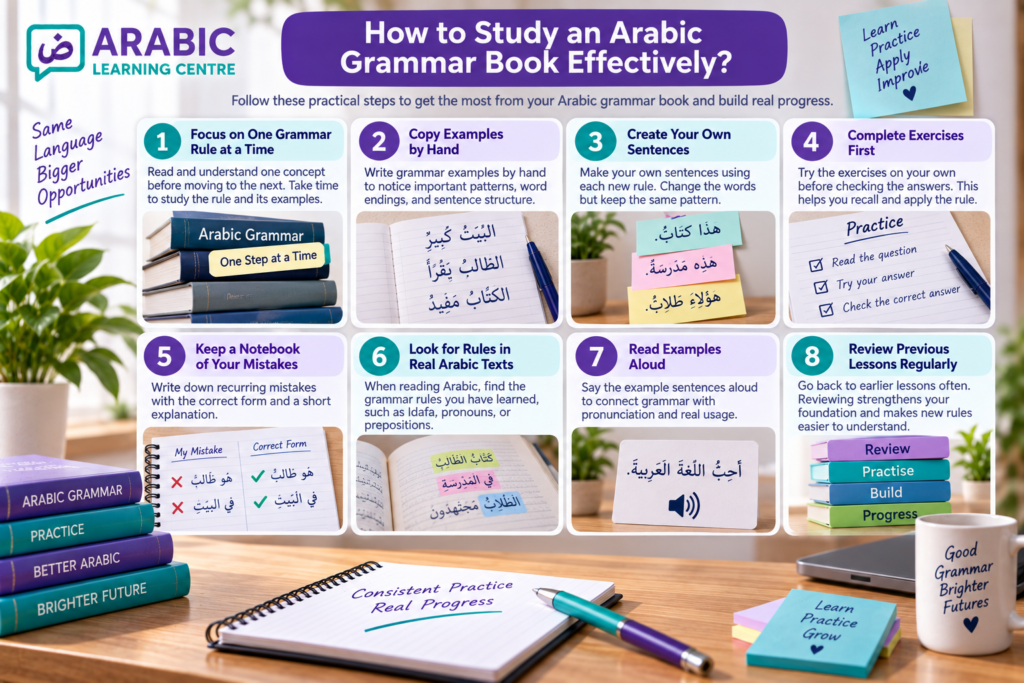
A better approach is to choose one main Arabic grammar book for beginners and follow a consistent study routine that combines understanding, practice, and review.
1. Focus on One Arabic Grammar Rule Before Moving to the Next
Read and understand one grammar concept at a time rather than rushing through several chapters. Give yourself enough time to understand the rule, study its examples, and recognize how it works before introducing another concept.
2. Copy Grammar Examples by Hand to Notice Important Patterns
Writing examples by hand encourages you to pay closer attention to word endings, agreement, sentence structure, and other grammatical details that can easily be missed when simply reading a page.
3. Create Your Own Arabic Sentences Using Each New Grammar Rule
After studying a rule, create new sentences based on the same structure. Change the nouns, verbs, adjectives, or pronouns while preserving the grammatical pattern you are practicing.
4. Complete Grammar Exercises Before Looking at the Correct Answers
Attempt each exercise independently before checking the answer key. This forces you to recall and apply what you have learned instead of relying on recognition alone.
5. Keep a Notebook of the Arabic Grammar Mistakes You Make Repeatedly
Write down recurring mistakes along with the correct form and a short explanation. Over time, this creates a personalized review resource focused specifically on the areas you find most difficult.
6. Look for the Grammar Rules You Learn in Real Arabic Texts
When reading Arabic outside your textbook, actively search for structures you have already studied, such as Idafa, adjective agreement, pronouns, prepositions, and nominal or verbal sentences.
7. Read Arabic Grammar Examples Aloud to Connect Rules With Real Usage
Reading example sentences aloud helps connect written grammar with pronunciation and natural sentence patterns. This is particularly useful if you want grammar to support both your reading and spoken Arabic.
8. Review Previous Grammar Lessons Before Learning New Rules
Return regularly to earlier lessons rather than continuously adding new material. Reviewing older concepts strengthens your foundation and makes it easier to understand more advanced grammar later.
The goal is not to finish an Arabic grammar book for beginners as quickly as possible. The goal is to reach a point where the grammar you study becomes easy to recognize, understand, and use independently.
How Many Arabic Grammar Books Does a Beginner Need?
Usually, one primary textbook and one supplementary reference are enough for a beginner.
Using too many books at the same time can introduce different terminology and teaching methods, making basic grammar feel more complicated than it actually is.
Your main book should provide a clear learning sequence, practical examples, and exercises that help you apply each rule.
The second resource should mainly serve as a reference, offering alternative explanations or additional examples whenever a concept remains unclear.
Once your foundation becomes stronger, you can gradually add specialized books on nahw, sarf, Classical Arabic, Quranic Arabic, or advanced Modern Standard Arabic depending on your learning goals.
At that stage, additional resources become more useful because you already have enough background to understand and compare different explanations.
For most beginners, finishing and practicing one well-structured grammar book is more valuable than collecting many resources. The goal is not to own ten Arabic grammar books, but to understand the rules, recognize them in real Arabic, and use them correctly.
Don’t Just Take Our Word For It
Take a look inside our vibrant classes and see our students and teachers in action. Click below to watch our classroom experience:
Take Your Arabic Grammar Beyond the Textbook With Arabic Learning Centre
Choosing the right Arabic grammar book for beginners gives you a strong starting point, but real progress comes when you begin applying those rules to actual Arabic. If you want structured guidance alongside your independent study.
Arabic Learning Centre offers online Arabic courses that help learners develop grammar, vocabulary, reading, and practical language skills with guided instruction.
Instead of struggling alone with difficult concepts such as i‘rab, sentence structure, verb patterns, or nahw and sarf, you can learn within a progressive programme and receive clarification as you study.
The centre also offers specialized options for learners who want to progress toward Classical Arabic and more advanced grammatical study.
Start your free trial with Arabic Learning Centre and experience structured Arabic learning before committing to a course.
Courses We Offer:
- Business Arabic Course
- Learn Arabic from Zero
- Medical Arabic Course
- Learning Arabic for Non Arabic Speakers
- Learn Arabic in Saudi Arabia
- Learn to Read Arabic Course
- Arabic Grammar Course
- Arabic Speaking Course
- Arabic Script writing course
- Arabic Vocabulary Course
- Arabic Pronunciation Course
Conclusion
Finding the best Arabic grammar book for beginners depends on your level, preferred learning style, and long-term reason for studying Arabic.
Al-Ajrumiyyah offers a traditional foundation. Al-Nahw Al-Wadih teaches through examples. Arabic Grammar: A First Workbook emphasizes practice, while modern English-language resources such as Arabic: An Essential Grammar can make grammatical concepts more accessible to independent learners.
Whichever book you choose, avoid measuring progress by the number of pages you finish. Study a manageable rule, understand the examples, complete exercises, create your own sentences, and then look for that structure in real Arabic.
A good Arabic grammar book for beginners gives you the map. Consistent reading, listening, speaking, practice, and correction teach you how to follow it.
Frequently Asked Questions
What is the best Arabic grammar book for beginners?
There is no single best book for every learner. Al-Ajrumiyyah is valuable for students interested in traditional Classical Arabic grammar, while books such as Easy Arabic Grammar may be more accessible to absolute beginners who prefer explanations in English.
Is Al-Ajrumiyyah suitable for beginners?
Yes, Al-Ajrumiyyah is traditionally considered an introductory grammar text. However, its explanations are extremely concise, so non-Arabic-speaking beginners often benefit from studying it with a teacher, commentary, or supporting course.
What should I learn first in Arabic grammar?
Begin with basic word categories, nominal and verbal sentences, pronouns, gender, number, definiteness, adjective agreement, idafa, basic verb conjugation, and common particles. Grammatical cases and more detailed syntax can then be developed progressively.
Should I learn Arabic grammar before speaking Arabic?
You do not need to master grammar before speaking. Grammar and speaking can develop together. Basic grammar helps you construct clearer sentences, while speaking gives you opportunities to apply those structures until they become more natural.
Can I learn Arabic grammar by myself?
Yes, particularly at beginner level. Choose one structured book, complete its exercises, write your own examples, and review consistently. However, teacher feedback can help identify misunderstandings that are difficult to notice during self-study.
How long does it take to learn basic Arabic grammar?
There is no fixed timeline. Progress depends on your existing Arabic level, study frequency, the type of Arabic you are learning, and how much practice you do outside the textbook. A learner studying consistently will usually make more meaningful progress than someone who occasionally reads several grammar books without applying the rules.
Related Articles
Arabic Grammar