 Arabic Grammar
| Key Takeaways |
| The past continuous tense in Arabic expresses an ongoing action in the past using the verb كَانَ (kāna) followed by a present-tense verb (المضارع). |
| Arabic constructs past continuous with كَانَ conjugated for the subject, then the imperfect verb conjugated to match person, gender, and number. |
| Arabic past continuous relies on the imperfect verb (المضارع) to carry the continuity — not a separate progressive particle. |
| Mastering كَانَ + المضارع unlocks past continuous, past habitual, and past progressive meanings across all Arabic tenses. |
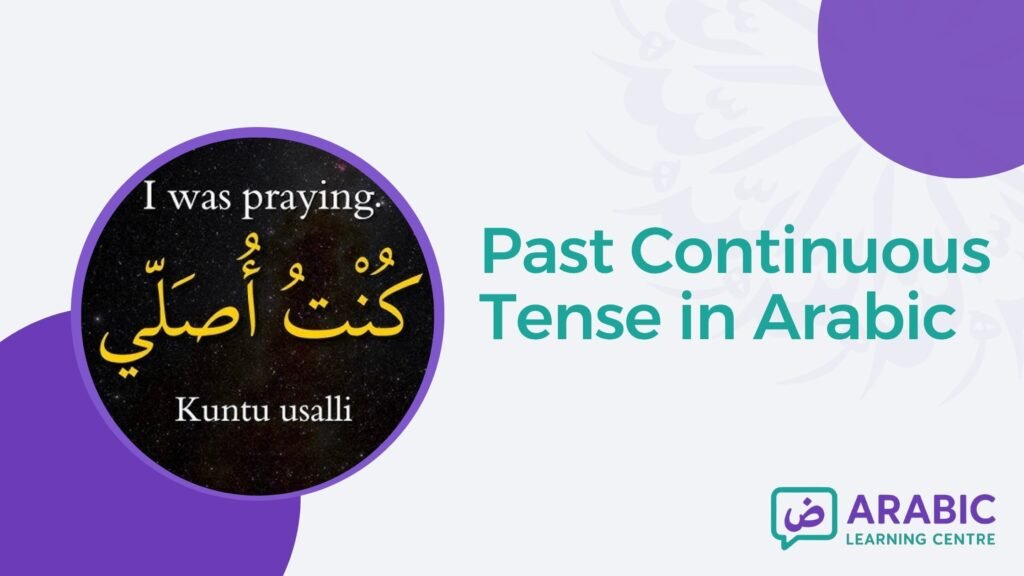
The past continuous tense in Arabic is formed by combining the verb كَانَ (kāna, “was/were”) with the present-tense imperfect verb (الفعل المضارع). This construction tells us that an action was in progress at a specific past moment — exactly like “I was studying” or “she was walking” in English.
What makes this structure so valuable for learners is its regularity. Once you know how to conjugate كَانَ and the imperfect verb independently, combining them follows a consistent, predictable pattern.
Arabic past continuous is not an exception-heavy structure — it is one of the most rule-governed forms in the language.
What Is the Past Continuous Tense?
The past continuous in Arabic is the كَانَ + الفعل المضارع construction. كَانَ (the verb “to be” in past tense) carries the time reference — placing the action in the past — while the imperfect verb carries the ongoing, incomplete nature of the action.
Both verbs must agree in person, gender, and number with the subject of the sentence.
This two-verb system is the standard in Classical Arabic (الفصحى) and Modern Standard Arabic (MSA). It is documented extensively in core Nahw references including Ibn Hisham’s Awdah al-Masālik and al-Jurjānī’s grammatical tradition.
The basic formula is:
| Component | Arabic | Role |
| Subject (الفاعل) | هُوَ / هِيَ / أَنَا etc. | Identifies who is acting |
| كَانَ (conjugated) | كَانَ / كَانَتْ / كُنْتُ | Sets the past time frame |
| Imperfect Verb (المضارع) | يَدْرُسُ / تَكْتُبُ | Carries the ongoing action |
Working through a structured program like The Arabic Learning Centre’s Arabic Grammar Course will help you internalize this formula across all persons and genders with guided practice and immediate correction.
Start Learning Arabic Grammar with a Free Trial

How Do You Conjugate كَانَ for Past Continuous in Arabic?
كَانَ belongs to the category of الأفعال الناقصة (af’āl nāqisa) — the so-called “deficient verbs” or “incomplete verbs” in Arabic Nahw. It is conjugated in the past tense across all persons, genders, and numbers.
Crucially, كَانَ itself is a past-tense verb, so it anchors the entire construction in past time.
Here is the full conjugation of كَانَ in the past tense:
| Pronoun (English) | Arabic Pronoun | كَانَ Conjugation | Transliteration |
| I | أَنَا | كُنْتُ | kuntu |
| You (m. sg.) | أَنْتَ | كُنْتَ | kunta |
| You (f. sg.) | أَنْتِ | كُنْتِ | kunti |
| He | هُوَ | كَانَ | kāna |
| She | هِيَ | كَانَتْ | kānat |
| We | نَحْنُ | كُنَّا | kunnā |
| You (m. pl.) | أَنْتُمْ | كُنْتُمْ | kuntum |
| You (f. pl.) | أَنْتُنَّ | كُنْتُنَّ | kuntunna |
| They (m.) | هُمْ | كَانُوا | kānū |
| They (f.) | هُنَّ | كُنَّ | kunna |
Notice that كَانَ follows the same root pattern (ك-و-ن) throughout. At The Arabic Learning Centre, students in our Arabic Grammar Course practice these conjugations systematically before combining them with the imperfect verb — this sequencing prevents the gender-agreement errors that appear when learners rush ahead.
Shots Videos from Our Courses
How Does the Imperfect Verb Function in the Arabic Past Continuous Construction?
The imperfect verb in the كَانَ + المضارع structure appears in its indicative (مرفوع) form, marked by a Damma (ضَمَّة) on the final root letter. It does not take the subjunctive or jussive form here — an error that intermediate learners sometimes make under the false impression that كَانَ governs a mood change.
The imperfect verb must also agree with the subject in person, gender, and number — independently of how كَانَ is conjugated. Both verbs track the same subject.
For example, the verb كَتَبَ (kataba, “to write”) conjugated in the imperfect:
| Subject | Imperfect Verb | Transliteration |
| هُوَ (he) | يَكْتُبُ | yaktubu |
| هِيَ (she) | تَكْتُبُ | taktubu |
| أَنَا (I) | أَكْتُبُ | aktubu |
| نَحْنُ (we) | نَكْتُبُ | naktubu |
| هُمْ (they m.) | يَكْتُبُونَ | yaktubūna |
To review imperfect verb forms in depth, the guide on how to conjugate verbs in Arabic at The Arabic Learning Centre blog covers all conjugation patterns with clear examples.
Full Past Continuous Sentence Examples in Arabic
The clearest way to absorb the كَانَ + المضارع structure is through complete sentences. Each example below shows the formula operating with a different subject.
He Was Studying — كَانَ يَدْرُسُ
كَانَ الطَّالِبُ يَدْرُسُ فِي الْمَكْتَبَةِ
Kāna al-ṭālibu yadrusu fī al-maktabah.
The student was studying in the library.
Here كَانَ (past, 3rd person masculine singular) + يَدْرُسُ (present, 3rd person masculine singular) combine smoothly. Both agree with الطَّالِبُ (al-ṭālibu, “the student” — masculine).
She Was Writing — كَانَتْ تَكْتُبُ
كَانَتِ الْبِنْتُ تَكْتُبُ رِسَالَةً
Kānati al-bintu taktubu risālatan.
The girl was writing a letter.
Notice that كَانَتْ (feminine) and تَكْتُبُ (feminine) both agree with الْبِنْتُ (al-bintu, “the girl” — feminine). This dual agreement is mandatory.
I Was Listening — كُنْتُ أَسْمَعُ
كُنْتُ أَسْمَعُ الدَّرْسَ بِاهْتِمَامٍ
Kuntu asmaʿu al-darsa bi-ihtimām.
I was listening to the lesson attentively.
They Were Playing — كَانُوا يَلْعَبُونَ
كَانَ الْأَوْلَادُ يَلْعَبُونَ فِي الْحَدِيقَةِ
Kāna al-awlādu yalʿabūna fī al-ḥadīqah.
The boys were playing in the garden.
Note: when الْأَوْلَادُ (al-awlādu, “the boys”) is the subject, كَانَ (not كَانُوا) is used because the subject follows the verb — a classical Arabic rule where a verb preceding a plural noun takes singular form.
Read also: Arabic Present Tense
What Are the Most Common Mistakes Learners Make with Past Continuous in Arabic?
The most frequent error in the كَانَ + المضارع construction is gender mismatch — using كَانَ with a feminine subject when كَانَتْ is required, or mismatching the imperfect verb’s gender.
This is the single error our certified instructors at The Arabic Learning Centre correct most consistently in beginner and intermediate students.
Mistake 1 — Gender Agreement Error
❌ كَانَ الْبِنْتُ تَكْتُبُ.(incorrect — كَانَ with feminine subject)
✅ كَانَتِ الْبِنْتُ تَكْتُبُ. (correct)
Mistake 2 — Using the Past Tense Verb Instead of the Imperfect
A frequent confusion, especially for beginners who learned the past tense first:
❌ كَانَ الطَّالِبُ دَرَسَ. (incorrect — double past tense)
✅ كَانَ الطَّالِبُ يَدْرُسُ. (correct — كَانَ + imperfect)
The sentence كَانَ دَرَسَ (kāna darasa) does not exist as standard Arabic past continuous. The imperfect (المضارع) is non-negotiable in this construction.
Mistake 3 — Incorrect Mood on the Imperfect Verb
Some learners apply a Sukoon or Fatha to the final letter of the imperfect verb, producing the jussive or subjunctive mood by mistake. The imperfect in this structure always takes the indicative (مرفوع) form — ending in Damma (ُ) for singular forms.
For a deeper look at diacritical marks and how they signal grammatical function, the article on harakat in Arabic explains the Damma, Fatha, and Kasra system that governs these endings.
How Does Arabic Past Continuous Differ from Simple Past Tense?
Arabic past continuous (كَانَ + المضارع) differs from the simple past tense (الماضي) in the nature of the action described. The simple past describes a completed action. The past continuous describes an action that was in progress — incomplete, ongoing — at a past moment.
| Tense | Arabic Example | Meaning |
| Simple Past (ماضي) | دَرَسَ الطَّالِبُ | The student studied. (completed) |
| Past Continuous | كَانَ الطَّالِبُ يَدْرُسُ | The student was studying. (ongoing) |
The distinction matters in narrative contexts — for example, when describing what someone was doing when something else happened:
كَانَ يَقْرَأُ حِينَ دَخَلَ أَخُوهُ
Kāna yaqraʾu ḥīna dakhala akhūhu.
He was reading when his brother entered.
Here the past continuous (كَانَ يَقْرَأُ) sets the background action, while the simple past (دَخَلَ) expresses the interrupting event. This interplay between the two tenses is a hallmark of Arabic narrative style.
For a broader overview of how Arabic tenses operate, visit the guide on tenses in Arabic.
Past Continuous vs. Past Habitual in Arabic — What Is the Difference?
Both past habitual and past continuous use the كَانَ + المضارع structure, which is why many learners initially conflate them. The distinction is not grammatical but contextual — conveyed through time adverbs and surrounding sentences.
كَانَ يَشْرَبُ الْقَهْوَةَ كُلَّ صَبَاحٍ
Kāna yashrabu al-qahwata kulla ṣabāḥin.
He used to drink coffee every morning.
(past habitual — كُلَّ صَبَاحٍ signals repetition)
كَانَ يَشْرَبُ الْقَهْوَةَ عِنْدَمَا اتَّصَلْتُ
Kāna yashrabu al-qahwata ʿindamā ittaṣaltu.
He was drinking coffee when I called.
(past continuous — specific interrupted moment)
The grammar is identical. Context — specifically, time expressions like كُلَّ صَبَاحٍ (every morning) versus عِنْدَمَا (when) — is what signals the meaning to the reader or listener.
This is a nuance that students at The Arabic Learning Centre encounter in the intermediate stage of the Arabic Grammar Course, usually after they have already internalized the basic structure.
Start Learning Arabic Grammar with a Free Trial

Exercises to Practice the Past Continuous Tense in Arabic
Applying the rule actively is how it becomes automatic. The following exercises are graduated from recognition to production.
Exercise 1 — Translate into Arabic (Past Continuous)
Construct a كَانَ + المضارع sentence for each prompt. Check gender and number agreement carefully.
- She was reading a book.
- We were eating lunch.
- The students (m.) were writing their lessons.
- I was watching the sky.
- They (f.) were speaking Arabic.
Answer Key:
- كَانَتْ تَقْرَأُ كِتَابًا
- كُنَّا نَأْكُلُ الْغَدَاءَ
- كَانَ الطُّلَّابُ يَكْتُبُونَ دُرُوسَهُمْ
- كُنْتُ أَنْظُرُ إِلَى السَّمَاءِ
- كُنَّ يَتَكَلَّمْنَ الْعَرَبِيَّةَ
Exercise 2 — Identify the Error
Each sentence below contains one error. Find and correct it.
- كَانَتِ الطَّالِبُ يَدْرُسُ
- كَانَ الْبِنْتُ تَكْتُبُ
- كُنْتُ دَرَسْتُ الْعَرَبِيَّةَ
Corrections:
- Subject الطَّالِبُ is masculine → كَانَ الطَّالِبُ يَدْرُسُ.
- Subject الْبِنْتُ is feminine → كَانَتِ الْبِنْتُ تَكْتُبُ.
- Imperfect required, not past → كُنْتُ أَدْرُسُ الْعَرَبِيَّةَ.
For learners who want guided practice with a certified instructor, The Arabic Learning Centre’s Arabic Course for Beginners builds from verb fundamentals through to the كَانَ construction in a structured, personalized sequence.
Our Students Reviews
Join Our Arabic Course for Beginners With a Free Trial
Read also: Future Tense in Arabic
Begin Mastering Arabic Grammar with Certified Instructors at The Arabic Learning Centre
The كَانَ + المضارع structure gives you an immediate, practical tool for real Arabic communication — narrating stories, describing memories, and engaging in natural conversation.
The Arabic Learning Centre offers:
- 1-on-1 sessions with certified native Arabic instructors
- Flexible scheduling available 24/7
- Structured curricula from beginner to advanced
- Personalized correction targeting your exact error patterns
- A free trial lesson to experience the method before committing
Explore the Arabic Grammar Course or the Arabic Course for Beginners and take your first step today.
Check out our top courses in Arabic and choose the course you need to start learning Arabic today:
- Arabic Course for Beginners
- Arabic Script Writing Course
- Arabic Speaking Course
- Learn Arabic Letters for Tajweed
- Learning Arabic Grammar
- Arabic Vocabulary Course
- Fusha Arabic Course
- Classical Arabic Course
- Arabic Course for Islamic Studies
- Quranic Arabic Course
- Learn Arabic for New Muslims
Start with a FREE trial class and enhance your Arabic language skills

Conclusion
The past continuous tense in Arabic follows a clear, learnable formula: conjugate كَانَ to match your subject in person, gender, and number, then follow it with the imperfect verb in the indicative mood. Both verbs must agree with the subject — this double agreement is the structural heart of the construction.
The most important distinction learners carry forward is that كَانَ sets the time (past), while the imperfect verb (المضارع) carries the aspect (ongoing). Neither verb alone communicates both — they work as a unit. Understanding this immediately clarifies why the simple past verb cannot replace the imperfect in this structure.
Frequently Asked Questions About the Past Continuous Tense in Arabic
What is the past continuous tense in Arabic called in Nahw terminology?
The past continuous in Arabic is not a distinct named form in classical Nahw (النحو). It is described as the كَانَ + المضارع construction, where كَانَ functions as a فعل ناقص (fiʿl nāqis — deficient/incomplete verb) that takes a subject (اسم كان) and a predicate (خبر كان), with the imperfect verb serving as the predicate of كَانَ.
Does the imperfect verb after كَانَ change its form?
The imperfect verb in the كَانَ + المضارع structure remains in the indicative (مرفوع) mood — no mood change occurs. It takes a Damma ( ُ ) on its final letter in singular forms. Some learners incorrectly apply a Sukoon or Fatha, producing jussive or subjunctive forms, which are grammatically wrong in this context. The verb conjugates fully for person, gender, and number.
Can كَانَ be used with other verb patterns for past continuous meaning?
Yes — كَانَ can precede any imperfect verb regardless of the verb’s root pattern (sound verb, hollow verb, defective verb, doubled verb, etc.). The كَانَ + المضارع rule applies universally across verb categories. The imperfect verb in each pattern must still agree with the subject and appear in the indicative mood.
How do I express past continuous with a female plural subject in Arabic?
For a feminine plural subject (هُنَّ), use كُنَّ (past tense, 3rd person feminine plural) followed by the imperfect verb in its feminine plural form — يَفْعَلْنَ pattern. For example: كُنَّ يَدْرُسْنَ (kunna yadrusna) — “They (f.) were studying.” The ن suffix on the imperfect verb is essential for feminine plural agreement and must never be dropped.