 Arabic Vocabulary & Speaking
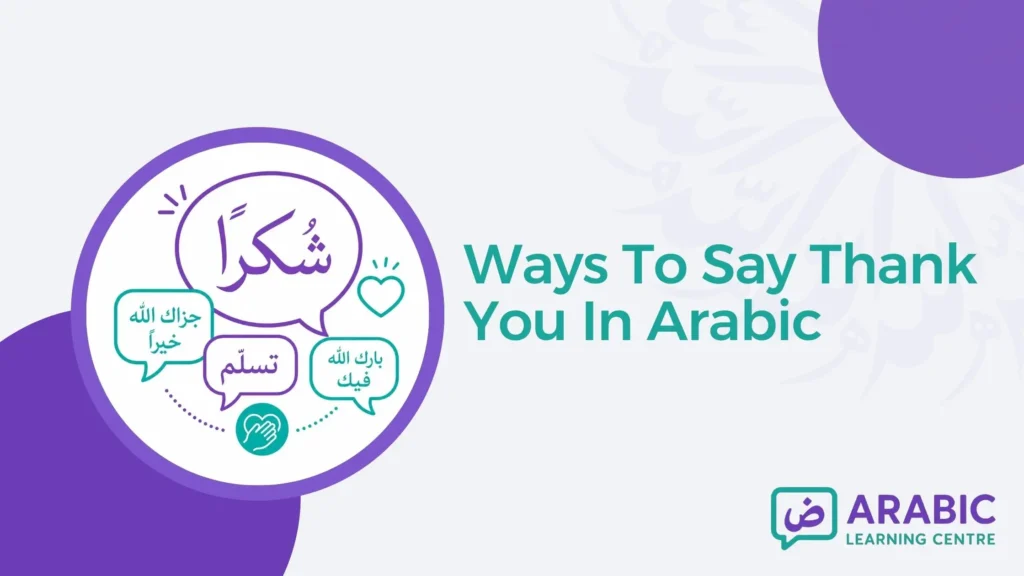
Learning how to say thank you in arabic is one of the first steps toward speaking Arabic politely and naturally. The most common word is شكرًا / shukran, but Arabic has many richer expressions that show gratitude, respect, warmth, and cultural awareness.
In Arabic-speaking communities, gratitude is not only about saying a direct “thank you.” People often use phrases that mean “may God give you health,” “may Allah reward you,” “your kindness made me shy,” or “there is no one like you.” These expressions reflect the deep value Arabic culture places on generosity, respect, and appreciation.
How To Say Thank You In Arabic?
The most direct and widely understood way to say thank you in arabic is شكرًا / shukran. It works in both formal and informal situations, making it the safest phrase for beginners.
شكرًا / Shukran means “thank you.” It comes from the Arabic root شكر / shakara, which means “to thank” or “to be grateful.” You can use it with friends, teachers, shopkeepers, coworkers, or strangers.
| Arabic Phrase | Transliteration | Meaning | Usage |
| شكرًا | Shukran | Thank you | General use |
| شكرًا لكَ | Shukran laka | Thank you | To a male |
| شكرًا لكِ | Shukran laki | Thank you | To a female |
| شكرًا لكم | Shukran lakum | Thank you | To a group |
You can simply say shukran, or you can make it more specific by adding lak / laka / laki / lakum, depending on who you are speaking to.
Thanks A Lot In Arabic
If you want to sound more appreciative, you can use stronger expressions that mean “thank you very much” or “many thanks.” These are useful in formal conversations, emails, and situations where someone has done something important for you.
The most common phrase for “thanks a lot in Arabic” is:
شكرًا جزيلًا / Shukran jazīlan
This means thank you very much or many thanks.
The word جزيلًا / jazīlan means “a lot” or “greatly,” so the phrase gives more weight to your gratitude than a simple shukran.
Other strong expressions include:
| Arabic Phrase | Transliteration | Meaning |
| شكرًا جزيلًا | Shukran jazīlan | Thank you very much |
| أشكرك جزيل الشكر | Ashkuruka jazīl ash-shukr | I thank you very much |
| مع جزيل الشكر | Ma‘a jazīl ash-shukr | With many thanks |
These expressions are especially suitable for professional writing, formal emails, academic communication, or respectful spoken Arabic.
Formal Ways To Say Thank You In Arabic
Formal Arabic expressions are useful in business, education, official messages, and polite communication. They sound respectful and are often used in written Arabic.
One common formal expression is:
أشكركم على حسن تعاونكم
Ashkurukum ‘alā husni ta‘āwunikum
Meaning: I thank you for your kind cooperation.
This phrase is often used in professional emails, official letters, and business communication. It is more polished than simply saying shukran.
You can also say:
مع جزيل الشكر
Ma‘a jazīl ash-shukr
Meaning: With many thanks.
This phrase works well at the end of emails or formal messages.
Shots Videos from Our Courses
Deep And Heartfelt Ways To Say Thank You In Arabic
Sometimes, a simple “thank you” is not enough. Arabic has emotional expressions that show deep appreciation when someone helps you, supports you, or does something very generous.
These expressions are useful when you feel touched, embarrassed by someone’s kindness, or deeply grateful from the heart.
| Arabic Phrase | Transliteration | Meaning |
| لا أعرف كيف أشكرك | Lā a‘rifu kayfa ashkuruk | I do not know how to thank you |
| أخجلتني بصنيعك | Akhjaltanī bi ṣanī‘ik | I appreciate your favor |
| خجلني كرمك | Khajjalanī karamuk | Your kindness made me shy |
| أشكرك من كل قلبي | Ashkuruka min kulli qalbī | I thank you from the bottom of my heart |
These phrases are stronger than thank you in arabic as a direct translation. They show emotion, humility, and sincere appreciation.
Build Real Arabic Confidence With An Intensive Arabic Course
If you want to move beyond simple phrases like thank you in Arabic and start using Arabic confidently in real conversations, The Arabic Learning Centre’s Intensive Arabic Course gives you the structured support you need. Through focused online lessons, practical speaking practice, Arabic grammar training, and high-frequency vocabulary, this course helps dedicated learners build faster progress in both understanding and communication.
Start with an intensive Arabic learning path today and learn how to use everyday expressions, formal phrases, and cultural Arabic naturally with expert guidance.
Islamic Way To Say Thank You In Arabic
In Islamic culture, one of the most meaningful ways to thank someone is by making du‘aa for them. Instead of only saying “thank you,” you ask Allah to reward the person.
The most common Islamic expression is:
جزاك الله خيرًا
Jazāk Allah khayran
Meaning: May Allah reward you with goodness.
This phrase is widely used among Muslims. It is suitable when someone helps you, teaches you, supports you, gives you advice, or does something beneficial.
| Arabic Phrase | Transliteration | Used For |
| جزاك الله خيرًا | Jazāk Allah khayran | To a male |
| جزاكِ الله خيرًا | Jazāki Allah khayran | To a female |
| جزاكم الله خيرًا | Jazākum Allah khayran | To a group |
A common response is:
ولك مثله
Wa laka mithluh
Meaning: And the same to you.
This expression carries a spiritual meaning, so it is more than a casual way to say thank you in arabic. It is both gratitude and prayer.
Quranic Arabic And The Meaning Of Gratitude
Gratitude is an important value in Quranic Arabic. The word شكر / shukr means thankfulness, and the Quran often connects gratitude with faith, blessing, and spiritual awareness.
One powerful verse says:
فَاذْكُرُونِي أَذْكُرْكُمْ وَاشْكُرُوا لِي وَلَا تَكْفُرُونِ
“So remember Me; I will remember you. And be grateful to Me and do not deny Me.”
This verse shows that gratitude is not only a social habit but also a spiritual responsibility.
Another well-known verse says:
لَئِنْ شَكَرْتُمْ لَأَزِيدَنَّكُمْ
“If you are grateful, I will surely increase you.”
This teaches that thankfulness is connected with increase, blessing, and recognition of Allah’s favors.
So, when learning how to say thank you in arabic, it is also useful to understand the deeper religious and cultural meaning of gratitude in Arabic-speaking societies.
Everyday Spoken Ways To Say Thank You In Arabic
Spoken Arabic includes many natural expressions that native speakers use every day. These phrases may not translate directly into English, but they are very common in real conversations.
In many Arabic dialects, people do not always say shukran on its own. Instead, they use phrases that fit the situation, such as thanking someone for work, service, kindness, or hospitality.
يعطيك العافية / Ya‘tik Al-‘Afiyah
This phrase literally means may God give you health. In real usage, it means something like “thank you for your effort” or “well done.”
You can use it when someone is working hard, serving you, helping you, or doing something useful.
Examples of when to use it:
- When entering a shop
- After someone helps you
- When thanking a taxi driver
- When someone provides a service
- When someone is cleaning, working, or carrying something
Note: In Moroccan Darija, ‘afiya can mean “fire,” so this phrase may not work the same way in Morocco.
يسلموا إيديك / Yislamu Ideyk
This expression literally means may your hands be safe or may your hands enjoy health. It is used when someone does something nice for you with their hands.
You can say it when someone cooks for you, gives you tea, opens a door, sends you a file, repairs something, or helps you physically.
| Arabic Phrase | Transliteration | Used For |
| يسلموا إيديك | Yislamu ideyk | To a male |
| يسلموا إيديكي | Yislamu ideyki | To a female |
| يسلموا إيديكم | Yislamu ideykum | To a group |
This is a warm and natural phrase, especially in Levantine Arabic.
ما قصرت / Ma Qassart
This phrase means something like you did not fall short or you did everything perfectly. It is used when someone has helped you well or completed something properly.
You can use it after someone gives you excellent service, helps you move, hosts you, repairs something, teaches you, or supports you.
| Arabic Phrase | Transliteration | Meaning |
| ما قصرت | Ma qassart | You did great |
| ما قصرتي | Ma qassarti | You did great — to a female |
| ما قصرتوا | Ma qassartu | You all did great |
This phrase is one of the most useful alternatives to thank you in arabic because it sounds natural and appreciative.
كلك ذوق / Kullak Dhawq
This phrase means you are all taste or you are very kind and polite. It is often used when someone gives you a compliment.
If someone praises your Arabic, clothes, home, work, or personality, you can respond with:
كلك ذوق / Kullak dhawq
Meaning: That is very kind of you.
Forms include:
| Arabic Phrase | Transliteration | Used For |
| كلك ذوق | Kullak dhawq | To a male |
| كلكِ ذوق | Kullik dhawq | To a female |
| كلكم ذوق | Kullukum dhawq | To a group |
It is friendly, warm, and common in everyday speech.
ممنونك / Mamnounak
This phrase means I am grateful to you or I owe you. It is used when someone does you a real favor.
It is common in the Levant and is also related to the Persian word mamnoun, which is used to say thank you in Persian.
| Arabic Phrase | Transliteration | Meaning |
| ممنونك | Mamnounak | I am grateful to you — to a male |
| ممنونِك | Mamnounik | I am grateful to you — to a female |
| ممنونكم | Mamnounkum | I am grateful to you — to a group |
This phrase is useful when someone helps you in a way that feels personal or meaningful.
يكثر خيرك / Yekather Khairak
This phrase means may God increase your goodness. It is used across different Arabic-speaking regions to thank someone for help or generosity.
You can use it when someone gives you something, helps you, offers support, or does you a favor.
| Arabic Phrase | Transliteration | Meaning |
| يكثر خيرك | Yekather khairak | May your goodness increase — to a male |
| يكثر خيرِك | Yekather khairek | To a female |
| يكثر خيركم | Yekather khairkum | To a group |
It is a kind and respectful way to express gratitude.
Master Formal Arabic With A Fusha Arabic Course
If you want to use phrases like thank you in Arabic correctly while also understanding the grammar, structure, and formal style behind them, The Arabic Learning Centre’s Fusha Arabic Course is a strong next step.
This course helps learners build confidence in Modern Standard Arabic through structured grammar training, vocabulary development, reading practice, and guided communication. With expert instruction, you can move from basic expressions to accurate Arabic writing, speaking, and comprehension for academic, professional, and everyday formal contexts.
Start your Fusha Arabic Course with The Arabic Learning Centre today and learn how to use Arabic expressions with accuracy, confidence, and real cultural understanding.
How To Respond To Thank You In Arabic?
When someone says thank you in Arabic, the most common response is عفوًا / ‘afwan, which means “you’re welcome.”
You may also hear العفو / al-‘afw, which has the same meaning.
| Arabic Response | Transliteration | Meaning |
| عفوًا | ‘Afwan | You’re welcome |
| العفو | Al-‘afw | You’re welcome |
| ولا يهمك | Wala yhemmak | No problem |
| على الرحب والسعة | ‘Ala ar-rahb wa as-sa‘ah | You are most welcome |
| ولك مثله | Wa laka mithluh | Same to you |
For Islamic expressions like Jazāk Allah khayran, a common response is wa laka mithluh, meaning “and the same to you.”
Choosing The Right Thank You Phrase In Arabic
The best phrase depends on the situation. Arabic gratitude is highly connected to context, relationship, formality, and regional usage.
Here is a simple guide:
| Situation | Best Phrase |
| General thank you | شكرًا / Shukran |
| Thank you very much | شكرًا جزيلًا / Shukran jazīlan |
| Islamic gratitude | جزاك الله خيرًا / Jazāk Allah khayran |
| Thanking someone for effort | يعطيك العافية / Ya‘tik al-‘afiyah |
| Thanking someone for food or service | يسلموا إيديك / Yislamu ideyk |
| Thanking someone for a big favor | ممنونك / Mamnounak |
| Thanking someone after great help | ما قصرت / Ma qassart |
| Responding to a compliment | كلك ذوق / Kullak dhawq |
The more expressions you know, the more natural your Arabic will sound.
Common Mistakes When Saying Thank You In Arabic
Many learners use shukran for every situation, which is understandable but not always natural. Native speakers often choose expressions based on the action, not only the meaning of “thank you.”
Another mistake is translating phrases word for word. For example, يعطيك العافية literally means “may He give you health,” but its real function is to thank someone for their work or effort.
Learners should also pay attention to gender. Arabic often changes depending on whether you are speaking to a male, female, or group.
For example:
- Jazāk Allah khayran — to a male
- Jazāki Allah khayran — to a female
- Jazākum Allah khayran — to a group
Understanding these small changes helps your Arabic sound more respectful and accurate.
Read Also: Is Quranic Arabic Different From Normal Arabic?
Our Students Reviews
Read Also: Egyptian Arabic Vocabulary
Learn Arabic Naturally With The Arabic Learning Centre
Want to go beyond memorizing phrases like thank you in Arabic and start using them naturally in real conversations? The Arabic Learning Centre offers structured online Arabic lessons with native tutors, helping learners build confidence in Arabic speaking, pronunciation, vocabulary, and cultural expressions.
Whether you want to master everyday phrases, understand formal Arabic, or improve your communication with Arabic speakers, the academy provides step-by-step guidance for all levels.
Start your Arabic journey today with a free trial lesson and learn how to speak Arabic with accuracy, confidence, and real cultural understanding.
Courses We Offer:
- Arabic Course for Beginners
- Arabic Classes for Adults
- Arabic Classes for Ladies
- Advanced Arabic Course
- Intensive Arabic Course
Conclusion
Learning how to say thank you in arabic gives you more than one simple phrase. It helps you understand Arabic culture, politeness, religion, and everyday communication.
You can start with شكرًا / shukran, then gradually add phrases like shukran jazīlan, jazāk Allah khayran, ya‘tik al-‘afiyah, yislamu ideyk, and ma qassart. Each expression gives you a different way to show appreciation depending on the situation.
The more you practice these Arabic gratitude expressions, the more natural, respectful, and confident you will sound when speaking with Arabic speakers.
Read Also: Weather In Arabic – Full Vocabulary
Frequently Asked Questions
What Is The Most Common Way To Say Thank You In Arabic?
The most common way is شكرًا / shukran, which simply means “thank you.” It is widely understood across the Arab world and works in both formal and informal situations.
How Do You Say Thank You Very Much In Arabic?
You can say شكرًا جزيلًا / shukran jazīlan, which means “thank you very much” or “many thanks.” It is polite and suitable for formal or respectful situations.
What Does Jazāk Allah Khayran Mean?
جزاك الله خيرًا / Jazāk Allah khayran means “May Allah reward you with goodness.” It is an Islamic expression used to thank someone while also making du‘aa for them.
How Do You Respond To Thank You In Arabic?
The most common response is عفوًا / ‘afwan, meaning “you’re welcome.” You can also say العفو / al-‘afw or ولا يهمك / wala yhemmak, meaning “no problem.”
Is Shukran Formal Or Informal?
Shukran can be both formal and informal. It is simple, polite, and widely accepted, but in daily speech many native speakers also use warmer expressions depending on the situation.
What Is A Natural Way To Thank Someone For Their Effort In Arabic?
A natural phrase is يعطيك العافية / ya‘tik al-‘afiyah, which means “may God give you health.” It is commonly used to thank someone for their work, effort, or service.
Related Articles
Arabic Vocabulary & Speaking