 Learn Arabic
Arabic worksheets give beginners a structured, hands-on way to practise the script, build vocabulary, and internalize grammar rules.
The five worksheets in this guide cover the exact skills every new Arabic learner needs — from tracing individual letters to forming complete sentences — and each one is ready to print or copy directly.
Structured practice on paper activates a different kind of memory than screen-based repetition.
Worksheet 1: Arabic Alphabet Tracing Worksheet for Beginners
Printable Arabic alphabet tracing worksheets help beginners develop correct letter formation before attempting to write freely. Arabic handwriting is built on specific stroke sequences that, once learned incorrectly, are difficult to unlearn. Tracing guides the hand into correct muscle memory from the very first session — this is the single most time-efficient way to begin Arabic script.
Each Arabic letter has up to four positional forms — isolated (مُنْفَرِدَة), initial (أَوَّلِيَّة), medial (وَسَطِيَّة), and final (نِهَائِيَّة) — and a complete tracing worksheet must practice all four, not just the isolated form.
At The Arabic Learning Centre, we observe that students who trace letters in isolation first, before encountering positional variations, often develop a mental block when they later encounter the same letter mid-word. The worksheet below introduces all four forms from day one, which prevents that confusion.
Download the Printable Arabic Worksheet 1 — Arabic Alphabet Tracing Sheet
For more on mastering the Arabic alphabet, see our guide on how to master Arabic alphabet learning.
When students at The Arabic Learning Centre combine worksheet drills with live instructor sessions through our Arabic Course for Beginners, their retention of letter forms and vocabulary improves measurably faster than digital-only study alone.
Join Our Arabic Course for Beginners With a Free Trial

Read Also: The Best Arabic Tracing Worksheets
Worksheet 2: Arabic Short Vowels (Harakat) Recognition Worksheet
Arabic short vowels — collectively called الحَرَكَات (al-Ḥarakāt) — are the three diacritical marks that give Arabic letters their sound. The Fatha (فَتْحَة) produces an “a” sound, the Kasra (كَسْرَة) produces an “i” sound, and the Damma (ضَمَّة) produces a “u” sound.
Beginners who cannot reliably distinguish these three marks will be unable to read Arabic text correctly, even if they know all 28 letters.
This is, consistently, the most common early stumbling block we observe at The Arabic Learning Centre.
Adult learners frequently conflate the Fatha and Kasra in the first two weeks — almost always because both diacritics appear visually small above or below the letter, and the eye has not yet trained to locate them automatically.
The fix is targeted repetition with immediate feedback. The worksheet below uses multiple-choice and fill-in-the-blank formats to build that visual discrimination quickly.
For a deeper look at pronunciation mechanics, our Arabic pronunciation guide explains exactly how each short vowel is physically produced.
Download the Printable WORKSHEET 2 — Arabic Short Vowels Recognition Sheet
Shots Videos from Our Courses
Read Also: Free Arabic Practice Worksheets
Worksheet 3: Printable Arabic Vocabulary Worksheet — Everyday Objects
Printable Arabic vocabulary worksheets for beginners should focus on high-frequency concrete nouns — objects a learner can see, point to, and revisit daily. Vocabulary acquisition in Arabic is most durable when the Arabic script form, the transliteration, and the English meaning are learned together from the start — not introduced in stages.
The list below draws from the semantic field of everyday household and classroom objects, which our instructors at The Arabic Learning Centre use in the first four weeks of the Arabic Vocabulary Course. These words appear frequently enough that beginners encounter them naturally as their reading develops.
Begin Pronouncing Arabic Fluently with a Free Trial

Arabic nouns also carry grammatical gender — مُذَكَّر (mudhakkar / masculine) or مُؤَنَّث (mu’annath / feminine) — and this worksheet introduces that distinction immediately, because it affects every subsequent grammar rule the learner will encounter.
Download the Printable WORKSHEET 3 — Arabic Vocabulary: Everyday Objects
Worksheet 4: Arabic Grammar Worksheet — Definite and Indefinite Nouns
Arabic grammar worksheets for beginners must address the ال (al-) definite article early, because it governs how every noun functions in a sentence. In Arabic, nouns without ال are indefinite — equivalent to “a” in English — while nouns with ال prefixed become definite, equivalent to “the.” Critically, Arabic marks indefiniteness with tanwin (تَنْوِين) — a double vowel sound at the end of the word — which has no direct English equivalent.
This distinction matters immediately because Arabic sentence construction relies on definiteness to establish grammatical relationships.
Our Arabic Grammar Course introduces this rule in the very first grammar unit — and for good reason.
Start Learning Arabic Grammar with a Free Trial

Errors in definite/indefinite marking cascade into mistakes in الإضافة (al-Iḍāfah) noun-noun constructions and المبتدأ والخبر (al-mubtada’ wal-khabar) subject-predicate sentences later.
For a full explanation of how these rules connect, see our Arabic grammar for beginners guide.
Download the Printable WORKSHEET 4 — Definite and Indefinite Arabic Nouns
Worksheet 5: Arabic Sentence Building Worksheet — Simple Subject-Predicate Sentences
Simple Arabic sentence construction follows the pattern of المبتدأ والخبر (al-mubtada’ wal-khabar) — the subject (mubtada’) and the predicate (khabar). In Arabic, a basic nominal sentence does not require a verb: “الكِتَابُ كَبِيرٌ” (al-kitābu kabīrun) means “The book is big” — with no word for “is” at all.
This is one of the first grammatical structures that surprises English speakers, and a worksheet that drills it actively prevents the instinct to add an unnecessary verb.
For further context on how spoken sentences differ from written ones, see our guide on how to speak Arabic.
Download the Printable WORKSHEET 5 — Arabic Sentence Building: Al-Mubtada’ wal-Khabar
Working with qualified certified Arabic instructors at The Arabic Learning Centre, students who practice this structure through written exercises consistently produce their first correct Arabic sentences within two weeks — often sooner than they expect, which provides a major motivational boost early in the learning process.
Book a FREE session with one of our native Arabic-certified teachers
Our Students Reviews
Read Also: How to Introduce Yourself in Arabic?
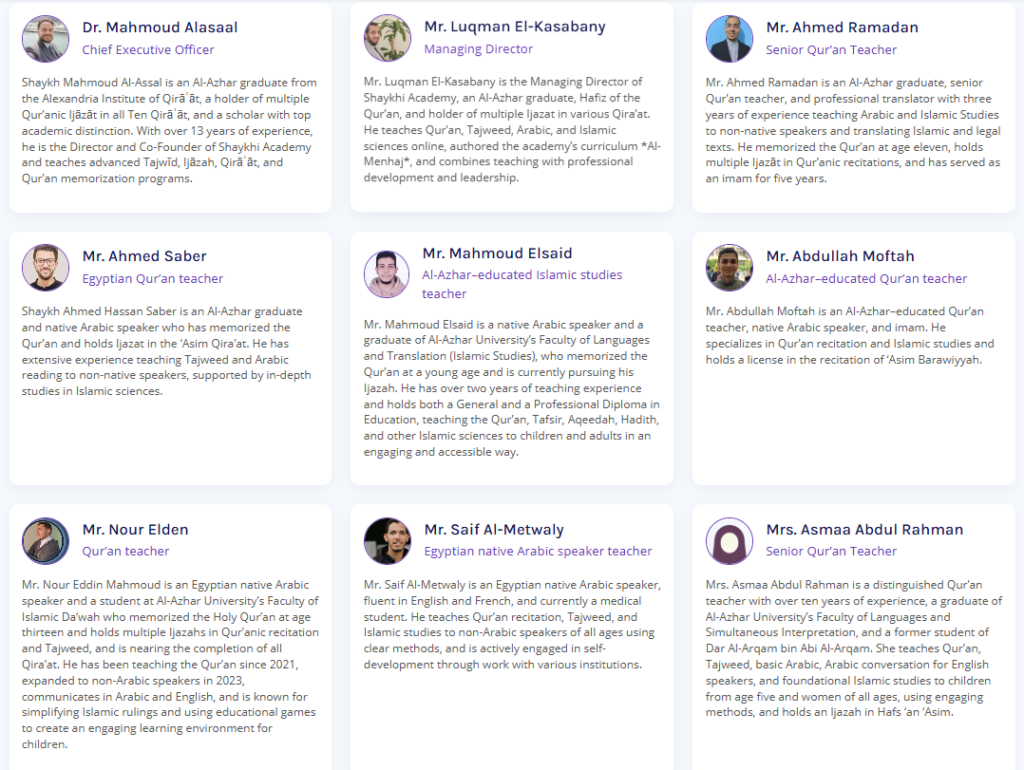
Begin Learning Arabic with Certified Instructors at The Arabic Learning Centre
These five worksheets give you a strong foundation — but worksheets alone cannot replace structured instruction. Errors in letter formation, vowel reading, or grammar agreement compound quickly without expert correction.
The Arabic Learning Centre offers:
- 1-on-1 sessions with certified native Arabic instructors
- Flexible scheduling available 24/7 to suit any time zone
- Structured curricula from alphabet to advanced grammar
- A free trial lesson — no commitment required
Explore the course that fits your current level:
- Arabic Course for Beginners — start from zero with a proven curriculum
- Arabic Grammar Course — master Nahw with targeted guidance
- Learn to Read Arabic Course — develop script reading fluency fast
Start with a FREE trial class and enhance your Arabic language skills

Conclusion
Arabic worksheets for beginners work best when each one targets a single, specific skill — tracing, vowel recognition, vocabulary, grammar, or sentence building. Mixing too many goals in one practice session diffuses focus and slows retention.
The five worksheets above cover the exact sequence our certified instructors follow at The Arabic Learning Centre in the opening weeks of structured tuition. Each builds directly on the last: you trace letters, learn to vowel them, attach vocabulary, understand definiteness, and then combine it all into real sentences.
Daily 15–20 minutes of focused worksheet practice, paired with at least two live instructor sessions per week, is the pattern that produces the fastest measurable progress for adult beginners — Insha’Allah, these resources mark a strong start to your Arabic study.
Read Also: How to Greet People in Arabic?
Frequently Asked Questions About Arabic Worksheets
What Should Arabic Worksheets for Absolute Beginners Cover First?
Arabic worksheets for absolute beginners should start with alphabet tracing — specifically all four positional forms of each letter. Before vocabulary or grammar can be introduced meaningfully, a beginner must recognize and write each letter reliably. Rushing past this stage consistently produces reading errors that are difficult to correct later.
How Often Should Beginners Use Printable Arabic Worksheets?
Printable Arabic worksheets are most effective when used daily in short, focused sessions of 15–20 minutes. Spaced repetition — returning to the same worksheet across three to four consecutive days — produces stronger letter and vocabulary retention than a single long session. Consistency over intensity is the governing principle for beginner Arabic practice.
Are Arabic Worksheets Enough to Learn Arabic on Their Own?
Arabic worksheets alone are not sufficient to learn Arabic. They are practice tools — they consolidate what a learner has already been taught, but they cannot introduce new concepts, correct pronunciation errors, or provide the feedback a beginner needs. Worksheets should accompany structured instruction with a qualified instructor for best results.
How Do Arabic Worksheets for Kids Differ from Adult Worksheets?
Arabic worksheets for kids use larger print, simpler vocabulary drawn from a child’s environment, and game-style formats — matching, colouring, and picture labelling. Adult worksheets prioritize grammar rules and analytical exercises. The underlying Arabic content is the same, but the scaffolding, pacing, and motivational framing differ significantly between the two groups.
Where Can I Find More Support After Completing These Arabic Worksheets?
After completing these worksheets, the logical next step is structured instruction with feedback. Our Arabic Course for Beginners at The Arabic Learning Centre builds directly on the skills these worksheets introduce — with certified instructors, a sequenced curriculum, and 1-on-1 sessions tailored to your pace.