 Arabic Alphabet & Writing
| Key Takeaways |
| The Arabic alphabet has 28 letters, each with up to four positional forms depending on word placement. |
| Daily Arabic alphabet practice sessions of 15–20 minutes consistently outperform longer, irregular study sessions for retention. |
| Most adult beginners recognise all 28 Arabic letters within 1–3 weeks of structured daily practice with correct technique. |
| Arabic letters are grouped into shape families — learning by family rather than alphabetical order accelerates recognition significantly. |
| Connecting letters correctly requires understanding which letters join on both sides and which only connect on the right side. |
Arabic alphabet practice works best when it follows a structured sequence — letter families first, positional forms second, connection rules third. Most beginners who struggle with the Arabic script are not lacking effort; they are using the wrong order. Start with shape groups, not alphabetical order, and recognition becomes measurably faster.
The difference between learners who read Arabic within weeks and those who stall for months almost always comes down to method. The 28 Arabic letters follow consistent visual logic, and once you understand that logic — how forms shift by position, which letters connect and which do not — the script stops feeling foreign and starts feeling systematic.
1. Practice the Four Positional Forms of Each Arabic Letter
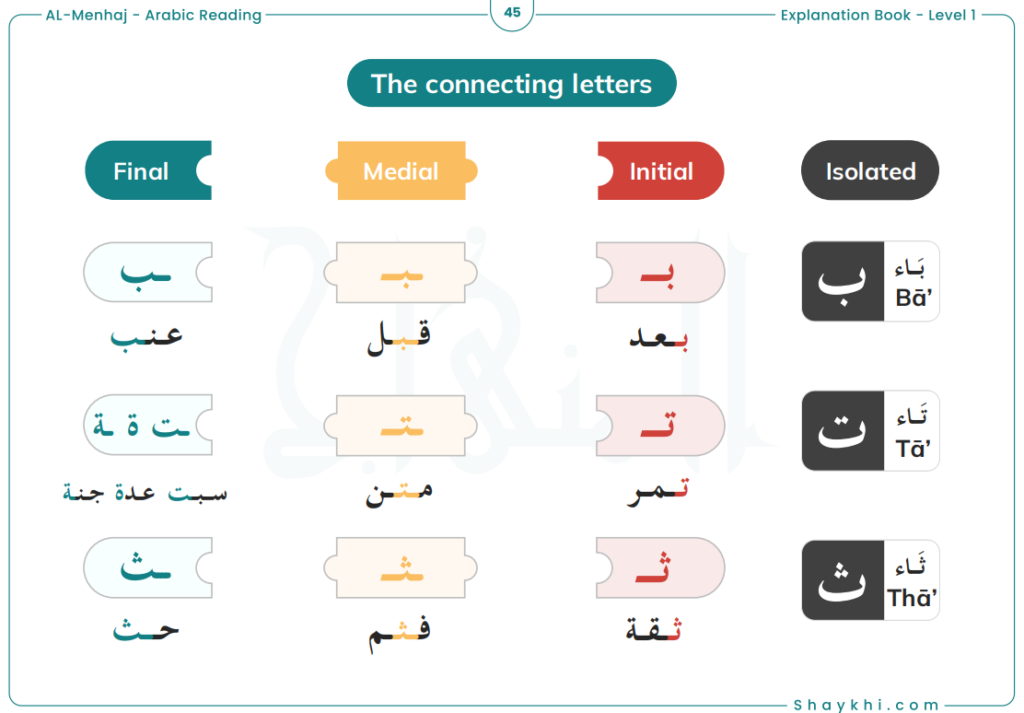
Every Arabic letter has up to four distinct written forms: isolated, initial (beginning of word), medial (middle of word), and final (end of word). Understanding this is non-negotiable for reading and writing practice.
Explore Al-Menhaj Book for Free
The good news: the forms are not arbitrary. They follow a single rule — letters shrink and connect when they appear inside a word, but retain their core identifying feature (the dots, the distinctive curve, the loop).
Practice Positional Forms of The Letter ع (ʿAyn) as a Model
| Position | Arabic Form | Example |
| Isolated | ع | ع |
| Initial | عَـ | عَلِيم |
| Medial | ـعـ | مَعَه |
| Final | ـع | سَمَع |
The ع (ʿayn) letter is particularly instructive because its shape changes visibly across positions, yet the open-top loop always remains its identifying marker. This is the visual anchor students should track.
Practice tip: for each new letter, write all four positional forms in one row before moving to the next letter. This trains the eye to recognise the letter family regardless of position.
Use Arabic Alphabet Practice Sheets
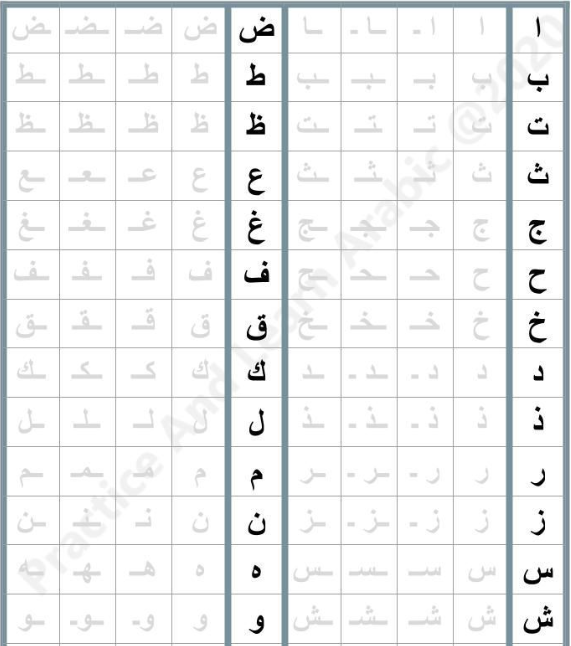
Using structured practice sheets is a practical way to reinforce letter forms. These sheets typically provide traced outlines for each letter, allowing beginners to develop the necessary muscle memory for the specific strokes and curves of the Arabic script.
Why Learning Arabic Letters by Shape Family Is More Effective Than Alphabetical Order
Grouping Arabic letters by visual similarity — rather than their traditional alphabetical sequence — is the single most effective starting point for beginners. Letters like ب (bā’), ت (tā’), and ث (thā’) share an identical base shape and differ only in dot placement. Learning them together builds pattern recognition that the alphabetical approach disrupts.
At The Arabic Learning Centre, our Arabic Course for Beginners uses exactly this shape-family sequence rather than traditional alphabetical order. Students consistently reach full letter recognition faster — typically within three weeks of starting.
Join Our Arabic Course for Beginners With a Free Trial

2. Practice Arabic Letter Connection
Arabic letter connection — knowing which letters join to the following letter and which do not — is the area where most beginners form persistent errors. Once a wrong connection habit forms, it requires significant effort to correct.
The foundational rule: six Arabic letters are non-connectors. They attach to the letter before them but never connect to the letter that follows. These six are:
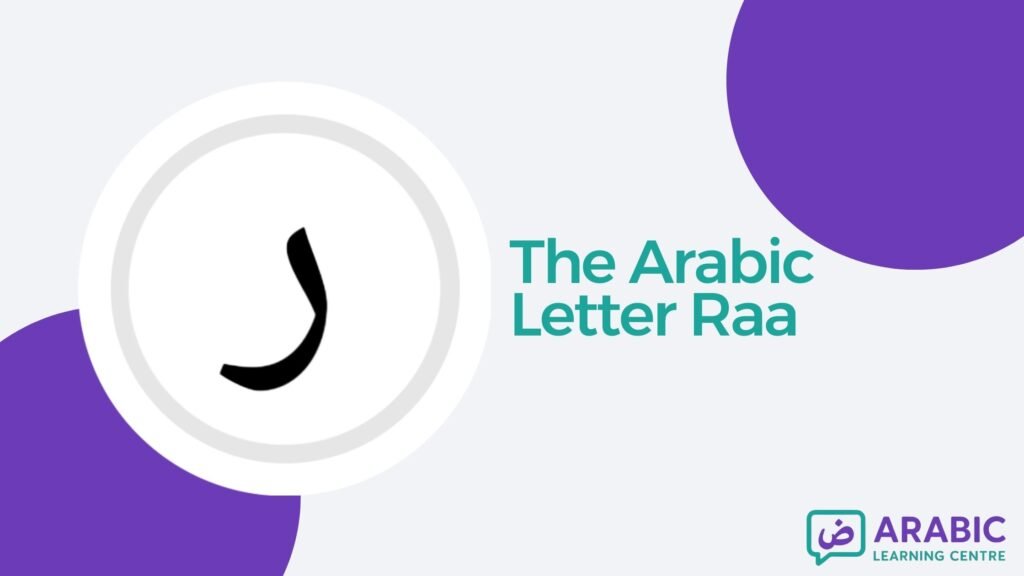
ا (alif) — د (dāl) — ذ (dhāl) — ر (rā’) — ز (zayn) — و (wāw)
Every other letter connects on both sides when appearing in the medial position.
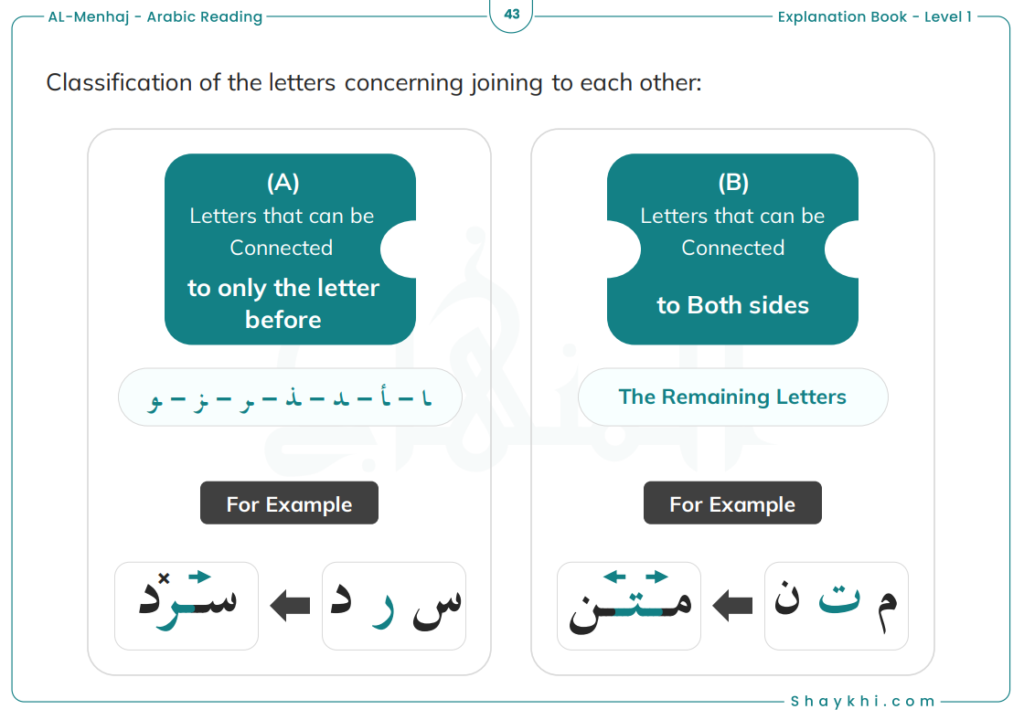
A Practical Connection Drill for Beginners
Write the word كَتَبَ (kataba — “he wrote”) step by step:
كَتَبَ Kataba “He wrote”
Notice how ك, ت, and ب all connect in sequence. Now compare with a word containing a non-connector:
دَرَسَ Darasa “He studied”
Here, د connects to nothing on its left — the word breaks after it even though it appears mid-thought in the root. Drilling with real Arabic verbs like these, rather than isolated letters, makes the connection rule tangible.
Our Learn to Read Arabic Course covers connection rules within a fully sequenced curriculum, so learners never develop the gap-filling errors we see so frequently in self-taught students.
Start Reading Arabic with a FREE Trial

Read also: The Arabic Alphabet: Complete Guide for Beginners
3. Practice Arabic Letters with Correct Pronunciation
Script practice and pronunciation practice must happen together. Writing letters silently, without sounding them, produces learners who can copy Arabic but cannot read it aloud — which significantly limits progress.
Each Arabic letter has a specific makhraj (مَخْرَج — articulation point). This is the physical location in the mouth or throat where the sound is produced. Practising letters with their correct makhraj from day one prevents fossilised pronunciation errors that are difficult to undo later.
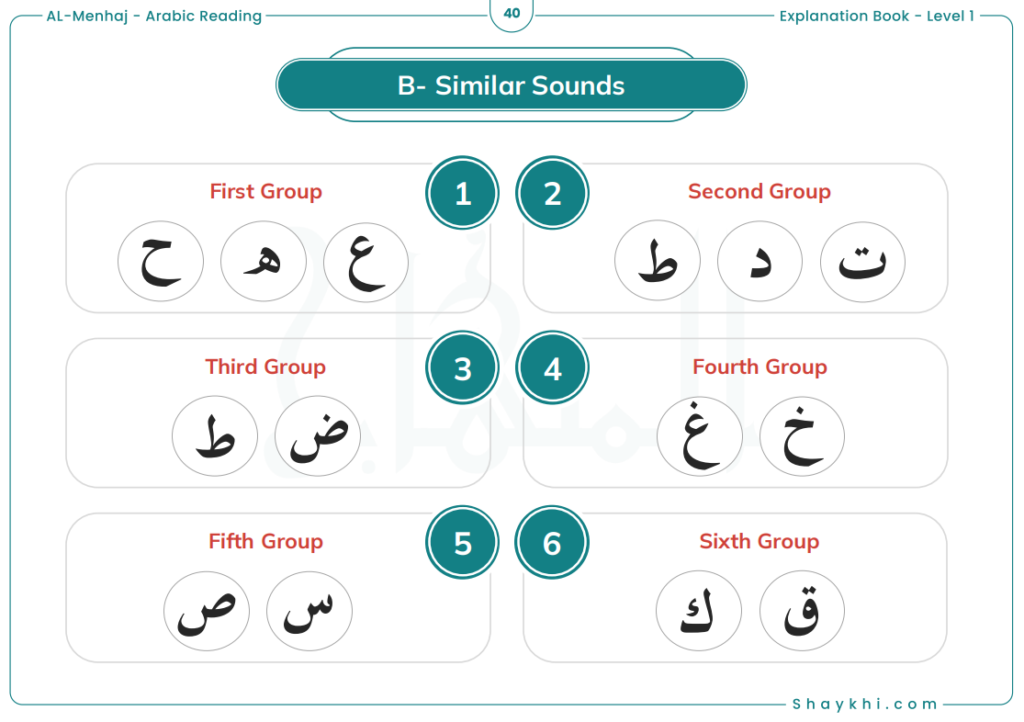
Three Letters Beginners Consistently Mispronounce During Practice
| Letter | Common Error | Correct Articulation |
| ع (ʿayn) | Pronounced as plain ‘a’ | Voiced pharyngeal fricative — constrict the throat |
| ح (ḥā’) | Confused with ‘h’ in English | Voiceless pharyngeal fricative — breathe from deep throat |
| ق (qāf) | Pronounced as ‘k’ | Uvular stop — produced at back of mouth, not front |
In our instructors’ experience, beginners who practise these three letters with audio modelling in the first week avoid the most common mispronunciation patterns that persist for months in self-directed learners.
The Arabic Pronunciation Course at The Arabic Learning Centre addresses makhraj for all 28 letters with guided audio feedback.
Begin Pronouncing Arabic Fluently with a Free Trial

Read also: How to Learn the Arabic Alphabet?
4. Practice Diacritical Marks (Tashkeel)
Tashkeel (تَشْكِيل) — the short vowel markings written above and below Arabic letters — are often excluded from beginner practice materials. This is a significant mistake. Learning letters without their vowel marks creates a dependency on guesswork when reading real Arabic text.
The three core vowel diacritics every beginner must practise alongside the letters are:
- Fatha (فَتْحَة) — a diagonal stroke above the letter, producing a short ‘a’ sound
- Kasra (كَسْرَة) — a diagonal stroke below the letter, producing a short ‘i’ sound
- Damma (ضَمَّة) — a small loop above the letter, producing a short ‘u’ sound
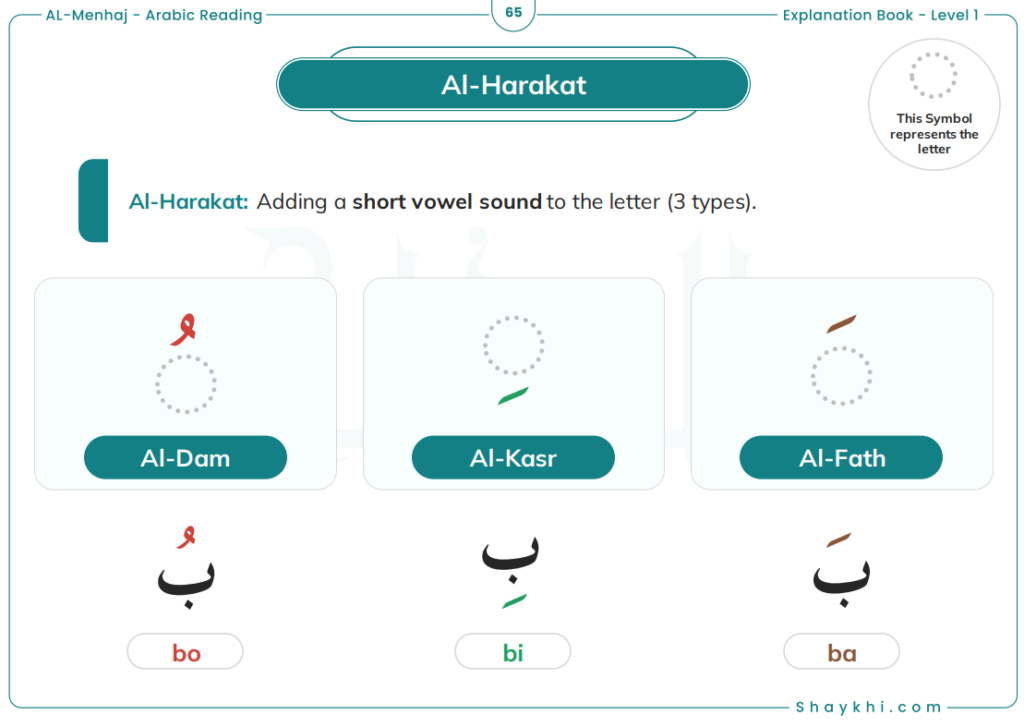
The most common confusion we observe at The Arabic Learning Centre is between Fatha and Kasra in the first two weeks of practice — almost always because learners are introduced to them simultaneously as abstractions rather than physically anchored to letter writing.
Introducing tashkeel on a single well-known letter (such as ب) first — ba, bi, bu — before applying it across the alphabet, resolves this confusion effectively.
For young learners specifically, our Online Arabic Classes for Kids integrates tashkeel practice through colour-coded visual systems that make vowel recognition intuitive and engaging.
Enroll your child in our Arabic Classes for KIDS with a free trial

What Does Make Arabic Alphabet Practice Sessions Actually Effective?
Effective Arabic alphabet practice is not about writing each letter 50 times. Repetition without feedback produces fluent mistakes. The most productive practice sessions combine three elements: recognition drills, production drills, and contextual reading exposure.
Here is the session structure our instructors recommend for absolute beginners:
- Minutes 1–5: Recognition flash — identify letters from mixed visual cards (no writing yet)
- Minutes 6–12: Guided production — write each letter of the day’s family in all four positions
- Minutes 13–20: Word spotting — find today’s letters inside short, real Arabic words
This 20-minute structure produces faster retention than 45-minute unfocused sessions. Students at The Arabic Learning Centre who follow this format typically pass from letter recognition to basic word reading within five to six weeks.
For Muslim learners specifically, using short Quranic words during the word-spotting phase adds meaningful context. The Arabic Learning Centre offers the Al-Menhaj Book — a structured Learn to Read Quran resource developed by instructors with over 25 years of teaching experience — which integrates exactly this type of contextual letter practice from the very first lesson.
Explore Al-Menhaj Book for Free
Begin Your Arabic Alphabet Practice with Certified Instructors at The Arabic Learning Centre
Structured practice with the right sequence — shape families, positional forms, connection rules, tashkeel — produces results that self-study rarely achieves alone.
The Arabic Learning Centre offers:
- 1-on-1 sessions with certified native Arabic instructors
- Flexible scheduling available 24/7
- Structured curriculum from letter recognition to fluent reading
- Free trial lesson — no commitment required
- Specialist courses: Arabic Course for Beginners, Learn to Read Arabic, and Arabic Classes for Kids
Check out our top courses in Arabic and choose the course you need to start learning Arabic today:
- Arabic Course for Beginners
- Arabic Script Writing Course
- Arabic Speaking Course
- Learn Arabic Letters for Tajweed
- Learning Arabic Grammar
- Arabic Vocabulary Course
- Fusha Arabic Course
- Classical Arabic Course
- Arabic Course for Islamic Studies
- Quranic Arabic Course
- Learn Arabic for New Muslims
Frequently Asked Questions About Arabic Alphabet Practice
How Long Does It Take to Learn the Arabic Alphabet from Scratch?
Most adult beginners who practise consistently for 15–20 minutes daily recognise all 28 Arabic letters within 1–2 weeks. Writing them accurately across all four positional forms typically takes an additional 1–2 weeks. Learners with structured instructor guidance reach this milestone measurably faster than those using self-study alone.
Should I Learn Arabic Letters in Alphabetical Order or by Shape Family?
Learning by shape family is significantly more effective for beginners. Grouping letters like ب, ت, and ث together — which share the same base shape and differ only in dots — accelerates recognition and reduces confusion. Alphabetical order has cultural and reference value but does not reflect the visual logic of Arabic orthography.
Is Arabic Alphabet Practice Different for Quranic Arabic and Modern Standard Arabic?
The 28 letters and their forms are identical across Quranic Arabic and Modern Standard Arabic. The difference lies in diacritical marking — Quranic text is fully vowelled with tashkeel, making it excellent practice material for beginners. Learners focused on Quran reading benefit from alphabet practice that incorporates tashkeel from the very beginning.
What Are the Hardest Arabic Letters for English Speakers to Learn?
The letters consistently presenting the greatest challenge are ع (ʿayn), غ (ghayn), ح (ḥā’), خ (khā’), and ق (qāf). The difficulty is not visual but phonetic — these sounds have no English equivalents and require unfamiliar articulation points. Practising these with audio guidance from a certified instructor prevents mispronunciation habits from forming early.
Can I Learn Arabic Alphabet Practice Effectively Without a Teacher?
Basic letter recognition is achievable through self-study. However, correct pronunciation — particularly the pharyngeal and uvular sounds — and proper script formation sequence are extremely difficult to self-verify. Working with a certified Arabic instructor, even for a short initial period, prevents the persistent errors that take far longer to correct than to avoid in the first place.
Related Articles
Arabic Alphabet & Writing
Leave a Reply