 Arabic Resources & Courses
Smartphones have turned language learning into a daily habit—five minutes in a café, a quick review before bed, a streak to protect. For Arabic learners, that convenience feels empowering. Script drills, pronunciation models, and chatbot dialogues promise steady progress at your fingertips.
From Duolingo and Memrise to Rosetta Stone, Mondly, Drops, Anki, ArabicPod101, Write It! Arabic, Busuu, and iTalki, today’s Arabic language learning apps offer vocabulary practice, spaced repetition, speech recognition, and community feedback. Yet mastering grammar, pronunciation, and script fluency ultimately demands structured guidance and expert correction.
1. Duolingo as an Arabic Language Learning Apps and Tools
Duolingo remains one of the most popular free options for beginners starting their Arabic journey. The app uses gamification to make learning engaging through bite-sized lessons and daily practice streaks.
The platform introduces Arabic script gradually alongside vocabulary building. Users earn points for correct answers and advance through increasingly challenging levels.
However, Duolingo’s Arabic course has notable limitations. It focuses primarily on Modern Standard Arabic without deep grammar explanations. The pronunciation feature lacks the nuanced feedback that native certified instructors provide.
The Arabic Learning Centre’s Arabic Course for Beginners addresses these gaps with personalized 1-on-1 sessions. Our certified teachers provide detailed pronunciation correction and grammar context that apps cannot replicate, ensuring proper foundation from day one.
Join Our Arabic Course for Beginners With a Free Trial

Arabic Script Writing Practice in Duolingo
The app includes basic script recognition exercises. Users trace letters and match them with sounds through multiple-choice questions.
Yet this approach doesn’t develop true handwriting fluency. The connection rules between letters require expert demonstration and feedback.
2. Memrise
Memrise specializes in vocabulary acquisition through spaced repetition technology. The app presents words at optimal intervals to strengthen long-term memory retention.
Users access native speaker video clips for authentic pronunciation models. This multimedia approach helps learners connect written words with spoken Arabic naturally.
The platform offers both Modern Standard Arabic and dialectical options. Learners can choose Egyptian, Levantine, or Gulf Arabic based on their specific needs.
Vocabulary Building with Memrise Arabic Apps
Memrise organizes words into thematic categories like family, food, and travel. Each lesson typically contains 10-15 new vocabulary items with visual associations.
The review system adapts to individual progress rates. Words you struggle with appear more frequently until mastery is achieved.
Shots Videos from Our Courses
3. Rosetta Stone App for Arabic Language Learning
Rosetta Stone uses immersive methodology without translation. The program teaches Arabic through pictures, audio, and text exclusively in the target language.
This approach mimics natural language acquisition. Learners develop intuitive understanding rather than translating mentally from their native language.
The speech recognition technology provides immediate pronunciation feedback. Users must speak clearly enough for the system to accept their responses.
Grammar Development Through Rosetta Stone
Rosetta Stone introduces grammar patterns inductively through repeated exposure. Learners recognize patterns before explicitly learning rules.
This method works well for basic sentence structures. However, complex Arabic grammar concepts like إعراب (i’rāb) “grammatical case endings” require explicit instruction.
The Arabic Learning Centre’s Arabic Grammar Course offers systematic grammar instruction with certified instructors who explain the “why” behind rules, not just the “what.”
Start Learning Arabic Grammar with a Free Trial

4. Mondly
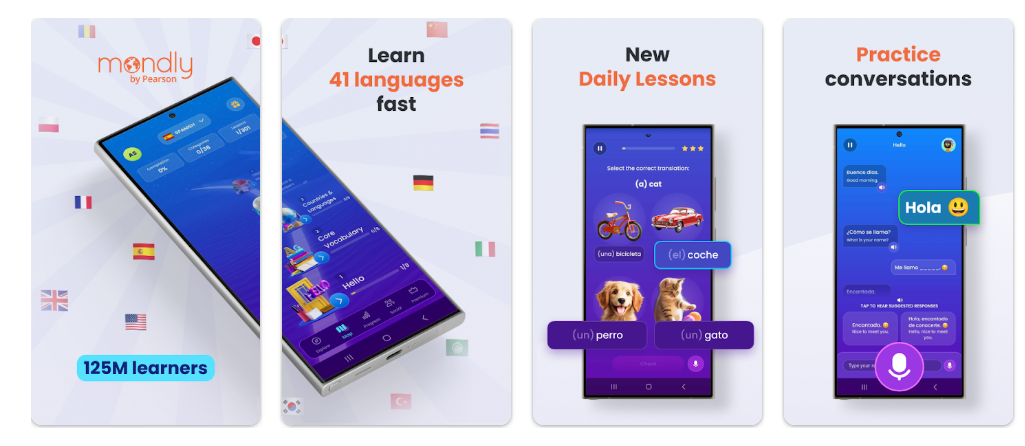
Mondly emphasizes conversational practice through chatbot technology. The AI-powered conversations simulate real dialogues in various everyday scenarios.
Users practice ordering food, asking directions, and making introductions. The app provides instant feedback on pronunciation and sentence construction.
The augmented reality feature creates immersive learning environments. Virtual objects appear labeled in Arabic, connecting language with visual context.
Conversational Arabic Practice in Mondly
Mondly’s dialogue system includes 40+ conversation topics. Each scenario presents vocabulary and phrases applicable to specific situations.
The voice recognition assesses pronunciation accuracy. Users receive scores and can replay native speaker models for comparison.
5. Drops
Drops takes a minimalist approach focusing exclusively on vocabulary. Each session lasts exactly five minutes, making learning manageable for busy schedules.
The app eliminates written translation, using only images and Arabic words. This visual association technique strengthens memory retention effectively.
Drops covers 2,800+ Arabic words organized into practical categories. The fast-paced swiping interface keeps learners engaged and focused.
Visual Learning Through Drops Arabic App
Each word appears with a simple illustration. Users swipe, tap, or trace to indicate understanding and move forward.
The time pressure creates focused learning sessions. This constraint actually improves concentration and reduces mental fatigue.
For comprehensive vocabulary development, The Arabic Learning Centre’s Arabic Vocabulary Course provides contextualized learning. Our instructors teach words within sentence structures and cultural contexts that apps cannot fully capture.
Enroll in Our Arabic Vocabulary Course to Get Your Free Trial

6. Anki
Anki offers customizable flashcard decks using spaced repetition algorithms. Advanced learners often prefer this tool for its flexibility and power.
Users create personalized decks or download shared decks from the community. Popular Arabic decks include Quranic vocabulary, Modern Standard Arabic, and dialect-specific collections.
The algorithm calculates optimal review timing based on your performance. Cards you answer correctly appear less frequently over time.
Creating Effective Arabic Flashcards
Effective cards include Arabic text, transliteration, translation, and example sentences. Adding audio clips enhances pronunciation learning significantly.
أَنَا طَالِبٌ
Anā ṭālibun
“I am a student (masculine)”
أَنَا طَالِبَةٌ
Anā ṭālibatun
“I am a student (feminine)”
This format demonstrates gender agreement patterns essential for Arabic grammar mastery.
7. ArabicPod101 as Comprehensive Arabic Learning App
ArabicPod101 delivers structured lessons through audio and video podcasts. The platform covers beginner through advanced levels with cultural insights woven throughout.
Each lesson includes dialogue transcripts, vocabulary lists, and grammar notes. The line-by-line audio breakdown helps learners understand natural speech patterns.
Premium membership unlocks personalized learning paths and access to certified teachers for assignment review. The structured approach resembles traditional classroom instruction.
Listening Comprehension with ArabicPod101
The podcast format trains listening skills naturally. Hosts speak clearly at the beginning, gradually introducing authentic speed.
Cultural notes explain context behind phrases and customs. This cultural competence enhances communication effectiveness beyond mere linguistic accuracy.
8. Write It! Arabic for Script Writing Tools
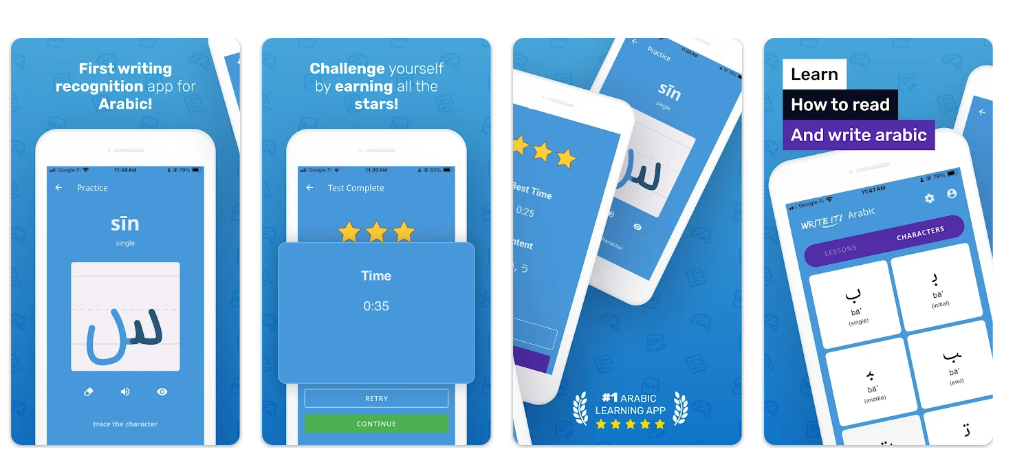
Write It! Arabic specializes in teaching proper letter formation and writing mechanics. The app demonstrates stroke order and direction for each letter form.
Users trace letters on screen while the app evaluates accuracy. The system recognizes incorrect strokes and provides corrective feedback immediately.
The progression moves from individual letters to connected writing. This systematic approach builds proper handwriting habits from the foundation.
Mastering Arabic Script Through Digital Tools
The app covers all letter positions: isolated, initial, medial, and final forms. Each variation requires separate practice for complete mastery.
ب (isolated bā’) بـ (initial) ـبـ (medial) ـب (final)
Understanding these variations is crucial for reading fluency. However, developing beautiful handwriting requires expert observation and correction.
9. Busuu
Busuu combines self-paced lessons with community interaction. Native speakers review your written and spoken exercises, providing authentic feedback.
The platform follows CEFR standards, offering clear progression from A1 to B2 levels. Each lesson targets specific communicative competencies.
Grammar explanations appear within context rather than isolation. This integration helps learners understand practical application immediately.
Community Learning in Busuu Arabic
Users submit writing or speaking exercises. Native Arabic speakers in the community correct mistakes and offer suggestions.
This peer feedback simulates real communication more authentically than automated responses. However, not all community members provide expert-level corrections.
Read Also: Free Arabic Courses
10. iTalki
iTalki connects learners with professional Arabic teachers and community tutors worldwide. This marketplace model offers flexibility in choosing instructors based on qualifications and teaching styles.
Lessons occur via video call at mutually convenient times. Pricing varies based on teacher experience and lesson type.
The platform includes both structured lessons and informal conversation practice. Learners can switch between teachers to experience different teaching approaches.
Our Students Reviews
Read Also: Free Arabic Grammar Courses
Start Your Arabic Learning Journey with The Arabic Learning Centre
Modern Arabic language learning apps and tools offer valuable supplementary resources for vocabulary, practice, and exposure. However, achieving true fluency requires expert instruction and personalized feedback.
The Arabic Learning Centre combines technological convenience with human expertise:
- Certified native Arabic instructors with specialized training in teaching non-native speakers
- Personalized 1-on-1 sessions tailored to your learning pace and goals
- Flexible scheduling available 24/7 to fit your lifestyle
- Structured curriculum covering all skill areas from beginner to advanced
- Free trial lesson to experience our teaching methodology
- Progress tracking and regular assessments to measure improvement
Whether you’re learning Arabic for Islamic studies, professional advancement, or personal enrichment, our comprehensive courses provide the foundation apps cannot replicate. Our Arabic Course for Beginners, Arabic Grammar Course, Arabic Speaking Course, and Arabic Script Writing Course offer systematic progression with expert guidance.
Check out our top courses in Arabic and choose what is the most course you need to start learning Arabic today:
- Arabic Course for Beginners
- Arabic Script Writing Course
- Arabic Speaking Course
- Learn Arabic Letters for Tajweed
- Learning Arabic Grammar
- Arabic Vocabulary Course
- Fusha Arabic Course
- Classical Arabic Course
- Arabic Course for Islamic Studies
- Quranic Arabic Course
Start with a FREE trial class and enhance your Arabic language skills
Conclusion
Arabic learning apps provide accessible entry points—gamified lessons, visual vocabulary building, immersive listening, and AI-driven conversation practice. They strengthen memory retention and exposure, especially for beginners building foundational familiarity with Modern Standard Arabic and common dialects.
Still, apps often lack deep grammar explanation, precise pronunciation correction, and personalized feedback. Complex elements such as gender agreement, case endings (إعراب), and connected script forms require systematic instruction beyond automated responses or peer review.
Combining digital tools with certified native instructors creates the strongest path to fluency. Structured courses, one-on-one sessions, progress tracking, and contextualized vocabulary ensure learners move beyond recognition toward confident reading, writing, speaking, and true communicative competence.
Related Articles
Arabic Resources & Courses