 Arabic Alphabet & Writing
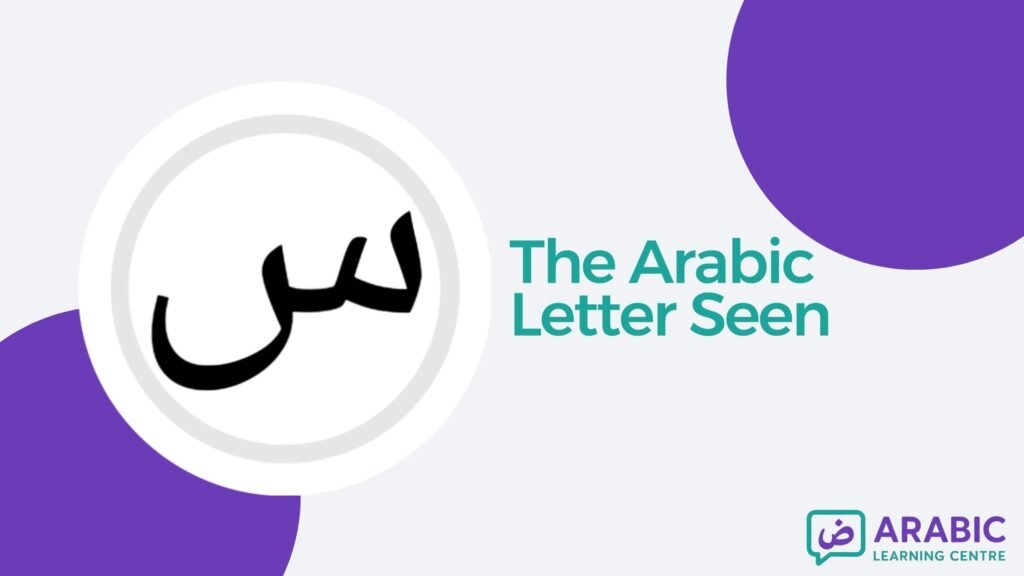
The letter Seen (س) is one of the fundamental letters of the Arabic alphabet, widely used in everyday words and essential for beginners learning Arabic. Understanding Seen (س) helps learners improve their reading, writing, and pronunciation skills. This guide provides detailed explanations, examples, exercises, and downloadable worksheets to master this important letter.
Learning Seen (س) not only strengthens your Arabic vocabulary but also builds a solid foundation for reading and writing fluently. Whether you are a beginner or looking to improve your Arabic skills, this comprehensive guide will help you recognize the letter in its different forms, understand its pronunciation, and use it correctly in words, phrases, and sentences.
Letter Seen / س
The letter Seen (س) is the twelfth letter of the Arabic alphabet. It is a consonant pronounced as /s/, similar to the “s” sound in the English words “sun” or “snake.” The letter has a distinctive shape and is written differently depending on its position in a word: at the beginning, middle, or end.
– Character: س
– Sound: /s/
– Type: Consonant
– Usage: Appears in countless Arabic words such as سعيد (sa‘eed – happy), سمك (samak – fish), and سلام (salaam – peace).
The letter Seen (س) is simple to recognize due to its sharp zigzag shape and small peaks, making it visually distinct from other Arabic letters.
How to Identify The letter Seen?
The letter Seen (س) can be easily recognized by its distinctive zigzag shape with three small peaks. These peaks are the most important feature, as they distinguish Seen (س) from similar letters such as Sheen (ش), which has three dots above the peaks.
When learning the Arabic letter Seen (س), it is important to focus on the zigzag shape and the absence of dots above, as this is the key feature that differentiates it from similar letters like Sheen (ش). To strengthen recognition, learners can compare these letters side by side and practice reading and writing simple words that contain Seen, such as سلام (salaam – peace) or سمك (samak – fish).
Tips to Identify Seen (س):
– Look for the three small peaks (zigzags).
– Listen for the /s/ sound when pronouncing words.
– Compare it with similar letters like Sheen (ش), which has three dots above the peaks.
Letter Seen / س Forms: At the Beginning, Middle, and End of the word
The letter Seen (س) changes its shape depending on its position in a word. Understanding these forms is crucial for reading and writing Arabic correctly.
1- At the Beginning of the Word (سـ):
The letter connects only to the letter after it. Example: سعيد (Sa‘eed – Happy)
2- In the Middle of the Word (ـسـ):
Seen connects to both the preceding and following letters. Example: مسجد (Masjid – Mosque)
3- At the End of the Word (ـس):
Seen connects only to the letter before it. Example: درس (Dars – Lesson)

At Arabic Learning Centre, we make learning Arabic letters simple and interactive, helping you practice these forms through guided lessons and exercises.
Letter Seen / س With Fatha ( َ )

When the letter Seen (س) carries a Fatha ( َ ), it produces the “sa” sound, similar to the “sa” in “sun”. The Fatha is a small diagonal line placed above the letter, indicating a short “a” vowel sound.
Examples: سَرير (Sareer – Bed), سَعيد (Sa‘eed – Happy) and سَفينة (Safeena – Ship)
Letter Seen / س With Dammah ( ُ )

When the letter Seen (س) carries a Dammah ( ُ ), it produces the “su” sound, similar to the “su” in “suit”. The Dammah is a small curl-like mark placed above the letter, indicating a short “u” vowel sound.
Examples: سُوق (Sooq – Market), سُلم (Sulm – Ladder) and سُلطان (Sultan – Sultan)
Letter Seen / س With Kasrah ( ِ )

When the letter Seen (س) carries a Kasrah ( ِ ), it produces the “si” sound, similar to the “si” in “sit”. The Kasrah is a small diagonal line placed below the letter, indicating a short “i” vowel sound.
Examples: سِلم (Silm – Ladder), سِمك (Simak – Fish) and سِنة (Sinnah – A tooth)
Letter Seen / س With sukoon ( ْ )

When the letter Seen (س) carries a Sukoon ( ْ ), it indicates that the letter is not followed by a vowel and should be pronounced without any additional sound, just the consonant “s”. The Sukoon is a small circle placed above the letter.
Examples: درسْ (Dars – Lesson), مسْجد (Masjd – Mosque) and بسْ (Bas – Enough/Only)
Examples of the letter Seen / س in Words
The letter Seen (س) appears in many common Arabic words, and its form changes depending on its position in the word. Practicing these examples helps learners recognize the letter quickly and understand how it connects with other letters.
| Position | Arabic Word | Pronunciation | English Word |
| At the beginning | سمك / سعيد | Samak / Sa‘eed | Fish / Happy |
| In the middle | مسجد / رسالة | Masjid / Risaalah | Mosque / Letter |
| At the end | درس / جرس | Dars / Yas | Lesson / Bell |
When practicing, highlight Seen (س) in words to train your eyes to spot it quickly, no matter where it appears.

Examples of letter Seen / س in Phrases and Sentences
Seeing the letter Seen (س) in complete phrases and sentences makes it easier to understand how the letter is used in real communication. Below are simple examples showing Seen (س) at the beginning, middle, and end of sentences.
| Position | Arabic Example | English Meaning |
| At the beginning | سَعيدُ ذَهَبَ إلى السُّوق | Sa’eed went to the market |
| In the middle | ذَهَبْتُ إِلَى المَسْجِد | I went to the mosque |
| At the end | أُحِبُّ السَّمَك | I love fish |
Tip: When practicing, highlight Seen (س) in sentences to easily spot its shape and pronunciation in context.
How to write the Seen Letter?
Writing the Arabic letter Seen (س) is simple once you understand its basic zigzag shape. Like all Arabic letters, it is written from right to left.
Steps to write Seen (س):
1- Start with a short zigzag line on the writing line (baseline), forming three small peaks.
2- Ensure the peaks are clear and sharp to distinguish Seen from similar letters like Sheen (ش).
3- When connecting to other letters, extend the strokes smoothly to join with adjacent letters.
Forms of Seen (س):
– Isolated form: س
– Beginning of a word: سـ (e.g., سَعيد – Sa‘eed / Happy)
– Middle of a word: ـسـ (e.g., مسجد – Masjid / Mosque)
– End of a word: ـس (e.g., درس – Dars / Lesson)

How to Pronounce the Letter Seen?
The pronunciation of Seen (س) is straightforward because it always produces the /s/ sound, regardless of its position in a word. It is very similar to the English “s” in words like “sun” or “snake.”
Its articulation point comes from the tip of the tongue touching the area just behind the upper front teeth (alveolar ridge) — making it a voiceless alveolar consonant. The vocal cords do not vibrate when pronouncing it, unlike voiced sounds such as “z.”
Basic pronunciation rules of Seen (س) with harakat (vowel marks):
1- Seen with Fatha (سَ):
Pronounced as a short “sa” sound.
Example: سَعيد (Sa‘eed) → Happy
2- Seen with Dammah (سُ):
Pronounced as a short “su” sound.
Example: سُوق (Sooq) → Market
3- Seen with Kasrah (سِ):
Pronounced as a short “si” sound.
Example: سِمك (Simak) → Fish
4- Seen with Sukoon (سْ):
Pronounced as a plain “s” sound without any following vowel.
Example: درسْ (Dars) → Lesson
Tips for learners:
– Place the tip of your tongue just behind your upper front teeth.
– Practice in front of a mirror to check tongue placement and airflow.
– Compare it with the English “s” in sun or snake to master it easily.

Learn Seen through videos
Learning the Arabic letter Seen (س) becomes much more effective when you use educational videos. Seeing the shape, hearing the pronunciation, and watching the writing process step-by-step will help you remember the letter better. The following videos explain Seen (س) in a clear and engaging way:
– Learn Letter Seen: Reading and Writing | Arabic Alphabet
This video teaches how to read and write the letter Seen (س) with proper pronunciation in both English and Arabic.
– All You Need to Know About Seen and Sheen – Learn Arabic
A complete guide to the letter Seen (س), covering pronunciation, writing, and the short vowels it can carry, and comparing it to Sheen (ش).
How to Make the Most of These Videos
1- Listen carefully to the pronunciation at the start of the video, then repeat the examples out loud.
2- Follow the writing demonstration step-by-step, and practice writing alongside the video.
3- Combine the videos with written explanations, images, and exercises for maximum learning.
Read Also: The Letter Ayn ع In Arabic With Examples, Exercises, and Worksheets
Learn Arabic with Arabic Learning Centre
At Arabic Learning Centre, we provide a complete Arabic learning course with a system that combines written lessons, educational videos, and interactive exercises. With our step-by-step method, you’ll master the letter Seen (س) quickly and move on confidently to the next Arabic letters!
Read Also: The Letter Zay / ز in Arabic With Examples, Exercises, and Worksheets
Exercises For Seen in Arabic
Practicing is the best way to master the Arabic letter Seen (س). These exercises will help you recognize, write, and pronounce the Seen letter correctly in different positions of a word.
1. Identify the Letter Seen (س)
Circle the letter Seen (س) in the words below:
– سمك
– مدرسة
– سلم
– شمس
2. Write Seen in Different Positions
Write the letter Seen (س) in:
– Beginning position: ســ
– Middle position: ـسـ
– End position: ـس
3. Match the Word to Its Picture
Draw a line between each word and the correct picture:
سمك (Fish) 
شمس (Sun) 
سرير (Bed) 
4. Fill in the Missing Letter
Complete the words by adding the missing Seen (س):
1- __مك (Fish)
2- غ__ق (twilight)
3- مدر__ة (School)
Read Also: The Letter Taa / ت In Arabic With Examples, Exercises, and Worksheets
5. Read Aloud
Read these words slowly, paying attention to the Seen (س) pronunciation:
1- سيف (Sword)
2- مدرسة (School)
3- أسد (Lion)
Repeat these exercises daily until you can spot the Seen instantly and write it from memory.
Read Also: The Letter Saad / ص in Arabic With Examples, Exercises, and Worksheets
Downloadable Worksheets for the Arabic letter Seen
Learning the Arabic alphabet begins with recognizing and practicing each letter in different positions. The letter Seen (س) is one of the most important letters for beginners, and using worksheets helps learners improve writing, reading, and vocabulary skills in an engaging way.
Here are some free downloadable worksheets to practice the letter Seen (س):
– Arabic Seeds (Islamic-themed): Letter Seen Pack – Offers coloring and tracing worksheets for Seen, along with Islamic vocabulary examples (like شمس، سمك) and audio support for correct pronunciation.
– IQRA Network: Practice Pages for Seen – Worksheets focused on the letter and word recognition of the letter Seen.
These worksheets can be printed and used at home or in classrooms, making practice fun and interactive.
Read Also: The Letter Khaa / خ in Arabic With Examples, Exercises, and Worksheets
Common Mistakes related to the letter Seen
The letter Seen (س) is one of the important letters in the Arabic alphabet. It has a soft “s” sound, like the s in the English word sun. When learning the Seen, students often make mistakes in writing, pronouncing, or connecting it with other letters. By understanding these common mistakes, learners can improve their Arabic reading and writing skills more easily.
1- Confusing Seen (س) with Sheen (ش)
Many learners mix up س and ش, since they look similar.
Difference: Seen (س) has no dots, while Sheen (ش) has three dots above.
Example: سَمَك (samak – fish) and شَمَس (shams – sun)
2- Incorrect Pronunciation
Some students pronounce س as the English letter “z” or confuse it with “sh.”
Correct pronunciation: A soft “s” sound, like the s in “sun.”
Example: سيف (sayf – sword) → should sound like “safe,” not “zayf.”
3- Mistakes in Writing Positions
Learners sometimes forget that the shape of س changes depending on its position in the word.
Forms: Initial: سـ (e.g., سَمَك), Medial: ـسـ (e.g., مَسـجد) and Final: ـس (e.g., نَفـس)
4- Forgetting the Smooth Curve
A common writing mistake is making the letter too sharp or angular instead of smooth and flowing.
Read Also: The Letter Kaaf ك In Arabic With Examples, Exercises, and Worksheets
Start Your Arabic Learning Journey with Expert Teachers Today
Ready to truly understand Arabic and use it with confidence? At The Arabic Learning Centre, you’ll learn with expert Arabic language teachers, including qualified female Arabic teachers, in a supportive and professional environment designed for real progress. Whether you’re learning Arabic for the Quran, studies, career, or daily conversation, we have the right course for you.
Take the next step today and join thousands of students learning Arabic the right way.
Courses We Offer:
- Online Arabic Course
- Classical arabic course
- Modern Standard Arabic Course
- Fusha Arabic Course
- Learn Saudi Arabic
Conclusion
The Arabic letter Seen (س) is an essential part of the Arabic alphabet, forming a foundation for reading, writing, and pronunciation skills. Recognizing its distinctive zigzag shape and understanding its variations at the beginning, middle, and end of words are crucial for learners. Practicing Seen (س) with Fatha, Dammah, Kasrah, and Sukoon, along with examples in words, phrases, and sentences, helps learners build fluency and accuracy. Identifying common mistakes, such as confusing Seen with Sheen (ش) or mispronouncing it, further strengthens reading and writing confidence.
Consistent practice through writing exercises, highlighting Seen (س) in context, and using worksheets allows learners to internalize the letter’s forms and sounds. By focusing on these techniques, beginners and advanced learners alike can master Seen (س), laying a solid foundation for learning other Arabic letters and improving overall language proficiency.
Related Articles
Arabic Alphabet & Writing
Leave a Reply