 Arabic Alphabet & Writing
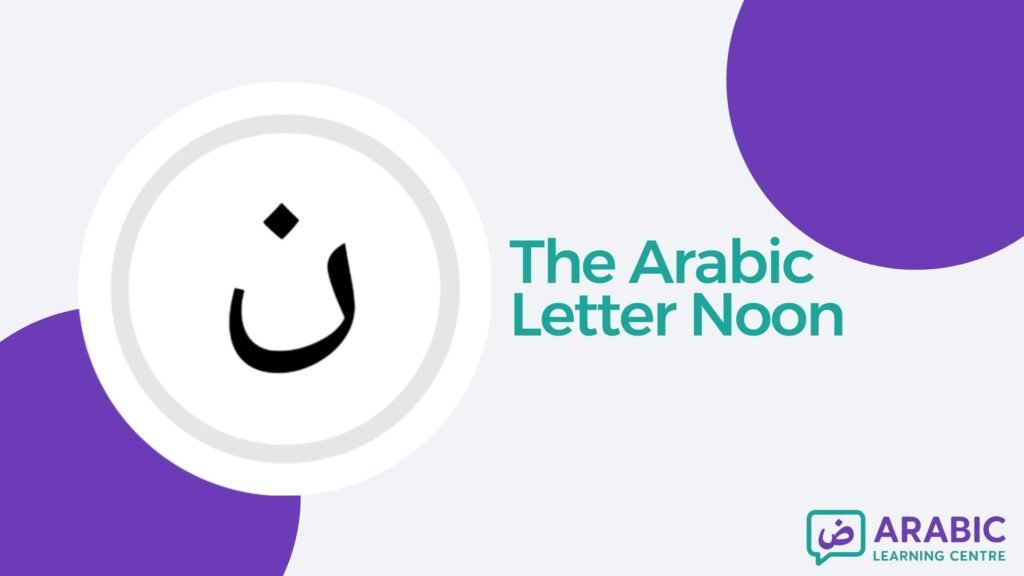
The letter Noon (ن) is one of the most important and frequently used letters in the Arabic alphabet. It has a unique sound that comes from the tip of the tongue, and it plays a vital role in forming words, phrases, and sentences in the Arabic language. Learning Noon properly helps students build strong reading and writing skills while understanding the rhythm and structure of Arabic words.
In this article, we will explore the letter Noon (ن) in detail, including its forms at the beginning, middle, and end of words, its pronunciation, and its use with different vowel marks. You will also find practical examples, exercises, downloadable worksheets, and tips to avoid common mistakes, making it easier for learners to master this essential Arabic letter.
Letter Noon – ن

The letter Noon (ن) is the fourteenth letter of the Arabic alphabet. It has a distinct nasal sound, pronounced from the tip of the tongue touching the upper gums. Noon is used in many Arabic words and is essential for proper reading, writing, and pronunciation. Its basic shape is a simple curve with a dot above it (ن), making it easily recognizable in any word.
Characteristics of Noon (ن):
– Sound: A soft “n” sound, similar to the English letter “n.”
– Dot: It has a single dot placed above the letter.
– Frequency: Commonly used in everyday Arabic vocabulary.
– Flexibility: Can appear at the beginning, middle, or end of words, taking different forms accordingly.
How to Identify The letter Noon – ن
Identifying the letter Noon (ن) is simple once you know its shape and dot. The basic form of Noon is a small curve with a single dot placed directly above it. The dot is essential, as it distinguishes Noon (ن) from similar letters like Ba (ب) and Ta (ت), which have one or two dots below or above the line.
Noon can appear in three different positions in a word:
1- At the beginning: نـ
2- In the middle: ـنـ
3- At the end: ـن
By observing the dot placement and the curve shape, learners can quickly recognize Noon in any word, making reading and writing Arabic more accurate and easier.
Letter Noon and ن Forms: At the Beginning, Middle, and End of the word
The letter Noon (ن) changes its shape depending on its position within a word. Understanding these forms is crucial for proper reading and writing in Arabic:
1- Beginning of a word: نـ
The letter connects to the following letter on the right side.
Example: نور (Noor – Light)
2- Middle of a word: ـنـ
Noon connects to both the preceding and following letters.
Example: منزل (Manzel – House)
3- End of a word: ـن
The letter only connects to the preceding letter on the right.
Example: قلم (Qalam – Pen)
By practicing these forms with examples, learners can quickly recognize Noon in any word, whether it appears at the start, middle, or end. Using clear visual aids and tracing exercises will reinforce the learning process.

Learn Arabic with Arabic Learning Centre
At Arabic Learning Centre, students of all ages can enjoy structured and interactive Arabic lessons online. With skilled native teachers, engaging activities, and clear guidance, learning letters like Noon (ن) becomes both easy and fun.
Letter Noon/ ن With Fatha ( َ )

When the letter Noon (ن) carries a Fatha (َ), it is pronounced as “Na” (نَ) with a short “a” sound. The Fatha is a small diagonal stroke placed above the letter.
Examples:
– نَاي (Nay – Nay) → Noon comes at the beginning.
– مَدينَة (Madina – City) → Noon appears at the end.
– حَنان (Hanan – Compassion) → Noon is in the middle.
To practice, repeat the sound “Na” several times, focusing on the nasal pronunciation of Noon.
Letter Noon / ن With Dammah ( ُ )
When the letter Noon (ن) carries a Dammah ( ُ ), it is pronounced as “Nu” (نُ) with a short “u” sound. The Dammah is a small curl-like mark placed above the letter.
Examples:
– نُور (Noor – Light) → Noon comes at the beginning.
– ينُول (Yanuol – He gets) → Noon appears at the end.
– حُنون (Hunoon – Compassion) → Noon is in the middle.
To practice, repeat the sound “Nu” multiple times, paying attention to the rounded “u” sound.
Letter Noon/ ن With Kasrah ( ِ )
When the letter Noon (ن) carries a Kasrah ( ِ ), it is pronounced as “Ni” (نِ) with a short “i” sound. The Kasrah is a small diagonal stroke placed below the letter.
Examples:
– نِعْمَة (Ni‘ma – Blessing) → Noon comes at the beginning.
– مُنْتَخَبِين (Muntakhabeen – Selected) → Noon appears at the end.
– حِنِين (Haneen – Longing) → Noon is in the middle.
To practice, repeat the sound “Ni” several times, focusing on the light nasal sound of Noon.
Letter Noon/ ن With sukoon ( ْ )
When the letter Noon (ن) carries a Sukoon (ْ), it is pronounced as a “silent N” (نْ), meaning it has no vowel sound following it. The Sukoon is a small circle placed above the letter to indicate the absence of a vowel.
Examples:
– مِنْ (Min – From) → Noon comes at the end and is silent.
– أَنْتَ (Anta – You) → Noon is in the middle with no vowel sound.
– لَنْ (Lan – Will not) → Noon appears at the end and is silent.
To practice, focus on stopping the sound immediately after pronouncing Noon with Sukoon.
Examples of letter Noon/ ن in Words
The letter Noon (ن) appears in many Arabic words. It can occur at the beginning, middle, or end of a word. Its distinctive shape with a dot above makes it easy to recognize in any position. Learning to identify Noon in different positions helps improve reading fluency and accuracy.
Here are some examples:
| Position | Arabic Word | Pronunciation | English Word |
| At the beginning | نَور / نَوم / نَجْم | Noor / Naum / Najm | Light / Sleep / Star |
| In the middle | حِنان / منازل / فناء | Hanan / Manazel / Fina | Compassion / Houses / End |
| At the end | فان/ حِنان | Fann / Hanan | Mortal / Compassion |
When practicing, learners should highlight the letter ن in words to train their eyes to spot it quickly, no matter where it appears.

Examples of letter Noon/ ن in Phrases and Sentences
The letter Noon (ن) is commonly used in Arabic phrases and sentences. Recognizing its shape and pronunciation in context helps learners improve reading fluency and writing accuracy.
Examples:
| Position | Arabic Phrase / Sentence | English Meaning |
| At the beginning | نَجْمٌ سَاطِعٌ | A bright star |
| In the middle | الحُبُّ يَجْمَعُنَا | Love unites us |
| At the end | حَنان تُحب المَدْرَسَة | Hanan Love School |
To practice, learners can underline or circle the letter ن in each sentence, then read aloud, paying attention to its correct sound and position within the words. This method strengthens both recognition and pronunciation skills.
How to write the Noon Letter?
Writing the letter Noon (ن) correctly is essential for proper handwriting and recognition. Follow these steps to practice:
1- Start with a small curve: Begin at the right and make a short curved line going down to the left.
2- Add the connecting stroke (if in the middle or beginning of a word): Draw a small horizontal line extending from the curve to connect with the next letter.
3- Place the dot above: Put a single dot directly above the curve. This is crucial, as it distinguishes Noon from similar letters.
4- Practice in different positions: Write Noon at the beginning (نـ), middle (ـنـ), and end (ـن) of words to get comfortable with all forms.

How to Pronounce the Letter Noon?
The letter Noon (ن) is pronounced as a nasal “n” sound, similar to the English letter “n” in words like “net” or “night.”
Articulation Point (Makharij):
Noon is pronounced from the tip of the tongue touching the upper front gums (behind the upper teeth). This is the precise point where the air passes to create the characteristic nasal sound of Noon.

Tips for Correct Pronunciation:
1- Place the tip of your tongue gently against the upper gums.
2- Release air through the nose while keeping the tongue in contact with the gums.
3- Practice with different vowel marks: نَ (Na), نُ (Nu), نِ (Ni), نْ (N silent).
4- Repeat simple words like نَور (Noor – Light), حِنان (Hanan – Compassion), مُنَظَمَة (Munathama – Organization) to strengthen accuracy.
Tip: Use a mirror to check tongue placement and ensure the sound comes clearly through the nose.
Learn Noon through videos
Learning the Arabic letter Noon (ن) becomes much more effective when you use educational videos. Seeing the shape, hearing the pronunciation, and watching the writing process step-by-step will help you remember the letter better. The following videos explain Noon in a clear and engaging way:
– Learn Noon with Short and Long Vowels #LearnArabic
This video demonstrates how Noon interacts with short and long vowels, enhancing understanding of its usage in different contexts.
– Arabic Alphabet: (Noon) ن with Short Vowel Sounds
This video focuses on the pronunciation of Noon with different short vowel sounds, aiding in accurate pronunciation.
– Arabic Writing for Beginners – Mastering the Arabic Letter Noon ن
A tutorial that guides beginners through the process of writing the letter Noon correctly.
How to Make the Most of These Videos
1- Listen carefully to the pronunciation at the start of each video, then repeat the examples out loud.
2- Follow the writing demonstrations step-by-step, and practice writing Noon alongside the video.
3- Combine the videos with worksheets, images, and pronunciation drills for maximum learning.
Learn Arabic with Arabic Learning Centre
Arabic Learning Centre offers online Arabic classes designed to make learning simple and enjoyable. Our native Arabic teachers, step-by-step lessons, and interactive materials help every learner master the Arabic alphabet, including the letter Noon (ن).
Exercises for letter Noon in Arabic
Practicing is the best way to master the Arabic letter Noon (ن). These exercises will help you recognize, write, and pronounce Noon correctly in different positions of a word.
1. Identify the Letter Noon
Circle the letter Noon (ن) in the words below:
– نور
– حنان
– منازل
– ينمو
2. Write Noon in Different Positions
Write the letter Noon in:
– Beginning position: نـ
– Middle position: ـنـ
– End position: ـن
3. Match the Word to Its Picture
Draw a line between each word and the correct picture:
– نور 
– حنان 
– منازل 
– ينمو 
4. Fill in the Missing Letter
Complete the words by adding the missing Noon (ن):
1- ح__ان (Compassion)
2- م__زل (House)
3- ي__مو (He grows)
4- __ور (Light)
5. Read Aloud
Read these words slowly, paying attention to Noon pronunciation:
– نور (Light)
– حنان (Compassion)
– منازل (Houses)
– ينمو (He grows)
Repeat these exercises daily until you can spot Noon instantly and write it from memory.
Downloadable Worksheets for the Arabic letter Noon
To make learning engaging and effective, we’ve created printable worksheets for the Arabic letter Noon (ن). These worksheets help students practice recognizing, writing, and using Noon in words and sentences through fun and interactive activities.
Download the worksheets here:
– My Resourse Station: Noon Worksheet – Colour, Trace, and Write a printable PDF to practice writing and recognizing Noon.
– Arabic Seeds (Islamic-themed): Provides coloring and tracing worksheets for each letter, including Noon, along with pronunciation audio files for memorization and enhanced learning.
Common Mistakes related to the letter Noon
Even though the Arabic letter Noon (ن) is one of the most frequently used and important letters in Arabic, many beginners make common mistakes when learning it. Understanding these mistakes will help you avoid them and improve your Arabic skills faster.
1. Confusing Noon (ن) with Ba (ب) or Ta (ت)
Mistake: Learners often mistake Noon (ن) for letters like Ba (ب) or Ta (ت) because they also have a curved shape and a dot.
Correction: Noon has a single dot above, Ba has a single dot below, and Ta has two dots above.
| Feature | Noon (ن) | Ba (ب) | Ta (ت) |
| Shape | Curved with dot above | Curved with dot below | Curved with two dots above |
| Sound | “n” nasal sound | “b” sound | “t” sound |
| Example | نور (Noor – Light) | بَيت (Bayt – House) | تَمْر (Tamr – Dates) |
Read Also: The Letter Meem م In Arabic With Examples, Exercises, and Worksheets
2. Misplacing or Forgetting the Dot
Mistake: Some learners forget to write the dot on Noon or place it incorrectly.
Correction: Always place one dot above Noon. Without it, the letter may be mistaken for another letter, changing the meaning of the word.
Read Also: The Letter Laam ل In Arabic With Examples, Exercises, and Worksheets
3. Incorrect Pronunciation
Mistake: Noon is sometimes pronounced too softly or too heavily, or confused with other nasal sounds.
Correction: Noon is articulated from the tip of the tongue touching the upper gums, creating a clear nasal “n” sound. Practice tongue placement carefully.
4. Wrong Connections in Words
Mistake: Learners try to connect Noon incorrectly, either isolating it or connecting it from the wrong side.
Correction: Remember the forms:
– Beginning: نـ (نور)
– Middle: ـنـ (منزل)
– End: ـن (حنان)
Read Also: The Letter Qaaf ق In Arabic With Examples, Exercises, and Worksheets
5. Mixing Noon (ن) with Nunation (ً , ٌ , ٍ)
Mistake: Learners confuse Noon with the tanween marks, thinking they are part of the same letter.
Correction: Tanween is two small marks on top or below a letter, not the letter Noon itself. Example: بَيْتٌ (Baytun – A house) has a tanween, not a Noon.

By focusing on these mistakes and practicing consistently, learners can master Noon (ن) and confidently recognize, write, and pronounce it in any word or sentence.
Read Also: The Letter Zhaa ظ In Arabic With Examples, Exercises, and Worksheets
Start Your Arabic Learning Journey with Expert Teachers Today
Ready to truly understand Arabic and use it with confidence? At The Arabic Learning Centre, you’ll learn with expert Arabic language teachers, including qualified female Arabic teachers, in a supportive and professional environment designed for real progress. Whether you’re learning Arabic for the Quran, studies, career, or daily conversation, we have the right course for you.
Take the next step today and join thousands of students learning Arabic the right way.
Courses We Offer:
- Online Arabic Course
- Classical arabic course
- Modern Standard Arabic Course
- Fusha Arabic Course
- Learn Saudi Arabic
Conclusion
The letter Noon (ن) is one of the most frequently used letters in Arabic and plays a vital role in reading, writing, and pronunciation. Understanding its forms at the beginning, middle, and end of words helps learners recognize it quickly in various contexts. Practicing with Fatha, Dammah, Kasrah, and Sukoon enhances both reading fluency and accurate pronunciation. Consistent practice and exposure to different words and sentences strengthen overall language skills.
Recognizing common mistakes, such as misplacing the dot or confusing Noon with similar letters, is essential for mastering its correct usage. Writing exercises, interactive worksheets, and reading aloud improve familiarity and confidence with the letter. By integrating listening, speaking, reading, and writing practice, learners can use Noon (ن) effectively in both simple and complex words. Mastery of this letter forms a strong foundation for further Arabic learning.
Related Articles
Arabic Alphabet & Writing


Leave a Reply