 Arabic Alphabet & Writing
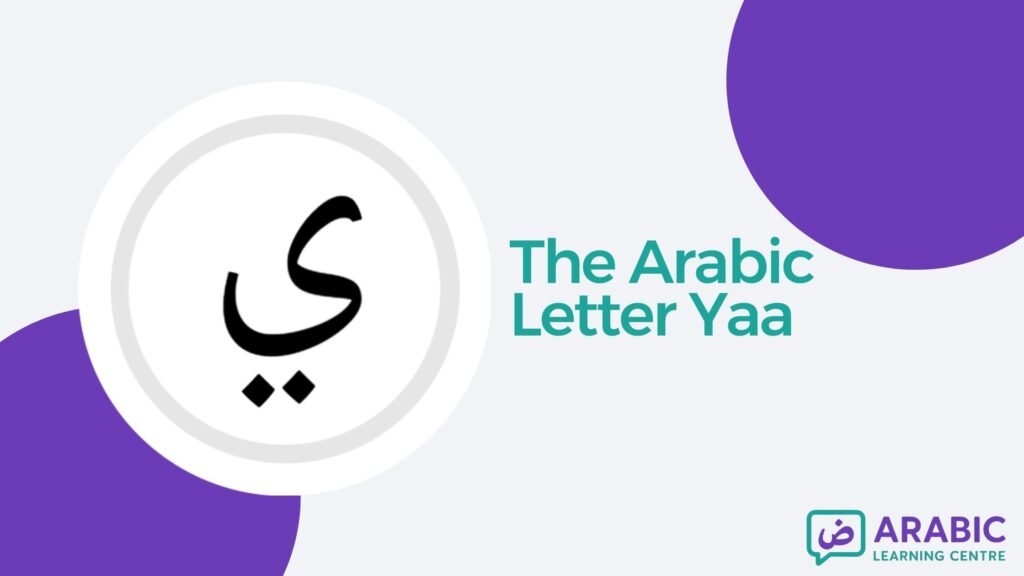
Learning the Arabic alphabet is the first step toward mastering the Arabic language, and one of its essential letters is Ya (ي). The letter ي is the 28th and last letter in the Arabic alphabet, and it carries a soft and clear sound similar to the English sound “y” in words like yes or the long vowel “ee” in see. Recognizing and practicing this letter helps learners build a solid foundation for reading, writing, and speaking Arabic correctly.
The letter Ya (ي) is used widely in Arabic words, appearing at the beginning, middle, or end of a word with different shapes. It also changes its pronunciation depending on the short vowels (Fatha, Dammah, Kasrah, or Sukoon). Mastering the letter ي is very important because it not only functions as a consonant but also acts as a long vowel, making it one of the most flexible and commonly used letters in Arabic.
Letter Yaa – ي
The letter Yaa (ي) is the 28th and last letter in the Arabic alphabet. It has a light sound, similar to the English “y” in yes. Sometimes, it also works as a long vowel and sounds like “ee” in see.
– Name of the letter: Yaa (ي)
– Position in the alphabet: 28th (last letter)
– Sound: “y” as in yes or “ee” as in see
– Type: Consonant and can also act as a vowel
– Writing direction: From right to left
The letter ي is special because it is used very often in Arabic. It appears in thousands of words and is one of the first letters that children find easy to pronounce.
How to Identify The letter Yaa – ي

The letter Yaa (ي) is easy to recognize because it has a two dots feature and a smooth curved shape. Its form changes depending on where it appears in the word:
– When alone, it looks like: ي
– It has two dots below the line (··)
– When connected to other letters, it stretches smoothly to join them
Tip for learners: Always look for the two dots under the line; they are the clear sign that this is the letter ي (Yaa).
Visual example:
– ي (Isolated)
– يبيت (Beginning)
– بيت (Middle)
– كرسي (End)
These examples help you quickly spot the letter in words, no matter where it comes.
Letter Yaa and ي Forms: At the Beginning, Middle, and End of the word
Like many Arabic letters, the shape of Yaa (ي) changes depending on its position in a word. Let’s look at each case with examples:
1- At the Beginning (يـ)
When Yaa comes at the start, it connects to the letter after it.
Example: ياسمين (Yasmeen), and يكتب (he writes)
2- In the Middle (ـيـ)
When Yaa is in the middle, it connects smoothly from both sides.
Example: بيت (house), and سيارة (car)
3- At the End (ـي)
When Yaa comes at the end, it appears stretched with two dots below.
Example: كرسي (chair), and غني (rich)
In some words, the final Yaa may appear without dots (known as alif maqsura ى), but it’s different from normal ي. For example: هدى (guidance).

At Arabic Learning Centre, you can learn Arabic step by step with professional native teachers. Our interactive lessons make it easy and enjoyable for students of all ages to master reading, writing, and speaking Arabic.
Letter Yaa/ ي With Fatha ( َ )

When the letter Yaa (ي) carries a Fatha ( َ ), it is pronounced as a short sound “ya”. The Fatha is a small diagonal stroke placed above the letter.
Examples:
– يَدين (he owes) → ya-deen
– يَذهب (he goes) → yazh-hab
– يَمين (right side) → ya-meen
The sound is always short and light, never stretched. It’s just a quick “ya” sound.
Letter Yaa / ي With Dammah ( ُ )

When the letter Yaa (ي) carries a Dammah ( ُ ), it is pronounced as a short sound “yu”. The Dammah is a small curl-like sign placed above the letter.
Examples:
– يُحِب (he loves) → yu-hibb
– يُدرِس (he teaches) → yu-dris
– يُساعد (he helps) → yu-saa‘id
The sound is short, like saying “yu” quickly. Do not confuse it with the long vowel “yoo”, which comes when Yaa is followed by a Waw.
Letter Yaa/ ي With Kasrah ( ِ )

When the letter Yaa (ي) carries a Kasrah ( ِ ), it is pronounced as a short sound “yi”. The Kasrah is a small diagonal stroke placed below the letter.
Examples:
– معايير (Standards) → maayieer
– أطايِب (Goodies) → atayib
– مصايِف (Summer resorts) → masayif
The Kasrah makes the sound short and sharp like the beginning of the word “yes”.
Letter Yaa/ ي With sukoon ( ْ )

When the letter Yaa (ي) carries a Sukoon ( ْ ), it becomes silent and does not have a vowel sound by itself. Instead, it connects directly to the consonant before it. The Sukoon is written as a small circle above the letter.
Examples:
– بَيْت (house) → bayt
– حَيْوان (animal) → hay-waan
– شَيْخ (sheikh) → shaykh
With Sukoon, the letter ي works like a helper sound. It combines with the letter before it, making a clear syllable.
Examples of letter Yaa/ ي in Words
The letter Yaa (ي) appears very frequently in Arabic words. It can occur at the beginning, middle, or end of a word. Each position has a clear shape, and learning to recognize these forms will help learners read faster and with more confidence.
Here are some examples:
| Position | Arabic Word | Pronunciation | English Word |
| At the beginning | ياسمين / يعمل / يدي | Yasmeen / ya‘mal / yadi | Jasmine / he works / hand |
| In the middle | بيت / سيارة / فيروز | bayt / sayyaarah / Fayrouz | house / car / Fayrouz (name) |
| At the end | كرسي / غني / نبي | kursi / ghani / nabi | chair / rich / prophet |
Highlight the letter ي when reading new words. This will train your eyes to spot it quickly in any position.

Examples of letter Yaa/ ي in Phrases and Sentences
After learning the letter Yaa (ي) in single words, it’s important to see it inside full phrases and sentences. This helps learners practice reading smoothly and understand how ي connects naturally with other letters.
Here are some examples:
| Position | Arabic Phrase / Sentence | English Meaning |
| At the beginning | يكتب الولد الدرس | The boy writes the lesson |
| In the middle | بيت كبير | A big house |
| At the end | هذا كرسي | This is a chair |
Try reading these sentences aloud. Notice how the letter ي sounds slightly different depending on its position and the vowel marks.
How to write the Yaa Letter?
The Yaa (ي) is a smooth and curved letter in the Arabic alphabet. It is always written with two dots underneath (··) when it is the regular Yaa, and its shape changes depending on its position in a word. Unlike Alif, Yaa connects to both the letter before and after it.
Steps to Write Yaa:
1- Starting point: Place your pen on the baseline (the writing line).
2- Curve: Draw a small curve or stroke depending on whether it is isolated, at the beginning, middle, or end.
3- Connection: If Yaa is in the middle or beginning, stretch the line smoothly to connect with the next letter.
4- Dots: Always add two dots below the letter at the end. (Example: ي)
Important notes:
– Shape variety: Yaa looks different at the beginning (يـ), middle (ـيـ), end (ـي), or alone (ي).
– Direction: Write from right to left with a flowing stroke.
– Special case: Be careful not to confuse Yaa (ي) with Alif Maqsura (ى), which looks similar at the end but has no dots.
How to Pronounce the Letter Yaa?
The pronunciation of Yaa (ي) depends on the harakah (vowel mark) it carries. On its own, Yaa can act as a consonant (like the English “y” in yes) or as a long vowel (like the “ee” in see).
In Qur’anic recitation, Yaa (ي) is one of the Madd letters (letters of elongation) when it appears after a letter with a Kasrah. Its sound comes from Al-Jawf (الجوف) — the empty space in the mouth and throat — producing a soft, stretched “ee” sound.

Basic pronunciation rules:
1- Yaa as a consonant with Fatha (يَ):
Pronounced as a short “ya” sound.
Example: يَذهب (yazh-hab – he goes).
2- Yaa with Dammah (يُ):
Pronounced as a short “yu” sound.
Example: يُساعد (yusaa‘id – he helps).
3- Yaa with Kasrah (يِ):
Pronounced as a short “yi” sound.
Example: مصايِف (masayif – Summer resorts).
4- Yaa as a long vowel (ـي):
Pronounced as a stretched “ee” sound.
Example: كبير (kabeer – big).
Smile slightly when pronouncing the long “ee” sound, keep it soft, and avoid mixing it with the short “i” sound. Practicing in front of a mirror can help you control the mouth shape and clarity.
Learn Yaa through videos
Watching videos can make learning the Arabic letter Yaa (ي) much more effective. Seeing how the letter is written, hearing its pronunciation, and following step-by-step guidance helps reinforce recognition and recall.
Here are some excellent and engaging video resources:
– Learn Letter Yaa (ي) in Arabic | Arabic Alphabet for Kids
A very recent, beginner-friendly video (published about 4 weeks ago) that clearly shows how to read, write, and pronounce the letter ي.
– Arabic Alphabet – Lets learn the letter ي – yaa | Alphabayt
This vibrant video from the Alphabayt series takes you on an exciting journey to learn the letter ي (Yaa)!
Learn more about the letter Yaa with Arabic Learning Centre:
How to Make the Most of These Videos
1- Listen & Repeat: Start the video, listen carefully to how ي is pronounced, then pause and repeat the examples out loud for practice.
2- Follow the Writing: Watch how the letter is drawn in each form—isolated, initial, medial, and final—and practice writing alongside the video.
3- Reinforce Learning: Combine these videos with written explanations, visual aids (like images), and exercises to reinforce understanding through multiple formats.
4- Engage Actively: Encourage learners (especially kids) to say the sounds and trace the shapes to connect visual writing and audible pronunciation.
Join Arabic Learning Centre to build a strong foundation in Arabic with expert guidance. Flexible schedules, engaging materials, and personalized support will help you achieve your language goals with confidence.
Exercises for letter Yaa in Arabic
Practicing is the best way to master the Arabic letter Yaa (ي). These exercises will help you recognize, write, and pronounce ي correctly in different positions of a word.
1. Identify the Letter Yaa
Circle the letter ي in the words below:
– بيت
– كبير
– سيارة
– كرسي
– يوم
2. Write Yaa in Different Positions
Write the letter Yaa in:
– Beginning position: يـ
– Middle position: ـيـ
– End position: ـي
– Isolated form: ي
3. Match the Word to Its Picture
Draw a line between each word and the correct picture:
– بيت 
– كرسي 
– يد 
– يوم 
4. Fill in the Missing Letter
Complete the words by adding the missing Yaa (ي):
1- ب__ت (house)
2- كرس___ (chair)
3- __د (hand)
4- __وم (day)
5. Read Aloud
Read these words slowly, paying attention to the sound of ي:
– كبير (kabeer – big)
– يوم (yawm – day)
– سيارة (sayyaarah – car)
– كرسي (kursi – chair)
Repeat these exercises daily until you can spot the letter Yaa instantly and write it from memory.
Downloadable Worksheets for the Arabic letter Yaa
To make learning fun and effective, we’ve prepared printable worksheets for the Arabic letter Yaa (ي). These resources are designed to help students practice recognizing, tracing, writing, and using the letter in real words and short sentences. The activities are interactive and perfect for both classroom and home learning.
Download the worksheets here:
– My Resource Station: Yaa Worksheet – A printable PDF where kids can trace, color, and write the letter ي in its different forms (beginning, middle, end, and isolated).
– Arabic Seeds (Islamic-themed): Offers coloring, tracing, and vocabulary worksheets for the letter ي, along with pronunciation aids to help learners memorize it more effectively.
These worksheets make learning Arabic engaging while reinforcing handwriting, pronunciation, and word recognition.
Read Also: The Letter Waaw و In Arabic With Examples, Exercises, and Worksheets
Common Mistakes related to the letter Yaa
Even though the Arabic letter Yaa (ي) is widely used and very important, many beginners make common mistakes when learning it. Understanding these mistakes will help you avoid them and improve your Arabic skills faster.
1. Confusing Yaa (ي) with Alif Maqsura (ى)
Mistake: Writing ى (Alif Maqsura) instead of ي, especially at the end of words.
Correction:
ي has two dots underneath.
ى looks similar but has no dots.
Example: صديقي (sadeeqi – my friend) A yaa while مصطفى (Mustafa) – ends with ى, not ي.
2. Forgetting the Dots of Yaa
Mistake: Writing ي without the two dots, which changes the letter completely.
Correction: Always remember the two dots under the letter ي in its isolated, initial, and medial forms.
Example: بيت (bayt – house), this is correct, while بٮت (wrong, missing dots).
Read Also: The Letter Dhaal / ذ in Arabic With Examples, Exercises, and Worksheets

Read Also: The Letter Faa’ ف In Arabic With Examples, Exercises, and Worksheets
3. Mispronouncing Yaa (ي) as a Long Vowel Only
Mistake: Thinking ي is always the long vowel “ee” (like in see).
Correction:
ي can be both:
1- A consonant (like “y” in yes → يد yad – hand).
2- A long vowel (like “ee” in tree → كبير kabeer – big).
Read Also: The Letter Baa / ب in Arabic With Examples, Exercises, and Worksheets
4. Writing the Wrong Form of Yaa in Words
Mistake: Using the isolated form (ي) in the middle of a word or not connecting it properly.
Correction: Practice writing ي in all forms:
– Beginning: يـ (يد)
– Middle: ـيـ (سيارة)
– End: ـي (كرسي)
By avoiding these mistakes and practicing regularly, learners will recognize, write, and pronounce ي with accuracy and confidence.
Read Also: The Letter Haa هـ In Arabic With Examples, Exercises, and Worksheets
Start Your Arabic Learning Journey with Expert Teachers Today
Ready to truly understand Arabic and use it with confidence? At The Arabic Learning Centre, you’ll learn with expert Arabic language teachers, including qualified female Arabic teachers, in a supportive and professional environment designed for real progress. Whether you’re learning Arabic for the Quran, studies, career, or daily conversation, we have the right course for you.
Take the next step today and join thousands of students learning Arabic the right way.
Courses We Offer:
- Online Arabic Classes for Kids
- Arabic Words for Kids
- Arabic Lessons for Kindergarten
- Arabic Elementary School
- Arabic Intermediate School
- Arabic High School
Conclusion
Mastering the Arabic letter Yaa (ي) is essential for building a strong foundation in reading, writing, and pronunciation. As the last letter of the Arabic alphabet, ي is unique because it can function both as a consonant (like “y” in yes) and as a long vowel (like “ee” in see). Its forms change depending on position, at the beginning, middle, or end of a word, but it remains easy to identify thanks to its two dots underneath.
Understanding these variations, along with correct vowel usage (Fatha, Dammah, Kasrah, or Sukoon), helps learners read fluently and avoid common mistakes. Through structured examples, exercises, and worksheets, learners can quickly recognize ي in words such as بيت (house), كرسي (chair), and يكتب (he writes). Practicing pronunciation with short vowels (ya, yu, yi) and long vowels (ee) ensures accurate reading and speaking. Avoiding common errors, such as confusing ي with ى (Alif Maqsura) or forgetting its two dots, is key to mastering the letter. By combining visual recognition, writing practice, and oral repetition, students will confidently use ي in everyday Arabic, making it one of the most important steps in progressing toward fluency.
Related Articles
Arabic Alphabet & Writing

Leave a Reply