 Learn Arabic
| Key Takeaways |
| Islam does not require fluency in Arabic to be Muslim — faith, intention, and practice define one’s Islam. |
| Certain acts of worship, particularly Salah (prayer), must be performed in Arabic according to scholarly consensus. |
| Learning specific Arabic phrases for prayer is an obligation upon every Muslim, regardless of their native language. |
| Arabic is the language of the Quran, making its study deeply rewarding and spiritually significant for all Muslims. |
| Any Muslim can begin learning the Arabic needed for worship within weeks through structured, guided instruction. |
Arabic is woven into the fabric of Islamic worship in ways that matter practically. Every Muslim who prays needs a foundational level of Arabic — not conversational fluency, but the specific Quranic phrases and supplications that Salah requires.
Understanding where that line falls can transform how you approach Arabic as a Muslim learner.
Do You Have to Learn Arabic to Be Muslim?
You do not have to learn Arabic to be Muslim. Becoming Muslim requires the Shahada — the declaration of faith — and living according to Islam’s core pillars. Fluency in Arabic is not a condition of being Muslim, nor of one’s faith being valid or accepted.
Is Learning Arabic Mandatory in Islam?
No, learning Arabic as a full language is not mandatory in Islam. However, memorising the specific Arabic phrases used in Salah (the five daily prayers) is considered an obligation by the majority of scholars. This is a meaningful distinction — Islam asks every Muslim to learn enough Arabic for worship, not to become a linguist.
The Fatiha (سُورَةُ الْفَاتِحَة) — the opening chapter of the Quran — must be recited in Arabic during every unit of prayer. Scholars across all four major Sunni madhabs (schools of jurisprudence) hold that Salah performed without the Arabic Fatiha is invalid. This ruling alone means every Muslim has an Islamic reason to learn at least some Arabic.
Beyond this minimum, learning more Arabic is described in scholarly tradition as fard kifaya — a collective obligation. If enough Muslims in a community learn Arabic deeply, the obligation lifts from others. But for every individual, the Arabic of worship is non-negotiable.
At The Arabic Learning Centre, our Learn Arabic for New Muslims course is specifically structured around this reality — starting with the Arabic you need for prayer, then building outward at your own pace.
Book a Free Session in Our Learn Arabic for New Muslims Course
Why Was Learning Arabic Important for Those Who Became Muslim?
When non-Arabs embraced Islam throughout history, learning Arabic became important for a layered set of reasons — theological, legal, and spiritual. Arabic was the language in which the Quran was revealed, making it the primary source of guidance for every Muslim, regardless of background.
Early Muslim scholars established that understanding the Quran in its original language prevents distortion of meaning. Translations, however careful, carry interpretive choices. The Arabic text itself is considered inviolable.
This led generations of non-Arab Muslims — Persian, Turkish, Berber, South Asian, and West African scholars — to master Arabic as a religious commitment.
Historically, this also served a unifying function. Arabic created a shared scholarly language across a vast and diverse Muslim world, allowing knowledge to travel and legal rulings to be compared across continents.
Read also: Arabic Worksheets for Kids
Why Is Arabic the Language of Islam?
Arabic is the language of Islam because it is the language in which the Quran was revealed to the Prophet Muhammad ﷺ. This is not a cultural preference — it is a theological reality Muslims accept as part of their faith. The Quran itself states:
إِنَّا أَنزَلْنَاهُ قُرْآنًا عَرَبِيًّا لَّعَلَّكُمْ تَعْقِلُونَ
Innā anzalnāhu Qur’ānan ʿarabiyyan laʿallakum taʿqilūn
“Indeed, We have sent it down as an Arabic Quran so that you may reason.” (Quran 12:2)
This verse situates Arabic not as incidental to the message but as integral to it. The specific sounds, grammatical structures, and word roots of Arabic carry layers of meaning that no translation fully captures.
Muslim scholars throughout history have regarded the study of Arabic grammar (Nahw) and vocabulary as essential tools for understanding divine speech accurately.
If you want to build that foundation properly, our Arabic Course for Islamic Studies offers a structured path from essential religious vocabulary through Quranic comprehension.
Join Our Arabic Course for Islamic Studies With a Free Trial

Is Arabic the Language of God?
This question requires careful, honest handling. Islamic theology does not describe God as having a “native language” in the human sense. What scholars affirm is that the Quran — Allah’s speech — was revealed in Arabic, and that Arabic is therefore the language of divine revelation and worship in Islam.
The distinction matters. Muslims are not claiming Arabic is exclusively sacred in a metaphysical sense that excludes all other speech. Rather, the Quran’s Arabic is regarded as uniquely preserved and untranslatable in its entirety. Supplications (du’a) may be made in any language — Arabic carries no monopoly over sincere personal prayer to Allah.
What Arabic does hold, in Islamic understanding, is a privileged position as the language through which the final, preserved divine message was transmitted.
Can You Pray in Your Own Language in Islam?
For Salah — the five obligatory daily prayers — the scholarly consensus is that the Fatiha and the required recitations must be in Arabic.
A new Muslim who has not yet learned the Arabic is given a period of grace to learn, during which scholars make accommodation. But the long-term expectation across all major schools of thought is Arabic recitation in formal prayer.
Du’a — personal supplication outside of the formal prayer structure — may be made in any language. This is widely agreed upon. When a Muslim speaks to Allah directly in their own language, expressing need, gratitude, or grief, that is entirely valid and encouraged.
The practical implication is that every Muslim has a genuine, immediate reason to begin learning basic Arabic — specifically, the phrases of Salah and the Fatiha. This is not an overwhelming amount of material. With structured guidance, most adult learners can achieve functional prayer-level Arabic reading within four to six weeks.
Our learn to read Arabic course at The Arabic Learning Centre covers exactly this foundation — Quranic script recognition and the recitations needed for prayer.
Start Reading Arabic with a FREE Trial

Can You Go to Jannah Without Knowing Arabic?
Yes — a Muslim’s entry to Jannah (paradise) is not conditional on knowing Arabic. Islamic theology is consistent on this point: what earns Jannah is faith, sincere worship, righteous action, and Allah’s mercy — not linguistic ability.
This does not diminish the value of learning Arabic. It reframes it accurately. Arabic is a means — a profoundly rewarding one — not a condition of salvation.
Millions of Muslims throughout history have lived and died deeply righteous lives without speaking or reading Arabic beyond their prayer recitations.
The encouragement to learn Arabic comes from a place of opportunity, not obligation linked to salvation. Understanding the Quran in its language opens doors of meaning that translations can only approximate. It is a gift worth pursuing — not a gate one must pass to be saved.
Is It Sunnah to Learn Arabic?
Learning Arabic beyond the minimum required for worship is strongly encouraged and regarded by many scholars as Sunnah — following the example and guidance of the Prophet ﷺ and his Companions. The Companions of the Prophet ﷺ, many of whom were non-Arab, learned Arabic to engage directly with revelation and legal rulings.
Practically, learning Arabic — even at a conversational or intermediate level — deepens one’s connection to Quran, Hadith, and scholarly literature in ways that have a direct impact on worship quality and Islamic knowledge. Our Arabic course for beginners at The Arabic Learning Centre gives Muslim learners a structured starting point that respects this tradition.
What Is the Islamic Requirement to Learn Arabic?
The Islamic requirement regarding Arabic can be summarised clearly across three tiers:
| Level | What Is Required | Who It Applies To |
| Obligatory (Fard ʿAyn) | Arabic recitations of Salah, including Surah Al-Fatiha | Every adult Muslim |
| Collective Obligation (Fard Kifaya) | Deep Arabic literacy to preserve Islamic scholarship | Muslim community as a whole |
| Recommended (Sunnah / Mustahabb) | Further Arabic learning for Quran and Hadith understanding | Every Muslim seeking deeper knowledge |
This framework, drawn from classical Usul al-Fiqh (principles of Islamic jurisprudence), clarifies that Arabic study sits at different levels of obligation depending on the purpose. No scholar requires native-level fluency from every Muslim. Every scholar requires at minimum the Arabic of prayer.
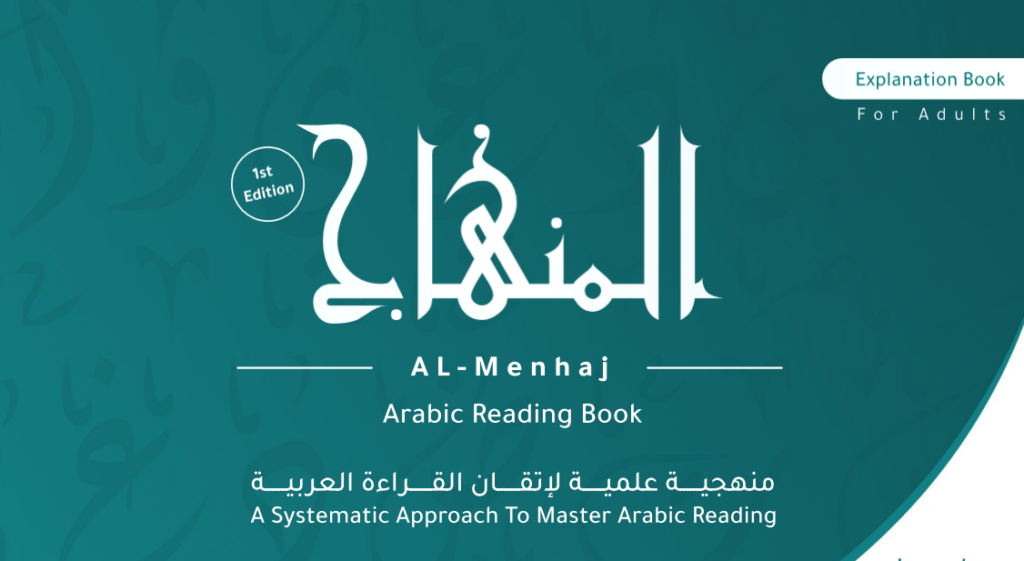
At The Arabic Learning Centre, our Al-Menhaj Book provides a guided, structured entry point for Muslims — particularly new Muslims — who need to learn Quranic script and prayer-level Arabic reading from absolute zero.
Explore Al-Menhaj Book for Free
How Much Arabic Does a Muslim Actually Need to Learn?
In our instructors’ experience at The Arabic Learning Centre, this is the question Muslim learners ask most urgently — and the one that causes the most unnecessary anxiety. The answer is simpler than most expect.
For functional Islamic worship, a Muslim needs:
- Surah Al-Fatiha — 7 verses, memorised in Arabic
- At-Tahiyyat and related Tashahhud phrases — used in the sitting position of prayer
- Takbir, Tasbih, and Tasleem phrases — the essential structure of Salah
- Basic du’a phrases — for after prayer and daily remembrance
This is achievable for virtually any adult learner within four to eight weeks of consistent, guided practice. Students at The Arabic Learning Centre who commit to short daily sessions regularly reach this milestone faster than they expected — and almost always find that, having reached it, they want to continue further.
The benefits of learning Arabic extend well beyond this minimum, and many Muslim learners discover that what began as a religious obligation becomes a source of genuine intellectual and spiritual fulfillment.
Begin Learning the Arabic You Need as a Muslim — at The Arabic Learning Centre
Every Muslim has a reason to learn Arabic — and a clear starting point. The Arabic Learning Centre offers structured, expert-guided Arabic courses for Muslim learners at every level, taught by certified native Arabic instructors.
Why learn with us:
- 1-on-1 personalised sessions tailored to your level and goals
- Flexible scheduling available 24/7 — learn at your own pace
- Dedicated Learn Arabic for New Muslims course
- Al-Menhaj Book for Quranic reading foundations
- Free trial lesson — no commitment required
Start with the Arabic your worship requires. Continue as far as your curiosity and commitment take you. Book your free trial lesson at The Arabic Learning Centre today.
Check out our top courses in Arabic and choose the course you need to start learning Arabic today:
- Arabic Course for Beginners
- Arabic Script Writing Course
- Arabic Speaking Course
- Learn Arabic Letters for Tajweed
- Learning Arabic Grammar
- Arabic Vocabulary Course
- Fusha Arabic Course
- Classical Arabic Course
- Arabic Course for Islamic Studies
- Quranic Arabic Course
- Learn Arabic for New Muslims
Start with a FREE trial class and enhance your Arabic language skills

Frequently Asked Questions About Learning Arabic as a Muslim
Do you have to speak Arabic to convert to Islam?
No. Converting to Islam requires sincerely declaring the Shahada — Lā ilāha illā Allāh, Muḥammadun rasūlu Allāh — which is said in Arabic, but fluency in Arabic is not required. The meaning must be understood and sincerely intended. No further Arabic ability is a condition of conversion.
What Arabic do new Muslims need to learn first?
New Muslims should prioritise learning Surah Al-Fatiha, the phrases of Salah (including Takbir, Tasbih, and Tashahhud), and basic du’a after prayer. This foundational set is specifically what our Learn Arabic for New Muslims course at The Arabic Learning Centre covers from the first lesson.
Can a Muslim read the Quran in translation instead of Arabic?
A Muslim may read and study Quran translations for understanding — this is encouraged. However, the translation is not considered the Quran itself in Islamic theology. The Arabic text is the Quran. Salah must use Arabic recitation. Reading a translation is study; reciting Arabic in prayer is worship.
How long does it take a new Muslim to learn prayer-level Arabic?
Most adult new Muslims can achieve functional prayer-level Arabic reading within four to eight weeks of structured daily practice lasting fifteen to twenty minutes. In our instructors’ experience at The Arabic Learning Centre, learners who start with the Arabic script rather than transliterations progress more confidently and retain the material more durably.
Is it sinful not to learn Arabic as a Muslim?
Not knowing Arabic is not sinful in itself. The obligation is specifically the Arabic recitations of Salah. A Muslim who genuinely cannot access Arabic instruction is not held to account for what is beyond their means. However, a Muslim who has access to learning and indefinitely neglects even the prayer-level minimum should reflect on that. Beyond that minimum, further learning is strongly encouraged but not a condition of sin or salvation.
Related Articles
Learn Arabic
Leave a Reply