 Arabic Alphabet & Writing
Learning the Arabic alphabet is achievable for any adult learner, typically within three to six weeks of structured daily practice. The alphabet contains 28 letters, all consonants, written from right to left — and while the script looks unfamiliar at first, its logic is consistent and learnable once you understand the system behind it.
What makes this process genuinely manageable is that Arabic script follows clear rules. Every letter has a predictable form based on where it sits in a word, and the sounds — though some are unlike anything in English — are precisely described by classical Arabic phonology. With the right method and a qualified instructor guiding your early weeks, the Arabic script stops feeling foreign remarkably quickly.
How to Learn Arabic Alphabet Online?
Learning the Arabic alphabet online works when the method combines structured instruction, immediate pronunciation feedback, and consistent daily engagement.
The most common failure pattern in online Arabic learning is relying solely on passive resources — alphabet charts, YouTube videos, apps — without live interaction to catch and correct errors as they form.
What to Look for in an Online Arabic Alphabet Course?
Effective online learning for the Arabic alphabet includes:
- Live instructor feedback on pronunciation and script formation — video or audio, not text only
- Structured letter sequencing based on shape grouping, not alphabetical order
- Daily practice sessions of 15–20 minutes rather than longer infrequent sessions
- Writing practice integrated from the first week — not deferred until reading is established
- Tashkeel (vowel marking) training from lesson one, not after the alphabet is “complete”
Students at The Arabic Learning Centre who follow our structured Arabic Course for Beginners — with 1-on-1 sessions with certified Arabic instructors and flexible 24/7 scheduling — consistently reach confident letter recognition within three to four weeks.
The personalized attention allows instructors to identify individual error patterns immediately, rather than leaving mispronunciations to solidify over months.
Book a FREE session with one of our native Arabic-certified teachers
For Muslims learning Arabic specifically to access the Quran, The Arabic Learning Centre also offers Al-Menhaj Book — a structured learn-to-read Quran resource developed by instructors with over 25 years of teaching experience, covering Arabic alphabet fundamentals and reading mechanics tailored precisely for non-native speakers.
Explore Al-Menhaj Book for Free
Step-by-Step Method for Learning the Arabic Alphabet
To learn the Arabic alphabet systematically, follow a five-stage progression that moves from sound awareness through to connected reading. Skipping stages — particularly stage two — is the single most common cause of plateau in early Arabic learners.
Stage 1 — Sound Orientation (Days 1–3)
Before writing a single letter, develop awareness of Arabic phonemes that do not exist in your native language.
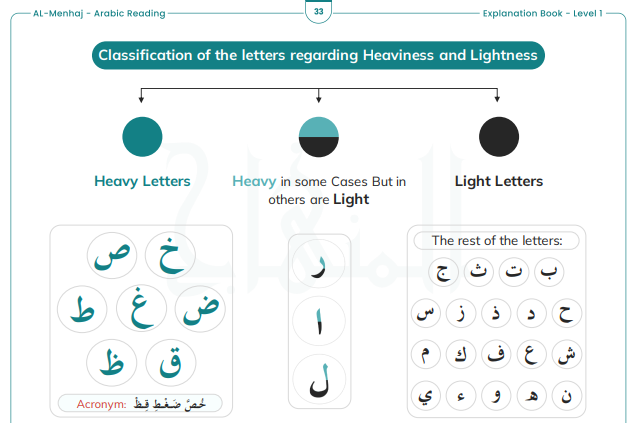
Focus on: ع، غ، ح، خ، ق، ص، ض، ط، ظ. These pharyngeal, uvular, and emphatic consonants require physical retraining of articulation. Attempting to write letters whose sounds you cannot yet produce creates a disconnected, ineffective learning loop.
Stage 2 — Shape Families and Positional Forms (Days 4–14)
Learn letters in shape-based clusters. For each cluster, practice all four positional forms — isolated, initial, medial, final — before moving to the next cluster. Write each letter by hand. Research on motor learning consistently supports handwriting as a superior retention method compared to typing for alphabet acquisition.
Stage 3 — Tashkeel and Short Vowel Integration (Days 10–18)
Introduce fatha, kasra, and damma alongside letters you already know. Practice reading simple consonant-vowel combinations:
بَ، بِ، بُ ba, bi, bu
This three-vowel drill applied to each letter you know is the fastest route to functional reading ability with short vowels.
Stage 4 — Letter Connection Practice (Days 15–25)
Practice connecting letters into two- and three-letter combinations before attempting full words. Focus specifically on the six non-connectors — و، ز، ر، ذ، د، أ — to build correct connection habits under supervision.
Stage 5 — Supervised Reading of Simple Texts (Days 20–35)
Begin reading short, fully vowelized (tashkeel-marked) texts with an instructor present to catch misreadings in real time. The Quran is an excellent fully-vowelized text for this stage. Most adult learners achieve comfortable letter recognition and basic reading ability within four to six weeks at this pace.
For a deeper look at script formation and advanced writing techniques, visit our guide on mastering Arabic alphabet learning and explore our full resource on how to learn Arabic for a structured roadmap beyond the alphabet stage.
Shots Videos from Our Courses
How Long Does It Take to Learn the Arabic Alphabet?
Most adult learners reach confident letter recognition within three to four weeks of daily 15–20 minute practice sessions. Full reading fluency with tashkeel typically follows within six to eight weeks. These are instructional estimates from The Arabic Learning Centre’s teaching experience — individual pace varies based on prior language learning experience, consistency of practice, and the quality of instruction received.
For a detailed breakdown of Arabic learning timelines beyond the alphabet stage, see our article on how long it takes to learn Arabic.
What Does the Arabic Alphabet Actually Consist Of?
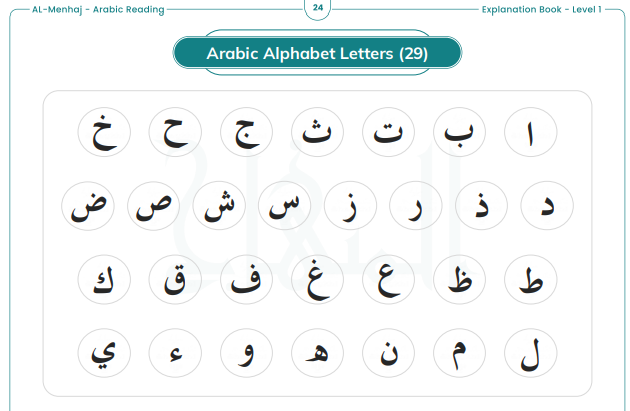
The Arabic alphabet (الحروف الهجائية, al-ḥurūf al-hijāʾiyyah) consists of 28 letters, all representing consonants. Vowel sounds are indicated separately through small diacritical marks called tashkeel (تشكيل) — symbols placed above or below letters. Understanding this consonant-based structure from the start prevents one of the most common early misconceptions beginners carry into their studies.
Explore Al-Menhaj Book for Free
Unlike the Latin alphabet, Arabic script is cursive by nature — most letters connect to adjacent letters within a word. This is not decorative; it is structurally mandatory. Each letter has between two and four distinct written forms: isolated, initial (beginning of a word), medial (middle), and final (end of a word).
Six letters — و، ز، ر، ذ، د، أ — are non-connectors. They connect to the letter before them but never to the letter after. Missing this rule is one of the first handwriting errors students make, and recognizing it early saves significant confusion.
| Letter | Isolated | Initial | Medial | Final |
| ب (bā’) | بـ | بـ | ـبـ | ـب |
| ع (ʿayn) | ع | عـ | ـعـ | ـع |
| ك (kāf) | ك | كـ | ـكـ | ـك |
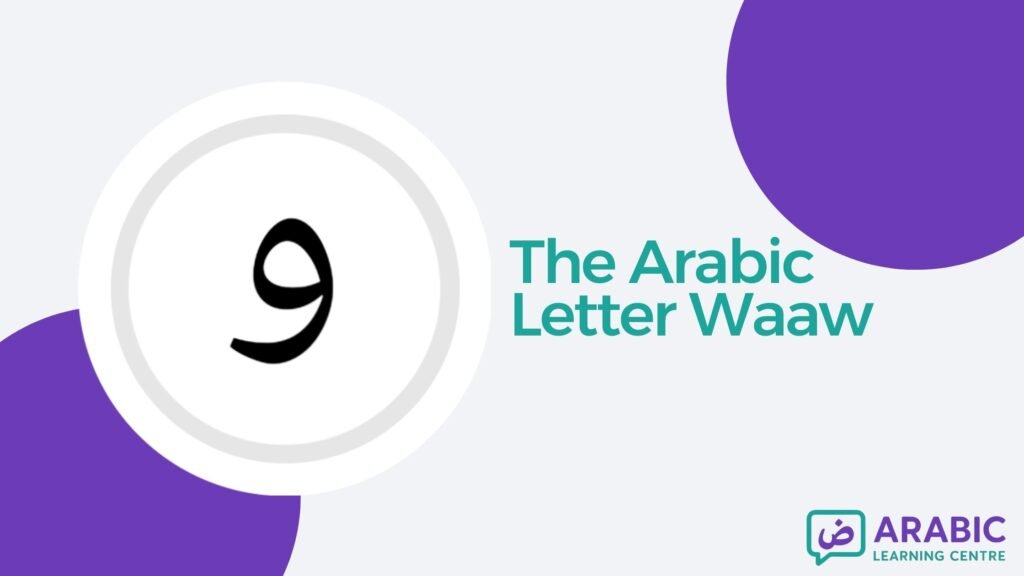
| و (wāw) | و | و | ـو | ـو |
Note: و is a non-connector — its initial and medial forms are identical to isolated.
Read also: The Arabic Alphabet: Complete Guide for Beginners
How Can I Memorize the Arabic Alphabet Effectively?
Memorizing the Arabic alphabet effectively requires grouping letters by visual similarity, not learning them in strict alphabetical order.
Research in language acquisition — and consistent observation in our classrooms at The Arabic Learning Centre — confirms that learners who study letters in shape-based clusters recognize and write them up to 35% faster than those who memorize them in sequence.
1. Group Letters by Visual Shape Family First
Arabic letters largely share base shapes. Recognizing this immediately reduces the 28 letters into roughly eight shape families. Consider these three:
- ب، ت، ث — same base shape, distinguished only by the number and position of dots
- ج، ح، خ — same curved body, distinguished by dots
- د، ذ — same angular form, one has a dot above
This grouping transforms the alphabet from 28 individual items to memorize into a manageable set of base shapes with systematic variations. Once you internalize the base shape, adding the dot distinction requires far less cognitive effort.
2. Use Tashkeel From Day One
Tashkeel — the three primary short vowel markers — must be introduced immediately alongside letter learning, not delayed until “later.”
| Marker | Name | Sound |
| َ (above) | Fatha | Short “a” — like “cat” |
| ِ (below) | Kasra | Short “i” — like “sit” |
| ُ (above, rounded) | Damma | Short “u” — like “put” |
At The Arabic Learning Centre, our Arabic Course for Beginners introduces tashkeel alongside the first letters from lesson one. Students who learn letters with vowel markers from the start develop accurate pronunciation habits that persist. Those who delay tashkeel consistently struggle to break mispronunciation patterns later.
Join Our Arabic Course for Beginners With a Free Trial

Read also: How to Learn Classical Arabic?
How to Read the Arabic Alphabet Without Confusing Similar Letters?
Reading the Arabic alphabet accurately depends on training your eye to distinguish dot patterns and position differences — the two primary differentiators between visually similar letters.
Most reading errors in the first four weeks trace back to one of these two categories, not to fundamental script difficulty.
1. Master Dot Placement Before Moving to Full Words
The Arabic script uses dots as phonemic differentiators. The letter ن (nūn) has one dot above; ب (bā’) has one dot below. The letters ف (fā’) and ق (qāf) differ only in the number of dots — one and two respectively.
Training your eye to register dot position before reading a letter as a whole is a foundational reading skill that instructors at The Arabic Learning Centre reinforce in every beginner session.
2. Practice Letter Recognition in All Four Positional Forms
A common stumbling block: learners recognize a letter in its isolated form but fail to identify it mid-word.
The letter ع (ʿayn) in isolation looks very different from its medial form ـعـ. Systematic exposure to all four positional forms — through structured reading exercises, not just alphabet charts — closes this recognition gap within two to three weeks.
Example: The word مَعْلَم (maʿlam, “teacher”) contains ع in its medial form. A learner who only knows the isolated form will pause or misread at that letter every time.
Is It Easy to Learn the Arabic Alphabet?
The Arabic alphabet is genuinely learnable for adult non-Arabic speakers, typically within three to four weeks of daily structured practice. Whether it feels easy depends largely on your starting method.
The script itself is logically constructed — far more phonetically consistent than English spelling, for example — but it requires dedicated engagement with sounds that do not exist in most European languages.
The honest answer from instructors who have taught hundreds of adult beginners: the script is not the hard part. The sounds are harder than the shapes. Letters like ع (ʿayn), غ (ghayn), ح (ḥā’), and خ (khā’) require articulation from parts of the throat and mouth that English speakers have never consciously activated.
These are described in classical Arabic phonology using the concept of makhraj (مَخْرَج) — the precise point of articulation for each letter.
ع (ʿayn), for instance, is produced by constricting the lower pharynx — a sound beginners almost universally produce incorrectly as a plain vowel in the first weeks. The correction comes through targeted pronunciation training, not repeated listening alone.
For learners who want to build correct pronunciation from the beginning, The Arabic Learning Centre’s Online Arabic Pronunciation Course provides structured makhraj training with certified instructors guiding each session.
Our Students Reviews
Begin Pronouncing Arabic Fluently with a Free Trial

Start Learning the Arabic Alphabet with Certified Instructors at The Arabic Learning Centre
The Arabic alphabet is your entry point to one of the world’s great literary and spiritual languages — and with the right method, it is well within your reach in under six weeks.
The Arabic Learning Centre offers:
- 1-on-1 sessions with certified native Arabic instructors
- Flexible 24/7 scheduling to suit any time zone
- Structured Arabic Course for Beginners with proven shape-based alphabet sequencing
- Online Arabic Pronunciation Course for correct makhraj training from day one
- Arabic Script Writing Course for learners focused on handwriting fluency
- Al-Menhaj Book for Muslims seeking Quran reading foundations
- Free trial lesson available — no commitment required
Book your free trial session today and begin with an instructor who will build your foundation correctly from the very first letter.
Check out our top courses in Arabic and choose what is the most course you need to start learning Arabic today:
- Arabic Course for Beginners
- Arabic Script Writing Course
- Arabic Speaking Course
- Learn Arabic Letters for Tajweed
- Learning Arabic Grammar
- Arabic Vocabulary Course
- Fusha Arabic Course
- Classical Arabic Course
- Arabic Course for Islamic Studies
- Quranic Arabic Course
- Learn Arabic for New Muslims
Start with a FREE trial class and enhance your Arabic language skills

Frequently Asked Questions About Learning the Arabic Alphabet
How Can I Memorize the Arabic Alphabet Quickly?
Group the 28 letters into shape-based families rather than memorizing them in alphabetical order. Letters sharing a base shape — such as ب، ت، ث — differ only in dot number and position, making clusters far easier to retain. Practice all four positional forms of each letter daily, and write by hand rather than typing. Most adult learners memorize all letters within three to four weeks this way.
Is It Easy to Learn the Arabic Alphabet Compared to Other Scripts?
The Arabic alphabet is moderately challenging for English speakers — primarily because of unfamiliar sounds and the four positional letter forms, not because the script is illogical. Arabic is actually phonetically more consistent than English. The sounds, particularly pharyngeal consonants like ع and ح, require more effort than the visual shapes. With daily structured practice and instructor guidance, most adults find the script manageable within a month.
How Do I Learn to Read the Arabic Alphabet Fluently?
Reading Arabic fluently begins with mastering letter recognition in all four positional forms, then building consonant-vowel reading with tashkeel. The critical step most learners skip is supervised reading practice — reading aloud with an instructor who can catch and correct misreadings immediately. Self-study alone tends to solidify errors. Instructor-guided reading practice from week three onward accelerates fluency significantly.
What Is the Hardest Part of Learning the Arabic Alphabet?
The hardest part for most English speakers is not the script itself — it is the pronunciation of sounds without equivalents in English. The letters ع (ʿayn), غ (ghayn), ح (ḥā’), and ق (qāf) require articulation from the pharynx and uvula. These sounds must be trained physically through targeted makhraj exercises. Without this training, learners read letters correctly on paper but pronounce them incorrectly for months.
Can I Learn the Arabic Alphabet Online Without a Teacher?
You can make initial progress with apps and videos, but self-study without instructor feedback has a significant limitation: it cannot catch and correct your pronunciation errors. The Arabic sounds and script forms that beginners get wrong are invisible to the learner — they feel correct even when they are not. A certified Arabic instructor provides the real-time correction that prevents errors from becoming habits. Even two to three live sessions per week alongside self-study makes a measurable difference.
Related Articles
Arabic Alphabet & Writing