 Arabic Alphabet & Writing
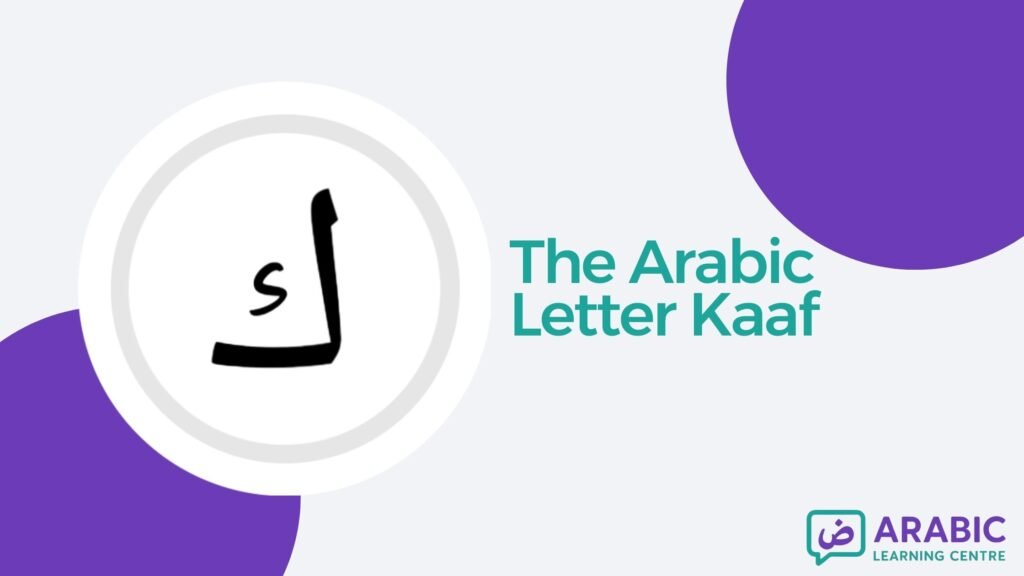
The Arabic alphabet is a fascinating system of symbols, each carrying its own sound, form, and importance. Among these letters is the letter Kaaf (ك), which is the 22nd letter in the Arabic alphabet. It plays a vital role in the structure of words and is commonly used in daily speech and writing. Learning this letter is essential for beginners who want to master reading and writing in Arabic, as it appears frequently in simple and complex words.
The letter Kaaf (ك) is unique in both its pronunciation and shape. It makes a soft “K” sound, similar to the English letter K as in the word kite. What makes this letter interesting is how its shape changes depending on its position in the word—at the beginning, middle, or end. In this article, we will explore the different forms of the letter Kaaf, learn how to pronounce and write it, and practice it through examples, exercises, and downloadable worksheets that make the learning process engaging and effective.
Letter Kaaf – ك

The letter Kaaf (ك) is the 22nd letter of the Arabic alphabet. It is classified as a consonant and produces a clear /k/ sound, similar to the English letter K in key or kite. In Arabic, this sound comes from the back of the tongue touching the roof of the mouth, making it sharp and easy to pronounce.
The shape of Kaaf is distinctive, with a curved structure and a small diagonal line (or mini-stroke) above it in its isolated form. This stroke is a key identifier of the letter and helps learners differentiate it from other letters such as Qaaf (ق), which may look somewhat similar but has a different sound and dot placement.
Learning the letter Kaaf is essential because it appears in many common words that children encounter daily, such as: كتاب (Kitaab – Book), كلب (Kalb – Dog), and كرسي (Kursi – Chair)
Understanding its definition, sound, and visual identity is the first step before moving to its connected forms within words.
How to Identify The letter Kaaf – ك
Identifying the letter Kaaf (ك) is quite simple once you pay attention to its unique shape and sound. In its isolated form, Kaaf looks like a curve with a small diagonal line (ـ) above it, which distinguishes it from other letters. Unlike letters that carry dots (مثل: ق، ف، ن)، Kaaf is recognized by this small stroke instead of a dot.
When listening, you can identify Kaaf by its strong /k/ sound, which is identical to the English “K” as in kite. This sound is clear, sharp, and unvoiced, meaning it does not require vibration of the vocal cords. Children can easily recognize it by practicing words that begin with the sound “Ka…” such as كبير (Kabeer – Big) or كعك (Ka‘k – Cake).
To make identification easier for beginners:
1- Visual tip: Look for the curved body with the tiny diagonal stroke.
2- Phonetic tip: Listen for the “K” sound at the start or inside a word.
3- Practice tip: Repeat simple Kaaf words daily to strengthen memory.
With practice, students will be able to quickly identify Kaaf in texts and distinguish it from similar letters like Qaaf (ق).
Letter Kaaf and ك Forms: At the Beginning, Middle, and End of the word
One of the most important things to learn about the Arabic alphabet is that letters change their shapes depending on where they appear in a word. The letter Kaaf (ك) is very flexible and has four forms: isolated, initial, medial, and final. Despite the small differences in appearance, the sound remains the same.
Here are the main forms of Kaaf (ك):
1- Isolated form (ك): when the letter stands alone.
Example: ك
2- Initial form (كـ): when the letter comes at the beginning of a word and connects to the following letters.
Example: كتاب (Kitaab – Book)
3- Medial form (ـكـ): when the letter comes in the middle of a word and connects on both sides.
Example: مكتبة (Maktaba – Library)
4- Final form (ـك): when the letter comes at the end of a word and connects to the previous letter.
Example: ملك (Malik – King)
Visual Tip for Students:
– At the beginning, Kaaf stretches to the right: كـ.
– In the middle, it connects on both sides: ـكـ.
– At the end, it closes neatly: ـك.
At Arabic Learning Centre, we make learning Arabic simple and engaging for kids. With interactive lessons, expert teachers, and fun worksheets, your child will love discovering the beauty of the Arabic alphabet.
Shots Videos from Our Courses
Letter Kaaf/ ك With Fatha ( َ )

When the letter Kaaf (ك) carries a Fatha ( َ ), it is pronounced as “Ka” (كَ) with a short “a” sound. The Fatha is a small diagonal stroke placed above the letter, giving it the light open vowel sound /a/.
Examples:
– كَلب (Kalb – Dog) → Kaaf comes at the beginning.
– مَكتَبة (Maktaba – Library) → Kaaf is in the middle.
– مَلِك (Malik – King) → Kaaf is at the end.
Practice Tip: Repeat the sound “Ka” several times, focusing on the clear “K” sound followed by the short “a”.
Letter Kaaf / ك With Dammah ( ُ )
When the letter Kaaf (ك) carries a Dammah ( ُ ), it is pronounced as “Ku” (كُ) with a short “u” sound. The Dammah is a small curl-like mark placed above the letter, giving it the rounded vowel sound /u/.
Examples:
– كُرة (Kura – Ball) → Kaaf comes at the beginning.
– مَكُوك (Makook – Shuttle) → Kaaf appears in the middle.
– مَلَكُ (Malaku – His angel/king) → Kaaf is at the end.
Practice Tip: Say “Ku” aloud several times while pointing at the Dammah sign.
Letter Kaaf/ ك With Kasrah ( ِ )
When the letter Kaaf (ك) carries a Kasrah ( ِ ), it is pronounced as “Ki” (كِ) with a short “i” sound. The Kasrah is a small diagonal stroke placed under the letter, giving it a light vowel sound /i/.
Examples:
– كِتاب (Kitaab – Book) → Kaaf comes at the beginning.
– مَكِنة (Makina – Machine) → Kaaf is in the middle.
– مَلكِ (Maliki – Belonging to the king) → Kaaf is at the end.
Practice Tip: Repeat the sound “Ki” several times, focusing on the short “i” sound.
Letter Kaaf/ ك With sukoon ( ْ )
When the letter Kaaf (ك) carries a Sukoon ( ْ ), it is pronounced as “K” (كْ) without any vowel sound. The Sukoon is a small circular mark placed above the letter, and it indicates that the Kaaf should be pronounced quickly and closed without extending a vowel.
Examples:
– مَكْتَب (Maktab – Office) → Kaaf is in the middle with Sukoon.
– فِكْر (Fikr – Thought) → Kaaf is in the middle.
– مِسكْ (Misk – Misk) → Kaaf is at the end.
Practice Tip: When practicing Sukoon, stop your voice right after pronouncing the letter “K”.
Examples of letter Kaaf/ ك in Words
The letter Kaaf (ك) appears in many Arabic words. It can occur at the beginning, middle, or end of a word. Because of its unique curved shape with a small diagonal stroke above, Kaaf is easy to recognize once learners are familiar with it. Identifying Kaaf in different positions helps students read more fluently and accurately.
Here are some examples:
| Position | Arabic Word | Pronunciation | English Word |
| At the beginning | كتاب / كرة / كلب | Kitaab / Kura / Kalb | Book / Ball / Dog |
| In the middle | مكتب / ملكة / مكان | Maktab / Malaka / Makaan | Office / Queen / Place |
| At the end | ملك / فلك / سمك | Malik / Falak / Samak | King / Universe / Fish |
Learners should highlight the letter ك in different words to train their eyes to spot it quickly.

Examples of letter Kaaf/ ك in Phrases and Sentences
After learning the letter Kaaf (ك) in single words, the next step is to recognize it within full phrases and sentences. This practice helps learners connect the letters naturally in reading and improves fluency. Since Kaaf can appear at the beginning, middle, or end of words, practicing it in sentences ensures children can identify and pronounce it smoothly in context.
Here are some examples:
| Position | Arabic Phrase / Sentence | English Meaning |
| At the beginning | كَتَبَ الولدُ الدرسَ | The boy wrote the lesson. |
| In the middle | المَكتبة كبيرة | The library is big. |
| At the end | هَذا مَلِكٌ عادل | This is a just king. |
How to write the Kaaf Letter?
Learning how to write the letter Kaaf (ك) correctly is essential for building strong Arabic handwriting skills. The shape of Kaaf changes depending on its position in the word, so students should practice each form step by step.
Steps to write Kaaf:
1- Isolated (ك): Start with a curved line, then add the small diagonal stroke above.
2- Initial (كـ): Draw a small hook that connects smoothly to the next letter.
3- Medial (ـكـ): Write the same small hook, but connect it to both the previous and following letters.
4- Final (ـك): Extend the curve backward and finish with a neat closing shape.

How to Pronounce the Letter Kaaf?
The pronunciation of the Arabic letter Kaaf (ك) is clear and straightforward compared to some other Arabic letters. It is very similar to the English letter K as in kite. The articulation point (مخرج الحرف) of Kaaf is from the back of the tongue (أقصى اللسان), touching the soft palate (الحنك الأعلى اللين), producing a sharp and strong sound. Unlike the letter Qaaf (ق), which is deeper and heavier, Kaaf has a lighter, clearer tone.

Basic pronunciation rules of Kaaf with short vowels (ḥarakāt):
1- Kaaf with Fatha (كَ):
Pronounced as “Ka” with a short “a” sound.
Example: كَلب (Kalb – Dog).
2- Kaaf with Dammah (كُ):
Pronounced as “Ku” with a short “u” sound.
Example: كُرة (Kura – Ball).
3- Kaaf with Kasrah (كِ):
Pronounced as “Ki” with a short “i” sound.
Example: كِتاب (Kitaab – Book).
4- Kaaf with Sukoon (كْ):
Pronounced as a plain “K” sound without any vowel.
Example: مَكْتَب (Maktab – Office).
Tips for correct pronunciation:
– Make sure the back of the tongue rises to touch the soft palate gently.
– Open your mouth slightly for “Ka”, round your lips for “Ku”, and smile lightly for “Ki”.
– Practice minimal pairs (like كِتاب / قِطار) to feel the difference between Kaaf (ك) and Qaaf (ق).
– Repeat words slowly, then faster, to build fluency in pronouncing the letter naturally.
Learn Kaaf through videos
Learning the Arabic letter Kaaf (ك) becomes much more effective when you use educational videos. Seeing the shape, hearing the pronunciation, and watching the writing process step-by-step will help learners remember the letter better. The following videos explain Kaaf in a clear and engaging way:
Arabic Writing for Beginners | Arabic words with Kaaf (ك)
A practical video that demonstrates how to write Kaaf in the beginning, middle, and end of words with real examples.
learn the difference ق VS.
ك – The most common mistake in Arabic pronunciation – Lesson 5 Arabic 101
Learn how to differentiate between two unique sounds in the Arabic language: Qaaf (ق) and Kaaf (ك).
How to pronounce the letter (ك)
This video guides learners through the pronunciation of the letter Qaaf (ك) in the Arabic alphabet.
Learn more about the letter Kaaf with Arabic Learning Centre Teachers:
How to Make the Most of These Videos
1- Listen carefully to the pronunciation at the beginning of each video, then repeat the sound كَ / كُ / كِ / كْ several times.
2- Follow the writing demonstrations step-by-step, and practice writing Kaaf on a notebook or worksheet as you watch.
Give your child the gift of language with Arabic Learning Centre. Our step-by-step Arabic programs help children master reading, writing, and speaking with confidence, all while enjoying the learning journey.
Read Also: The Letter Thaa / ث In Arabic With Examples, Exercises, and Worksheets
Exercises for letter Kaaf in Arabic
Practicing is the best way to master the Arabic letter Kaaf (ك). These exercises will help you recognize, write, and pronounce Kaaf correctly in different positions of a word.
1. Identify the Letter Kaaf (ك)
Circle the letter Kaaf (ك) in the words below:
– كتاب
– ملك
– مكان
– مكتب
2. Write Kaaf in Different Positions
Write the letter Kaaf (ك) in:
– Beginning position: كـ
– Middle position: ـكـ
– End position: ـك
3. Match the Word to Its Picture
Draw a line between each word and the correct picture:
– كرة 
– كتاب 
– ملك 
4. Fill in the Missing Letter
Complete the words by adding the missing Kaaf (ك):
1- __تاب (Book)
2- مل__ (King)
3- م__تب (Office)
5. Read Aloud
Read these words slowly, paying attention to Kaaf pronunciation:
– كلب (Dog)
– كُرة (Ball)
– كتاب (Book)
– ملك (King)
Repeat these exercises daily until you can instantly recognize the letter Kaaf (ك) in any word and write it from memory.
Read Also: The Letter Alif أ In Arabic With Examples, Exercises, and Worksheets
Downloadable Worksheets for the Arabic letter Kaaf
To make learning engaging and effective, we’ve created printable worksheets for the Arabic letter Qaaf (ق). These worksheets will help students practice recognizing, writing, and using the letter in words and sentences through fun, interactive activities. They are perfect for both classroom use and home learning.
Download the worksheets here:
– My Resourse Station: Kaaf Worksheet – Colour, Trace, and Write a printable PDF to practice writing and recognizing Kaaf.
– Arabic Seeds (Islamic-themed): Provides coloring and tracing worksheets for each letter, including Kaaf, along with pronunciation audio files for memorization and enhanced learning.
Read Also: The Letter Ghayn غ In Arabic With Examples, Exercises, and Worksheets
Common Mistakes related to the letter Kaaf
Even though the Arabic letter Kaaf (ك) is one of the most common and useful letters in Arabic, many beginners make avoidable mistakes when learning it. Understanding these mistakes will help you avoid them and improve your Arabic skills faster.
1. Confusing Kaaf (ك) with Kha (خ) or Lam (ل)
Mistake: Learners sometimes confuse Kaaf (ك) with Kha (خ) because of the curve, or with Lam (ل) because of the upward stroke.
Correction:
– Kaaf (ك) has a small diagonal stroke (hamzah-like mark) above it in the isolated form.
– Kha (خ) has a dot above.
– Lam (ل) has no dot or stroke.
| Feature | Kaaf (ك) | Kha (خ) | Lam (ل) |
| Shape | Curved, with small stroke above (isolated) | Curved with dot above | Tall curve with no stroke or dot |
| Sound | Light “K” sound (like English “k”) | Deep, throaty “Kh” | Light “L” sound |
| Example | كتاب (Kitaab – book) | خبز (Khubz – bread) | ليل (Layl – night) |
Read Also: The Letter Haa / ح in Arabic With Examples, Exercises, and Worksheets
2. Forgetting the Small Stroke (in Isolated Form)
Mistake: Some students forget to add the small stroke (ـك) in the isolated Kaaf, which makes it unclear.
Correction: Always remember to place the short diagonal stroke above the isolated Kaaf.
3. Incorrect Pronunciation
Mistake: Learners may pronounce Kaaf (ك) like Qaf (ق), making it heavier than it should be.
Correction:
– Kaaf (ك): A light sound, produced from the back of the tongue touching the soft palate. Example: كتاب (Kitaab).
– Qaf (ق): A heavy emphatic sound, deeper in the throat. Example: قلب (Qalb).
Read Also: The Letter Seen / س in Arabic With Examples, Exercises, and Worksheets
4. Wrong Connections in Words
Mistake: Learners sometimes fail to connect Kaaf properly in the middle of a word, leaving it isolated.
Correction: Remember that Kaaf connects from both sides:
– At the beginning: كـ (كتاب)
– In the middle: ـكـ (مكان)
– At the end: ـك (ملك)
5. Mixing Kaaf (ك) with English “C”
Mistake: Some learners assume Kaaf (ك) is like English “C,” which can sound like S (as in city) or K (as in cat).
Correction: Kaaf (ك) always sounds like a clear “K” sound (as in “kite”) — never like “S.”
By focusing on these common mistakes and practicing consistently, learners can master Kaaf (ك) with clarity in both writing and pronunciation.
Our Students Reviews
Read Also: The Letter Daad ض In Arabic With Examples, Exercises, and Worksheets
Join Online Arabic Classes For Middle Schoolers with Arabic Learning Centre!
At Arabic Learning Centre, we understand the unique challenges middle schoolers face while learning Arabic, especially in non-Arab countries. That’s why we’ve designed interactive and engaging online Arabic classes that help students not only pass their exams but also build strong communication skills in reading, writing, and speaking. With the guidance of dedicated native tutors, your child will gain confidence and fluency step by step.
Our program goes beyond school syllabi by immersing students in Arabic culture, history, and even calligraphy—making the learning experience both meaningful and enjoyable. Whether your child is homeschooled, enrolled in an Islamic school, or learning Arabic as an additional subject, Arabic Learning Centre provides the structure and support they need to excel and stay motivated throughout their learning journey.
Take the next step today and join thousands of students learning Arabic the right way.
Courses We Offer:
- Online Arabic Classes for Kids
- Arabic Words for Kids
- Arabic Lessons for Kindergarten
- Arabic Elementary School
- Arabic Intermediate School
- Arabic High Scho
Conclusion
Mastering the Arabic letter Kaaf (ك) is an important step for any learner beginning their Arabic journey. Its clear pronunciation, frequent use in common words, and distinct shape make it one of the most practical letters to recognize and practice. By understanding its forms in different positions—beginning, middle, and end—students can quickly build confidence in reading and writing Arabic words with ease.
Like any new skill, consistency is key. Daily practice through examples, worksheets, and reading exercises ensures that learners can spot, pronounce, and write Kaaf correctly in any context. By avoiding common mistakes and focusing on articulation, students not only improve their Arabic literacy but also strengthen their overall foundation in the language for more advanced learning.
Related Articles
Arabic Alphabet & Writing