 Arabic Alphabet & Writing
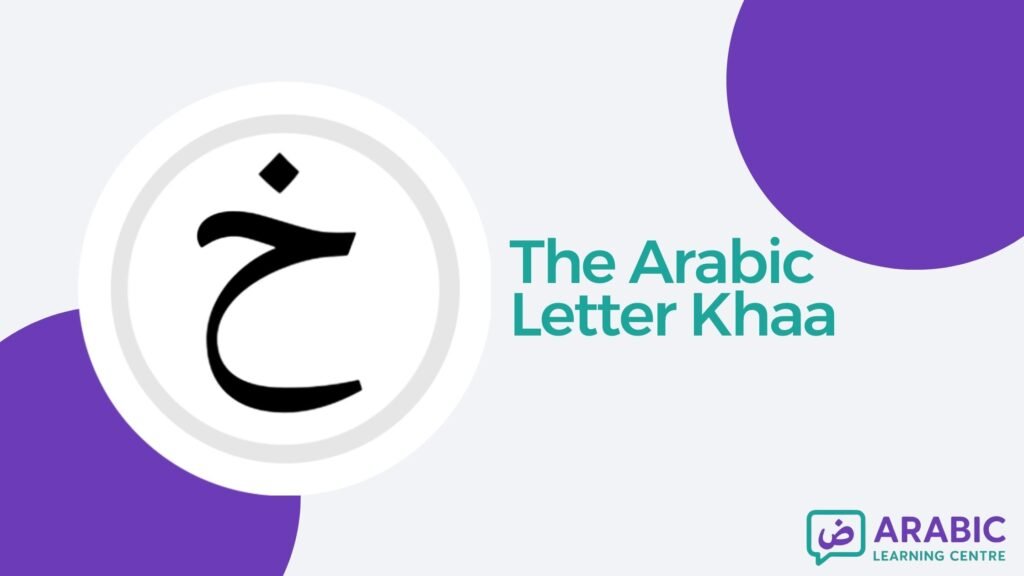
Learning the Arabic alphabet is the first and most essential step for anyone who wants to master the Arabic language. Among the 28 letters, the letter Khaa (خ) holds a unique place due to its distinct sound, which does not exist in many other languages. By understanding how to read, write, and pronounce Khaa, learners build a strong foundation for reading Arabic texts accurately and confidently. Whether you are a beginner or helping your child learn Arabic, starting with Khaa will strengthen your pronunciation and reading skills.
In this guide, we will explore everything about the letter Khaa (خ) in a simple and engaging way. You will learn its different forms, sounds, and usage with clear examples, exercises, and worksheets. We will also highlight common mistakes to avoid, provide step-by-step writing instructions, and share pronunciation tips. By the end of this article, you will be able to recognize, write, and pronounce Khaa (خ) with ease in words and sentences.
Letter Khaa / خ
The letter Khaa (خ) is one of the unique letters of the Arabic alphabet. It is a consonant that produces a distinct sound, similar to a soft “kh” pronounced from the back of the throat. Unlike some letters, Khaa connects to the letters that come after it, but its shape changes depending on its position in the word.
In written Arabic, Khaa is represented by a curved stroke with a dot above it (خ). It can appear at the beginning, middle, or end of words, each time taking a slightly different form. Understanding Khaa is essential because it appears in many Arabic words, and mastering its pronunciation and writing is crucial for reading and speaking Arabic correctly.
How to Identify the letter Khaa?

Recognizing the letter Khaa (خ) is straightforward once you are familiar with its distinct shape. Khaa is written as a curved stroke that extends slightly below the line, with a single dot placed above it (خ). Its unique “kh” sound, pronounced from the back of the throat, also helps in identifying it when reading aloud.
A key feature of Khaa is that it connects to the following letter when it appears at the beginning or middle of a word, but its shape changes depending on its position. At the end of a word, it has a slightly different final form.
Position Examples:
– Beginning of the word: خَروف (Kharouf – sheep)
– Middle of the word: مِخَدَّة (Mikhaddah – pillow)
– End of the word: فَخ (Fakh – trap)
Tip for learners: When you see a curved letter with a dot above it, especially producing the “kh” sound, it is very likely the letter Khaa (خ).
Letter Khaa / خ Forms: At the Beginning, Middle, and End of the word
The letter Khaa (خ) changes its shape depending on its position in a word, as it connects to the following letter when possible. Understanding these forms is essential for reading and writing Arabic correctly.
Here’s how Khaa looks in different positions:
– At the beginning: Connected to the following letter, e.g., خروف (Kharouf – sheep), خبز (Khubz – bread).
– In the middle: Connected to both the preceding and following letters, e.g., مِخَدَّة (Mikhaddah – pillow), أخضر (Akhdar – green), ملخّص (Mulakhkhas – summary).
– At the end: Connected only to the preceding letter, e.g., فَخ (Fakh – trap).
At Arabic Learning Centre, we make learning Arabic letters fun and interactive. Our step-by-step lessons, visual aids, and practice worksheets help learners of all ages easily recognize, write, and pronounce each letter. Start your Arabic learning journey with us today and master the alphabet from Alif to Yaa, including the unique Khaa (خ)!
Letter Khaa – خ With Fatha ( َ )

When the letter Khaa (خ) carries a Fatha ( َ ), it is pronounced as “Kha” (خَ) with a short “a” sound, similar to the “kha” in the English approximation of “Khan.”
Example words: خَروف (Kharouf) → sheep, خَبز (Khabz) → bread
The Fatha is always placed above the letter. This small diagonal stroke ( َ ) changes the sound of Khaa from its neutral consonant to a clear “a” sound, helping learners read and pronounce words correctly.
Letter Khaa – خ With Dammah ( ُ )

When the letter Khaa (خ) carries a Dammah ( ُ ), it is pronounced as “Khu” (خُ) with a short “u” sound, similar to the “oo” in the English word “book.”
Example words: خُبز (Khubz) → bread, خُردة (Khurdah) → junk
The Dammah is always placed above the letter and slightly curved. This small mark changes the sound of Khaa from its neutral consonant to a clear “u” sound, making pronunciation accurate and helping learners read Arabic words correctly.
Letter Khaa – خ With Kasrah ( ِ )

When the letter Khaa (خ) carries a Kasrah ( ِ ), it is pronounced as “Khi” (خِ) with a short “i” sound, similar to the “i” in the English word “sit.”
Example words: خِيار (Khiyaar) → cucumber, خِزانة (Khizanah) → closet
The Kasrah is always placed below the letter. This small diagonal stroke changes the sound of Khaa from its neutral consonant to a clear “i” sound, helping learners pronounce words accurately and read Arabic correctly.
Letter Khaa – خ With sukoon ( ْ )

When the letter Khaa (خ) carries a Sukoon ( ْ ), it is pronounced without any vowel sound, making it silent or stopping the sound of the consonant briefly. This is useful in words where Khaa appears without a short vowel.
Example words: مِخْدة (Mikhadah – pillow), فَخْ (Fakh – trap)
The Sukoon is always placed above the letter. This small circle mark changes the sound of Khaa, indicating that the letter should be pronounced alone, without adding a short vowel. Using Sukoon correctly is important for proper pronunciation and reading fluency.
Examples of letter Khaa – خ in Words
The letter Khaa (خ) appears frequently in Arabic words and can occur at the beginning, middle, or end of a word. Recognizing Khaa in different positions helps learners improve reading accuracy and pronunciation.
Here are some examples:
| Position | Arabic Word | Pronunciation | English Meaning |
| At the beginning | خروف / خبز / خيمة | Kharouf / Khubz / Kheema | sheep / bread / tent |
| In the middle | مِخَدَّة / أخضر / مخبز | Mikhaddah / Akhdar / Makhbaz | pillow / green / bakery |
| At the end | فَخ / مخ | Fakh / Mokh | trap / brain |
Tip for learners: When practicing, highlight the letter Khaa (خ) in words to train your eyes to spot it quickly, no matter where it appears.

Examples of letter Khaa/ خ in Phrases and Sentences
Seeing the letter Khaa (خ) in full phrases and sentences helps learners understand how it works naturally within context. By reading connected text, you also get used to spotting Khaa in different positions — at the start, middle, or end of words — while improving fluency in Arabic reading.
Here are some examples:
| Position | Arabic Example | English Meaning |
| At the beginning | خَطرت لي فكرة جديدة | A new idea came to my mind. |
| خَبر سعيد وصلني اليوم | I received good news today. | |
| In the middle | ذهبت إلى المخزن أمس | I went to the store yesterday. |
| الأخضر لون جميل للطبيعة | Green is a beautiful color for nature. | |
| At the end | رأيت فخ في الطريق | I saw a trap on the road. |
| هناك مخ في الجسم مسؤول عن التفكير | There is a brain in the body responsible for thinking. |
Tip for learners: When practicing, highlight the letter Khaa (خ) in phrases and sentences to train your eyes to recognize it in connected text.
How to write the Khaa Letter?
The letter Khaa (خ) has a distinctive curved shape with a dot above it. Writing Khaa correctly helps learners read and write Arabic accurately. Khaa connects to the following letter when it appears at the beginning or middle of a word.
Steps to Write Khaa:
1- Starting point: Place your pen slightly above the writing line.
2- Curved stroke: Draw a small curve from left to right, extending slightly below the baseline.
3- Dot: Place a single dot above the curve.
4- Connection (if needed): If the letter comes at the beginning or middle, smoothly connect it to the next letter.

Important notes:
– Shape consistency: Khaa changes slightly depending on its position (beginning, middle, end), but the curve and dot remain the same.
– Direction: Always draw the curve in one smooth motion from top-left to bottom-right, then add the dot above.
How to Pronounce the letter Khaa?
The pronunciation of Khaa (خ) depends on the vowel mark (harakah) it carries. On its own, Khaa produces a unique “kh” sound, similar to a soft raspy sound from the back of the throat. This sound does not exist in many other languages, making it distinctive in Arabic.
In Qur’anic recitation, Khaa is articulated from the back of the throat, giving it a deep, throaty resonance. Correct pronunciation requires controlling the airflow and ensuring the tongue and throat produce the proper sound.
Basic pronunciation rules:
1- Khaa with Fatha (خَ): Short “a” sound, e.g., خَبز (Khabz – bread).
2- Khaa with Dammah (خُ): Short “u” sound, e.g., خُبز (Khubz – bread).
3- Khaa with Kasrah (خِ): Short “i” sound, e.g., خِيار (Khiyaar – cucumber).
4- Khaa with Sukoon (خْ): Pronounced alone, without a vowel, e.g., فَخْ (Fakh – trap).
Tip for learners: Open your mouth slightly and focus the airflow from the back of your throat. Practice in front of a mirror to observe the tongue and throat position, and repeat the sound slowly, gradually blending it into words and sentences.

Learn Khaa through videos
Learning the Arabic letter Khaa (خ) becomes much more effective when you use educational videos. Seeing the shape, hearing the pronunciation, and watching the writing process step-by-step will help you remember the letter better. The following videos explain Khaa (خ) in a clear and engaging way:
Recommended Videos:
1- Letter Kha (خ) | Arabic Alphabet for Kids in English | Pronunciation
This video is designed for beginners and kids, teaching the pronunciation of Khaa (خ) in English, with visual examples to recognize the letter easily.
2- How to Read & Write Arabic Words with The Letter Kha خاء
This video explains how to read and write words containing the letter Khaa (خ), focusing on the different short vowels.
3- Kha (خ) – Learn Arabic with Safaa – Level 1
Learn words that start with Khaa (خ) to reinforce vocabulary and correct pronunciation.
4- Arabic Alphabet: (khaa’) (خ) with Short Vowel Sounds
This video demonstrates how to pronounce Khaa (خ) with short vowels (Fatha, Dammah, Kasrah) and provides examples for accurate pronunciation.
How to Make the Most of These Videos
1- Listen carefully: Pay attention to the pronunciation at the start, then repeat the examples out loud.
2- Follow the writing demonstration: Watch the step-by-step writing and practice alongside the video.
3- Combine with written material: Use the videos along with written explanations, images, and exercises for maximum learning.
Exercises For Khaa in Arabic
Practicing is the best way to master the Arabic letter Khaa (خ). These exercises will help you recognize, write, and pronounce Khaa correctly in different positions of a word.
1. Identify the Letter Khaa
Circle the letter Khaa (خ) in the words below:
– خروف
– أخضر
– مخدة
– فخ
– خبز
2. Write Khaa in Different Positions
Write the letter Khaa in:
– Beginning position: خ
– Middle position: ـخـ
– End position: ـخ
Read Also: The Letter Ayn ع In Arabic With Examples, Exercises, and Worksheets
3. Match the Word to Its Picture
Draw a line between each word and the correct picture:
– خروف 
– خبز 
– فخ 
– مخدة 
4. Fill in the Missing Letter
Complete the words by adding the missing Khaa (خ):
1- __روف (Sheep)
2- ف__ (Trap)
3- م__دة (Pillow)
5. Read Aloud
Read these words slowly, paying attention to Khaa pronunciation:
- خَبز (Bread)
- خِيار (Cucumber)
- خَرُوف (Sheep)
- فَخ (Trap)
Tip: Repeat these exercises daily until you can spot Khaa (خ) instantly and write it from memory.
Read Also: The Letter Zay / ز in Arabic With Examples, Exercises, and Worksheets
Downloadable Worksheets for the Arabic letter Khaa
Practicing with worksheets is an excellent way to reinforce your learning of the Arabic letter Khaa (خ). These worksheets provide exercises for recognizing, writing, and pronouncing Khaa in all positions of a word.
Here are some free downloadable worksheets to practice the letter Khaa:
– My Resource Station: Khaa Worksheet – Colour, Trace, and Write a printable PDF to practice writing and recognizing Khaa.
– Arabic Seeds (Islamic-themed): Provides coloring and tracing worksheets for each letter, including Khaa, along with pronunciation audio files for memorization and enhanced learning.
Read Also: The Letter Taa / ت In Arabic With Examples, Exercises, and Worksheets
Common Mistakes related to letter Khaa
Learning the Arabic letter Khaa (خ) can be challenging, and beginners often make mistakes that affect pronunciation and writing. Knowing these common errors and how to correct them will help learners master the letter more efficiently.
1. Confusing Khaa (خ) with Haa (ح)
– Mistake: Writing or pronouncing ح instead of خ.
– Correction: Remember that Khaa (خ) has a dot above the letter, while Haa (ح) has no dot. Always check for the dot to distinguish them.

Example: Wrong: حُب (Hub – love) instead of خُبز (Khubz – bread)
2. Mispronouncing Khaa from the Front of the Mouth
– Mistake: Pronouncing خ like a regular h sound from the throat or mouth front.
– Correction: Khaa must be pronounced from the back of the throat, producing a soft raspy sound. Practice with words like خَروف (Kharouf – sheep) to get the correct throat sound.
3. Forgetting the Short Vowels (Harakah)
– Mistake: Ignoring Fatha, Dammah, or Kasrah when reading or writing Khaa.
– Correction: Always include the correct vowel to ensure proper pronunciation. For example:
– خَ (Kha) – خَط
– خُ (Khu) – خُبز
– خِ (Khi) – خِيار
Read Also: The Letter Saad / ص in Arabic With Examples, Exercises, and Worksheets
4. Incorrect Connection in Words
– Mistake: Not connecting Khaa properly in the middle or end of words.
– Correction: Khaa connects to the preceding letter in the middle and beginning, but never to the letter after it. Practice writing Khaa in different positions to master its shape.
Read Also: The Letter Seen / س in Arabic With Examples, Exercises, and Worksheets
Start Your Arabic Learning Journey with Expert Teachers Today
Ready to truly understand Arabic and use it with confidence? At The Arabic Learning Centre, you’ll learn with expert Arabic language teachers, including qualified female Arabic teachers, in a supportive and professional environment designed for real progress. Whether you’re learning Arabic for the Quran, studies, career, or daily conversation, we have the right course for you.
Take the next step today and join thousands of students learning Arabic the right way.
Courses We Offer:
- Arabic Course for Beginners
- Arabic Classes for Adults
- Arabic Classes for Ladies
- Advanced Arabic Course
- Intensive Arabic Course
Conclusion
The letter Khaa (خ) is an essential component of the Arabic alphabet, offering a unique sound that comes from the back of the throat. Mastering Khaa involves understanding its pronunciation, recognizing its forms in the beginning, middle, and end of words, and practicing with short vowels and sukoon. With regular practice, reading, and writing, the Khaa becomes natural, helping learners build a strong foundation for Arabic literacy.
Through examples in words, phrases, and sentences, along with writing exercises, learners can improve their fluency and accuracy. Using educational videos, worksheets, and guided practice enhances retention and confidence. Consistent effort in practicing Khaa (خ) ensures that learners can read, write, and pronounce it correctly in various contexts, paving the way for mastering the Arabic alphabet.
Related Articles
Arabic Alphabet & Writing


Leave a Reply