 Arabic Alphabet & Writing
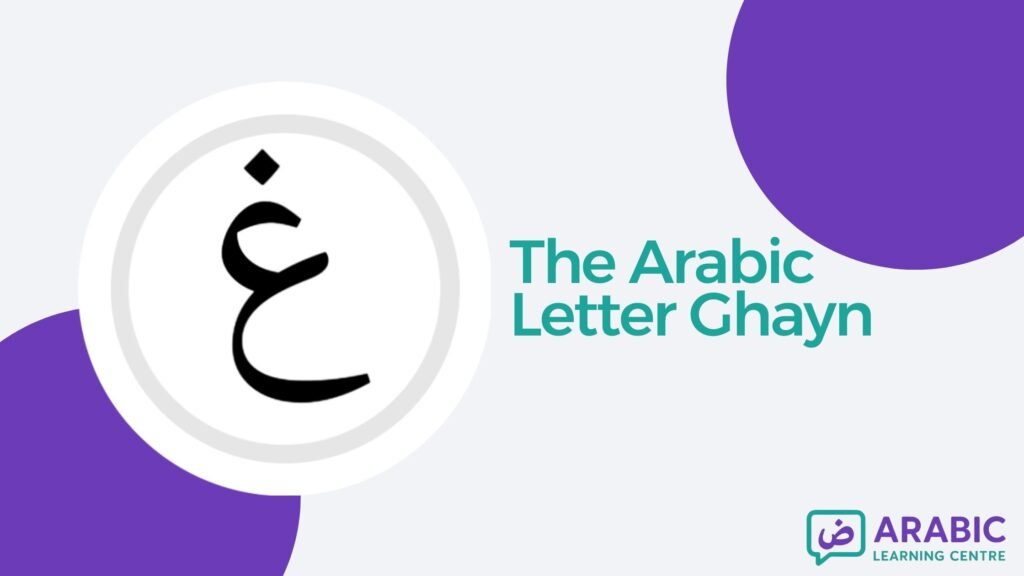
The Arabic alphabet is one of the richest writing systems in the world, and each letter carries its own distinct shape, sound, and role. Among these letters is the letter Ghayn (غ), which is the 19th letter of the Arabic alphabet. It has a deep and throaty sound that does not exist in English, which makes it both unique and sometimes challenging for learners. With consistent practice, however, students can master its pronunciation and recognize it easily in reading and writing.
Learning the letter Ghayn (غ) is essential for students of Arabic, as it frequently appears in the Qur’an, daily conversations, and modern texts. In this article, we will explore the definition, forms, pronunciation, and usage of the letter غ, along with examples, exercises, and worksheets that will make the learning process clear, interactive, and enjoyable.
Letter Ghayn – غ
The letter Ghayn (غ) is the 19th letter of the Arabic alphabet. It represents a voiced uvular fricative sound that is produced deep in the throat, and it does not exist in English. This makes it one of the most distinctive and unique sounds in the Arabic language. Learners often compare it to the French “r” or the Spanish “g” in amigo, but with a stronger and deeper articulation.
In terms of its characteristics, the letter غ is:
– Consonant (حرف ساكن).
– Voiced (مجهور).
– Uvular/fricative (يُخرج من أقصى الحلق قريبًا من لهاء الفم).
It can carry all Arabic short vowels (Fatha, Dammah, Kasrah, Sukoon), and it may also appear with Tanween or Shaddah.
The letter غ plays an important role in Arabic vocabulary, as it can appear at the beginning, middle, or end of words, giving great flexibility to the structure of Arabic words and sentences.
How to Identify The letter Ghayn – غ

The letter Ghayn (غ) can be identified easily once you become familiar with its unique shape and sound. It is closely related in form to the letter ʿAyn (ع), but the dot above makes it distinct.
Key points to help you identify غ:
1- Shape:
It has a rounded, open curve similar to the letter ʿAyn (ع), but with a slightly heavier structure in writing. Its shape changes depending on its position in the word (beginning, middle, or end).
2- Dot:
The defining feature of غ is the single dot above the letter. Without the dot, it becomes the letter ʿAyn (ع).
3- Sound:
The sound of غ is a voiced uvular fricative, produced deep in the throat. It does not exist in English but is somewhat close to the French “r” or the Spanish “g” in amigo.
4- Position Flexibility:
Like most Arabic letters, غ can appear at the beginning, in the middle, or at the end of words, always adapting its shape while keeping its identity clear.
By focusing on the dot, the deep throaty sound, and its flexible forms, learners can easily recognize and distinguish غ in any Arabic text.
Letter Ghayn and غ Forms: At the Beginning, Middle, and End of the word
The letter Ghayn (غ) changes its written form depending on where it appears in the word. Like many Arabic letters, it has four shapes: isolated, initial, medial, and final. Understanding these forms is very important for reading and writing Arabic correctly.
1- Isolated (منفصل): غ
2- Initial (في أول الكلمة): غـ , Example: غَابة (forest)
3- Medial (في وسط الكلمة): ـغـ , Example: مَغرفة (ladle)
4- Final (في آخر الكلمة): ـغ , Example: بُلوغ (puberty)
The main rounded curve of the letter stays the same, but its connections before or after other letters slightly change its appearance. With practice, learners will quickly recognize how غ blends naturally with other Arabic letters in different word positions.

Start your Arabic journey today with Arabic Learning Centre! Flexible online classes, step-by-step guidance, and engaging lessons designed to make learning Arabic easy and enjoyable.
Letter Ghayn/ غ With Fatha ( َ )

When the letter Ghayn (غ) carries a Fatha ( َ ), it is pronounced as “Gha” with a short “a” sound, produced from deep in the throat. The sound is unique to Arabic and resembles the French “r” but is softened with a short “a” vowel.
Form and Pronunciation:
– غَ = Gha
Example sound: Gha
Examples:
1- غَزال (ghazāl – gazelle) → here the letter comes at the beginning.
2- مَغَرِب (maghrib – sunset/west) → here the letter is in the middle.
3- فَرَغَ (faragha – he finished/emptied) → here the letter is at the end.
To pronounce it correctly: open your mouth slightly, let the sound come from the back of your throat, and keep it short and clear with the “a” sound.
Letter Ghayn / غ With Dammah ( ُ )
When the letter Ghayn (غ) carries a Dammah ( ُ ), it is pronounced as “Ghu” with a short “u” sound, similar to the “oo” in book, but produced deep in the throat. This sound is clear, rounded, and voiced.
Form and Pronunciation:
غُ = Ghu
Example sound: Ghu
Examples:
1- غُروب (ghurūb – sunset) → here the letter comes at the beginning.
2- مَغُول (maghūl – Mongol) → here the letter is in the middle.
3- بَلَغُو (balaghu – they reached) → here the letter is at the end.
To pronounce it correctly: round your lips slightly, push the sound from the back of your throat, and keep the “u” short and distinct.
Letter Ghayn/ غ With Kasrah ( ِ )
When the letter Ghayn (غ) carries a Kasrah ( ِ ), it is pronounced as “Ghi” with a short “i” sound, similar to the “i” in sit, but coming from the back of the throat with the unique gh sound.
Form and Pronunciation:
غِ = Ghi
Example sound: Ghi
Examples:
1- غِطاء (ghitāʾ – cover) → here the letter comes at the beginning.
2- مَغِيب (maghīb – absence/sunset) → here the letter is in the middle.
3- فارِغِ (fārighi – empty) → here the letter is at the end.
To pronounce it correctly: stretch the “i” sound slightly, keep your lips relaxed, and let the voiced gh sound come from deep in the throat.
Letter Ghayn/ غ With sukoon ( ْ )
When the letter Ghayn (غ) carries a Sukoon ( ْ ), it is pronounced as a plain “Gh” sound without any following vowel. The sound stops at the letter itself, making it shorter and sharper than when it carries a vowel.
Form and Pronunciation:
غْ = Gh
Example sound: Gh
Examples:
1- مغْرِب (maghrib – west/sunset) → here the letter comes in the middle.
2- بغْداد (Baghdād – Baghdad) → here the letter is in the middle.
3- يغْفر (yaghfir – He forgives) → here the letter is in the middle.
To pronounce it correctly: let the gh sound come from the throat, and stop it quickly without adding any extra vowel sound.
Examples of letter Ghayn/ غ in Words
The letter Ghayn (غ) appears frequently in Arabic words. It can occur at the beginning, middle, or end of a word. Each position has a slightly different shape, but the sound remains the same: a voiced deep sound from the throat. Recognizing غ in different positions helps learners improve both reading fluency and pronunciation.
Here are some examples:
| Position | Arabic Word | Pronunciation | English Meaning |
| At the beginning | غَابة / غُروب / غِناء | Ghābah / Ghurūb / Ghināʾ | Forest / Sunset / Singing |
| In the middle | مَغفِرة / بَغداد / مَغزَل | Maghfirah / Baghdād / Maghzal | Forgiveness / Baghdad / Spindle |
| At the end | بُلُوغ / فَرَغ / سَمغ | Bulūgh / Faragh / Samgh | Puberty / He finished / glue |
Tip for learners: When practicing, highlight غ in different words to train your eyes to spot it quickly and your ears to pronounce it correctly, no matter where it appears in the word.

Examples of letter Ghayn/غ in Phrases and Sentences
Just like with ʿAyn (ع), practicing Ghayn (غ) in phrases and sentences helps learners recognize its deep, throaty sound and see how it connects with other letters in real Arabic use. The letter غ is common in everyday Arabic and adds a strong, rolling resonance to words.
| Position | Arabic Phrase / Sentence | English Meaning |
| At the beginning | غَسَلْتُ يَدي | I washed my hand |
| In the middle | الطَّريقُ يملؤه الغيم | The road is cloudy |
| At the end | بَلَغَ أحمد البَيت | Ahmed reached the house |
How to write the Ghayn Letter?
The letter Ghayn (غ) is a unique Arabic letter that changes its shape depending on its position in the word (beginning, middle, or end). It looks very similar to ʿAyn (ع) but is always marked with a dot above. Writing غ requires careful attention to its curves and the placement of the dot, so it remains clear and distinct.
Steps to Write Ghayn (غ):
1- Starting point: Begin slightly above the baseline with a small curved stroke.
2- Curve downward: Draw a half-circle or hook shape that opens upward, similar to the letter ع.
3- Add the dot: Place a single dot above the curve—this is what makes it غ and not ع.
4- Connect (if needed): Extend the line smoothly to connect with the following or previous letter.
5- Final stroke: If isolated or at the end, extend the curve downward to rest on the baseline.

Important Notes:
– Shape variation: غ changes shape in its isolated, initial, medial, and final positions.
– Dot above: Always remember to place the dot, otherwise it will look like ʿAyn (ع).
– Smooth flow: Write the letter in a natural, continuous motion so it connects seamlessly within words.
Practice writing غ repeatedly in its four positions to train your hand to distinguish it clearly from ع.
How to Pronounce the Letter Ghayn?
The pronunciation of the letter Ghayn (غ) is one of the most distinctive sounds in Arabic. Its sound does not exist in English, which can make it challenging for learners. However, with practice, it becomes natural.
The articulation point of غ is from the upper throat (أقصى الحلق), close to where the sound of خ is produced, but it is voiced (مجهور). This means the vocal cords vibrate when pronouncing it. It produces a deep, throaty, rolling sound, somewhat similar to the French “r” in Paris or the Spanish “g” in amigo.

Basic Pronunciation Rules:
1- Ghayn with Fatha (غَ):
Pronounced as Gha, a short “a” sound with throat vibration.
Example: غَريب (gharīb – strange).
2- Ghayn with Dammah (غُ):
Pronounced as Ghu, a short “u” sound with rounded lips.
Example: غُروب (ghurūb – sunset).
3- Ghayn with Kasrah (غِ):
Pronounced as Ghi, a short “i” sound with the mouth slightly smiling.
Example: غِناء (ghināʾ – singing).
4- Ghayn with Sukoon (غْ):
The sound stops clearly in the throat without a vowel.
Example: بَلَغْ (balagh – he reached).
Tips for Learners:
– Compare غ with خ: both come from the same place, but خ is whispered (مهموس) while غ is voiced (مجهور).
– Practice in front of a mirror, focusing on the vibration in your throat.
– Listen and repeat after native speakers or Qur’anic recitation to master the depth of the sound.
– Don’t confuse غ with ق (Qaf). While both are heavy letters, ق comes from the back of the tongue, not the throat.
Learn Ghayn through videos
Learning the Arabic letter Ghayn (غ) through videos can make the process much easier and more enjoyable. With videos, you not only see how the letter is written but also hear its correct pronunciation and watch how it flows in words step by step.
Here are two excellent YouTube resources to help you master غ:
1. How To Pronounce Arabic Alphabet Correctly | Ayn & Ghayn | Arabic Alphabet Lesson 7 | Ismail Alqadi
This video gives a detailed explanation of how to pronounce both ʿAyn (ع) and Ghayn (غ).
2. Ayn (ع) & Ghayn (غ) | Learn How To Read Quran – Lesson 7
This lesson is ideal for Quran learners as it compares ع and غ visually and phonetically.
Tip: Watch each video several times, pause to repeat after the teacher, and record your voice to check your progress.
Unlock the beauty of Arabic with Arabic Learning Centre! Learn to read, write, and speak Arabic confidently with expert native teachers—all from the comfort of your home.
Exercises for the letter Ghayn in Arabic
Practicing is the best way to master the Arabic letter Ghayn (غ). These exercises will help you recognize, write, and pronounce غ correctly in its different positions in a word.
1. Identify the Letter Ghayn
Circle the letter غ in the words below:
– غابة
– مغرب
– غد
– بالغ
2. Write Ghayn in Different Positions
Write the letter غ in:
– Beginning position: غـ
– Middle position: ـغـ
– End position: ـغ
– Isolated form: غ
3. Match the Word to Its Picture
Draw a line between each word and the correct picture:
– غابة

– غزال

– مغرفَة

4. Fill in the Missing Letter
Complete the words by adding the missing غ (Ghayn):
1- __ابة (Forest)
2- __زال (Gazelle)
3- م__رب (West)
4- __طاء (Cover)
5. Read Aloud
Read these words slowly, paying attention to the deep sound of غ from the throat:
– غريب (Strange)
– غيم (Cloud)
– مغرب (Sunset / West)
– بلاغ (Message/Report)
Repeat these exercises daily until you can spot غ instantly, write it in all its forms, and pronounce it with the correct throaty vibration.
Read Also: The Letter Kaaf ك In Arabic With Examples, Exercises, and Worksheets
Downloadable Worksheets for the Arabic letter Ghayn
To make learning fun and effective, we’ve created printable worksheets for the Arabic letter Ghayn (غ). These worksheets will help students practice recognizing, writing, and using the letter in words and sentences through interactive activities. Perfect for classroom and home learning.
Download the worksheets here:
– My Resource Station: Ghayn Worksheet – Colour, Trace, and Write → a printable PDF to practice writing and recognizing the letter Ghayn in different positions.
– Arabic Seeds (Islamic-themed): Provides coloring and tracing worksheets for each letter, including Ghayn, along with pronunciation audio files for memorization and enhanced learning.
Read Also: The Letter Thaa / ث In Arabic With Examples, Exercises, and Worksheets
Common Mistakes related to the letter Ghayn
Even though the Arabic letter Ghayn (غ) is widely used, many beginners struggle with it, especially because of its unique throaty buzzing sound. Recognizing these mistakes will help you avoid them and improve your Arabic skills more effectively.
1. Confusing Ghayn (غ) with ʿAyn (ع)
Mistake: Writing غ without a dot (making it look like ع) or pronouncing it the same as ع.
Correction: Always remember:
| Feature | ʿAyn (ع) | Ghayn (غ) |
| Dot | None | One dot above |
| Sound | Voiced from the middle of the throat | Voiced from the upper throat, with a buzzing sound |
| Example | علم (ʿilm – knowledge) | غيم (ghaym – cloud) |
Read Also: The Letter Alif أ In Arabic With Examples, Exercises, and Worksheets
2. Weak Pronunciation (Losing the Buzz)
Mistake: Saying غ too softly, so it sounds like ع or even just a simple vowel.
Correction: غ must have a strong buzzing/fricative sound that comes from the back of the throat. Practice with words like: غابة (ghābah – forest), مغرب (maghrib – west/sunset).
3. Forgetting the Different Forms of غ
Mistake: Writing غ the same way in every position instead of adapting it.
Correction: Remember the four forms:
– Beginning: غـ → غَيم (ghaym – cloud)
– Middle: ـغـ → مَغرِب (maghrib – west/sunset)
– End: ـغ → بلاغ (balāgh – message)
– Isolated: غ
Read Also: The Letter Haa / ح in Arabic With Examples, Exercises, and Worksheets
4. Mixing it with the Letter Khaa (خ)
Mistake: Many learners confuse غ with خ because both are produced deep in the throat.
Correction:
– خ (khaa) = voiceless, like a rough “kh” sound.
– غ (ghayn) = voiced, with a buzzing vibration.
Example: خالد (Khālid) vs.
غالي (ghālī – expensive).
5. Adding Unnecessary Vowels with Sukoon (غْ)
Mistake: Pronouncing an extra vowel after غْ.
Correction: With Sukoon, stop the sound immediately.
Example: بَغْتةً (baghtatan – suddenly).
Tip for learners: Record your voice when pronouncing غ, then compare it to a native speaker’s pronunciation. Pay attention to the buzzing vibration—if you can feel it in your throat, you’re doing it correctly.
Read Also: The Letter Daad ض In Arabic With Examples, Exercises, and Worksheets
Join Arabic Classes For Middle Schoolers With Arabic Learning Centre!
Are you looking for a fun and effective way to strengthen your middle schooler’s Arabic skills? Arabic Learning Centre’s comprehensive online Arabic classes guide students through an interactive journey covering reading, writing, speaking, and grammar. Each lesson builds confidence step by step and provides a strong foundation for academic success and future growth.
Learning goes beyond textbooks with engaging activities, interactive games, and visual materials that make Arabic accessible and enjoyable. Students also explore Arabic culture and history, adding depth and context to their language learning while fostering pride and connection with their heritage.
Take the next step today and join thousands of students learning Arabic the right way.
Courses We Offer:
- Business Arabic Course
- Learn Arabic from Zero
- Medical Arabic Course
- Learning Arabic for Non Arabic Speakers
- Learn Arabic in Saudi Arabia
Conclusion
Mastering the Arabic letter Ghayn (غ) is a crucial step for anyone learning the language, as it appears frequently in texts, conversations, and the Qur’an. Its unique throaty sound and versatile forms challenge learners, but consistent practice with reading, writing, and pronunciation exercises makes it attainable. Understanding its shape, dot placement, and different positions in words ensures accurate recognition and use. Through examples, phrases, and interactive worksheets, students gain confidence and fluency in reading and writing Arabic.
Practicing Ghayn in sentences, listening to native pronunciation, and engaging with multimedia resources solidifies learning and prevents common mistakes. Recognizing its difference from similar letters like ʿAyn (ع) or Khaa (خ) is essential for clarity and proper articulation. By combining guided exercises, videos, and repeated practice, learners develop both skill and confidence. Ultimately, mastering غ enriches one’s Arabic language journey, opening doors to a deeper understanding of vocabulary, culture, and expression.
Related Articles
Arabic Alphabet & Writing

Leave a Reply