 Learn Arabic

Are you wondering how to learn Arabic on your own? Here is a complete guide on how to learn the Arabic language by yourself easily and fast. If you are one of those who prefer self-learning rather than attending traditional in-person Arabic classes, you may need a set of tools and resources that will make the Arabic learning process smoother and easier.
In this article, we will discuss the best Arabic self-learning techniques that will help you master the Arabic language on your own with the least effort possible.
Learning Arabic on your own is a rewarding challenge that can be tackled with the right tools and strategies. Immerse yourself in the language by reading Arabic books, navigating Arabic websites, watching videos, and engaging with native speakers. Practice daily, listen and repeat, and don’t fear mistakes. While self-study offers flexibility, supplementing your efforts with professional guidance can enhance your progress, making your journey to fluency both enriching and efficient.
Is it possible to learn Arabic by yourself?
Learning Arabic is not an easy task, especially for a beginner. It is even more challenging if you are intending to learn it on your own. So, if you are asking, is it possible to teach myself Arabic? The answer would be yes, with determination and commitment, nothing is impossible. However, seeking professional guidance and help from native Arab tutors would save you much time and effort and lead to better learning outcomes.
The Arabic Learning Centre’s Arabic Course for Beginners provides structured pathways with certified native instructors who help students clarify their learning objectives through personalized 1-on-1 sessions, ensuring you start with the right foundation from day one.
Join Our Arabic Course for Beginners With a Free Trial

How can I learn Arabic by myself?
If you want to learn Arabic by yourself let us first set this rule. The more you Expose yourself to the language the more you get the hang of it. So, let us share a bunch of activities that would help you achieve your learning goals easily.
1. Read Arabic Books
Reading Arabic books is one of the best techniques to learn Arabic by yourself. By exploring books on various topics, you will be able to expand your vocabulary pool and learn more about the Arabic language.
Start with easier books until you become more familiar with the language. Then, you can start reading books that slightly exceed your current level. It is not recommended to begin learning Arabic with more advanced books so that you don’t get easily discouraged.
2. Learn Arabic Pronunciation on Your Own With Audio Resources
Arabic contains emphatic sounds without English equivalents: ص ض ط ظ (ṣād, ḍād, ṭāʾ, ẓāʾ). These pharyngealized consonants require specific tongue positioning against the soft palate. Listen to native pronunciation repeatedly, imitating the deep, heavy quality these letters produce.
Record yourself pronouncing minimal pairs like سَعِيد (saʿīd – happy) versus صَعِيد (ṣaʿīd – upper region). Compare recordings against native speakers to identify pronunciation gaps requiring correction.
Practice Throat Letters Daily
The letters ع (ʿayn) and ح (ḥāʾ) originate from the throat and challenge most learners. Practice isolated repetitions of these sounds for 5 minutes daily until throat muscle coordination develops naturally.
The Arabic Learning Centre’s Arabic Speaking Course offers step-by-step pronunciation guidance with certified instructors who provide real-time correction, ensuring proper sound production from the beginning.
Enroll in Our Arabic Speaking Course Today With a Free Trial

3. Navigate Arabic websites
You can hone your Arabic language skills by navigating different Arabic websites. Whether these sites are educational, news-related, or entertainment-focused, you can still enhance your Arabic language skills by exploring the varied Arabic webcontent.
4. Watch Arabic videos
Watching Arabic videos can help you learn Fusha Arabic in addition to varied Arabic dialects. It is better to choose videos that have English subtitles so that you can listen as well as understand the meanings of what is being said.
5. Connect to Arab friends
In today’s digital era connecting to Arab friends has become way easier. Chatting and sharing knowledge with Arab friends on different social platforms can help you Level up your language skills and allow you to practice the language on a daily basis. Additionally, you will get to know more about the culture of the different Arabic-speaking countries.
Read Also: How Can I Improve My Arabic Language Skills?
6. Learn Arabic Grammar on Your Own Using Pattern Recognition
Arabic follows Verb-Subject-Object order in formal contexts, unlike English’s Subject-Verb-Object structure. Analyze simple sentences from authentic texts, identifying each component’s grammatical function. This analytical approach builds intuitive understanding faster than memorizing abstract rules.
Working with qualified Arabic teachers at The Arabic Learning Centre through our Arabic Grammar Course provides individualized attention needed to master sentence construction patterns with flexible scheduling available 24/7.
Start Learning Arabic Grammar with a Free Trial

Read Also: Where to Learn Arabic? – Top Websites, Countries, And Universities
7. Imitate Quranic recitations
Quranic Arabic is an eloquent form of the Arabic language. It is characterized by its strong vocabulary, concise as well as precise expressions. By carefully listening to Quran reciters and repeating the verses, you will master the pronunciation of Arabic letters. This method is especially helpful if you intend to further extend your study to Arabic and Islamic literature.
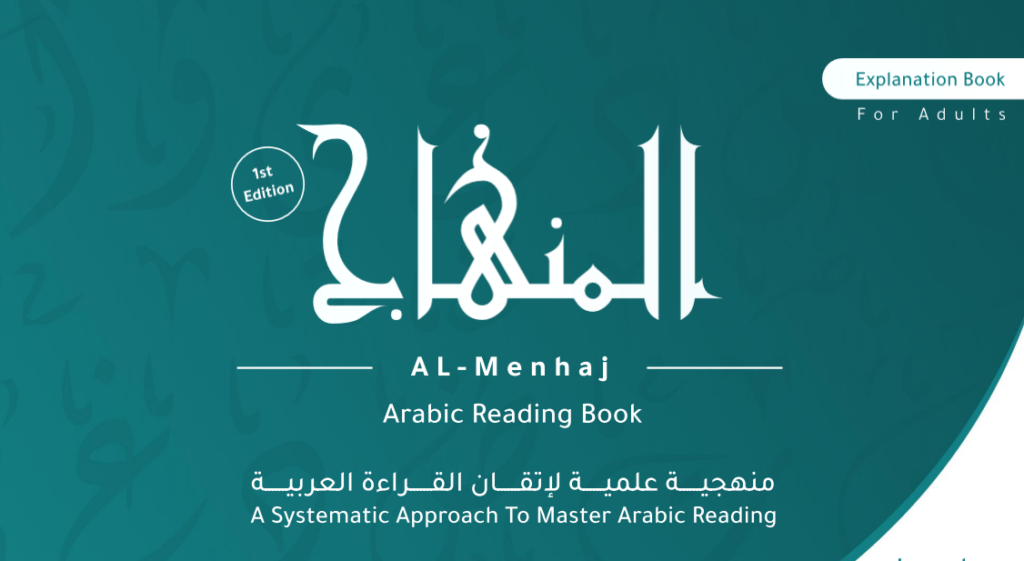
For Muslims specifically seeking to learn Arabic reading for Quran access, The Arabic Learning Centre offers Al-Menhaj Book — a comprehensive resource designed by experienced instructors with over 25 years of teaching expertise covering Arabic alphabet fundamentals tailored for non-native speakers.
Explore Al-Menhaj Book for Free
Read Also: How to Learn Arabic?
8. Listen, Repeat, and Record
Another way to learn Arabic by yourself is to listen carefully to a native Arab speaker and record yourself while repeating the same phrases. After that, compare your recording to the initial one and correct your own mistakes.
Read Also: How Long to Learn Arabic?
9. Learn to Express yourself in Arabic
It is also useful to devote 15 minutes at the end of each day where you try to say aloud what has happened throughout the day. This will help you gain confidence and get used to expressing yourself in Arabic without fear.
Read Also: How to Pronounce Arabic?
Learning Arabic on Your Own By Immersion
Learning Arabic by immersion is the most natural way to learn the language. It depends on surrounding yourself with the Arabic language as much as you can until you achieve fluency. Simply, by interacting with native Arabic speakers, you are most likely to master the language as well as understand the associated non-verbal cues and body language.
The best way to immerse yourself in the Arabic language is to travel to the Middle East. However, this option is not convenient to most of the learners. Therefore, a more convenient choice would be practicing Arabic daily with Arab friends, listening to Arabic podcasts, watching documentaries, and reading newspapers. It is worth mentioning that the key to success in this learning method is commitment and determination.
Read Also: How Difficult is Arabic?
Learning Arabic on your own by immersion tips and tricks
Here are some tips for the best way to learn Arabic by immersion
- Do not be afraid of making mistakes, especially at the beginning.
- Listen to Arabic podcasts and watch talk shows.
- Get engaged in conversations with Arabs on social media platforms.
- Practice every day. Remember that learning Arabic is a marathon rather than a sprint. This means that practicing Arabic daily is better in the long run than making long study sessions every now and then.
- Set a daily reminder so that you don’t forget your everyday tasks.
Read Also: How to Speak Arabic Language?
Read Also: Which Arabic Should I Learn?
Start Your Arabic Learning Journey With The Arabic Learning Centre
Self-teaching Arabic succeeds with proper structure, consistent practice, and strategic resource selection. These methods from experienced instructors provide the framework independent learners need for sustainable progress toward fluency.
The Arabic Learning Centre offers comprehensive support for self-directed learners through:
- Certified native Arabic instructors with specialized training in teaching non-Arabic speakers
- Flexible 24/7 scheduling accommodating independent study routines worldwide
- Personalized 1-on-1 sessions addressing your specific learning challenges and goals
- Free trial lessons allowing you to experience our teaching methodology risk-free
- Structured curriculum across all proficiency levels from absolute beginner to advanced
Check out our top courses in Arabic and choose what is the most course you need to start learning Arabic today:
- Arabic Course for Beginners
- Arabic Script Writing Course
- Arabic Speaking Course
- Learn Arabic Letters for Tajweed
- Learning Arabic Grammar
- Arabic Vocabulary Course
- Fusha Arabic Course
- Classical Arabic Course
Start with a FREE trial class and enhance your Arabic language skills

Conclusion
Learning Arabic independently is achievable with discipline and strategic practice. Reading widely, listening attentively, repeating consistently, and engaging in daily expression gradually transform passive knowledge into active fluency.
Pronunciation mastery, grammar pattern recognition, and immersion through media and conversation create a strong linguistic foundation. Small, consistent efforts—rather than occasional intensive study—produce lasting improvement over time.
For learners seeking faster, more structured results, guided instruction adds clarity and efficiency. With certified native teachers, personalized sessions, and flexible scheduling, independent effort evolves into measurable progress toward confident Arabic fluency.
Related Articles
Learn Arabic



Leave a Reply