 Arabic Alphabet & Writing
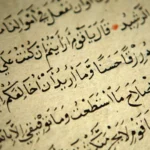
Arabic reveals itself through movement—letters flowing from right to left, connecting like a deliberate rhythm on the page. What first appears unfamiliar soon becomes patterned and logical, drawing learners toward the Quran, classical texts, and everyday communication with clarity and confidence.
Arabic alphabet learning rests on mastering 28 consonant letters, each shifting shape depending on position in a word. From dots that alter meaning to letters that refuse connection, this structured, letter-by-letter approach builds accurate pronunciation, solid writing habits, and a dependable path toward fluent reading.
Why Arabic Alphabet Learning Starts with Understanding the 28 Letters
Arabic alphabet learning begins with recognizing that Arabic contains 28 distinct letters, all consonants. Unlike English, Arabic script flows from right to left. Each letter changes shape based on its position in a word: isolated, initial, medial, or final.
The Arabic writing system connects letters within words, creating flowing script. This connectivity distinguishes Arabic from many other alphabets. Mastering each letter’s positional forms is essential for accurate Arabic alphabet learning.
| Key Feature | Arabic Alphabet | English Alphabet |
| Number of Letters | 28 | 26 |
| Writing Direction | Right to Left | Left to Right |
| Letter Connection | Most letters connect | Letters remain separate |
| Positional Forms | 4 forms per letter | 2 forms (upper/lower) |
At The Arabic Learning Centre, our Arabic Course for Beginners introduces these foundational concepts through structured lessons with certified instructors who specialize in teaching non-Arabic speakers. Students master letter recognition and formation through personalized 1-on-1 sessions available 24/7.
Join Our Arabic Course for Beginners With a Free Trial

1. Learning The Letter Alif (ا) in Arabic Alphabet
ا
Alif
“Represents the long ‘aa’ sound or serves as a carrier for hamza”
Alif is the first letter in Arabic alphabet learning journeys. It appears as a simple vertical stroke. In isolated and final positions, Alif stands alone. In initial and medial positions, it connects to following letters from the right side only.
Alif doesn’t connect to letters following it from the left. This unique characteristic affects word formation. Beginners often confuse Alif with Lam (ل), but Lam has a curved hook.
Common Pronunciation Pattern:
بَابٌ
bābun
“A door”
Notice how Alif creates the long vowel sound between the two ‘ba’ letters. This demonstrates Alif’s primary function in Arabic phonetics.
2. Learning The Letter Ba (ب) in Arabic Alphabet
ب
Ba
“Pronounced like ‘b’ in ‘ball'”
Ba is crucial for Arabic alphabet learning because it establishes the base form for similar letters. It features a horizontal stroke with one dot below. The dot placement distinguishes Ba from Ta (ت) and Tha (ث).
In different positions, Ba’s base shape remains consistent while connection points change. Initial Ba connects forward. Medial Ba connects both directions. Final Ba extends slightly backward.
Practice Word:
بَيْتٌ
baytun
“A house”
| Position | Form | Connection |
| Isolated | ب | No connection |
| Initial | بـ | Connects forward |
| Medial | ـبـ | Connects both sides |
| Final | ـب | Connects backward |
Mastering Ba’s formation early prevents confusion with visually similar letters. Focus on dot placement beneath the baseline consistently.
3. Learning The Letter Ta (ت) in the Arabic Alphabet
ت
Ta
“Pronounced like ‘t’ in ‘tea'”
Ta shares the exact base shape with Ba but carries two dots above. This pattern teaches beginners that Arabic alphabet learning involves recognizing dot patterns. The pronunciation shifts completely from ‘b’ to ‘t’ sound.
Writing Ta requires maintaining the base form while carefully placing two dots horizontally above. Common beginner mistakes include misaligning dots or confusing Ta with Tha.
Example Application:
تِلْمِيذٌ
tilmīdhun
“A student”
Our Arabic Script Writing Course at The Arabic Learning Centre provides detailed guidance on proper dot placement and letter proportion through individualized instruction.
Enroll in Our Arabic Script Writing Course Today With a Free Trial

4. Learning The Letter Tha (ث) in Arabic Alphabet
ث
Tha
“Pronounced like ‘th’ in ‘think'”
Tha completes the Ba-family trio with three dots above the base form. This interdental fricative sound doesn’t exist in many languages, making Arabic alphabet learning challenging for some students.
Position your tongue between teeth while producing airflow for accurate Tha pronunciation. This differs significantly from Ta’s hard stop sound.
Vocabulary Example:
ثَلَاثَةٌ
thalāthah
“Three”
| Letter | Dots | Dot Position | Sound |
| Ba (ب) | 1 | Below | ‘b’ |
| Ta (ت) | 2 | Above | ‘t’ |
| Tha (ث) | 3 | Above | ‘th’ |
Notice how Tha appears twice in this number word. Practicing such repetitive patterns reinforces muscle memory for both writing and pronunciation.
5. Learning The Letter Jeem (ج) in Arabic Alphabet
ج
Jeem
“Pronounced like ‘j’ in ‘jump'”
Jeem introduces a curved bowl shape with one dot below center. This letter connects in all positions and requires smooth curve formation. The dot sits inside or below the bowl depending on writing style.
Regional pronunciation variations exist—Egyptian Arabic pronounces it like hard ‘g’. For Arabic alphabet learning focused on Modern Standard Arabic, maintain the soft ‘j’ sound.
Common Word:
جَمِيلٌ
jamīlun
“Beautiful”
Jeem’s distinctive shape makes it easily recognizable. Practice the bowl curve separately before integrating dot placement for cleaner letter formation.
6. Arabic Alphabet Learning: Ha (ح)
ح
Ha
“Pronounced with throat constriction, no English equivalent”
Ha presents the first emphatic throat sound in Arabic alphabet learning. Unlike English ‘h’, this requires constricting throat muscles while exhaling. The written form resembles Jeem without the dot.
This letterless-dot bowl shape connects in all positions. Beginners often substitute regular ‘h’ sound initially. Conscious throat muscle engagement develops with practice and certified instructor feedback.
Word Example:
حَبِيبٌ
ḥabībun
“Beloved”
The Arabic Learning Centre’s Arabic Speaking Course emphasizes proper pronunciation of throat letters through speaking exercises and real-time correction from native Arabic teachers.
Enroll in OurArabic Speaking Course Today With a Free Trial

7. The Arabic Letter: Kha (خ)
خ
Kha
“Pronounced like ‘ch’ in German ‘Bach'”
Kha uses Ha’s base form with one dot above. This guttural fricative originates from the soft palate. Position the tongue as if saying ‘k’ but release air without full closure.
The dot placement above the bowl distinguishes Kha from Ha and Jeem. Consistent practice with this unique sound prevents reverting to ‘k’ or ‘h’ substitutions.
Practical Example:
خُبْزٌ
khubzun
“Bread”
| Letter | Base Shape | Dots | Sound Type |
| Jeem (ج) | Bowl | 1 below | Hard consonant |
| Ha (ح) | Bowl | None | Throat fricative |
| Kha (خ) | Bowl | 1 above | Guttural fricative |
Arabic alphabet learning requires patient repetition with sounds unfamiliar to English speakers. Audio resources complement written practice effectively.
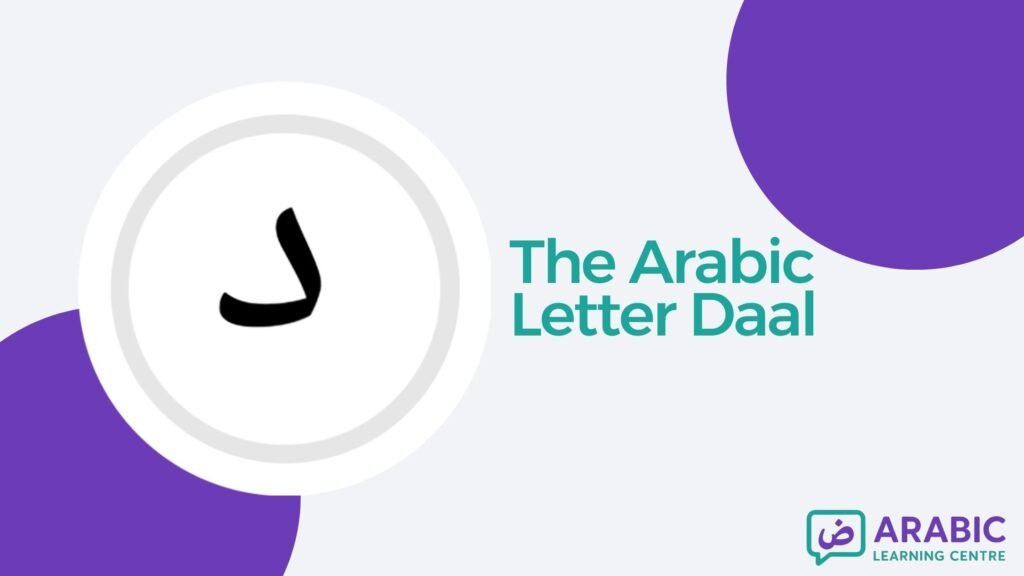
8. Arabic Letter: Dal (د)
د
Dal
“Pronounced like ‘d’ in ‘door'”
Dal appears as a simple curved stroke pointing upward. It’s a non-connector letter—it doesn’t link to letters following it. This characteristic affects word spacing and letter flow.
The curve angles slightly rightward at the top. Beginners sometimes confuse Dal with Thal (ذ), which carries a dot above.
Example Word:
دَرْسٌ
darsun
“A lesson”
Non-connector letters like Dal create natural breaks in Arabic words. Understanding which letters connect and which don’t is fundamental to Arabic alphabet learning success.
9. Arabic Letter: Thal (ذ)
ذ
Thal
“Pronounced like ‘th’ in ‘that'”
Thal is Dal with one dot above. This interdental sound requires tongue placement between teeth with voicing. It contrasts with Tha (ث), which is unvoiced.
Like Dal, Thal doesn’t connect to following letters. The dot placement must remain centered above the curve for clarity.
Common Usage:
هَٰذَا
hādhā
“This” (masculine)
Practicing voiced versus unvoiced interdental pairs (Tha/Thal) sharpens pronunciation accuracy. Record yourself and compare with native speaker models for improvement.
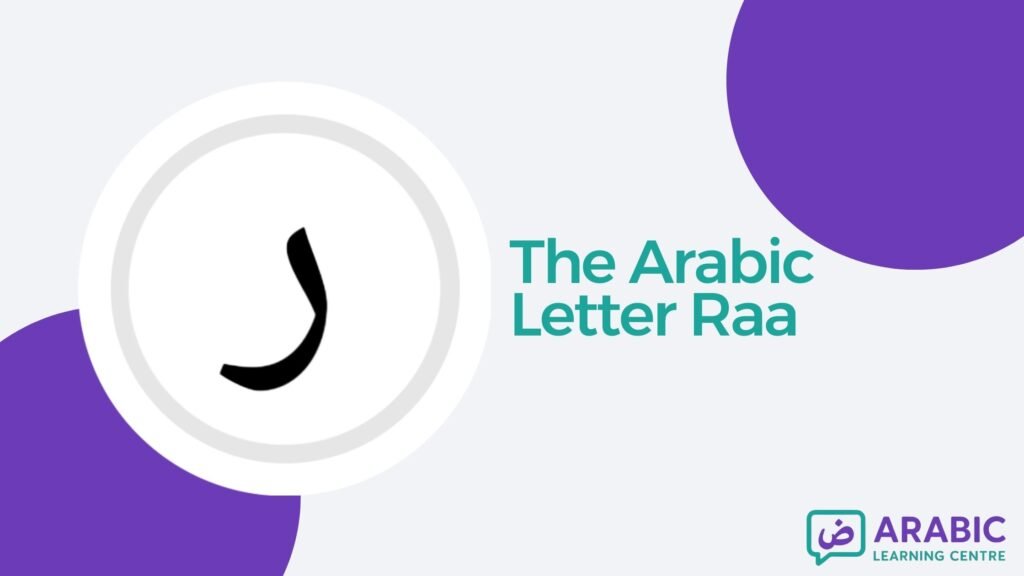
10. Learning The Letter Ra (ر) in The Arabic Alphabet
ر
Ra
“Pronounced with light tongue roll”
Ra features a small curved stroke below the baseline, often with a slight hook. It’s another non-connector letter that doesn’t link forward. The rolled ‘r’ sound may feel unfamiliar initially.
Touch tongue tip to the roof of your mouth behind front teeth, then release air quickly. This creates the characteristic Arabic Ra sound.
Word Example:
رَجُلٌ
rajulun
“A man”
Ra pronunciation varies between light and emphatic (heavy) depending on surrounding vowels. Advanced Arabic alphabet learning includes understanding these phonetic nuances.
11. Arabic Letter: Zay (ز)
ز
Zay
“Pronounced like ‘z’ in ‘zoo'”
Zay mirrors Ra’s shape with one dot above. This non-connector letter produces the familiar ‘z’ sound. The dot distinguishes it from Ra visually while pronunciation differs completely.
Maintain the same curved stroke as Ra, ensuring the dot sits centered above for legibility.
Practical Word:
زَيْتٌ
zaytun
“Oil”
| Letter | Shape | Dots | Connects Forward |
| Dal (د) | Upward curve | None | No |
| Thal (ذ) | Upward curve | 1 above | No |
| Ra (ر) | Below baseline | None | No |
| Zay (ز) | Below baseline | 1 above | No |
For students learning Arabic letters for Tajweed application, recognizing Ra and Zay distinctions ensures accurate Quranic recitation. The Arabic Learning Centre’s Learn Arabic Letters for Tajweed course provides specialized training in this area.
Join Our Classes to Learn Arabic Letters for Tajweed With a Free Trial

12. Arabic Letter: Seen (س)
س
Seen
“Pronounced like ‘s’ in ‘sun'”
Seen features three small peaks resembling a comb, creating its distinctive appearance. This letter connects in all positions. The three-peak pattern remains consistent whether isolated, initial, medial, or final.
Beginners often struggle with evenly spacing the three peaks. Practice maintaining uniform height and spacing for professional-looking Arabic script.
Example Application:
سَلَامٌ
salāmun
“Peace”
Seen’s visual complexity makes it memorable. Focus on smooth, flowing peaks rather than sharp triangular points for authentic Arabic calligraphy.
13. Arabic Letter: Sheen (ش)
ش
Sheen
“Pronounced like ‘sh’ in ‘ship'”
Sheen uses Seen’s base form with three dots above. The pronunciation shifts from ‘s’ to ‘sh’ sound. Dot placement should align horizontally above the peaks.
Common errors include misaligning dots or creating uneven peak structures. Maintain Seen’s foundation while adding dots systematically.
Common Word:
شَمْسٌ
shamsun
“Sun”
The Arabic Grammar Course at The Arabic Learning Centre incorporates letter pattern recognition into grammatical structure learning, reinforcing Arabic alphabet mastery through contextual application.
Start Learning Arabic Grammar with a Free Trial

14. Arabic Letter: Sad (ص)
ص
Sad
“Emphatic ‘s’ pronounced with tongue lowered”
Sad introduces emphatic letter concepts in Arabic alphabet learning. Its shape resembles an elongated oval connecting in all positions. The pronunciation requires tongue lowering and back-of-throat resonance.
This emphatic ‘s’ differs from regular Seen. The sound feels deeper and fuller. Surrounding vowels become heavier when adjacent to Sad.
Example Word:
صَبْرٌ
ṣabrun
“Patience”
Emphatic letters challenge beginners significantly. Working with qualified Arabic teachers at The Arabic Learning Centre through personalized sessions ensures proper pronunciation development with immediate feedback.
15. Arabic Letter: Dad (ض)
ض
Dad
“Emphatic ‘d’ unique to Arabic”
Dad shares Sad’s base form with one dot above. This emphatic ‘d’ sound exists exclusively in Arabic, making it the language’s most distinctive letter. Tongue positioning combines ‘d’ articulation with throat emphasis.
The dot placement differentiates Dad from Sad visually. Pronunciation requires conscious effort to maintain emphasis without distortion.
Practical Usage:
أَرْضٌ
arḍun
“Earth/land”
| Letter Type | Regular | Emphatic | Key Difference |
| S sound | Seen (س) | Sad (ص) | Tongue position lowered |
| D sound | Dal (د) | Dad (ض) | Throat resonance added |
| T sound | Ta (ت) | Ta (ط) | Fuller, deeper sound |
| TH sound | Thal (ذ) | Dha (ظ) | Pharyngeal emphasis |
Dad appears in fundamental Arabic vocabulary. Mastering its pronunciation demonstrates advanced Arabic alphabet learning and pronunciation precision.
16. Arabic Letter: Ta (ط)
ط
Ta (emphatic)
“Emphatic ‘t’ pronounced with tongue lowered”
This emphatic Ta differs from regular Ta (ت). Its shape forms a vertical oval connecting in all positions. No dots appear on this letter.
The emphatic ‘t’ requires tongue lowering and fuller resonance compared to regular Ta. This distinction affects meaning in minimal pairs.
Word Example:
طَعَامٌ
ṭaʿāmun
“Food”
Contrasting emphatic and non-emphatic letter pairs sharpens phonetic awareness. Arabic alphabet learning succeeds through consistent pronunciation practice with native speaker models.
17. Arabic Letter: Dha (ظ)
ظ
Dha (emphatic)
“Emphatic ‘th’ sound with throat emphasis”
Dha uses emphatic Ta’s base form with one dot above. This emphatic interdental sound combines Thal’s tongue placement with throat resonance. It’s the rarest letter in Arabic vocabulary.
Mastering Dha pronunciation requires integrating multiple articulatory features simultaneously. Patient practice with feedback prevents fossilized pronunciation errors.
Example Application:
ظُلْمٌ
ẓulmun
“Injustice/oppression”
18. Arabic Letter: Ayn (ع)
ع
Ayn
“Pharyngeal sound with no English equivalent”
Ayn presents one of Arabic’s most challenging sounds. The letter resembles a small loop or reversed ‘c’. It connects in all positions with distinct shape variations.
Produce Ayn by constricting pharyngeal muscles deeply in the throat while vocalizing. This voiced pharyngeal fricative requires significant practice for non-Arabic speakers.
Common Word:
عِلْمٌ
ʿilmun
“Knowledge”
Many beginners initially substitute glottal stop or omit Ayn entirely. Professional instruction ensures proper muscle engagement for authentic pronunciation development.
19. Arabic Letter: Ghayn (غ)
غ
Ghayn
“Pronounced like French ‘r’ from the throat”
Ghayn uses Ayn’s base shape with one dot above. This voiced velar fricative originates from the soft palate region. Position the tongue as for ‘g’ but create friction without full closure.
The dot placement distinguishes Ghayn from Ayn. Pronunciation shifts from pharyngeal to velar articulation point.
Example Word:
غَنِيٌّ
ghaniyyun
“Rich/wealthy”
Ghayn appears frequently in Arabic vocabulary. Consistent practice prevents reverting to ‘g’ or ‘r’ sound substitutions that obscure meaning.
20. Arabic Letter: Fa (ف)
ف
Fa
“Pronounced like ‘f’ in ‘food'”
Fa features a circular head with one dot above, connecting in all positions. The ‘f’ sound matches English pronunciation exactly, providing relief after challenging throat letters.
The circular head distinguishes Fa from Qaf (ق). Dot placement remains centered above the circle.
Practical Example:
فَوْقَ
fawqa
“Above/over”
| Letter | Shape | Dots | Sound | Difficulty Level |
| Fa (ف) | Circle | 1 above | ‘f’ | Easy |
| Qaf (ق) | Circle | 2 above | Deep ‘k’ | Challenging |
Fa’s familiarity helps beginners build confidence in Arabic alphabet learning. Use this letter to practice connection rules before tackling more complex forms.
21. Arabic Letter: Qaf (ق)
ق
Qaf
“Deep ‘k’ sound from back of throat”
Qaf resembles Fa with two dots above. This uvular stop originates from the throat’s deepest point. Touch the back of your tongue to the uvula while producing a ‘k’-like sound.
Regional variations exist—some dialects pronounce Qaf as glottal stop. For Modern Standard Arabic alphabet learning, maintain the deep uvular pronunciation.
Word Example:
قَلْبٌ
qalbun
“Heart”
22. Arabic Letter: Kaf (ك)
ك
Kaf
“Pronounced like ‘k’ in ‘king'”
Kaf appears as a small vertical stroke with angled extension, connecting in all positions. The regular ‘k’ sound contrasts with Qaf’s depth. Tongue touches the soft palate normally.
Isolated and final Kaf forms include a distinctive hamza-like mark inside. Initial and medial forms simplify to basic strokes.
Example Application:
كِتَابٌ
kitābun
“Book”
Kaf appears extensively in Arabic vocabulary. Mastering its positional forms ensures fluid handwriting and accurate reading comprehension.
23. Arabic Letter: Lam (ل)
ل
Lam
“Pronounced like ‘l’ in ‘love'”
Lam features a distinctive upward curve with hook, connecting in all positions. The ‘l’ sound matches English exactly. This tall letter provides visual balance in Arabic words.
Lam’s height distinguishes it from Alif. The curved hook at top creates immediate recognition. Initial Lam connects downward to following letters.
Common Word:
لَيْلٌ
laylun
“Night”
Lam combines with Alif to form the special ligature لا (Lam-Alif), taught as a unit in Arabic alphabet learning. This combination appears frequently.
24. Arabic Letter: Meem (م)
م
Meem
“Pronounced like ‘m’ in ‘moon'”
Meem appears as a small circular or oval form, connecting in all positions. The ‘m’ sound provides another familiar phoneme. Shape varies between circular (isolated/final) and flattened (medial).
Isolated Meem resembles a small zero. Final Meem tails below the baseline. Medial Meem flattens to accommodate connections.
Example Word:
مَاءٌ
māʾun
“Water”
Meem’s positional variations teach adaptability in Arabic script. Understanding these transformations is essential for reading fluency development.
25. Arabic Letter: Noon (ن)
ن
Noon
“Pronounced like ‘n’ in ‘noon'”
Noon shares similarities with Ba’s base form but features a centered dot above. It connects in all positions. The ‘n’ sound remains consistent across contexts.
The dot placement above the baseline distinguishes Noon from Ba. Final Noon may extend the base stroke slightly.
Practical Usage:
نُورٌ
nūrun
“Light”
| Letter | Base Shape | Dot Position | Sound |
| Ba (ب) | Horizontal line | Below | ‘b’ |
| Noon (ن) | Horizontal line | Above | ‘n’ |
| Ya (ي) | Horizontal line | Two below | ‘y’ |
26. Arabic Letter: Ha (ه)
هـ
Ha
“Pronounced like ‘h’ in ‘house'”
This Ha differs from the earlier throat Ha (ح). It represents regular ‘h’ sound. The shape varies significantly by position: isolated Ha appears as small oval with two dots; initial/medial Ha resembles connected loop.
Final Ha may appear as small circle (ة) called Ta Marbuta, functioning grammatically differently. Understanding these distinctions advances Arabic alphabet learning considerably.
Word Example:
هُوَ
huwa
“He”
Ha’s positional complexity requires dedicated practice. Focus on recognizing context clues for accurate identification in connected text.
27. Arabic Letter: Waw (و)
و
Waw
“Pronounced like ‘w’ in ‘water’ or long ‘oo'”
Waw appears as a vertical hook curving rightward. It’s a non-connector letter that doesn’t link to following letters. Waw functions as consonant ‘w’ or long vowel ‘ū’.
The single stroke simplicity makes Waw easy to write. Its dual function as consonant and vowel adds complexity to reading.
Example Application:
وَلَدٌ
waladun
“Boy/child”
Al-Menhaj Book, available through The Arabic Learning Centre, teaches systematic recognition of Waw’s dual functions for students learning Arabic reading for Quran access.
28. Arabic Letter: Ya (ي)
ي
Ya
“Pronounced like ‘y’ in ‘yes’ or long ‘ee'”
Ya features two dots below a base form similar to Ba. It connects in all positions. Like Waw, Ya functions as consonant ‘y’ or long vowel ‘ī’.
Final Ya extends below the baseline with characteristic curve. The two dots distinguish it from other letters with similar base forms.
Final Word:
يَدٌ
yadun
“Hand”
Ya completes the 28-letter Arabic alphabet. Mastering Ya’s positional forms and dual functions represents significant progress in Arabic alphabet learning.
How Arabic Alphabet Learning Transforms into Reading Fluency
Successfully completing the 28-letter journey marks just the beginning. Transforming letter knowledge into fluent reading requires systematic practice with vowel marks, word formation patterns, and connected text recognition.
| Learning Stage | Focus Area | Duration |
| Letter Recognition | Individual letter forms | 2-4 weeks |
| Positional Forms | Connected writing | 3-6 weeks |
| Vowel Integration | Short and long vowels | 4-8 weeks |
| Word Formation | Common patterns | 8-12 weeks |
| Fluent Reading | Connected text | 3-6 months |
Working with qualified Arabic teachers at The Arabic Learning Centre through personalized sessions ensures proper progression through each stage. Our structured curriculum prevents common pitfalls that slow independent learners.
Read Also: The Arabic Alphabet for Kids
Start Your Arabic Alphabet Learning Journey with The Arabic Learning Centre
You’ve now explored all 28 Arabic letters with pronunciation guidance and writing insights. True mastery requires consistent practice with expert feedback.
The Arabic Learning Centre offers comprehensive Arabic instruction through:
- Certified native Arabic instructors with specialized training in teaching non-Arabic speakers
- Flexible 24/7 scheduling with personalized 1-on-1 sessions tailored to your pace
- Structured curriculum covering Arabic alphabet, grammar, conversation, and script writing
- Free trial lessons to experience our teaching methodology risk-free
- Progress tracking and customized learning plans
Whether you choose our Arabic Course for Beginners, Arabic Script Writing Course, or Learn Arabic Letters for Tajweed, you’ll receive the individualized attention needed to transform alphabet knowledge into confident reading and writing skills.
Check out our top courses in Arabic and choose what is the most course you need to start learning Arabic today:
- Arabic Course for Beginners
- Arabic Script Writing Course
- Arabic Speaking Course
- Learn Arabic Letters for Tajweed
- Learning Arabic Grammar
- Arabic Vocabulary Course
- Fusha Arabic Course
- Classical Arabic Course
Start with a FREE trial class and enhance your Arabic language skills

Conclusion
Mastery of the Arabic alphabet depends on understanding how letters connect, transform, and separate within words. Recognizing positional forms, dot patterns, and non-connecting letters creates the visual fluency needed to read Arabic script smoothly and without hesitation.
Pronunciation deepens this foundation. Emphatic letters, throat sounds, and subtle contrasts demand focused practice and guided correction. When articulation and letter form develop together, learners avoid fossilized errors and gain clarity essential for Quranic recitation and formal Arabic usage.
With consistent practice and expert guidance, alphabet knowledge evolves into real reading confidence. Structured progression, personalized feedback, and targeted courses turn individual letters into meaningful words—opening the way to grammar, vocabulary, and lifelong engagement with the Arabic language.
Related Articles
Arabic Alphabet & Writing
Leave a Reply