 Arabic Alphabet & Writing
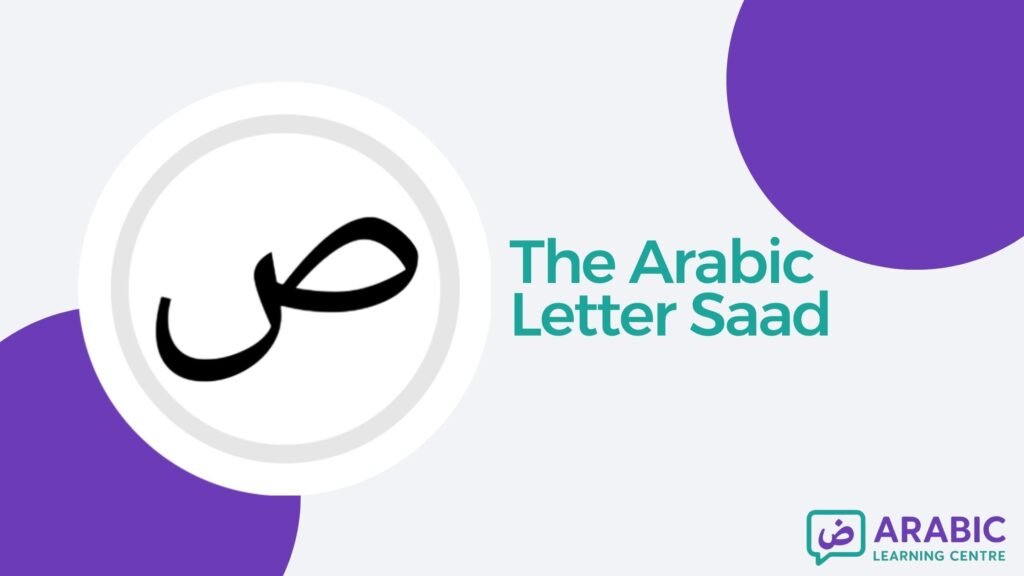
The Arabic letter Saad (ص) is one of the unique and powerful letters in the Arabic alphabet. It carries a deep sound that distinguishes it from many other letters, making it an essential step for beginners who are learning to read and write Arabic. Mastering Saad (ص) helps learners build a strong foundation in pronunciation, writing skills, and recognition of Arabic words.
Learning the letter Saad (ص) is not just about memorizing its shape—it’s about understanding how it appears in different positions, how it changes with short vowels, and how it fits naturally in words and sentences. In this guide, you will find detailed explanations, examples, exercises, and worksheets designed to help learners practice and master the letter Saad with confidence.
Letter Saad / ص
The letter Saad (ص) is the 14th letter of the Arabic alphabet. It is considered one of the emphatic letters in Arabic, producing a strong and heavy sound that is different from most English sounds. Saad is always written from right to left, like all Arabic letters, and it connects smoothly with the letters before and after it.
The unique sound of Saad makes it important for learners to pay attention to its pronunciation and shape. By practicing reading, writing, and recognizing this letter, students can improve their fluency and accuracy in Arabic.
How to Identify The letter Saad?
The letter Saad (ص) can be easily identified by its round, open curve at the top and a long horizontal baseline. Unlike some similar letters, Saad does not have any dots, which makes it easier to recognize once learners are familiar with its shape.

When reading Arabic, learners should focus on the distinct wide curve that makes Saad different from other letters, such as Seen (س). With practice, students will quickly be able to spot the letter Saad in any word, whether it appears at the beginning, middle, or end.
Letter Saad / ص Forms: At the Beginning, Middle, and End of the word
Like most Arabic letters, Saad (ص) changes its shape depending on its position in the word. It connects smoothly to the letters before and after it, while still keeping its unique curved body.
1- At the Beginning (صــ): Saad starts with a rounded curve followed by a straight line connecting to the next letter. Example: صَبَرَ (Sabar – to be patient).

2- In the Middle (ــصــ): Saad appears joined on both sides, showing its curve clearly in the center. Example: قَصْر (Qasr – palace).

3- At the End (ــص): Saad stretches along the baseline, ending the word with its distinct shape. Example: قُرْص (Qurs – tablet/disk).

At Arabic Learning Centre, we make learning Arabic easy and enjoyable for kids and beginners through interactive lessons, videos, and worksheets that bring each letter to life.
Letter Saad – ص With Fatha ( َ )

When the letter Saad (ص) carries a Fatha ( ـَ ), it produces the sound “Sa” (صَ). This is a short vowel that opens the mouth slightly while pronouncing the letter.
– Example at the beginning: صَديق (Sadeeq – friend).
– Example in the middle: عَصا (Asa – stick).
– Example at the end: مِقصَ (Miqas – scissors).
Letter Saad – ص With Dammah ( ُ )

When the letter Saad (ص) carries a Dammah ( ـُ ), it produces the sound “Su” (صُ). This sound is made by rounding the lips slightly while pronouncing the letter.
– Example at the beginning: صُورَة (Soora – picture).
– Example in the middle: عُصُور (Usur – eras/ages).
– Example at the end: قُرْصُ (Qursu – his disk/tablet).
Letter Saad – ص With Kasrah ( ِ )

When the letter Saad (ص) carries a Kasrah ( ـِ ), it produces the sound “Si” (صِ). The Kasrah sound is made by slightly lowering the jaw and stretching the lips into a small smile while pronouncing the letter.
– Example at the beginning: صِغار (Sighar – young ones).
– Example in the middle: مِصير (Maseer – destiny).
– Example at the end: مَقْصِ (Maqsi – my scissors/place of cutting).
Letter Saad – ص With sukoon ( ْ )

When the letter Saad (ص) carries a Sukoon ( ـْ ), it becomes silent and does not have a vowel sound on its own. Instead, it connects directly to the letter before it, producing a sharp and clear sound. The Sukoon is always written above the letter.
– Example in the middle: يَقصْر (Yaqsur – to shorten).
– Example at the end: قُرْص (Qurs – tablet/disk).
Examples of letter Saad – ص in Words
The letter Saad (ص) can appear in different positions inside Arabic words, and its sound changes naturally depending on the short vowel used. By practicing examples with Saad at the beginning, middle, and end, learners can strengthen their reading and writing skills while also improving pronunciation. The table below shows common words with Saad in various positions, along with their English meanings:
| Position | Arabic Word | Pronunciation | English Meaning |
| At the Beginning | صَبْر | Sabr | Patience |
| صُورَة | Soora | Picture | |
| صِغار | Sighar | Young ones | |
| In the Middle | قَصْر | Qasr | Palace |
| عَصا | Asa | Stick | |
| مِصير | Maseer | Destiny | |
| At the End | قُرْص | Qurs | Tablet/Disk |
| مِقصّ | Miqass | Scissors | |
| نَصّ | Nass | Text/Script |

Examples of letter Saad/ ص in Phrases and Sentences
Practicing the letter Saad (ص) inside full phrases and sentences helps learners understand how it flows in natural Arabic speech. It also trains them to connect Saad smoothly with other letters and pronounce it correctly in different positions. Below are some useful examples with translations:
| Position | Arabic Phrase / Sentence | English Meaning |
| At the Beginning | صَبَرَ الطِّفلُ كثيرًا | The child was very patient |
| صُورَة جَميلة | A beautiful picture | |
| صِغار الطُيُور | Small birds | |
| In the Middle | القَصْرُ كَبير | The palace is big |
| عَصا طَويلة | A long stick | |
| مِصير الإنسَان | The destiny of man | |
| At the End | هَذا قُرْص | This is a tablet/disk |
| أَحتاج مِقصّ | I need scissors | |
| قَرَأت نَصًّا | I read a text |
How to write the Saad Letter?
Writing the Arabic letter Saad (ص) is simple once you recognize its unique curved shape. Like all Arabic letters, it is written from right to left on the baseline. Saad does not have any dots, which makes it easier to remember compared to other letters.
Steps to write Saad (ص):
1- Begin with a wide curve that opens upward, sitting on the baseline.
2- Extend the curve to the left with a straight horizontal stroke.
3- When connecting to other letters, stretch the line smoothly so it joins on both sides if needed.

Forms of Saad:
– Isolated form: ص
– Beginning of a word: صـ (e.g., صَديق – friend)
– Middle of a word: ـصـ (e.g., قَصْر – palace)
– End of a word: ـص (e.g., قُرْص – tablet/disk)
How to Pronounce the Letter Saad?
The pronunciation of Saad (ص) is unique because it produces a heavy, emphatic /sˤ/ sound that is different from the regular Seen (س). Its articulation point comes from the middle of the tongue pressing slightly against the roof of the mouth (وسط اللسان مع سقف الفم), making it an emphatic voiced consonant.

Basic pronunciation rules of Saad (ص) with harakat (vowel marks):
1- Saad with Fatha (صَ):
Pronounced as a short “Sa” sound.
Example: صَبْر (Sabr) → patience
2- Saad with Dammah (صُ):
Pronounced as a short “Su” sound.
Example: صُورَة (Soora) → picture
3- Saad with Kasrah (صِ):
Pronounced as a short “Si” sound.
Example: صِغار (Sighar) → young ones
4- Saad with Sukoon (صْ):
Pronounced as a plain “S” sound without any following vowel.
Example: مِصْر (Misr) → Egypt
Tips for learners:
– Press the middle of your tongue slightly against the roof of your mouth to produce the emphatic sound.
– Practice in front of a mirror to watch your tongue and mouth position.
– Compare it with the regular Seen (س) to notice the difference between light and heavy “s” sounds.
Learn Saad through videos
Videos are a fun and effective way to learn the letter Saad (ص). They help learners see the correct pronunciation, practice writing, and recognize the letter in words and sentences. Watching visual demonstrations makes it easier for beginners to connect the sound with its written form. The following videos explain Saad (ص) in a clear and engaging way
–Learn Writing Arabic Letter | Saad
This video teaches how to write the letter Saad (ص).
–Arabic Alphabet – Lets learn the letter ص – saad | Alphabayt
A complete guide to the letter Saad (ص), covering pronunciation, writing, and examples.
How to Make the Most of These Videos
1- Listen carefully to the pronunciation at the start of the video, then repeat the examples out loud.
2- Follow the writing demonstration step-by-step, and practice writing alongside the video.
3- Combine the videos with written explanations, images, and exercises for maximum learning.
Read Also: The Letter Ayn ع In Arabic With Examples, Exercises, and Worksheets
Learn Arabic with Arabic Learning Centre
At Arabic Learning Centre, we offer interactive video lessons that guide students step by step through each form of Saad, its pronunciation with different harakat, and its use in everyday words and phrases. These videos make learning Arabic engaging and memorable for children and beginners.
Exercises For Saad in Arabic
Practicing is the best way to master the Arabic letter Saad (ص). These exercises will help you recognize, write, and pronounce Saad correctly in different positions of a word.
1. Identify the Letter Saad
Circle the letter Saad (ص) in the words below:
– صَبْر
– قَصْر
– مِصْر
– عَصا
– صُورَة
2. Write Saad in Different Positions
Write the letter Saad (ص) in:
– Beginning position: صـ
– Middle position: ـصـ
– End position: ـص
3. Match the Word to Its Picture
Draw a line between each word and the correct picture:
– صَبْر (Patience) 
– صُورَة (Picture) 
– عَصا (Stick) 
4. Fill in the Missing Letter
Complete the words by adding the missing Saad (ص):
1- __بر (Patience)
2- ق__ر (Palace)
3- مِ__ر (Egypt)
Read Also: The Letter Zay / ز in Arabic With Examples, Exercises, and Worksheets
5. Read Aloud
Read these words slowly, paying attention to the Saad (ص) pronunciation:
1- صَبْر (Sabr – Patience)
2- قَصْر (Qasr – Palace)
3- مِصْر (Misr – Egypt)
Repeat these exercises daily until you can spot Saad (ص) instantly and write it from memory.
Read Also: The Letter Taa / ت In Arabic With Examples, Exercises, and Worksheets
Downloadable Worksheets for the Arabic letter Saad
Learning the Arabic alphabet is easier when learners can recognize, trace, and practice each letter in different positions. The letter Saad (ص) is an important letter that appears in many everyday words. Using engaging worksheets helps kids improve their handwriting, reading, and vocabulary while making learning fun.
Here are some free downloadable worksheets to practice the letter Saad (ص):
– My Resource Station: Saad Worksheet – Colour, Trace, and Write activity sheet to practice writing and identifying the letter Saad.
– Arabic alphabet: letter Saad worksheets, Free Printable Offers tracing and coloring worksheets for each Arabic letter, including Saad, to support memorization and proper articulation.
Read Also: The Letter Khaa / خ in Arabic With Examples, Exercises, and Worksheets
Common Mistakes related to the letter Saad
Learning the letter Saad (ص) can sometimes be tricky for beginners, and there are a few common mistakes to watch out for:
1- Confusing Saad (ص) with Seen (س):
Saad is an emphatic letter and sounds heavier than Seen. Learners often pronounce it as a light “s” instead of the correct deep “sˤ” sound.
2- Incorrect placement of vowels:
Short vowels (Fatha, Dammah, Kasrah) must be placed correctly above or below the letter. Placing them incorrectly can change the meaning of the word.
3- Writing errors in the middle or end forms:
Beginners sometimes forget to connect Saad properly in the middle (ــصـ) or end (ــص) of the word, which can make words unreadable.
4- Skipping the Sukoon:
Learners sometimes add a vowel where Sukoon should be, changing the word’s pronunciation entirely.
Tips to avoid these mistakes:
– Practice comparing Saad (ص) and Seen (س) in minimal pairs.
– Read words aloud slowly, paying attention to the proper sound and connection of the letter.
Read Also: The Letter Seen / س in Arabic With Examples, Exercises, and Worksheets
Start Your Arabic Learning Journey with Expert Teachers Today
Ready to truly understand Arabic and use it with confidence? At The Arabic Learning Centre, you’ll learn with expert Arabic language teachers, including qualified female Arabic teachers, in a supportive and professional environment designed for real progress. Whether you’re learning Arabic for the Quran, studies, career, or daily conversation, we have the right course for you.
Take the next step today and join thousands of students learning Arabic the right way.
Courses We Offer:
- Business Arabic Course
- Learn Arabic from Zero
- Medical Arabic Course
- Learning Arabic for Non Arabic Speakers
- Learn Arabic in Saudi Arabia
Conclusion
Mastering the Arabic letter Saad (ص) is an essential milestone for every Arabic learner. From recognizing its unique shape to pronouncing its emphatic sound correctly, understanding Saad lays the foundation for better reading, writing, and comprehension skills.
With the help of examples, worksheets, and interactive exercises, students can gradually build confidence in using Saad in different word positions and vowel combinations. Whether you are a beginner or guiding children in their learning journey, practicing Saad (ص) daily will ensure accuracy and fluency.
Related Articles
Arabic Alphabet & Writing


Leave a Reply