 Arabic Alphabet & Writing
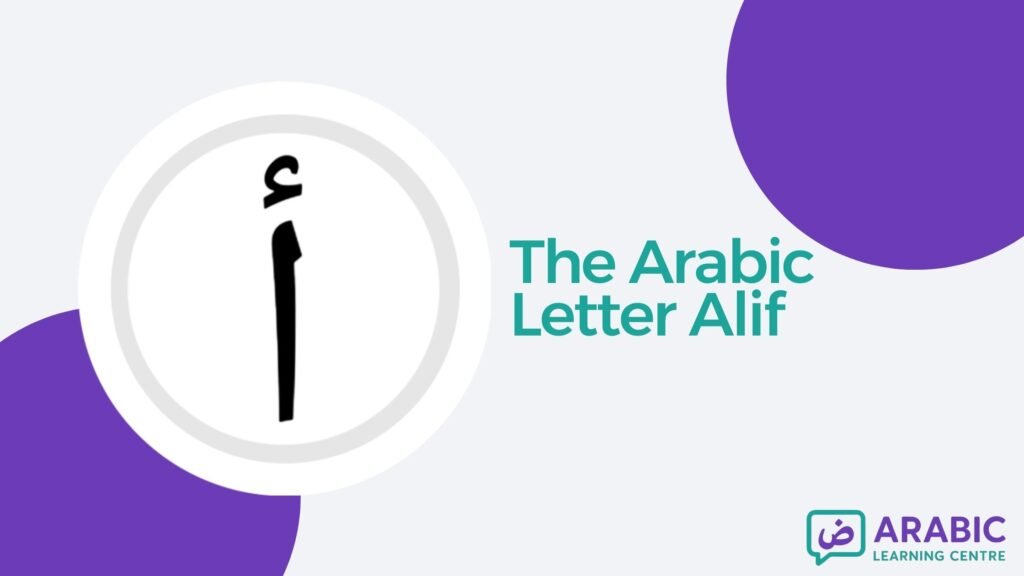
Learning the Arabic alphabet is the first step to mastering the language. Among the 28 letters, Alif (أ) is special, often appearing at the start of words. It plays a key role in pronunciation. Understanding Alif helps learners read Arabic confidently. Starting with Alif builds a strong foundation.
This guide explores Alif in a simple, engaging way. You will learn its forms, sounds, and usage with examples. Exercises and worksheets are included for practice. Common mistakes and step-by-step writing tips are shared. By the end, you will recognize, write, and pronounce Alif easily.
Letter Alif – أ
The letter Alif (أ) is the first letter of the Arabic alphabet. It is a vowel letter that has no sound of its own unless it carries a diacritical mark (short vowel) or acts as a long vowel. Alif is unique because it does not connect to the letter that comes after it, which makes it stand out in words. Its main role is to guide pronunciation, either by producing a long “aa” sound or by carrying short vowels such as fatha ( َ ), dammah ( ُ ), or kasrah ( ِ ).
In written Arabic, Alif is represented by a simple vertical stroke (ا) and may appear with a hamzah (ء) above or below it, depending on the word. It can be found at the beginning, middle, or end of words, each time taking a slightly different form. Understanding Alif is essential because it appears very frequently in Arabic vocabulary, making it one of the most important letters for beginners to master.
How to Identify The letter Alif – أ/ا
Recognizing the letter Alif is easy once you know its simple shape. Alif looks like a straight vertical line, written from top to bottom. It is one of the tallest letters in the Arabic alphabet and does not have any curves or loops. Sometimes, Alif appears with a small hamzah (ء) placed above (أ) or below (إ) the line, depending on the word.

A key feature of Alif is that it never connects to the letter after it, but it can connect to the letter before it. This makes its middle and end forms look almost the same as the isolated form.
| Position | Example |
| Beginning of the word | أَسد (Asad) |
| Middle of the word | كتاب (Ketab) |
| End of the word | عصا (Assa) |
Tip for learners: When you see a tall, single stroke in Arabic writing—especially at the start of a word—it is very likely the letter Alif.
Letter Alif and أ Forms: At the Beginning, Middle, and End of the word
The letter Alif (أ) is one of the simplest letters in Arabic when it comes to its shape. Unlike most letters, Alif does not connect to the letter that comes after it. This makes its form almost the same in all positions—beginning, middle, or end of a word—except for the slight connection from the previous letter when it appears in the middle or at the end.
Here’s how Alif looks in different positions:
– At the beginning: Appears as a straight vertical line, sometimes with a hamzah above or below, e.g., أم (mother), إمام (imam).
– In the middle: Connected to the letter before it but not after, e.g., سألت (I asked), فائدة (benefit).
-At the end: Stands alone after the last letter, e.g., هنا (here), عصا (stick).

At Arabic Learning Centre, we make learning Arabic letters fun and interactive. Our step-by-step lessons, visual aids, and practice worksheets ensure that learners of all ages can easily recognize, write, and pronounce each letter. Start your Arabic learning journey with us today and master the alphabet from Alif to Yaa!
Letter Alif/ أ With Fatha ( َ )

When the letter Alif (أ) carries a fatha (ـَ), it produces a short “a” sound, similar to the “a” in the English word cat. This is one of the simplest sounds in Arabic and is often the first vowel learners encounter. For example:
– At the beginning: The fatha is placed above the Alif to show the short vowel sound, e.g., أَسد (asad – lion).
– In the middle: Alif with fatha connects to the letter before it but remains open after, e.g., سَأَل (sa’al – he asked).
– At the end: Alif rarely appears with fatha at the end because it usually acts as a long vowel instead, but in some cases with hamzah it can, e.g., مَلأَ (mala’a – he filled).
Fatha always sits above the letter, slightly slanted, and indicates a quick, light sound—not a long “aa”.
Letter Alif / أ With Dammah ( ُ )

When the letter Alif (أ) carries a dammah (ـُ), it produces a short “u” sound, similar to the “oo” in the English word book. This sound is quick and rounded, not as long as the “oo” in moon. For example:
– At the beginning: The dammah is placed above the Alif in the form of a small curl or loop, e.g., أُم (umm – mother).
– In the middle: Alif with dammah connects to the letter before it but leaves the next letter unconnected, e.g., سُأل (su’il – was asked).
– At the end: Alif rarely appears with dammah at the end because it usually functions as a long vowel or carrier of hamzah, e.g., ملأُ (mala’u – they filled).
Dammah always sits above the letter and is shaped like a small number 9 in Arabic. It adds a short “u” sound that should be pronounced quickly without extending.
Letter Alif/ أ With Kasrah ( ِ )

When the letter Alif (أ) carries a kasrah (ـِ), it produces a short “i” sound, similar to the “i” in the English word sit. The kasrah is a small diagonal stroke placed below the letter, and it changes the pronunciation to be lighter and sharper compared to fatha or dammah. For example:
– At the beginning: The kasrah is placed under the Alif, e.g., إِمام (imam – leader).
– In the middle: Alif with kasrah connects to the letter before it but not to the letter after, e.g., سِأَل (si’al – he asked).
– At the end: Rare in most words, but possible in some forms with hamzah, e.g., ملِئ (muli’a – was filled).
The kasrah is always written below the letter, so when you see a small slanted stroke under Alif, it signals a quick “i” sound.
Letter Alif/ أ With sukoon ( ْ )


The sukoon (ـْ) is a small circular mark placed above a letter to indicate the absence of a vowel sound. When placed on Alif (أ), it means that the letter carries no vowel and is silent. However, in standard Arabic, Alif rarely appears with sukoon because it usually acts as a long vowel or a seat for hamzah. When it does appear, it is often in special cases involving hamzat al-wasl or hamzat al-qat‘ in certain grammatical forms.
– Example with hamzah and sukoon: أْخذ (’khadha – he took).
– In the Quranic text: You may sometimes see Alif with sukoon in specific tajweed rules. (ٱقْرَأْ – read).
Sukoon indicates a “stop” in the vowel sound. If you see it on Alif, be aware that you will move directly from the previous letter’s sound to the next consonant without adding a vowel.
Examples of letter Alif/ أ in Words
The letter Alif (أ) appears very frequently in Arabic words. It can occur at the beginning, middle, or end of a word. Each position is easy to identify because Alif is always a straight vertical line, sometimes carrying a hamzah (ء) above or below. Recognizing Alif in different positions helps learners improve their reading speed and accuracy.
Here are some examples:
| Type | At the beginning | In the middle | At the end |
| Arabic Word | أم/ أمل/ إمام | سألت/ فائدة/ مأكول | هنا/ عصا/ قرأا |
| Pronunciation | Umm/ Amal/ Iman | Sa’alt/ Fa’idah/ Ma’kul | Huna/ Asa/ Qara’a |
| English Word | mother/ hope/ leader | I asked/ benefit/ eaten | Here/ stick/ they read |
When practicing, highlight Alif in words to train your eyes to spot it quickly, no matter where it appears.

Examples of letter Alif/ أ in Phrases and Sentences
Seeing the letter Alif (أ) in full phrases and sentences helps learners understand how it works naturally within context. By reading connected text, you also get used to spotting Alif in different positions — at the start, middle, or end of words — while also improving fluency in Arabic reading.
Here are some examples:
| Position | Arabic Example | English Meaning |
| At the beginning | أحب القراءة كل يوم | I love reading every day. |
| أمام المدرسة يوجد حديقة جميلة | In front of the school, there is a beautiful garden | |
| In the middle | سأذهب إلى السوق غدًا | I will go to the market tomorrow |
| هذا الكتاب فائدة كبيرة | This book has great benefit | |
| At the end | أعيش في مدينة كبيرة | I live in a big city |
| السماء صافية اليوم | The sky is clear today |
How to write the Alif Letter?
The Alif (أ) is one of the simplest letters in the Arabic alphabet to write. It is a straight vertical line that sometimes carries a hamzah (ء) above or below, depending on the word. The letter does not connect to the letter following it, but it can connect to the letter before it.
Steps to Write Alif:
1- Starting point: Place your pen slightly above the writing line.
2- Vertical stroke: Draw a straight downward line until you touch the baseline.
3- Hamzah (if needed): Add the hamzah above (أ) or below (إ) depending on the word.
4- Spacing: Leave a small gap between Alif and the letter that follows it.

Important notes:
– Shape consistency: Whether it is at the beginning, middle, or end, Alif keeps the same straight shape.
– Direction: Always write from top to bottom in one smooth stroke.
How to Pronounce the Letter Alif?
The pronunciation of Alif (أ) depends on the harakah (vowel mark) it carries. On its own, Alif represents a long “aa” sound (like the “a” in father). When it carries a hamzah (ء) with a short vowel, it produces a clear consonant sound followed by the vowel.
In Qur’anic recitation, the long vowel Alif ا has no independent sound of its own but is always preceded by a letter with a fatha.
Its sound comes from the Al-Jawf (الجوف) — the empty space in the mouth and throat — and is considered one of the Madd letters (letters of elongation).
When Alif carries a hamzah (أ), the articulation point is from the middle of the throat for the hamzah sound, before moving into the vowel sound.

Basic pronunciation rules:
1- Alif as a long vowel (ا):
Pronounced as a stretched “aa” sound. Example: باب (baab – door).
2- Alif with Hamzah and Fatha (أَ):
Short “a” sound. Example: أكل (akal – he ate).
3- Alif with Hamzah and Dammah (أُ):
Short “u” sound. Example: أم (umm – mother).
4- Alif with Hamzah and Kasrah (إِ):
Short “i” sound. Example: إمام (imaam – leader).
Open your mouth wide for the “aa” sound, round your lips for the “u” sound, and smile slightly for the “i” sound. Practice in front of a mirror to get the mouth shape right.
Learn Alif through videos
Learning the Arabic letter Alif (أ) becomes much more effective when you use educational videos. Seeing the shape, hearing the pronunciation, and watching the writing process step-by-step will help you remember the letter better. The following videos explain Alif in a clear and engaging way:
Learn Letter Alif: Reading and Writing | Arabic Alphabet
This video teaches how to read and write the letter Alif with proper pronunciation in both English and Arabic.
All You Need to Know About Alif – Learn Arabic
A complete guide to the letter Alif, covering pronunciation, writing, and the short vowels it can carry.
How to Make the Most of These Videos
1- Listen carefully to the pronunciation at the start of the video, then repeat the examples out loud.
2- Follow the writing demonstration step-by-step, and practice writing alongside the video.
3- Combine the videos with written explanations, images, and exercises for maximum learning.
Learn Arabic with Arabic Learning Centre
At Arabic Learning Centre, we provide a complete Arabic learning course with a learning system that combines written lessons, educational videos, and interactive exercises. With our step-by-step method, you’ll master Alif quickly and move on confidently to the next Arabic letters!
Exercises for letter Alif in Arabic
Practicing is the best way to master the Arabic letter Alif (أ). These exercises will help you recognize, write, and pronounce Alif correctly in different positions of a word.
1. Identify the Letter Alif
Circle the letter Alif (أ) in the words below:
- أسد
- مدرسة
- باب
- أمي
- قلم
2. Write Alif in Different Positions
Write the letter Alif in:
– Beginning position: أ
– Middle position: ـاـ
– End position: ـا
3. Match the Word to Its Picture
Draw a line between each word and the correct picture:
أسد 
أرنب 
باب 
4. Fill in the Missing Letter
Complete the words by adding the missing Alif (أ):
1- __سد (Lion)
2- ب__ب (Door)
3- __رض (Earth)
5. Read Aloud
Read these words slowly, paying attention to Alif pronunciation:
– أكل (He ate)
– أنا (I)
– أرض (Earth)
Repeat these exercises daily until you can spot Alif instantly and write it from memory.
Read Also: The Letter Kaaf ك In Arabic With Examples, Exercises, and Worksheets
Downloadable Worksheets for the Arabic letter Alif
To make learning fun and effective, we’ve created printable worksheets for the Arabic letter Alif (أ). These worksheets will help students practice recognizing, writing, and using the letter in words and sentences through interactive activities. Perfect for classroom and home learning.
Download the worksheets here:
– My Resourse Station: Alif Worksheet – Colour, Trace, and Write a printable PDF to practice writing and recognizing Alif.
– Arabic Seeds (Islamic-themed): Provides coloring and tracing worksheets for each letter, including Alif, along with pronunciation audio files for memorization and enhanced learning.
Read Also: The Letter Thaa / ث In Arabic With Examples, Exercises, and Worksheets
Common Mistakes related to the letter Alif
Even though the Arabic letter Alif (أ) is one of the easiest letters to write and pronounce, many beginners make common mistakes when learning it. Understanding these mistakes will help you avoid them and improve your Arabic skills faster.
1. Confusing Alif (أ) with Hamzah (ء)
– Mistake: Writing Hamzah (ء) as if it were Alif or placing Hamzah in the wrong position.
– Correction: Alif is a straight vertical stroke (ا) and may carry a Hamzah above (أ) or below (إ), but they are not the same letter.
Alif (ا) vs. Hamza (ء)
| Feature | Alif (ا) | Hamza (ء) |
| Type | A letter in the Arabic alphabet (first letter) | A symbol/diacritic representing a glottal stop |
| Shape | Vertical stroke | Small hook-like mark above or below a letter |
| Function | Represents the long vowel “aa” | Represents a consonant sound (glottal stop) |
| Examples | باب (baab – door) | أَكل (akala – ate), سُؤال (su’āl – question) |
| Position in Words | Cannot connect to the letter after it | Sits on or under a carrier letter (often Alif, Waw, or Ya) |
| Carriers | — | Alif (أ / إ), Waw (ؤ), Ya (ئ) |
| Pronunciation | Smooth vowel sound | A sudden break in the voice |
Read Also: The Letter Ghayn غ In Arabic With Examples, Exercises, and Worksheets
2. Mixing Alif (ا) with Laam (ل)
– Mistake: Writing Laam and Alif with similar height and shape, especially for beginners.
– Correction: Laam has a curve at the bottom, while Alif is a straight line without a curve.


Read Also: The Letter Haa / ح in Arabic With Examples, Exercises, and Worksheets
3. Forgetting the Different Forms of Alif in Words
– Mistake: Writing Alif in the wrong form in the beginning, middle, or end of a word.
– Correction:
At the Beginning: أ (أرض)
In the Middle: ـاـ (كتاب)
At the End: ـا (سماء)
4. Pronouncing Alif Incorrectly
– Mistake: Pronouncing Alif with a sound when it’s actually a madd (long vowel), or shortening it incorrectly.
– Correction: Alif often represents the long vowel /aa/, as in “باب” (baab), and should be fully extended when reciting.
5. Adding Harakat Incorrectly
– Mistake: Placing Fatha, Dammah, or Kasrah incorrectly on Alif when it doesn’t carry a vowel.
– Correction: Alif usually does not carry a vowel unless it has a Hamzah on it (أ, إ).
Read also: The Letter Daad ض In Arabic With Examples, Exercises, and Worksheets
Start Your Arabic Learning Journey with Expert Teachers Today
Ready to truly understand Arabic and use it with confidence? At The Arabic Learning Centre, you’ll learn with expert Arabic language teachers, including qualified female Arabic teachers, in a supportive and professional environment designed for real progress. Whether you’re learning Arabic for the Quran, studies, career, or daily conversation, we have the right course for you.
Take the next step today and join thousands of students learning Arabic the right way.
Courses We Offer:
- Business Arabic Course
- Learn Arabic from Zero
- Medical Arabic Course
- Learning Arabic for Non Arabic Speakers
- Learn Arabic in Saudi Arabia
Conclusion
Mastering the Arabic letter Alif is more than just learning a character — it is the first step into the rich world of the Arabic language. From its shapes and sounds to its role in words, sentences, and Qur’anic text, Alif opens the door to deeper understanding and fluent communication.
By practicing its forms, pronunciation, and usage through examples, exercises, and worksheets, learners gain a solid foundation for reading and writing Arabic. Building this strong start makes learning the rest of the Arabic letters easier and more enjoyable, paving the way for mastering the language step by step.
Related Articles
Arabic Alphabet & Writing

Leave a Reply