 Arabic Resources & Courses
| Key Takeaways |
| Arabic learning games accelerate vocabulary retention by making repetition feel rewarding rather than mechanical or tedious. |
| Flashcard games like Anki use spaced repetition algorithms proven to improve long-term Arabic word retention significantly. |
| Digital games such as Duolingo Arabic and Arabicity target script recognition, making the alphabet more approachable for beginners. |
| Physical board games and card games work especially well for Arabic learners in group settings, reinforcing spoken interaction. |
| Games work best as a supplement to structured instruction — not as a standalone Arabic learning method for lasting fluency. |
Arabic learning games are one of the most effective tools for building vocabulary, script recognition, and conversational confidence — especially in the early stages when motivation is fragile. Whether you are a complete beginner or an intermediate learner hitting a plateau, the right game can turn 20 minutes of daily practice into something you genuinely look forward to.
The reason games work is not magic — it is repetition dressed in reward. Arabic script, vocabulary, and basic grammar patterns need hundreds of exposures before they become automatic.
Games create those exposures without the mental resistance that traditional drills often produce. Pair them with structured Arabic lessons for beginners and the results compound quickly.
1. Anki Flashcard Game
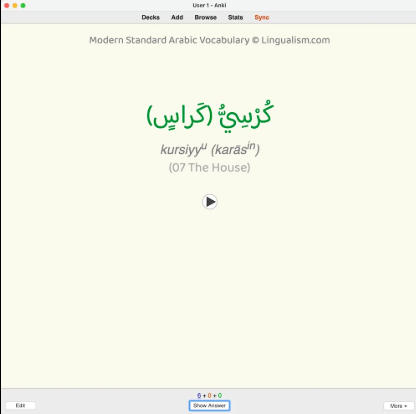
Anki is a spaced repetition flashcard system that schedules Arabic vocabulary review at precisely the right moment before you forget it. Unlike static flashcard apps, Anki tracks how confidently you recalled each word and adjusts the next review interval accordingly.
For Arabic learners, this means high-frequency vocabulary becomes deeply encoded rather than temporarily memorized.
What makes Anki genuinely powerful is the Arabic script support. You can create cards that display the full Arabic word — كِتَاب (kitāb, “book”) — on one side, with the English meaning, transliteration, and even an audio recording on the other.
Within weeks, learners who use Anki consistently begin recognizing root patterns across words, which is one of the fastest ways to expand Arabic vocabulary.
At The Arabic Learning Centre, students enrolled in our Arabic Vocabulary Course are guided to use Anki alongside their lessons. The combination — instructor-curated vocabulary lists reviewed through spaced repetition — produces noticeably faster results than either method alone.
Enroll in Our Arabic Vocabulary Course to Get Your Free Trial

How to Set Up Anki for Arabic Script Practice
Download the shared Arabic decks from AnkiWeb. Search specifically for MSA (Modern Standard Arabic) or Quranic Arabic decks depending on your goal. Always enable right-to-left text display in card settings so Arabic script renders correctly.
2. Duolingo Arabic for Beginner-Friendly Game
Duolingo Arabic introduces the Arabic alphabet and basic vocabulary through short, gamified exercises designed to feel more like play than study. The app uses points, streaks, and level progression to keep beginners returning daily — and daily exposure is what Arabic script recognition actually requires.
Duolingo’s strength is lowering the activation barrier. A beginner who feels intimidated by the Arabic alphabet will open Duolingo far more willingly than a grammar textbook.
The app covers letter recognition, basic pronunciation, and elementary vocabulary — making it a reasonable starting point before transitioning to more structured learning.
Its weakness is equally important to understand: Duolingo does not teach Arabic grammar systematically. Learners who rely on it exclusively tend to plateau after a few months.
Used correctly — as a daily warm-up or review tool alongside real instruction — it adds genuine value. For a solid foundation in Arabic grammar, our Arabic Grammar Course provides the systematic depth Duolingo cannot.
Start Learning Arabic Grammar with a Free Trial

3. Arabicity — The Arabic Script Recognition Game
Arabicity is an online Arabic learning game specifically designed to train letter recognition, letter-sound matching, and basic word reading in Arabic script. It targets the single biggest barrier most beginners face: the Arabic alphabet feels visually overwhelming before the individual letters become familiar shapes.
The game presents letters in isolation, then in connected forms, then in simple words — mirroring the logical progression a qualified Arabic instructor would follow. This sequencing matters.
Learners who can recognize ب (ba), ي (ya), and ت (ta) in isolation still often struggle to identify them inside a connected word like بَيْت (bayt, “house”) — and Arabicity specifically targets that gap.
In our instructors’ experience at The Arabic Learning Centre, learners who spend two focused weeks on letter recognition games before attempting full words gain reading fluency measurably faster than those who attempt to read words before the individual letters are automatic.
If you want to accelerate this process, our learn to read Arabic course builds on exactly this principle with certified instructor support.
4. Arabic Alphabet Board Games and Card Games for Group Learning
Physical Arabic alphabet card games — such as Arabic letter matching sets and vocabulary card games — are among the most effective tools for children and group learners because they add a social, competitive dimension that digital apps cannot replicate. Interaction in Arabic, even at a basic level, builds conversational confidence faster than solo practice.
Popular formats include:
- Arabic letter matching games — pairing isolated letter cards with words containing that letter
- Arabic vocabulary picture cards — matching illustrated cards to their Arabic word equivalents
- Arabic root word card games — grouping words sharing the same three-letter root, which trains pattern recognition
For children especially, these tactile, social games create positive associations with Arabic early on. Our online Arabic classes for kids incorporate game-based learning principles directly into structured lessons, making the experience both educationally rigorous and genuinely enjoyable.
Enroll your child in our Arabic Classes for KIDS with a free trial

5. Arabic Scrabble and Word-Building Games
Arabic Scrabble — played with Arabic letter tiles — trains spelling, word construction, and vocabulary recall simultaneously, making it one of the most cognitively rich Arabic learning games available. Unlike passive recognition exercises, Scrabble forces the player to actively retrieve and construct words, which encodes vocabulary far more deeply.
Arabic Scrabble sets are available in both standard Arabic letter format and transliterated formats for early beginners.
The standard Arabic version is strongly preferred for learners beyond the absolute beginner stage, as it reinforces correct script without the crutch of romanization.
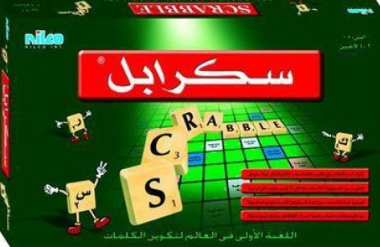
A practical variant for small learning groups: replace the full Scrabble board with a simpler word-building card game. Each player draws letter tiles and races to construct a valid Arabic word. This works especially well for vocabulary themes — food words, household objects, or verbs of motion — which is a method our certified instructors at The Arabic Learning Centre use in group sessions to make vocabulary review genuinely competitive.
Read also: Is Arabic Worth Learning?
6. Arabic Language Learning Apps with Game Mechanics
Mango Languages and Mondly both incorporate game-like progression, audio challenges, and interactive dialogue practice into structured Arabic lessons — sitting between a formal language course and a casual game.
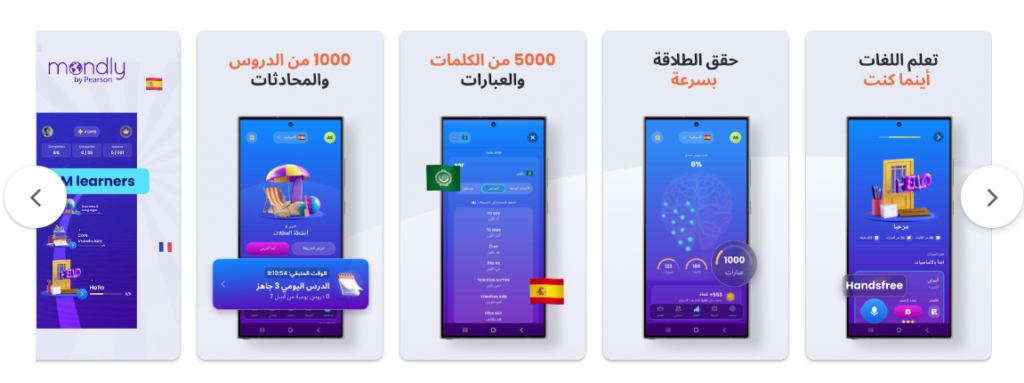
Both apps offer Modern Standard Arabic, with Mango Languages providing particularly strong grammar notes integrated into the exercises.
| Feature | Mango Languages | Mondly Arabic |
| Grammar Explanation | Clear, integrated notes | Minimal |
| Script Practice | Moderate | Basic |
| Audio Quality | Native speaker recordings | Native speaker recordings |
| Conversational Practice | Dialogue-based | AR chatbot feature |
| Best For | Structured beginners | Casual daily practice |
Mondly’s augmented reality chatbot feature deserves specific mention: it allows learners to practice basic Arabic conversation with a virtual interlocutor, which reduces the social anxiety many beginners feel before attempting real conversation.
For genuine conversational fluency, our Arabic Conversation Course with live instructors goes significantly further.
Read also: Best Books for Learning Arabic
7. Arabic Pronunciation Games and Listening Challenges
Arabic pronunciation games that use audio-based challenges — such as identifying minimal pairs or matching sounds to letters — directly address the most persistent difficulty non-Arabic speakers face: Arabic phonemes that do not exist in English. The letters ع (ʿayn), غ (ghayn), ح (ḥa), and خ (kha) require entirely different articulation points (makhārij) than any English sound.
Apps like Pimsleur Arabic use audio repetition with a recall-and-repeat format that functions as a pronunciation game. The listen-repeat-confirm cycle trains the ear before training the mouth — which is the correct pedagogical sequence. Most beginners try to produce sounds they cannot yet accurately hear, which is why early pronunciation errors become so persistent.
At The Arabic Learning Centre, our Arabic Pronunciation Course addresses each difficult phoneme systematically, with instructors correcting articulation in real time — something no app-based game can replicate. Games are excellent for daily exposure; a qualified instructor is irreplaceable for correcting ingrained errors.
Begin Pronouncing Arabic Fluently with a Free Trial

8. Arabic Crossword Puzzles and Word Search Games
Arabic crossword puzzles and word searches train reading direction, letter recognition within words, and vocabulary recall — all while feeling significantly less demanding than formal study. Because Arabic reads right to left, even a simple word search in Arabic script actively reinforces the correct reading direction, which many beginners instinctively reverse in early practice.
Arabic crosswords are available in graded difficulty levels. Beginner versions use common vocabulary with full tashkeel (diacritical marks) to support correct reading. Advanced versions remove the diacritics, which is a meaningful challenge — reading unvowelled Arabic is a distinct skill that even intermediate learners find demanding.
These work exceptionally well as end-of-week review activities, consolidating vocabulary from the week’s study before new material is introduced.
Paired with structured lessons, they reinforce retention without adding significant cognitive load. For learners wanting to understand how Arabic reading develops systematically, our blog on mastering the Arabic alphabet covers the foundational steps in depth.
Start Learning Arabic with Certified Instructors at The Arabic Learning Centre
Games accelerate Arabic practice — but certified instruction accelerates fluency. The Arabic Learning Centre offers:
- 1-on-1 personalized lessons with certified native Arabic instructors
- Flexible scheduling available 24/7 — learn at your own pace
- Structured curricula from beginner script through advanced grammar
- Free trial lesson — experience the method before committing
- Courses for every learner: beginners, kids, adults, ladies, and new Muslims
Explore our Arabic Course for Beginners or Arabic classes for kids and book your free trial today. Games open the door — our instructors walk you through it.
Book a FREE session with one of our native Arabic-certified teachers
Frequently Asked Questions About Arabic Learning Games
Can Arabic Learning Games Replace Formal Arabic Lessons?
Arabic learning games cannot replace structured instruction for learners aiming at genuine fluency. Games build vocabulary recognition, script familiarity, and motivation effectively. However, they do not teach Arabic grammar systematically, correct pronunciation errors, or develop the productive language skills — speaking and writing — that formal lessons with a certified instructor provide. Use games as a daily supplement.
What Are the Best Arabic Learning Games for Children?
The best Arabic learning games for children combine visual recognition with tactile interaction — Arabic letter matching cards, illustrated vocabulary sets, and app-based games like Duolingo Arabic. Children benefit most from games that use colour, repetition, and mild competition. Our online Arabic classes for kids integrate game-based methods within a structured curriculum led by qualified instructors.
How Long Should I Spend on Arabic Learning Games Each Day?
Twenty to thirty minutes of game-based Arabic practice daily is sufficient as a supplement to formal study. Beyond this, returns diminish — games reinforce known material more than they introduce new concepts. A practical structure is: formal lesson or study session first, followed by fifteen to twenty minutes of game-based vocabulary or script review to consolidate what was just learned.
Do Arabic Learning Games Teach Grammar Effectively?
Most Arabic learning games do not teach grammar effectively in isolation. Grammar requires systematic explanation of rules — such as the إضافة (iḍāfa) genitive construction or verb-subject agreement patterns — that game formats rarely provide with sufficient depth. Apps like Mango Languages come closest, integrating brief grammar notes. For real grammar instruction, our Arabic Grammar Course is the appropriate resource.
Are There Arabic Learning Games for Complete Beginners Who Cannot Read Arabic Script?
Yes. Arabicity, Duolingo Arabic, and Arabic alphabet card matching games are all designed for learners who cannot yet read Arabic script. They introduce individual letters before connected words, which is the correct starting sequence. Our blog on the Arabic alphabet for kids also covers beginner-friendly approaches to script recognition.
Related Articles
Arabic Resources & Courses


Leave a Reply