 Arabic Grammar
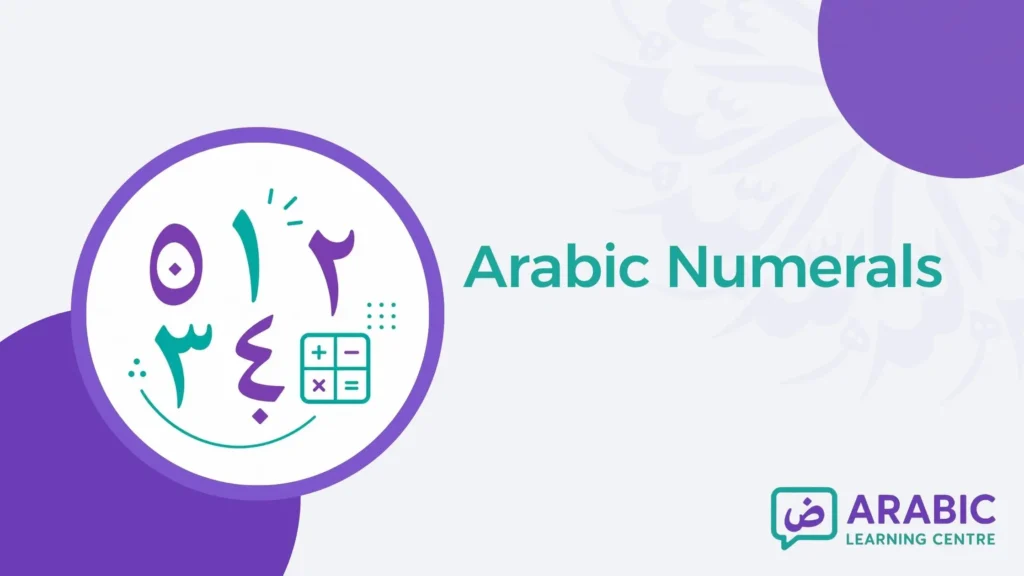
Arabic numerals are among the most important tools in human communication because they are used to write numbers in education, science, business, technology, trade, money, dates, and daily life. Even people who do not speak Arabic often use a numeral system that is historically connected to Arabic mathematical transmission.
When people search for arabic numerals, they may mean two different things. Sometimes they mean the digits used globally today: 0, 1, 2, 3, 4, 5, 6, 7, 8, 9. Other times, they mean the digits commonly used in Arabic-speaking countries: ٠، ١، ٢، ٣، ٤، ٥، ٦، ٧، ٨، ٩. Understanding this difference is the key to understanding the whole topic.
What Are Arabic Numerals?
Arabic numerals are written symbols used to represent numbers. In English, the term usually refers to the familiar digits 0–9, while in Arabic learning contexts, it often refers to the Eastern Arabic symbols used in Arabic texts.
The modern numeral system most people use today is usually called the Hindu-Arabic numeral system because it developed from Indian numerals and reached Europe through Arabic-speaking and Persian scholars. Britannica describes Hindu-Arabic numerals as the ten symbols 1, 2, 3, 4, 5, 6, 7, 8, 9, 0, used in the decimal number system.
In simple words, Arabic numerals are digits, not number words. For example:
| Number Value | Western Arabic Numeral | Eastern Arabic Numeral | Arabic Word |
| Zero | 0 | ٠ | صفر |
| One | 1 | ١ | واحد |
| Two | 2 | ٢ | اثنان |
| Three | 3 | ٣ | ثلاثة |
| Four | 4 | ٤ | أربعة |
| Five | 5 | ٥ | خمسة |
| Six | 6 | ٦ | ستة |
| Seven | 7 | ٧ | سبعة |
| Eight | 8 | ٨ | ثمانية |
| Nine | 9 | ٩ | تسعة |
So, if someone asks what are Arabic numerals?, the best answer is: Arabic numerals are digits used to write numbers, especially the decimal digits used today around the world and the Eastern Arabic digits used in Arabic-speaking regions.
Arabic Numbers And Arabic Numerals: Are They The Same?
Arabic numbers and Arabic numerals are closely related, but they are not exactly the same thing. Arabic numerals are the written digit symbols, while Arabic numbers can also refer to the Arabic words used when speaking or writing numbers in letters.
For example, 5 and ٥ are numerals. The word خمسة is the Arabic number word for “five.” This distinction is useful for learners because reading Arabic digits is not the same as knowing how to say numbers correctly in Arabic.
The reference text also highlights this difference by showing both numeral forms and Arabic number words, such as ١٠ for 10 and عشرة for the spoken/written word “ten.”
Here is a simple comparison:
| Concept | Example | Meaning |
| Western Arabic numeral | 7 | Digit used globally |
| Eastern Arabic numeral | ٧ | Digit used in Arabic texts |
| Arabic number word | سبعة | Spoken/written word for seven |
| English number word | seven | Spoken/written English word |
This is why an Arabic learner should study both the symbols and the words. You may recognize ٢٠ as 20, but you also need to know that it is pronounced عشرون.
Origin Of Arabic Numerals
The origin of Arabic numerals is connected to India, the Islamic world, and Europe. The system did not appear in one place in its final modern shape; it developed through transmission, adaptation, scholarship, trade, and education.
Historically, the digits known in Europe as Arabic numerals came from Indian numerical ideas. They were then adopted and developed by scholars in the Islamic world before being introduced to Europe. Britannica states that Hindu-Arabic numerals originated in India in the 6th or 7th century and were introduced to Europe through the writings of Middle Eastern mathematicians, especially al-Khwarizmi and al-Kindi, around the 12th century.
This history explains the name Hindu-Arabic numerals. “Hindu” points to the Indian origin, while “Arabic” points to the Arabic-speaking and Islamic scholarly role in spreading the system to Europe.
The development can be understood in four main stages:
| Stage | Main Role |
| Indian mathematicians | Developed early decimal numeral ideas |
| Arabic and Persian scholars | Studied, refined, translated, and transmitted the system |
| Islamic civilization | Spread the system across scholarship, trade, and administration |
| Europe | Adopted the system gradually, especially for calculation and commerce |
So, the origin of Arabic numerals is best described as Indian in early development, Arabic-Islamic in transmission, and global in modern use.
Where Did Arabic Numerals Originate?
Arabic numerals originated from Indian numeral traditions, then spread through the Arabic-speaking and Islamic world before reaching Europe. This is why the system has a shared historical identity rather than a single simple origin story.
The numerals are called “Arabic” in many European languages because Europeans learned them mainly through Arabic mathematical works. Al-Khwarizmi played a major role in this process; Britannica describes him as a mathematician whose works introduced Hindu-Arabic numerals and algebraic concepts into European mathematics.
A simple answer to where did Arabic numerals originate? is:
Arabic numerals originated from Indian numerical systems, were developed and transmitted through Arabic and Persian scholarship, and later spread into Europe.
This does not reduce the Arabic role. Instead, it shows how knowledge moved across civilizations. The modern system became powerful because different cultures preserved, improved, taught, and applied it.
Turn Your Understanding Of Arabic Numerals Into Real Arabic Skills
Learning Arabic numerals is one of the first practical steps in understanding the Arabic language. You now know how numbers like ٠، ١، ٢ are used in dates, prices, and daily communication—but recognizing symbols is only the beginning.
To actually use Arabic in real situations, you need to move beyond numerals into grammar, sentence structure, and speaking skills. This is exactly where the Intensive Arabic Course at the Arabic Learning Centre becomes essential.
Join the Intensive Arabic Course today and move from understanding Arabic numerals to speaking Arabic with confidence.
Shots Videos from Our Courses
Types Of Arabic Numerals
There are two main types of Arabic numerals that learners usually need to understand: Western Arabic numerals and Eastern Arabic numerals. Both represent the same number values, but they use different symbols.
Your reference explains this clearly by separating Eastern Arabic numerals such as ٠١٢٣٤٥٦٧٨٩ from Western Arabic numerals such as 0123456789.
Eastern Arabic Numerals
Eastern Arabic numerals are the digits commonly seen in many Arabic-speaking countries. They are written as ٠، ١، ٢، ٣، ٤، ٥، ٦، ٧، ٨، ٩.
These numerals are especially important for learners who want to read Arabic books, signs, prices, phone numbers, dates, addresses, and official documents. For example, ٢٠٢٦ means 2026, and ٥٠ means 50.
Western Arabic Numerals
Western Arabic numerals are the digits used in English and many other languages today: 0, 1, 2, 3, 4, 5, 6, 7, 8, 9.
They are called Arabic numerals because they reached Europe through Arabic mathematical tradition. Today, they are used globally in science, banking, education, computers, engineering, and everyday writing.
Ghubar Numerals
Ghubar numerals are often discussed as part of the western form of Arabic numerals. They were used historically in parts of North Africa and al-Andalus and are connected to the shapes that later influenced European digits.
This type is useful historically because it helps explain why the numerals used in Europe look different from the Eastern Arabic numerals used in many Arabic-speaking regions today.
Arabic Numerals Vs Roman Numerals
Arabic numerals and Roman numerals are two very different ways of writing numbers. Arabic numerals use a decimal place-value system, while Roman numerals use letters from the Latin alphabet.
Roman numerals use symbols such as I, V, X, L, C, D, M. For example, VIII means 8, XII means 12, and MMXXVI means 2026. Britannica notes that Hindu-Arabic numerals represented a major break from older counting methods and helped prepare the way for algebra.
Here is a direct comparison:
| Feature | Arabic Numerals | Roman Numerals |
| Example | 2026 | MMXXVI |
| System | Decimal place-value system | Additive/subtractive letter system |
| Zero | Has zero | No zero |
| Calculation | Easy for arithmetic | Difficult for arithmetic |
| Large numbers | Short and efficient | Long and complex |
| Modern use | Global daily use | Mostly decorative or formal |
| Best for | Math, science, money, technology | Clocks, names, titles, monuments |
Arabic numerals are easier for calculation because the position of each digit matters. For example, in 507, the 5 means five hundreds, the 0 means no tens, and the 7 means seven ones. Roman numerals do not work this way.
Why Did Arabic Numerals Replace Roman Numerals?
Arabic numerals replaced Roman numerals because they were more efficient, easier to calculate with, better for large numbers, and supported the use of zero and place value. These advantages made them more useful for trade, mathematics, accounting, science, and education.
Roman numerals were useful in ancient Rome, but they were not ideal for complex arithmetic. Imagine multiplying or dividing numbers written as LXXXVIII or CDXLIX. Arabic numerals made written calculation much easier because every digit has a value based on its position.
The biggest advantages were:
| Advantage | Why It Mattered |
| Zero | Allowed empty place values, such as 105 |
| Place value | Made numbers shorter and clearer |
| Decimal base | Worked naturally with calculation |
| Compact writing | Made large numbers easier to record |
| Arithmetic efficiency | Helped trade, science, and accounting |
| Flexibility | Worked for fractions, algebra, and advanced math |
The system gradually spread in Europe through scholarship, commerce, and mathematical education. It did not replace Roman numerals overnight, but over time, Arabic numerals became the practical choice for calculation and record-keeping.
Today, Roman numerals still appear on clocks, book chapters, movie titles, monarch names, and formal inscriptions. However, for real calculation, Arabic numerals became the dominant system.
Use Arabic Numerals Naturally In Real Conversations
Understanding Arabic numerals like ١، ٢، ٣ is an important first step, but real progress happens when you can actually use these numbers in everyday conversations—whether you’re talking about prices, dates, phone numbers, or time. Learning the symbols alone is not enough without practicing how they sound and how they are used in real dialogue.
The Arabic Speaking Course at the Arabic Learning Centre helps you bridge this exact gap. Instead of just recognizing numerals, you will practice using them naturally in spoken Arabic through guided conversations, correct pronunciation, and real-life scenarios. This allows you to move from passive knowledge to confident communication.
Join the Arabic Speaking Course today and start using Arabic numerals and language together in real, fluent conversations.
The Role Of Zero In Arabic Numerals
Zero is one of the most important reasons Arabic numerals became so powerful. Without zero, it is difficult to build a clear place-value system.
In Eastern Arabic numerals, zero is written as ٠, while in Western Arabic numerals it is written as 0. The Arabic word for zero is صفر (sifr), and your reference notes that the English word “zero” is historically connected to the Arabic word sifr, meaning emptiness or nothing.
Zero matters because it can act as a placeholder. For example:
| Number | Meaning |
| 5 | five |
| 50 | five tens |
| 500 | five hundreds |
| 105 | one hundred, zero tens, five ones |
Without zero, numbers like 10, 100, 1005, 2050, and 1,000,000 become much harder to write clearly. This is one reason the Arabic numeral system became essential for mathematics and science.
How Do Arabic Numerals Work?
Arabic numerals work through a decimal place-value system. This means the value of a digit depends on its position in the number.
For example, the digit 4 can mean different things depending on where it appears:
| Number | Value Of 4 |
| 4 | four |
| 40 | four tens |
| 400 | four hundreds |
| 4,000 | four thousands |
This same system works with Eastern Arabic numerals:
| Western Arabic | Eastern Arabic | Meaning |
| 67 | ٦٧ | sixty-seven |
| 345 | ٣٤٥ | three hundred forty-five |
| 2026 | ٢٠٢٦ | two thousand twenty-six |
Although Arabic text is written from right to left, multi-digit numbers are usually written with the highest place value on the left and read as a number sequence. Your reference also notes that numerals are written left to right, while Arabic letters are written right to left.
Arabic Numbers From 1 To 10
Learning Arabic numbers from 1 to 10 is the first practical step for anyone studying Arabic numerals. These digits appear in prices, time, dates, phone numbers, addresses, classrooms, and everyday situations.
Here is a simple table:
| English | Eastern Arabic Numeral | Arabic Word | Pronunciation |
| 0 | ٠ | صفر | sifr |
| 1 | ١ | واحد | waahid |
| 2 | ٢ | اثنان | ithnaan |
| 3 | ٣ | ثلاثة | thalaatha |
| 4 | ٤ | أربعة | arba‘a |
| 5 | ٥ | خمسة | khamsa |
| 6 | ٦ | ستة | sitta |
| 7 | ٧ | سبعة | sab‘a |
| 8 | ٨ | ثمانية | thamaaniya |
| 9 | ٩ | تسعة | tis‘a |
| 10 | ١٠ | عشرة | ‘ashara |
The easiest method is to learn the symbol, the sound, and the word together. For example, connect ٧ with سبعة and “seven,” not only with the English digit 7.
Why Learning Arabic Numbers Is Useful?
Learning Arabic numbers is useful because numbers appear everywhere in real life. Even if your Arabic level is still basic, numbers help you understand signs, receipts, prices, dates, time, pages, addresses, and phone numbers.
Arabic numbers are especially useful for:
- Reading prices in Arab countries
- Understanding dates and appointments
- Giving phone numbers
- Reading page numbers in Arabic books
- Shopping and bargaining
- Telling time
- Understanding addresses
- Reading official forms
- Studying Quranic, Islamic, or Arabic texts
- Building confidence in daily Arabic communication
Numbers are also a good starting point because they are structured. Once you learn the first ten numbers, many larger numbers become easier to recognize.
Common Confusion About Arabic Numerals
Many learners get confused because the phrase “Arabic numerals” means different things depending on context. In English, it often means 0–9, but in Arabic learning, it often means ٠–٩.
This confusion is normal. The digits 0–9 are historically called Arabic numerals in Europe because Europeans received them through Arabic scholarship. However, many Arabic-speaking countries use the Eastern Arabic forms ٠–٩ in daily Arabic writing.
The simplest way to remember it is:
| Term | Usually Means |
| Arabic numerals in English | 0, 1, 2, 3, 4, 5, 6, 7, 8, 9 |
| Eastern Arabic numerals | ٠، ١، ٢، ٣، ٤، ٥، ٦، ٧، ٨، ٩ |
| Arabic numbers | Arabic number words and/or digits |
| Hindu-Arabic numerals | Historical decimal system from India via Arabic scholarship |
So, when writing about arabic numerals, it is better to explain both systems clearly instead of treating the term as if it has only one meaning.
Our Students Reviews
Start Learning Arabic The Right Way Today
After understanding Arabic numerals and how they work in daily life, the next step is to move from recognizing numbers to actually using Arabic with confidence. Learning digits is only the beginning—real progress comes when you can read, speak, and understand Arabic naturally in real situations.
At the Arabic Learning Centre, you can turn this knowledge into practical skills through structured lessons, expert guidance, and a clear learning path designed for all levels. Whether you are just starting or want to improve your fluency, the academy helps you build strong foundations step by step.
Join the Arabic Learning Centre today and begin your journey toward mastering Arabic with confidence.
Courses We Offer:
- Business Arabic Course
- Learn Arabic from Zero
- Medical Arabic Course
- Learning Arabic for Non Arabic Speakers
- Learn Arabic in Saudi Arabia
Conclusion
Arabic numerals are more than simple number symbols. They represent one of the most important developments in the history of mathematics, communication, trade, and science.
The answer to what are Arabic numerals? depends on context. In English, Arabic numerals usually mean 0–9. In Arabic learning, they often mean the Eastern Arabic digits ٠–٩. Both systems are connected historically and function through the same decimal place-value logic.
The origin of Arabic numerals goes back to Indian mathematical traditions, but Arabic and Persian scholars played a major role in preserving, developing, and transmitting the system. This is why the system became known in Europe as Arabic numerals.
Compared with Roman numerals, Arabic numerals were clearer, shorter, more flexible, and much better for calculation. They included zero, supported place value, and made advanced arithmetic easier. That is why Arabic numerals gradually replaced Roman numerals and became the global standard for writing numbers today.
Frequently Asked Questions
This section gives direct answers to the most common questions people ask about Arabic numerals, Arabic numbers, their origin, their types, and their difference from Roman numerals.
What Are Arabic Numerals?
Arabic numerals are digit symbols used to write numbers. In English, they usually mean 0–9, while in Arabic learning they may also refer to Eastern Arabic digits such as ٠، ١، ٢، ٣.
What Are Arabic Numbers?
Arabic numbers can mean the Arabic digit symbols or the Arabic number words. For example, ٥ is a numeral, while خمسة is the Arabic word for five.
What Is The Origin Of Arabic Numerals?
The origin of Arabic numerals goes back to Indian numeral systems. They were later developed, used, and transmitted through Arabic and Persian scholars before spreading into Europe.
Where Did Arabic Numerals Originate?
Arabic numerals originated from India, then moved through the Islamic world and into Europe. This is why they are often called Hindu-Arabic numerals.
What Are The Main Types Of Arabic Numerals?
The main types are Eastern Arabic numerals like ٠١٢٣٤٥٦٧٨٩ and Western Arabic numerals like 0123456789. Both represent the same number values but use different shapes.
What Is The Difference Between Arabic Numerals And Roman Numerals?
Arabic numerals use a decimal place-value system with zero, while Roman numerals use letters such as I, V, X, L, C, D, M. Arabic numerals are much easier for calculation.
Related Articles
Arabic Grammar